

Carpet condition is the single most common reason landlords withhold damage deposits in the Greater Toronto Area. When you clean carpet to recover a damage deposit, the outcome depends on one legal distinction: the difference between normal wear and tear and actual damage. Normal wear is the gradual fading, light matting, and minor scuffing that happens through ordinary use. Damage is pet urine, cigarette burns, heavy food stains, and anything that leaves the carpet in worse condition than when you moved in. Understanding that line protects both tenants and landlords before a single dollar changes hands.
What determines if carpet cleaning costs can be deducted from a damage deposit?
Landlords cannot deduct for routine carpet cleaning or normal wear. Only damage such as pet urine stains, cigarette burns, or heavy food spills justifies deductions. That distinction matters enormously in the GTA, where security deposits are capped at one month's rent under Ontario's Residential Tenancies Act.
Deductible carpet damage typically falls into clear categories:
- Pet accidents. Urine soaks through the carpet pile into the underpad and subfloor, creating permanent odour and staining that routine cleaning cannot reverse.
- Burns. Cigarette or iron burns destroy carpet fibres and cannot be attributed to ordinary use.
- Heavy staining. Red wine, paint, or grease ground into the pile over time constitutes damage, not aging.
- Torn or ripped sections. Physical tearing from furniture dragging or pet clawing goes beyond normal wear.
Non-deductible conditions include light traffic flattening, minor fading from sunlight, and the general dullness that accumulates over a multi-year tenancy. A landlord cannot charge to make a unit cleaner or newer than it was at move-in. The deposit covers restoration to the original condition, not an upgrade.
Lease clauses add another layer. Some GTA rental agreements include a specific cleaning clause requiring professional carpet cleaning at move-out, regardless of condition. These clauses are enforceable when the lease required professional cleaning at move-in as well. Read your lease carefully before assuming routine vacuuming is sufficient.
Pro Tip: If your lease includes a professional cleaning clause, get the cleaning done and keep the receipt. That single document can prevent a deduction dispute entirely.
Routine professional cleaning is not always a tenant's legal duty; most jurisdictions treat it as a landlord expense unless actual damage exists. Knowing this gives you a clear position if a landlord tries to charge for standard end-of-tenancy cleaning.
How to clean carpets before move-out to maximise your deposit recovery

The most effective method for deposit recovery carpet cleaning is hot water extraction, also called steam cleaning. This technique injects hot water and a cleaning solution deep into the carpet pile, then extracts it along with dissolved soil, allergens, and staining agents. Industry best practice recommends professional deep cleaning such as hot water extraction every 12–18 months to maintain carpet warranty and meet landlord cleaning standards.
Choosing between DIY and professional cleaning
| Factor | DIY rental machine | Professional service |
|---|---|---|
| Equipment power | Consumer-grade suction | Truck-mounted, high-pressure extraction |
| Stain removal | Surface-level results | Deep pile penetration |
| Drying time | 6–12 hours | 2–4 hours with professional airflow |
| Documentation | No receipt or guarantee | Dated receipt and service record |
| Cost | Lower upfront | Higher, but defensible in disputes |
DIY carpet cleaning machines are widely available at hardware stores across the GTA. They work well for light refreshing between tenancies. For deposit recovery, however, a professional service produces a dated receipt that serves as legal evidence of cleaning. That receipt is worth more than the cost difference.
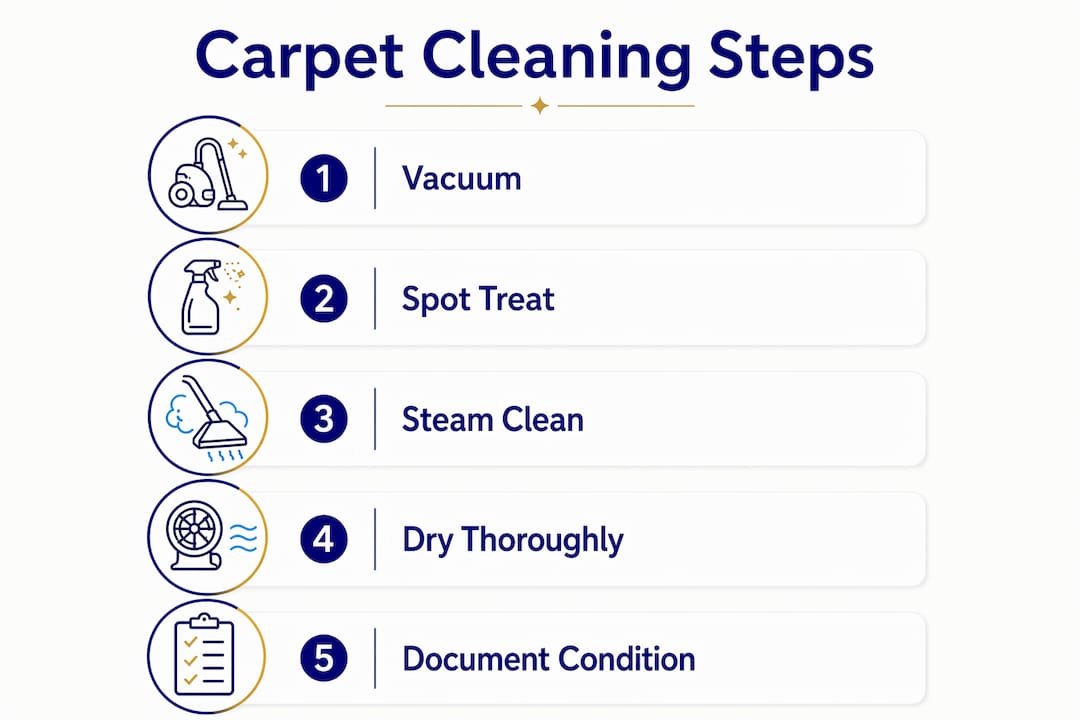
Follow this sequence for the best results before handing back your keys:
- Vacuum thoroughly first. Remove all loose debris before any wet cleaning. Wet extraction on a heavily soiled carpet simply pushes grit deeper into the pile.
- Treat stains individually. Apply a targeted stain remover to pet accidents, grease, or wine before the main clean. Allow it to dwell for the time specified on the product label.
- Clean from the far corner toward the door. This prevents walking over wet carpet and re-soiling it.
- Allow full drying time. Open windows and run fans. Damp carpet left overnight can develop mildew, creating a new problem.
- Inspect under furniture. Move all pieces before cleaning. Landlords check under beds and sofas during move-out inspections.
- Book the clean 2–3 days before your move-out date. This gives the carpet time to dry fully and allows a second pass if needed.
You can find a detailed breakdown of professional cleaning methods that explains which technique suits each carpet type and stain category.
Pro Tip: Book your professional clean 48 hours before the move-out inspection, not the morning of. Wet carpet fibres look darker and can be mistaken for staining during a rushed inspection.
How to document carpet condition to dispute unfair deductions
Without a dated move-in inventory report with photos, tenants face serious difficulty disputing deductions for carpet damage. The burden of proof sits heavily on the tenant to show that a condition existed before they moved in.
The most effective documentation approach uses side-by-side, date-stamped photos or videos taken at move-in and move-out. Receipts alone are insufficient to settle disputes about deep-set carpet damage. You need visual evidence that tells a clear before-and-after story.
Document the following at move-in and move-out:
- Stains. Photograph every visible stain with a ruler or coin in frame for scale.
- Burns or tears. Capture these in close-up and wide-angle shots to show location within the room.
- Fibre wear and matting. High-traffic areas like hallways and living rooms show natural flattening over time. Document this at move-in so it cannot be charged as damage later.
- Odours. You cannot photograph a smell, but you can note it in writing in the move-in report and ask the landlord to countersign.
- Cleaning receipts. Keep every invoice from professional cleaners, including the date, company name, and services performed.
If a landlord withholds your deposit unfairly, Ontario's Landlord and Tenant Board provides a formal dispute resolution process. Landlords must provide an itemised list of deductions with receipts. Tenants who can produce a complete documentation package, including move-in photos, move-out photos, and a professional cleaning receipt, have a strong position in any dispute.
Pro Tip: Email your move-in photos to yourself and your landlord on the day you move in. The email timestamp creates an independent record that is difficult to challenge.
Routine carpet maintenance to prevent damage during your tenancy
Preventing carpet damage during a tenancy costs far less than repairing it at move-out. The right habits protect both the tenant's deposit and the landlord's asset.
Regular vacuuming twice weekly prevents abrasive grit buildup that damages carpet fibres over time. Grit acts like sandpaper on the pile with every footstep. Removing it consistently is the single most effective low-cost maintenance action a tenant can take.
Additional maintenance strategies that protect your deposit:
- Use quality entrance mats. Entrance mats and no-shoes policies reduce the abrasive particles tracked in from outside, which are the primary cause of fibre wear in high-traffic areas.
- Rotate furniture every six months. Furniture legs create permanent indentations in carpet pile over time. Rotating placement spreads the load and prevents concentrated crushing.
- Address spills immediately. Blot, never rub. Rubbing spreads the stain and pushes it deeper into the pile. Use a clean white cloth and work from the outside of the spill inward.
- Schedule a mid-tenancy professional clean. For tenancies longer than 18 months, a professional clean during the lease resets the abrasion clock and removes embedded soil that vacuuming cannot reach. This also demonstrates to your landlord that you are maintaining the property responsibly.
- Check carpet warranty requirements. Some carpet manufacturers require documented professional cleaning at set intervals to maintain the warranty. If the landlord's carpet has such a requirement, meeting it protects both parties.
These steps align with what landlords across the GTA expect when they conduct move-out inspections. A well-maintained carpet is rarely the subject of a deposit dispute.
Key takeaways
Cleaning carpets to recover a damage deposit requires legal knowledge, the right cleaning method, and thorough documentation before and after your tenancy.
| Point | Details |
|---|---|
| Know what is deductible | Only damage beyond normal wear, such as pet stains or burns, justifies a landlord's cleaning deduction. |
| Use hot water extraction | Professional steam cleaning produces the deepest clean and a dated receipt that protects your deposit. |
| Document at move-in | Date-stamped photos and a signed inventory report are your strongest defence against unfair deductions. |
| Maintain throughout tenancy | Vacuuming twice weekly and using entrance mats prevents the damage that leads to deposit claims. |
| Keep all receipts | Professional cleaning invoices serve as legal evidence in Landlord and Tenant Board disputes. |
What I've learned from years of carpet deposit disputes
After working with hundreds of tenants and landlords across the GTA, I can tell you that most deposit disputes over carpets are entirely avoidable. The cases that end badly for tenants almost always share one feature: no move-in documentation. A tenant who moves in without photographing every existing stain is handing the landlord a blank cheque.
The other pattern I see constantly is tenants assuming that professional cleaning is legally required at move-out. It often is not. What matters is returning the carpet to its move-in condition. If it was lightly worn when you arrived, lightly worn is acceptable when you leave. The problem is that without photos, you cannot prove what "lightly worn" looked like on day one.
For landlords, the lesson runs the other direction. Clear written standards in the lease, a thorough move-in inspection report, and fair expectations about normal aging make disputes rare. Landlords who try to charge for carpet replacement after a five-year tenancy, when the carpet had a ten-year lifespan, will lose at the Landlord and Tenant Board. Knowing the depreciation rules protects you as much as it protects the tenant.
My honest advice: treat the move-in inspection as seriously as the lease signing. Both documents define your financial relationship for the entire tenancy.
— Rob
Professional carpet cleaning for deposit recovery in the GTA
Icleansecuc serves tenants and landlords throughout the Greater Toronto Area with professional carpet cleaning designed specifically for move-out situations. The team uses truck-mounted hot water extraction equipment and eco-friendly solutions to remove deep-set stains, odours, and allergens that consumer machines cannot reach.

Every service includes a dated invoice that documents the cleaning standard achieved. That receipt is your evidence if a landlord disputes the carpet's condition. Icleansecuc also offers move-out cleaning packages that cover carpets, upholstery, and tile in a single visit. Review the full range of cleaning services or request a quote to get a clear price before your move-out date.
FAQ
Can a landlord deduct carpet cleaning from my deposit in Ontario?
A landlord can only deduct for damage beyond normal wear and tear, such as pet urine, burns, or heavy staining. Routine cleaning at the end of a standard tenancy is generally a landlord expense under Ontario's Residential Tenancies Act.
What is the best cleaning method for deposit recovery?
Hot water extraction, also called steam cleaning, is the most effective method. It penetrates deep into the carpet pile, removes embedded soil and stains, and produces a dated receipt that serves as evidence in deposit disputes.
How do I prove carpet condition at move-in?
Take date-stamped photos and video of every room on move-in day, document all existing stains or damage in a written inventory report, and email the files to yourself and your landlord immediately to create an independent timestamp.
Does professional cleaning guarantee I get my full deposit back?
Professional cleaning removes the most common grounds for a deduction, but it does not override pre-existing damage. Combining a professional clean with thorough move-in and move-out documentation gives you the strongest possible position.
How often should I clean carpets during a long tenancy?
Professional deep cleaning every 12–18 months maintains carpet condition, meets most manufacturer warranty requirements, and demonstrates responsible tenancy to your landlord.