
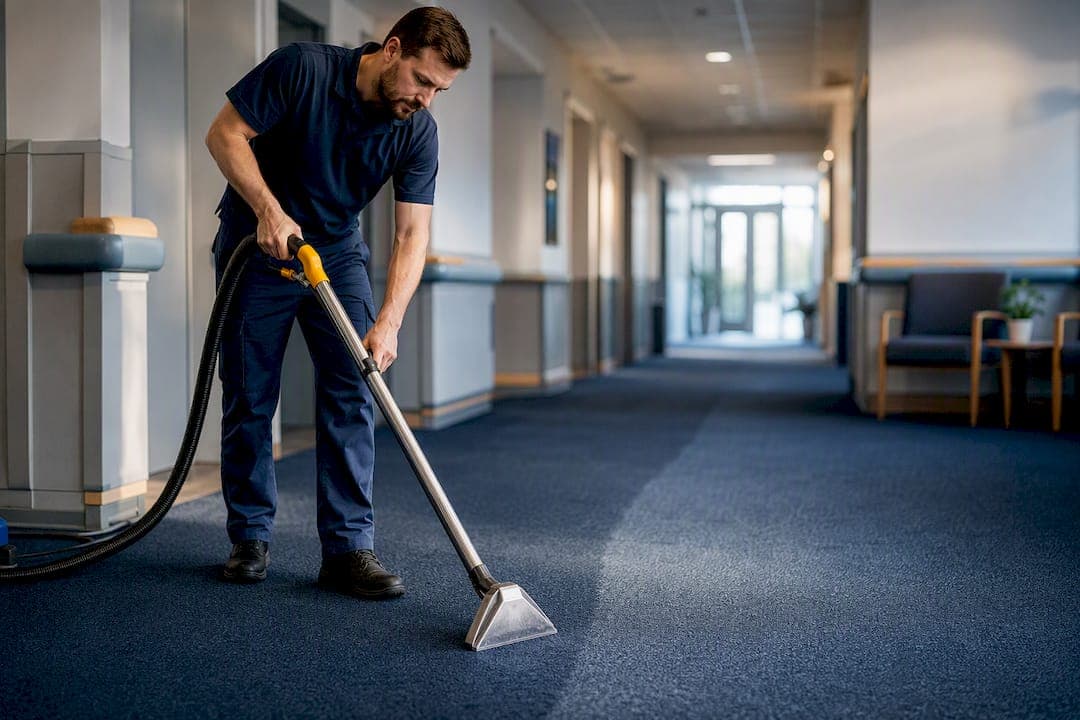
Start with this baseline schedule by traffic level: light areas get an annual deep clean, moderate-traffic zones need periodic deep cleaning twice yearly, heavy-traffic areas call for quarterly attention, and extra-heavy zones require monthly or as-needed deep cleaning. Every schedule should bend to the carpet manufacturer's warranty terms and indoor air quality needs. Three things never change regardless of traffic: daily vacuuming, immediate spot response, and a deep clean booked on a fixed calendar rather than left to guesswork.
TL;DR:
- Light-traffic areas should have a deep clean annually, while extra-heavy zones may require monthly cleaning depending on soil accumulation and soil types.
- Immediate spot treatment and regular vacuuming, especially in entrance and high-traffic zones, significantly reduce the soil buildup that shortens carpet lifespan.
- Proper drying and ventilating after cleaning are essential to prevent mold growth and maintain indoor air quality, with low-emission products preferred.
- Scheduling deep cleanings based on actual traffic patterns and soil levels helps avoid unnecessary services and preserves warranty coverage.
- Professional services should follow standards like CRI 204 and IAQ guidelines, ensuring efficient, health-conscious cleaning aligned with building needs.
Table of Contents
- Recommended frequencies by traffic zone
- Cleaning methods explained and when to use them
- Daily practices that keep carpets clean between deep cleans
- Indoor air quality, drying time, and wastewater handling
- Building a customised maintenance schedule
- What a well-run schedule looks like in practice
- How iCleanseCUC supports a commercial cleaning schedule
- Standards and guidance worth keeping on file
- Sources
- FAQ
Recommended frequencies by traffic zone
Traffic level is not about square footage. It is about how many feet cross a given patch of carpet in a day, and what is on those feet. A private office sees light traffic. A main corridor, reception area, or elevator lobby sees moderate to heavy traffic. Building entrances, cafeterias, and patient rooms in healthcare settings often qualify as extra-heavy because of a mix of volume, moisture, and food or biological soil.
VOXFLOR's commercial carpet maintenance guidelines lay out vacuum, interim, and deep-clean cadences by traffic band, and the frequencies below follow that structure.
| Traffic level | Example locations | Vacuum | Interim cleaning | Deep clean |
|---|---|---|---|---|
| Light | Private offices, executive suites | Twice weekly | Rarely needed | Typically annually |
| Moderate | Open-plan offices, meeting rooms | Daily | As needed | Around twice a year |
| Heavy | Main corridors, reception areas | Daily | Monthly | Approximately quarterly |
| Extra-heavy | Entrances, cafeterias, patient rooms | Daily, sometimes twice | Weekly | Usually monthly |
A few zones deserve a faster clock than their traffic band suggests:
- Food service areas accumulate grease and sugar residue that plain vacuuming cannot lift, so they often need interim cleaning even at moderate traffic.
- Entrances collect grit and de-icing residue that wears carpet fibres mechanically, which pushes many facilities to weekly interim treatment regardless of the season.
- Healthcare spaces carry infection-control requirements that favour more frequent extraction over interim methods alone.
Pro Tip: Walk the floor plan with a highlighter before setting any schedule. Traffic patterns rarely match room labels, and a "light" office next to a busy printer station can behave like a moderate zone.
Cleaning methods explained and when to use them
Each cleaning method does a different job, and mismatching method to interval either wastes money or lets soil build past the point interim cleaning can fix.
Routine vacuuming removes loose, dry soil before it works down into carpet backing where it abrades fibres. A HEPA-filter vacuum matters here because ordinary vacuums can recirculate fine particulates instead of capturing them, and Health Canada's guidance for indoor air quality professionals flags carpets that are not regularly vacuumed as a potential source of indoor contaminants.

Interim methods, including encapsulation and bonnet cleaning, use low-moisture chemistry to lift surface soil and refresh appearance between deep cleans. They dry fast and let a facility reopen a space quickly, but they do not reach soil that has migrated into the carpet pile's lower layers.
Hot-water extraction is the restorative method. It flushes embedded soil, allergens, and residue out of the carpet rather than just redistributing them, which is why the CRI 204 commercial carpet standard treats it as a distinct tier rather than an occasional upgrade to interim cleaning.
- Vacuuming: daily maintenance, removes dry surface soil, does nothing for embedded residue.
- Interim cleaning: low-moisture refresh, buys time between deep cleans, limited penetration.
- Hot-water extraction: full soil removal from deep in the pile, required at the intervals set for each traffic level.
A maintenance programme built on soil prevention, routine vacuuming, spot removal, interim cleaning, and deep cleaning extends appearance life more reliably than deep cleaning alone, according to CRI and IICRC guidance on layered maintenance.
Daily practices that keep carpets clean between deep cleans
The gap between deep cleans is where carpets are won or lost. A few habits, run consistently, do most of the work.
- Vacuum entrance mats and the first 3 to 4.5 metres of flooring beyond every door daily, following expert hygiene tips for cleaning fitness mats since this strip absorbs most tracked-in grit.
- Vacuum main corridors and high-traffic common areas daily, and private offices twice-weekly.
- Treat spots the moment they appear rather than waiting for the next scheduled visit, using only the chemistry approved in the manufacturer's maintenance guidance to avoid voiding a warranty.
- Coordinate mat replacement and entrance matting with building services so soil-trapping surfaces are cleaned or swapped on their own cycle.
Pro Tip: Keep a small stock of manufacturer-approved spotting solution at reception and in janitorial closets. A stain treated within minutes rarely needs professional attention; one left overnight often does.
Indoor air quality, drying time, and wastewater handling
Cleaning frequency is only half the picture. How and when a carpet gets cleaned affects the air people breathe in the days afterward.
- Health Canada's draft guidance on indoor air quality in office buildings recommends scheduling carpet cleaning for periods of low occupancy, maximizing water extraction so carpets dry within 24 hours, choosing low-emission cleaning products, and ventilating the space afterward.
- Returning a damp carpet to service too early invites mould growth and musty odour, and it can undo the cleaning's benefit entirely. Verify dryness with a moisture probe rather than by touch or guesswork before reopening a space.
- Contractors using hot-water extraction generate wastewater that carries a high organic load. The City of Calgary's wastewater compliance guidance warns that this water needs pre-treatment or proper disposal to avoid bylaw violations and infrastructure damage, so it is worth confirming a contractor's disposal practice before booking.
Ventilating for several air changes after cleaning, alongside low-emission product choices, shifts the goal from a carpet that looks clean to a space that is actually healthier to occupy.
Building a customised maintenance schedule
A single frequency rarely fits an entire building. The fix is a short mapping exercise rather than a new system.
- Walk the floor plan and mark each zone by traffic level, using the entrance, corridor, and private-office categories as a starting point.
- Assign a vacuum, interim, and deep-clean interval to each zone based on that traffic level.
- Write the intervals, along with permitted cleaning methods and drying targets, into the maintenance contract or work order.
- Set a review date to reassess zones after any change in occupancy or layout.
A contract or work order should specify:
- Permitted cleaning methods and any manufacturer chemistry restrictions.
- A maximum return-to-service moisture level, verified before reopening.
- Wastewater handling and disposal responsibility.
- Inspection and acceptance criteria the facility manager signs off on.
Pro Tip: Build in a frequency trigger, not just a calendar. Visible soil build-up, odour complaints, IAQ symptoms among staff, an approaching warranty inspection, or a scheduled event are all valid reasons to move a deep clean earlier than planned.
What a well-run schedule looks like in practice
A typical mid-size office runs daily vacuuming by night staff, weekly spot checks by the facility team, and a quarterly hot-water extraction booked for a Friday evening so carpets have the whole weekend to dry and ventilate before occupants return. Occupants get a short notice email, and someone checks moisture levels before reopening the floor. Handled this way, maintenance is cheap insurance against early carpet replacement and the disruption that comes with it.
— Rob
How iCleanseCUC supports a commercial cleaning schedule
Running this schedule in-house takes equipment, training, and someone watching the calendar every quarter. Professional cleaning services handle the deep-clean end of that work for facility managers who would rather hand it off than manage it internally.
- Hot-water extraction and interim cleaning sized to heavy-traffic and light-traffic commercial areas rather than a one-size quote.
- Eco-friendly, low-emission products that fit typical drying and ventilation targets facility managers may work toward.
- Scheduling built around low-occupancy windows, with verified drying before a space reopens, is recommended.
If a quarterly or monthly clean is coming due, request a quote and get a booking that fits your building's actual traffic pattern instead of a generic interval.
Standards and guidance worth keeping on file
Share these with procurement and contractors when setting or reviewing a maintenance contract:
- CRI 204 commercial carpet standard for maintenance tiers and frequency charts.
- ANSI/IICRC S100 preview for procedural specifications.
- Health Canada's IAQ building stewardship guidance for scheduling and drying practices.
- VOXFLOR maintenance guidelines for traffic-based intervals and warranty terms.
Sources
- VOXFLOR commercial carpet maintenance guidelines (Beaulieu Canada)
- Draft guidance on improving indoor air quality in office buildings: Building stewardship — Health Canada
- Carpet cleaning operations wastewater compliance information — City of Calgary
FAQ
How often should commercial carpet be cleaned?
Frequency depends on traffic: light areas need a deep clean roughly once a year, moderate zones about twice a year, heavy-traffic areas quarterly, and extra-heavy zones monthly or as soiling demands, based on VOXFLOR's traffic-based schedule. Daily vacuuming and prompt spot treatment apply to every traffic level in between deep cleans.
Can 20-year-old carpet still be cleaned professionally?
Older carpet can often be cleaned, though results depend on the fibre's condition, how well it was maintained over its life, and whether soil has become permanently set into the backing. A professional inspection before booking is the reliable way to know whether extraction will restore appearance or whether replacement makes more sense.
How often should you get carpet professionally cleaned?
For most commercial spaces, professional hot-water extraction should happen at the interval matched to that zone's traffic level, ranging from annually for light-traffic offices to monthly for extra-heavy areas like entrances and cafeterias. Between those visits, interim low-moisture cleaning can extend appearance without the drying time a full extraction needs.
How often should you replace commercial carpet?
Replacement timing depends more on wear, fibre condition, and warranty terms than on a fixed calendar. A consistent maintenance programme, including the vacuuming, interim, and deep-clean intervals outlined by CRI 204, tends to extend the time before replacement becomes necessary by keeping soil from wearing down fibres prematurely.