
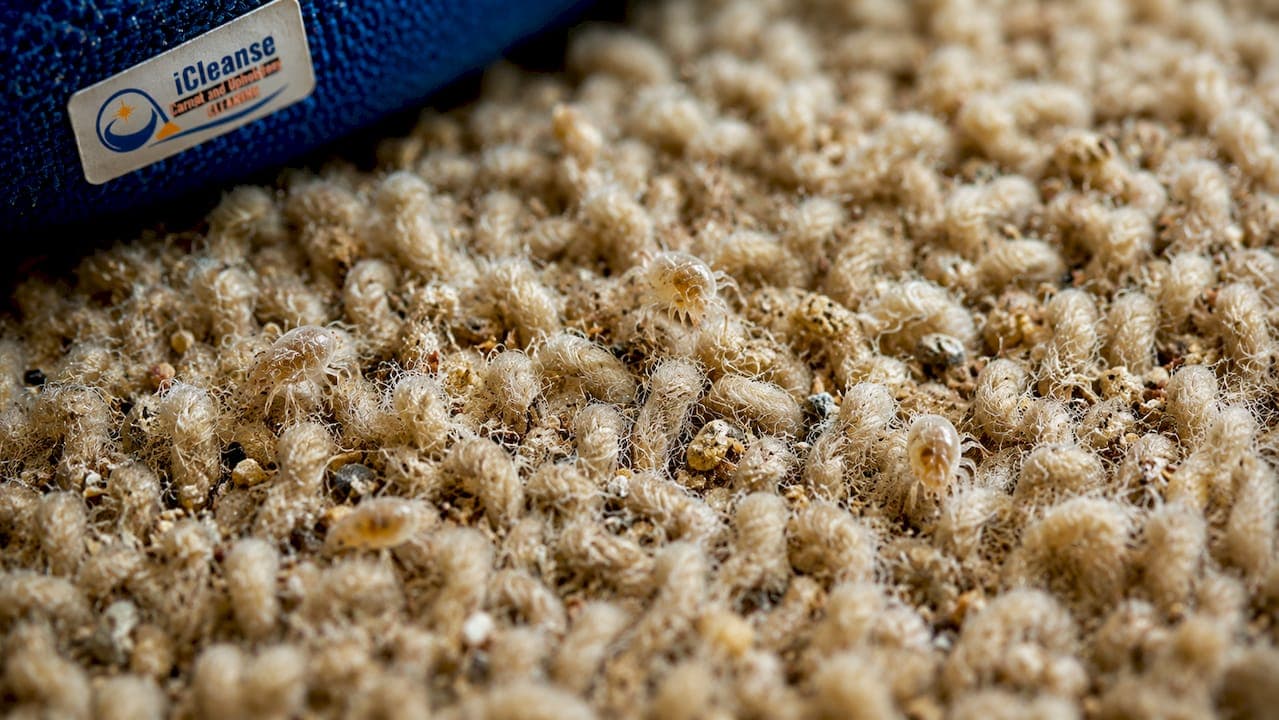
Embedded carpet dirt is defined as microscopic particles, biological residues, and chemical compounds that settle below the surface fibres of a carpet and cannot be removed by routine vacuuming. These include dust mite fecal matter, clay particles, road salt crystals, pet dander, and mold spores. Carpets in high-traffic, poorly ventilated homes can contain pollutant concentrations up to 10 times higher than outdoor air. That figure alone explains why understanding the specific examples of embedded carpet dirt matters for every homeowner and renter who wants a genuinely clean home.
1. Dust mites and biological particulates
Dust mites are the most common biological source of embedded carpet dirt in Canadian homes. Their fecal pellets measure 100–300 microns, small enough to slip past standard vacuum filters and lodge deep within carpet fibres. Mold spores range from 1–30 microns, making them even harder to capture. Pet dander sits in a similar size range and clings to fibres with a static charge that vacuuming cannot break.
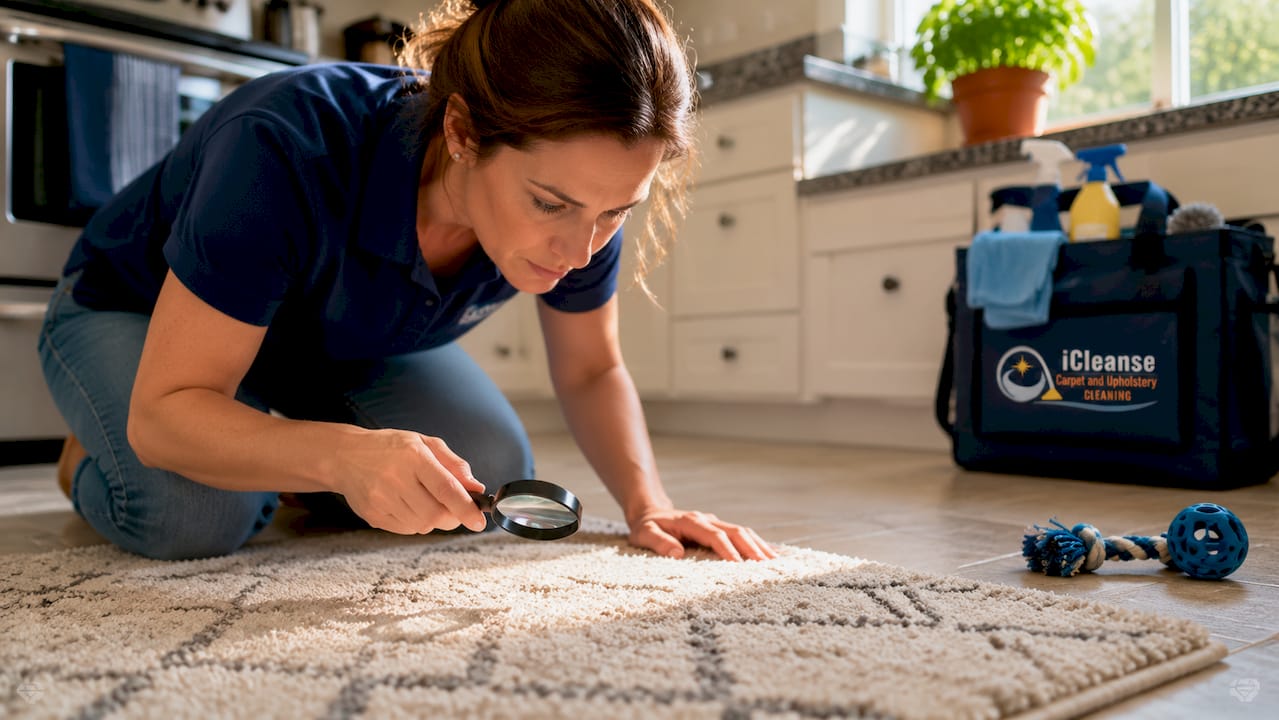
The health impact is direct. Carpets act as reservoirs for these allergens, and every footstep stirs them back into the air you breathe. Canadians spend roughly 90% of their time indoors, which means prolonged exposure to whatever your carpet holds. For anyone with asthma or seasonal allergies, this is not a minor inconvenience. It is a daily trigger.
Regular vacuuming moves these particles around more than it removes them. Standard residential vacuums function as dust pumps for ultra-fine particles, re-aersolising allergens into the indoor environment rather than capturing them. HEPA-filtered vacuums help at the surface level, but they cannot reach particles packed into the base of the pile.
Common biological contaminants found embedded in carpet fibres include:
- Dust mite fecal pellets (100–300 microns)
- Pet dander from dogs, cats, and small animals
- Mold spores (1–30 microns), particularly in humid rooms or basements
- Pollen tracked in from outdoors during spring and summer
- Human skin cells, which are a primary food source for dust mites
Pro Tip: Place a dehumidifier in carpeted rooms to keep relative humidity below 50%. Dust mites cannot reproduce effectively below that threshold, which slows biological accumulation between professional cleanings.
2. Mineral particles: clay, grit, sand, and glacial silt
Mineral particles are the most physically destructive examples of carpet soil. They enter your home on boots, pet paws, and clothing, then work their way down through the pile with every step. Once at the base of the fibre, they act like sandpaper. Grit and sand physically abrade carpet fibres with each footfall, causing irreversible fibre shredding and permanent dulling of the pile.
Canadian soil profiles make this worse than in many other regions. Leda Clay, common across the Ottawa Valley and parts of southern Ontario, is an ultra-fine marine clay that breaks into particles finer than most vacuum thresholds. Regional soil types like Leda Clay and glacial silt require specialised extraction methods because standard equipment simply cannot pull them out. Glacial silt, deposited across much of the Canadian Shield, behaves similarly.
The fibre damage from mineral particles is not always visible at first. Embedded mineral particulates cause fibre distortion that alters light reflection, creating permanent dulling even after visible dirt is removed. That grey, lifeless look in a high-traffic hallway is often mineral damage, not surface soiling.
Key sources of mineral embedded dirt in Canadian homes:
- Winter road salt and ice-melt crystals tracked in on boots
- Trail dust and construction grit from outdoor activity
- Fine sand from playgrounds and beaches
- Glacial silt and Leda Clay from regional soil
- Gravel and grit from driveways and parking areas
Pro Tip: Place high-quality entry mats both outside and inside every exterior door. A two-mat system captures the majority of coarse grit before it reaches your carpet. Shake or replace mats weekly during winter months when road salt tracking peaks.
3. Chemical residues: salts, oils, and cleaning agent build-up
Chemical residues are the least visible but often the most damaging long-term examples of embedded carpet stains and soil. Road salt and ice-melt compounds do not just sit on the surface. They crystallise within carpet fibres as moisture evaporates, physically expanding and weakening the fibre structure. Over a Canadian winter, this cycle of wetting and crystallisation repeats dozens of times.
DIY cleaning products create a separate problem. High-pH surfactants found in many consumer carpet cleaners leave a sticky residue that attracts dirt faster after cleaning than before. This is why a carpet cleaned with a rental machine or spray-and-scrub product often looks worse within a few weeks. The residue acts as a chemical magnet for new soil.
Oils compound the issue further. Shoe oils, pet paw oils, and cooking grease that drifts and settles all bind to carpet fibres and trap particulate matter. Moisture from wet boots or spills then weakens the fibre at the point of oil saturation, accelerating wear.
Embedded chemical residues commonly found in carpets include:
- Road salt and calcium chloride crystals from winter tracking
- High-pH surfactant residues from DIY spray cleaners and rental machines
- Shoe and pet paw oils that bind particulate dirt
- Cooking grease that settles on open-plan carpeted areas
- Fabric softener residue from laundered rugs placed on carpet
Professional extraction removes these residues through high-pressure hot water rinsing combined with proper pH-neutralising solutions. Consumer equipment rarely achieves the water temperature or extraction pressure needed to fully flush chemical build-up from the base of the pile.
4. Visible signs that embedded dirt is present
Visible signs of embedded carpet dirt are often misread as surface soiling. Knowing the difference helps you act before permanent damage sets in.
- Dull, grey patches in high-traffic areas. This is mineral fibre damage, not surface dirt. Vacuuming will not restore the colour because the fibres themselves have been abraded.
- Stiff or matted pile that does not spring back. Fibre matting results from a combination of mineral grit, oil binding, and fibre compression. It signals deep soil accumulation.
- Persistent musty or sour odour. A carpet that smells after vacuuming contains bacteria or mold deep in the fibres. Surface deodorising masks the smell temporarily but does not address the source.
- Rapid re-soiling after cleaning. If a carpet looks dirty again within days of cleaning, chemical residue from a previous DIY clean is likely attracting new soil.
- Allergy or asthma symptoms that worsen indoors. When symptoms improve after leaving the house and return when you come back, embedded biological particulates are a likely cause.
Apparent surface cleanliness is not a reliable indicator of embedded soil. A carpet can look acceptable while holding significant quantities of mineral grit, allergens, and chemical residue below the surface. Homeowners who wait until stains or odours become unbearable miss the health benefits of removing invisible contaminants early.
5. How knowledge of embedded dirt guides smarter cleaning
Understanding what type of embedded carpet soil you are dealing with directly determines which cleaning method will actually work. Vacuuming alone addresses surface debris but fails to capture ultra-fine particles like glacial silt or microscopic allergens. Knowing this prevents wasted effort and money on approaches that cannot reach the problem.
Choosing the right extraction method
Hot water extraction, also called steam cleaning, uses high-pressure water and strong suction to flush particulates from the base of the pile. It is the most effective method for removing embedded mineral particles and biological contaminants. Carbonated cleaning solutions physically displace embedded particulates through gas expansion, lifting dirt without harsh chemicals and preserving fibre integrity. Both methods outperform consumer-grade equipment because they achieve the pressure and temperature needed to break the bond between embedded particles and carpet fibres.
Wet cleaning without proper drying creates a new risk. Carpets left damp for extended periods increase mold growth risk and cause wicking, where deep soil migrates back to the surface as moisture evaporates. Professional equipment extracts the majority of moisture during the cleaning process, reducing drying time significantly.
Maintenance between professional cleanings
- Vacuum high-traffic areas at least twice per week using a HEPA-filtered vacuum
- Use entry mats at all exterior doors and clean them weekly
- Address liquid spills immediately by blotting, never rubbing, to prevent deep penetration
- Avoid DIY spray-and-scrub products that leave high-pH residues
- Schedule professional carpet cleaning services at least once per year, or twice yearly in homes with pets, children, or allergy sufferers
Pro Tip: After a professional clean, place clean towels over any damp spots and weigh them down with books overnight. This accelerates moisture absorption and prevents wicking of deep soil back to the surface.
Regional soil type affects cleaning frequency. Homes near construction zones, unpaved roads, or high-salt winter environments accumulate mineral embedded dirt faster than average. Adjusting your cleaning schedule to account for your specific location is more effective than following a generic annual recommendation.
Key takeaways
Embedded carpet dirt consists of microscopic biological, mineral, and chemical particles that standard vacuuming cannot remove, making professional extraction the only reliable method for restoring carpet health and appearance.
| Point | Details |
|---|---|
| Biological contaminants embed deeply | Dust mite fecal matter and pet dander lodge below vacuum reach and trigger allergies with every footstep. |
| Mineral grit causes permanent damage | Clay, sand, and glacial silt abrade carpet fibres like sandpaper, creating irreversible dulling over time. |
| Chemical residues attract more dirt | High-pH DIY cleaner residues act as soil magnets, causing rapid re-soiling after consumer-grade cleaning. |
| Visible signs often indicate deep soil | Matted pile, grey patches, and persistent odour signal embedded dirt, not just surface soiling. |
| Professional extraction is necessary | Hot water extraction and carbonated methods reach the base of the pile where consumer equipment cannot. |
What I have learned from years of embedded dirt in Canadian carpets
The most common misconception I encounter is that a carpet looks clean, so it must be clean. That assumption costs homeowners years of carpet life and, more seriously, months of unnecessary allergen exposure. The dirt doing the most damage is the dirt you cannot see.
Canadian homes face a specific combination of challenges that most generic cleaning advice does not address. Leda Clay and glacial silt are genuinely different from the sandy soils common in drier climates. They are finer, they bind more stubbornly, and they require more extraction pressure to dislodge. A homeowner in the Greater Toronto Area tracking in winter road salt and regional clay is dealing with a more aggressive embedded dirt profile than someone in a dry, low-salt environment.
The other pattern I see consistently is the DIY cleaning cycle. A homeowner notices a stain, uses a consumer spray product, the carpet looks better for two weeks, then looks worse than before. The surfactant residue from the spray is doing exactly what it is chemically designed to do: it binds to soil. The problem is that it keeps binding after the cleaning is done. Breaking that cycle requires proper rinsing with professional equipment, not another round of spray cleaner.
My honest recommendation is to schedule professional cleaning at least once per year for most households, and twice yearly if you have pets, young children, or anyone with respiratory sensitivities. Do not wait for visible stains or odours. By the time you can see or smell the problem, the embedded dirt has already done significant damage to both the fibre and the indoor air quality of your home.
— Rob
Icleansecuc removes what vacuuming leaves behind
Embedded carpet dirt requires more than surface cleaning. Icleansecuc uses professional extraction equipment and eco-friendly solutions to pull biological allergens, mineral grit, and chemical residues from the base of your carpet pile, not just the surface.

Serving homeowners and renters across the Greater Toronto Area, Icleansecuc brings regional knowledge of Canadian soil profiles and seasonal debris to every job. Whether your carpet shows visible wear or you simply know it is overdue for a deep clean, the team delivers results that protect both your carpet and your indoor air quality. Review the full range of professional cleaning methods Icleansecuc uses, or request a quote to get started with a cleaning tailored to your home.
FAQ
What are the most common examples of embedded carpet dirt?
The most common examples are dust mite fecal matter, pet dander, mold spores, mineral grit such as sand and clay, and road salt crystals. These particles settle below the carpet surface and cannot be removed by regular vacuuming.
Can vacuuming remove embedded carpet dirt?
Standard vacuuming removes surface debris but fails to extract ultra-fine particles like glacial silt or biological allergens embedded at the base of the pile. HEPA-filtered vacuums improve surface capture but still cannot reach deeply embedded soil.
How do I know if my carpet has embedded dirt?
Signs include dull or grey patches in high-traffic areas, stiff or matted pile, persistent musty odour after vacuuming, rapid re-soiling after cleaning, and worsening allergy symptoms indoors. These indicate soil embedded below the surface, not just on top.
How often should I have my carpets professionally cleaned?
Most households benefit from professional cleaning at least once per year. Homes with pets, children, or allergy sufferers should schedule cleaning twice yearly to manage biological and mineral embedded dirt effectively.
Does DIY carpet cleaning make embedded dirt worse?
DIY cleaners using high-pH surfactants leave residues that attract new dirt faster than before cleaning. Without professional-grade rinsing and extraction pressure, these residues remain in the fibre and accelerate re-soiling.