
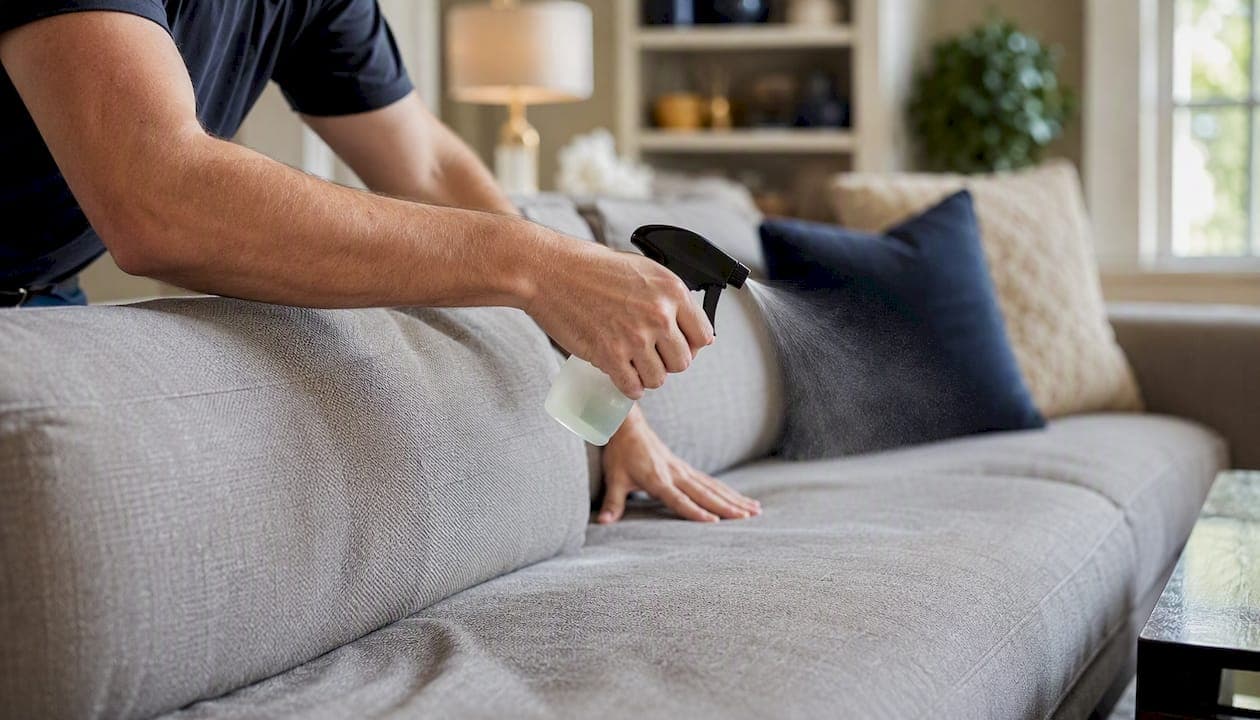
Yes, in most cases, but not with a can of fabric spray and an open window. Light smoke exposure, like a kitchen mishap or an evening of candles, usually lifts with thorough DIY cleaning. Heavier contamination, from house fires, prolonged cigarette smoking, or wildfire smoke drifting indoors, tends to need professional restoration. A 2022 study found that smoke VOCs in contaminated fabric remained at high concentrations even after 45 minutes of active desorption. That's why airing out a couch rarely solves the problem on its own; the odour compounds are bonded into fibres and foam, not just sitting on the surface.
Here's what to do in the next 24 to 72 hours:
- Move affected furniture outdoors or to a well-ventilated room if possible.
- Vacuum every surface, including seams and underneath cushions, before trying any product.
Key Takeaways
Removing smoke smell from upholstery depends on how deep the odour has penetrated, with light contamination responding to DIY methods and deep-set odour requiring professional extraction and IICRC-guided restoration.
| Point | Details |
|---|---|
| Odour hides below the surface | VOCs can persist in fabric well past 45 minutes of airing, so ventilation alone rarely finishes the job. |
| Vacuum before treating | Slow, overlapping strokes pull residue from seams and tufting that quick passes miss. |
| Baking soda needs dwell time | An overnight application outperforms several short treatments spread through the day. |
| Fabric type changes outcomes | Natural fibres release odour faster with airflow; synthetics and foam trap it longer. |
| Icleansecuc offers inspection-first cleaning | Their team matches hot-water or low-moisture extraction to your specific fabric and cushion construction. |
Table of Contents
- Fixing smoke smell in upholstery: quick actions for the first few days
- Deeper treatments for stubborn smoke odour: what works and what to avoid
- Does fabric type change how you should treat smoke smell?
- When should you call a professional cleaner for smoke odour?
- What a local team actually does when they show up
- Ready to book a professional smoke odour treatment?
- Sources
Fixing smoke smell in upholstery: quick actions for the first few days
Start with airflow. Open windows on opposite sides of the room to create cross-ventilation, and run a fan pointed away from the furniture to pull odour out rather than push it around. If the piece can be moved to a garage or covered porch for a day, that head start matters more than most people expect.
Vacuuming comes next, and technique matters here. Use the upholstery attachment with slow, overlapping strokes rather than quick passes. Fast vacuuming skims the surface; slow strokes pull particulates and loose residue out of the weave. Hit crevices, tufting, and the underside of cushions where ash and residue settle unseen.
For removable covers, check the care label and launder with an unscented detergent on the hottest safe setting. Skip fabric softener. It coats fibres and can trap odour instead of releasing it.
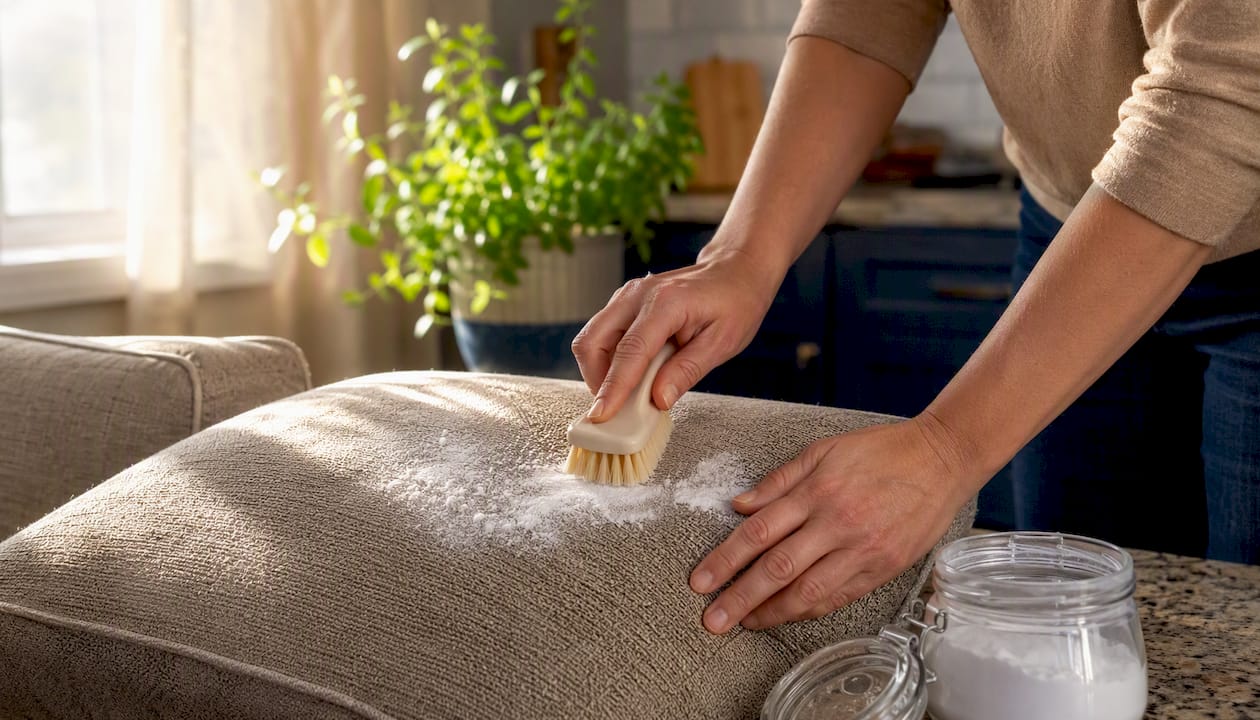
For anything that can't be washed, baking soda is your workhorse. Sprinkle it generously over the entire surface, work it gently into the fabric with a soft brush, and let it sit overnight, or up to 24 hours for stubborn cases, before vacuuming it away. Activated charcoal placed in bowls nearby (not on the fabric) helps absorb ambient odour in the room over several days. A light misting of diluted white vinegar can help with surface odour, but always spot test first on a hidden area.
Avoid soaking any textile. Excess moisture can push residue deeper, and damp foam left too long invites mould growth rather than solving the odour issue.
Pro Tip: Do the baking soda treatment right before bed and vacuum it up first thing in the morning. The overnight dwell time does more work than three shorter applications spread through the day.
Deeper treatments for stubborn smoke odour: what works and what to avoid
When DIY steps only knock the smell down partway, deeper extraction methods are the next step. Hot-water extraction, often called steam cleaning, forces heated water and cleaning solution into the fabric and pulls it back out with strong suction, reaching odour trapped below the surface layer. Low-moisture extraction achieves a similar result with less liquid, which suits fabrics prone to shrinking or water staining.
For serious contamination, professionals sometimes use thermal fogging or hydroxyl and ozone treatments to neutralize odour molecules at a chemical level rather than masking them. These require controlled ventilation and are not something to attempt in an occupied home; ozone in particular can irritate airways at the concentrations needed to be effective.
Solvent-based cleaners marketed for smoke odour can work, but they carry real risk of fibre damage and colour change on delicate or blended fabrics. The ANSI/IICRC S300 consolidated draft standard points restorers toward specialized fire- and smoke-restoration protocols under S700, noting that smoke-damaged materials often require multi-step remediation rather than a single product application.
Before attempting anything beyond vacuuming and baking soda, run through this safety checklist:
- Wear gloves and a mask when handling soot-contaminated fabric.
- Never mix cleaning chemicals, especially anything containing bleach or ammonia.
- Keep electrical outlets and cords away from wet-cleaning zones.
When smoke has penetrated foam and framing rather than just the outer fabric, no amount of surface treatment resolves it. That's the point where restoration standards call for professional, multi-stage processes instead of another DIY attempt.
Does fabric type change how you should treat smoke smell?
It changes everything about your approach. A gas chromatography–mass spectrometry study modelled how tobacco and cooking odours desorb from cotton, wool, and polyester, and found the dynamics vary significantly by fibre type and airflow. Natural fibres like cotton and wool tend to absorb odour compounds more readily but also release them faster with proper ventilation. Polyester and synthetic blends resist absorption at first but can trap odour more stubbornly once saturated, since the fibres don't breathe the same way.
Foam cushions are the hidden problem. Odour molecules migrate into the foam core, and if the cover is glued rather than zippered, cleaning the surface fabric alone won't touch what's underneath. Timber frames can also absorb smoke over years of exposure, particularly in pieces used for smoking indoors.
- Removable, zippered covers: launder separately and treat the foam insert on its own.
- Glued or fixed upholstery: professional extraction is usually the only realistic option.
- Always spot test an inconspicuous area for colourfastness before applying any liquid treatment.
Separate research on tobacco smoke's effects on fabric found that smoke exposure alters colour properties over time and that third-hand residues can persist and re-emit odour long after visible cleaning, which explains why some couches "smell fine" for a week and then don't.
When should you call a professional cleaner for smoke odour?
A few signs mean it's time to stop experimenting and book a professional. If the smell returns a few days after cleaning, especially when the room warms up or gets humid, that's a strong indicator odour is trapped deep in the foam or frame. Yellowing or visible discolouration on light-coloured fabric, smoke damage from an actual house fire, or years of accumulated nicotine saturation all point the same direction.
Here's what a professional visit typically involves:
- Inspection and fibre identification to determine safe treatment options.
- Pre-treatment to loosen embedded residue before extraction.
- Hot-water or low-moisture extraction, sometimes paired with thermal fogging or encapsulation for odour neutralization.
- Controlled drying and a follow-up check to confirm the smell hasn't returned.
Timelines usually run from a few hours for standard upholstery cleaning to a full day or more for fire-damaged pieces needing multi-stage treatment. Cost depends on the size and number of pieces, contamination severity, and whether foam or frame replacement is needed.
When you're getting quotes, ask:
- What's included in the inspection, and how do you identify fibre type before treating it?
- Which techniques will you use for my specific fabric?
- Do you use eco-friendly solutions, and are your technicians trained to IICRC standards?
- What happens if the odour isn't fully resolved after the first visit?
Icleansecuc's upholstery cleaning services follow this inspection-first approach, matching treatment to fabric type rather than applying the same method to every piece that comes through the door.
What a local team actually does when they show up
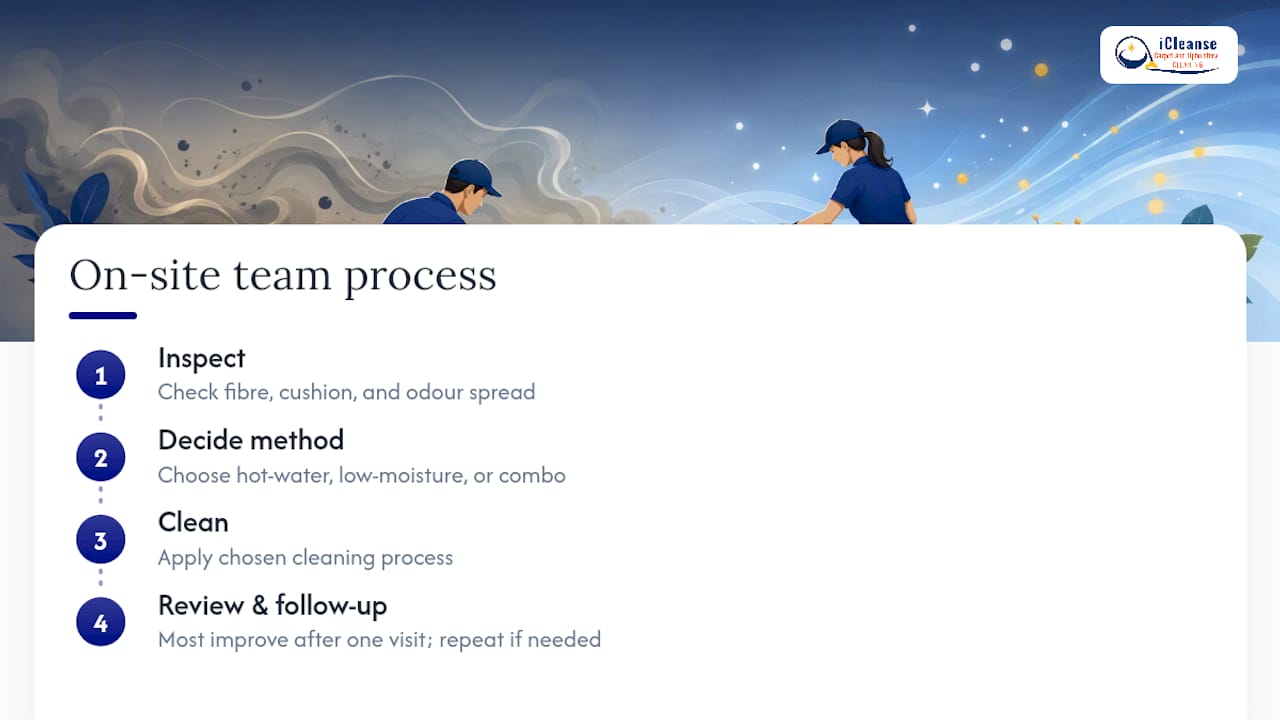
Every couch or chair gets inspected before any product touches it. That means checking fibre type, cushion construction, and how far the odour has travelled before deciding whether hot-water extraction, low-moisture cleaning, or a combination gets the best result. Most clients see a significant reduction in odour after one visit, and if the smell lingers, a follow-up visit is part of getting it right.
Ready to book a professional smoke odour treatment?
If the baking soda and vinegar routine hasn't fully cut through the smoke smell, a proper inspection tells you exactly what's trapped in your furniture and what it'll take to remove it. Requesting a quote gets you a straightforward assessment, transparent pricing, and cleaning done with commercial-grade equipment and eco-friendly solutions, no guessing games about which product to try next.
Here's what happens after you reach out: a technician inspects the fabric and cushion construction to identify the best treatment method, then walks you through the timeline and cost before any work begins. Follow-up is part of the process if odour lingers after the first pass. For general cleaning tips in the meantime, the upholstery cleaning tips page has practical steps you can try today, and if you're weighing whole-home air quality alongside furniture treatment, non-toxic air purifier options are worth a look for ongoing odour control. When you're ready, book an inspection and get a clear answer on what your furniture actually needs.
Sources
- Journal of Environmental Health Science and Engineering (2022) — study on smoke VOC persistence
- Gas chromatography–mass spectrometry study on fabric odour desorption (2022-11-12)
- Onlinelibrary