
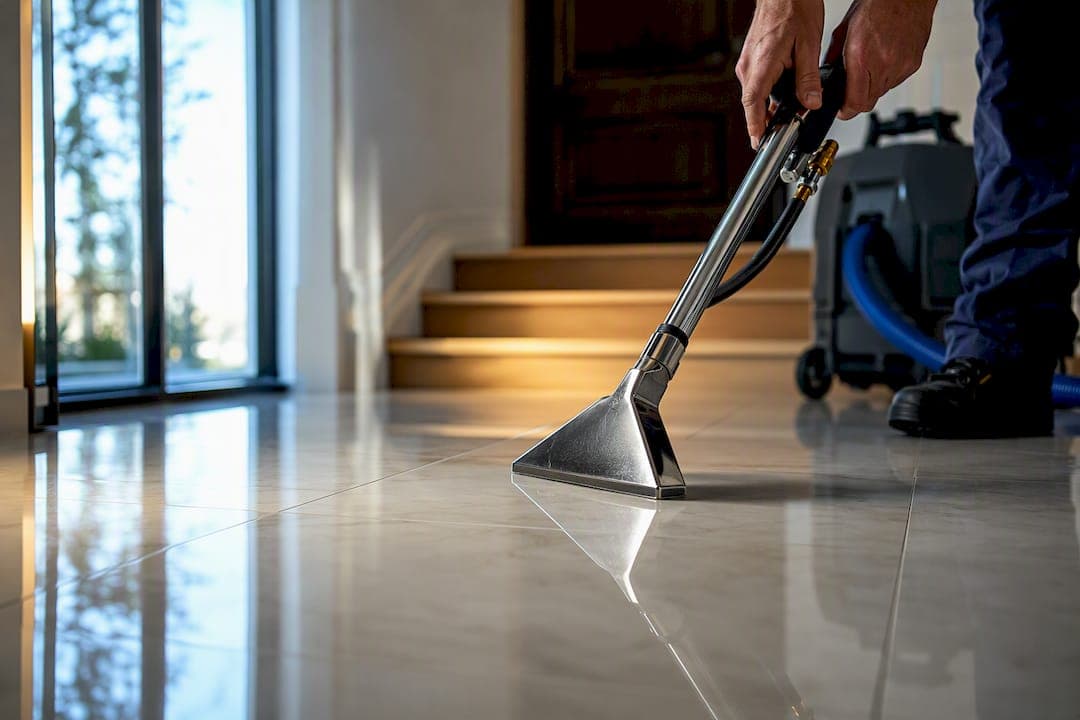
Sweep weekly and damp-mop monthly with a pH-neutral cleaner, and most ceramic floors stay in good shape without much fuss. Stains and dirty grout need targeted treatment: baking-soda paste or a hydrogen-peroxide cleaner, scrubbed with a nylon brush, never a metal one. When grout is crumbling, stained beyond DIY reach, or hasn't been sealed in years, that's your cue to book a professional deep clean and reseal rather than keep fighting it yourself.
TL;DR:
- Regular sweeping or dust-mopping prevents grit from scratching glazed surfaces and should be done weekly, especially in high-traffic areas.
- Damp-mopping with a pH-neutral cleaner monthly keeps floors clean without dulling the glaze or damaging grout.
- Use baking soda and nylon brushes for general grout cleaning, hydrogen peroxide for organic stains, and avoid harsh acids or wire brushes that can scratch tiles.
- Sealing grout periodically is essential to prevent staining and usually needs reapplication every few years in high-traffic zones.
- Professional deep cleaning is recommended when stains or grout deterioration persist despite routine maintenance.
Table of Contents
- What is the best way to clean ceramic tile floors weekly and monthly?
- How do you deep clean grout and remove tough stains?
- Which tools and cleaners work best for ceramic tile, and which to avoid
- How can sealing and simple habits cut down future cleaning work?
- What does professional tile and grout cleaning actually involve?
- What matters most in ceramic tile care, and what's overrated
- Ready for a professional tile and grout clean?
- Where to check manufacturer-specific cleaning instructions
- Sources
What is the best way to clean ceramic tile floors weekly and monthly?
A simple, repeatable schedule beats any single miracle product. Ceramic tile picks up grit constantly, and grit is what actually scratches a glazed surface over time, not the mopping itself. Regular sweeping or dust-mopping prevents that grit from grinding into the finish, which is why tile maintenance guides put it at the top of every list.
Here's a routine that holds up in a real household:
- Every week: sweep or vacuum the floor (use the hard-floor setting, not the beater bar), wipe up spills immediately, and check high-traffic zones like the entryway and kitchen sink area for grime buildup.
- Every month: damp-mop with warm water and a pH-neutral cleaner, rinsing your mop head often so you're not just dragging dirty water around. Buff dry with a clean microfibre cloth or towel to avoid water spots and streaking.
- Adjust by room and season: kitchens and entryways need the weekly step more like twice a week, while a bedroom floor can often stretch to biweekly sweeping. In winter, add an extra sweep after snowy or salted days. Road salt tracked in on boots is abrasive and can dull grout colour over months of exposure.
Pro Tip: Keep a soft-bristle broom or dust mop right by the door you use most. If sweeping takes ten seconds because the tool is already in reach, you'll actually do it every week instead of every month.
A quick printable checklist: sweep (weekly), spot-wipe spills (as needed), damp-mop (monthly), rinse and dry mop head after each use, and do a walk-through of grout lines every few months to catch discolouration before it sets in.
How do you deep clean grout and remove tough stains?
Before touching anything stronger than your weekly routine, open a window or turn on the fan, and always spot test a hidden corner first, especially with coloured or unsealed grout. Cover nearby baseboards or wood trim if you're using a wet product, since splashes can leave their own stains.
For grout that's genuinely dirty rather than just dusty, the method depends on what's causing the problem:
- General grime and light staining: make a paste from baking soda and water, work it into the grout lines with a nylon scrub brush, let it sit 10 to 15 minutes, then scrub and rinse.
- Organic stains (coffee, wine, mould shadows): hydrogen peroxide poured directly onto the stain, left to fizz for a few minutes, works well and is gentler on grout colour than chlorine bleach.
- Heavy oil or grease (common near stoves): a commercial grout cleaner formulated for grease cuts through what baking soda alone won't touch.
- Mould and mildew: hydrogen peroxide or a tile-safe mildew cleaner is the safer call. Skip bleach on coloured grout altogether, since it can strip pigment unevenly and leave patchy light spots.
- Mineral deposits and hard-water haze: a manufacturer-approved acidic cleaner, used sparingly and rinsed thoroughly, dissolves the buildup. This is one case where acidic cleaners solve a problem gentler options can't, but overuse etches grout and stone over time.
One detail homeowners consistently miss: manufacturer care instructions specifically warn against wire brushes and harsh acids, because they scratch glazed ceramic and can discolour grout permanently. That scratch pattern isn't cosmetic only, either. Once a glaze is compromised, dirt embeds in the micro-scratches and every future cleaning gets harder.
If you've tried baking soda, peroxide, and a proper acidic cleaner and the grout still looks tired, cracked, or is pulling away from the tile edges, DIY has run its course. That's a regrout-or-restoration job, not a stronger-chemical job.
Which tools and cleaners work best for ceramic tile, and which to avoid
Your tool choice matters almost as much as your cleaner choice, and the two mistakes compound each other: a metal brush plus a harsh acid is the fastest way to ruin a glazed floor.
Tools worth keeping around:
- A soft-bristle broom or dust mop for daily and weekly sweeping.
- A microfibre or chamois mop for damp-mopping, since it lifts dirt instead of just pushing it around.
- A nylon scrub brush for grout lines, small enough to get into corners without gouging the surface.
- A steam mop can work for surface sanitizing, but check the manufacturer's compatibility guidance first, since not every grout and sealant combination handles sustained heat and moisture well.
Cleaners, sorted by job:
- pH-neutral cleaners for routine mopping. They clean without slowly etching grout or dulling glaze over dozens of applications.
- Alkaline cleaners for cutting grease, particularly in kitchens.
- Acidic cleaners for mineral scale and hard-water haze, used occasionally and rinsed completely.
- Oxygen bleach or hydrogen peroxide for grout stains specifically.
What to leave on the shelf: metal or wire brushes, ammonia-based products on grout, muriatic acid on glazed tile, and any "no-rinse" cleaner. That last one sounds convenient, but the residue it leaves behind can make tile noticeably more slippery underfoot over time.
A diluted dish soap and warm water works fine for light everyday cleaning when you don't want to think about categories at all.
How can sealing and simple habits cut down future cleaning work?
Sealing grout is a key preventive move most homeowners often skip, as explained in this tenant safety water hygiene checklist for landlords. Cement-based grout is porous and typically needs periodic sealing depending on foot traffic; epoxy grout tends to resist stains more and requires sealing less frequently.
- Place doormats at every exterior entry, and build a light "shoes off" habit to cut down the grit and winter salt tracked onto tile.
- Resealing grout in high-traffic zones like entryways and kitchens is generally recommended every few years, with lower-traffic rooms requiring less frequent resealing.
- Watch for grout that's gone dull or is absorbing water quickly. That's your sign resealing is overdue, not optional.
What does professional tile and grout cleaning actually involve?
Professional cleaning relies on commercial extraction equipment paired with stronger, but still safe, cleaning agents to pull dirt out of porous grout that a mop simply can't reach. That combination of mechanical agitation and real extraction is what restoration specialists point to as the gap between DIY and professional results on heavily trafficked floors.
Call a pro when you're seeing persistent staining that survives repeated attempts, mould spreading across multiple grout lines, grout that's crumbling or cracking, or you simply don't have the time or tools to do it properly.
Pro Tip: A legitimate quote should include an inspection first. If a company prices your job over the phone without seeing your floor, get a second opinion before booking.
Expect an inspection, a clear quote before work starts, cleaning products chosen for your specific tile and grout type, and follow-up advice on how to maintain the results.

What matters most in ceramic tile care, and what's overrated
Most advice on cleaning ceramic tile obsesses over the wrong variable. People search for the perfect cleaner when the real damage comes from the wrong tool, applied consistently over years. A metal brush used twice a year does more harm than a mediocre cleaner used every week, because scratches are permanent and residue isn't.
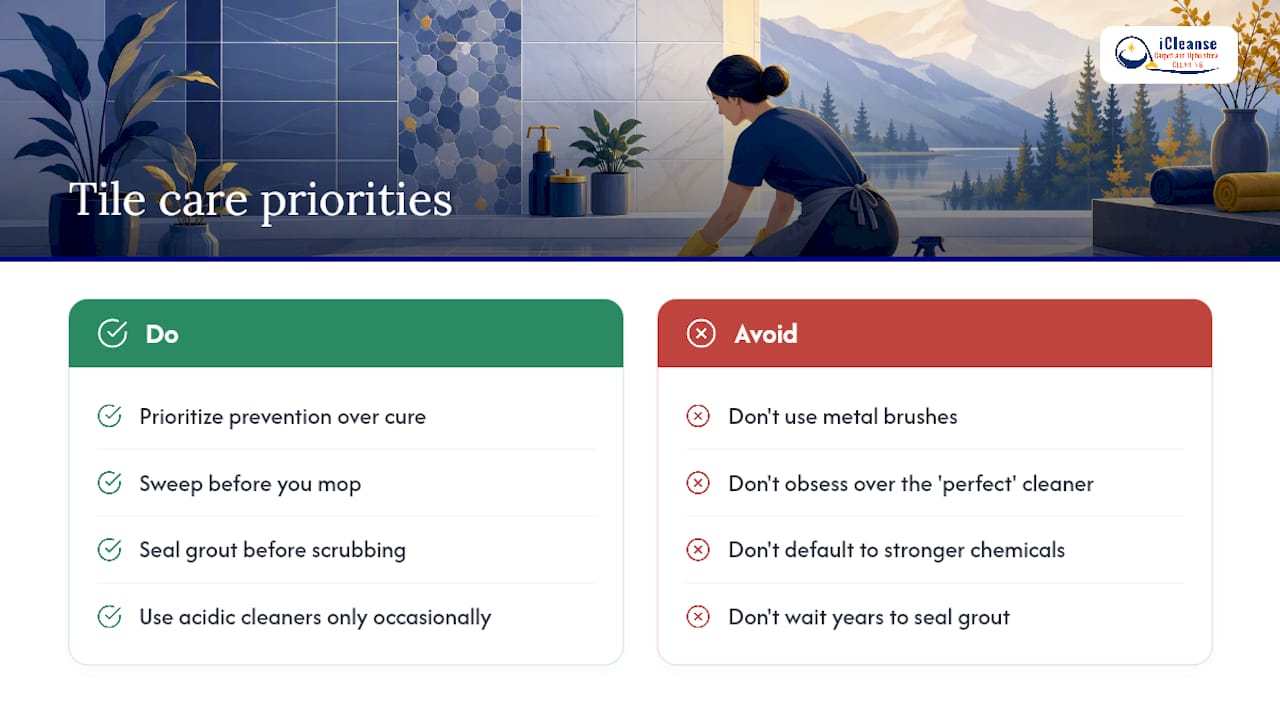
The conventional wisdom also underrates sealing. Homeowners will spend real money on premium cleaners while letting grout go unsealed for five years, which guarantees every stain sinks in deeper and stays longer. Sealing is cheap insurance against exactly the stains this article spends the most space explaining how to remove.
If you take one thing from this: prioritize prevention over cure. Sweep before you mop, seal before you scrub, and treat acidic cleaners as an occasional tool, not a default. DIY handles most routine grime just fine. The moment grout is cracking or staining keeps winning despite your best effort, that's not a signal to try a stronger chemical. It's a signal the floor needs more than a bottle can give it.
— Rob
Ready for a professional tile and grout clean?
DIY covers weekly sweeping and monthly mopping well, but grout that's been neglected for years, or stained deep enough that baking soda and peroxide aren't cutting it, usually needs equipment a household mop can't match. Icleanse offers tile and grout cleaning built around commercial extraction and cleaning agents matched to your specific tile type, plus a cleaning and reseal package for floors where the grout itself needs protecting, not just cleaning.

If your grout still looks decent and you're just keeping up with routine dirt, stick with the schedule above and save the money. But if stains keep coming back, grout is visibly worn, or you're getting ready to move and want the floors looking their best, request a quote and get an inspection before you spend another weekend scrubbing on your knees.
Where to check manufacturer-specific cleaning instructions
Every tile and grout combination has its own limits, so treat this article as the general framework and confirm specifics before using a new product. Daltile's care guidance covers what damages glazed surfaces. Carpet One's tile care page lays out routine maintenance basics, and your tile's original manufacturer warranty documentation should always take priority over any general advice, this article included.
Sources
- How to care for and maintain ceramic and porcelain tile | Daltile
- Tile floor care: How to clean tile flooring | Carpet One
- How to clean tile floors and grout | Bissell Canada
- Tile maintenance | Tile Solutions