
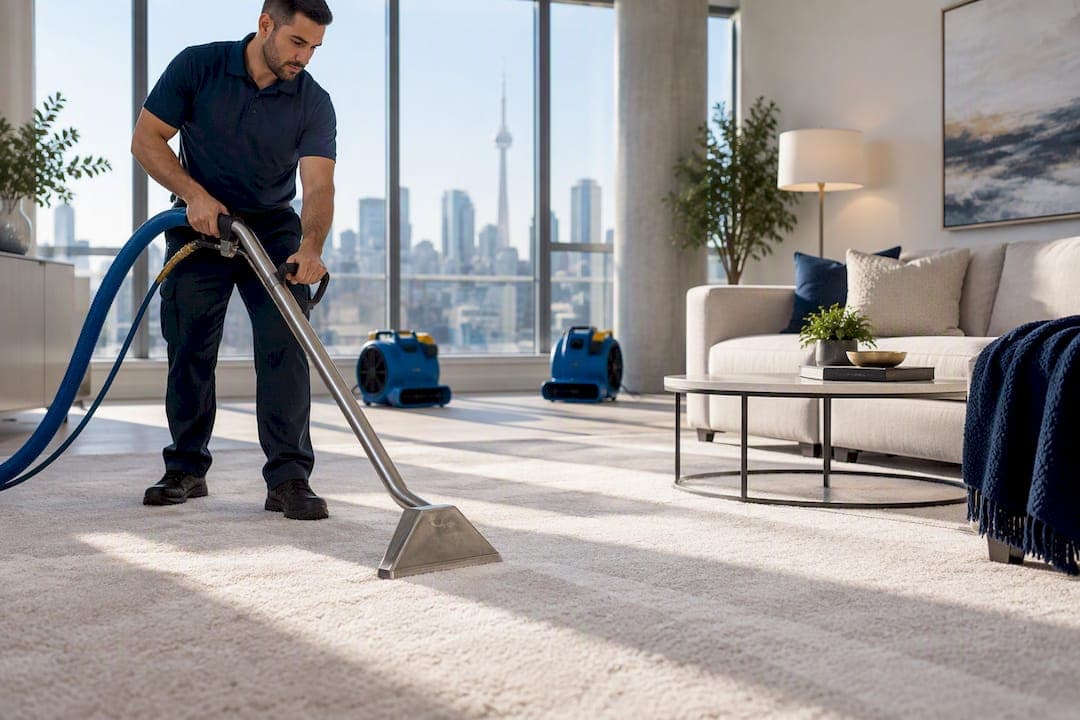
Hot water extraction (HWE) is the professional deep-clean method that flushes soil and allergens from carpet fibres by injecting hot water and immediately vacuuming it away. It's the method most carpet manufacturers point to when they talk about protecting a warranty, and it's what most people mean when they say "steam cleaning," even though true steam plays a minor role in the process. For most homes and offices, it's the right call for a true deep clean rather than a surface refresh.
TL;DR:
- Professional hot water extraction uses higher temperatures and stronger vacuum recovery than rental machines, resulting in faster drying times of 1.5 to 4 hours.
- The method effectively removes deep-seated soil, pet urine, and allergens, which low-moisture steam cleaning cannot reach.
- Regular scheduling every 12 to 24 months is recommended for most homes, or more frequently if pets, children, or heavy traffic are present.
- Proper extraction prevents moisture trapping, mold growth, and odor development, especially after water damage or major spills.
- Documented service records from professionals protect warranty claims and ensure the cleaning meets manufacturer guidelines.
Table of Contents
- What is hot water extraction and how does it work?
- Hot water extraction vs steam cleaning: what's actually different
- The real benefits of hot water extraction
- How often should you schedule hot water extraction?
- What to expect on the day: timeline, drying, and equipment
- Risks and common mistakes with hot water extraction
- Practitioner notes from iCleanseCUC
- Why the "just rent a machine" advice misses the point
- Book a professional hot water extraction visit
- Sources
- FAQ
What is hot water extraction and how does it work?
A typical hot water extraction carpet job follows a set sequence, and skipping any step is usually where results fall short.
- Pre-inspection and dry vacuuming to remove loose soil and check for existing stains, wear, or padding damage.
- Pre-spray application that breaks down oils, grease, and protein-based stains before the rinse.
- Hot water injection under pressure, pushing heated water deep into the pile and backing.
- Agitation, usually with a groomer or brush, to work the solution through the fibres.
- Simultaneous vacuum extraction, pulling the dirty water back out almost as fast as it goes in.
- Optional neutral rinse and grooming to reset the pH and lift the pile for even drying.
Professional truck-mounted machines typically run hot water at 65 to 82°C with far stronger pressure and vacuum recovery than a rental unit from a grocery store. That gap matters more than most people realize: weak vacuum recovery leaves water sitting in the pad, which is exactly how carpets end up smelling musty three days after a "clean." A proper rinse pass also matters because it clears the pre-spray residue that would otherwise attract new dirt within weeks.
Hot water extraction vs steam cleaning: what's actually different
The word "steam" gets used loosely, and it causes real confusion at the point of booking. True steam cleaning uses low-moisture vapour that sits mostly on the surface, while hot water extraction pushes pressurized water deep into the fibres and pulls it back out with a vacuum. The visible mist from an HWE machine is a byproduct of the heat, not the working mechanism, which is why most companies market the service as "steam cleaning" even though extraction is doing the actual work.
- Moisture level: HWE uses far more water, but nearly all of it comes back out in extraction.
- Drying time: steam-only methods dry quickly since so little moisture goes in; HWE needs a proper drying window.
- Effectiveness on pet urine and deep soil: HWE rinses and removes urine crystals and bacteria trapped in the padding, while low-moisture vapour can't reach that layer.
- Encapsulation or bonnet cleaning: fine as light maintenance between deep cleans, but not a substitute for extraction when soil has built up.
If a carpet just needs a quick refresh between deep cleans, encapsulation is a reasonable stopgap. If there's a pet accident, years of foot traffic, or a persistent smell, extraction is the method that actually solves it.
The real benefits of hot water extraction
The appeal of hot water extraction carpet cleaning comes down to three things: health, appearance, and warranty compliance.
- Extraction pulls out a large share of the dust mites, pollen, and bacteria embedded in the pile, which matters for anyone dealing with allergies or asthma in the home.
- Because the solution gets rinsed and extracted rather than left to dry on the fibres, carpets don't develop the sticky residue that shampooing or bonnet cleaning tends to leave behind, and that residue is exactly what attracts new dirt faster.
- Many carpet manufacturers require or strongly recommend periodic professional hot water extraction to keep a warranty valid, since leftover detergent residue accelerates the wear that voids coverage.
Pro Tip: Check your carpet's warranty booklet for the exact wording. Some manufacturers specify "hot water extraction" by name and will deny a claim if you can only show receipts for shampooing or a rental machine.
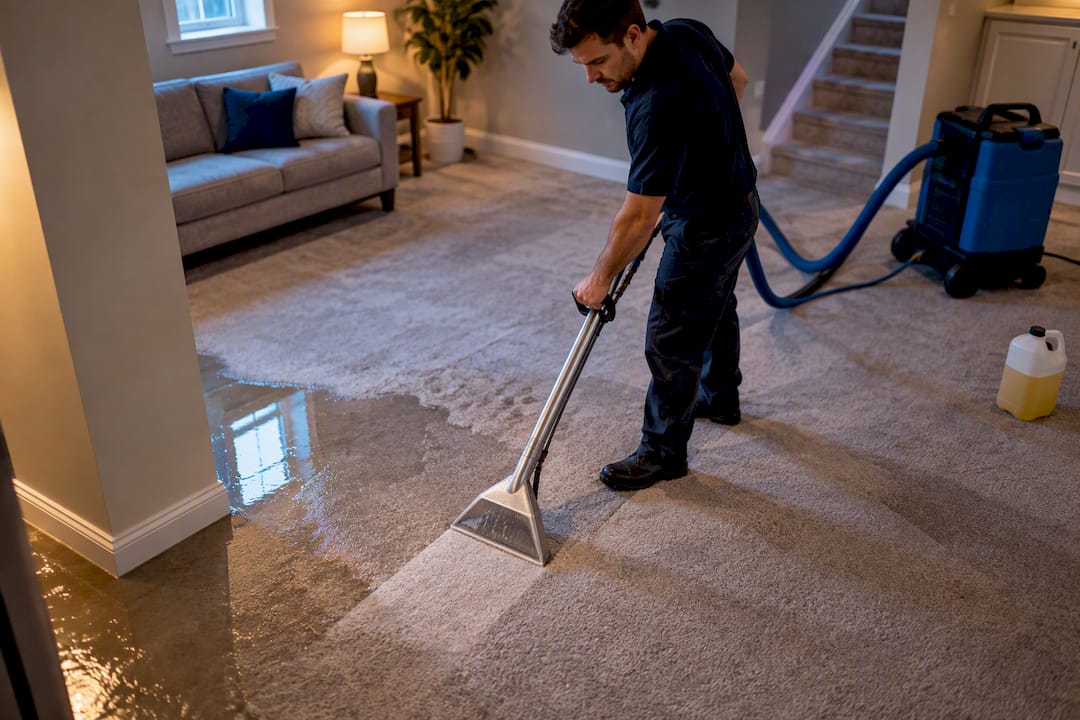
Water damage restoration is where extraction earns its reputation the fastest. After a flood or major leak, HWE combined with rapid extraction and antimicrobial treatment is the most effective way to pull contaminated water out of carpet and reduce mould risk, a job that a wet vacuum or rental steamer simply isn't built to handle.
How often should you schedule hot water extraction?
Most manufacturers and cleaning professionals point to a baseline, with clear triggers that move the timeline up.
- Every 12 to 24 months for typical household traffic with no pets or young children.
- Annually, or more often, if you have pets, kids, or heavy foot traffic through main hallways and living rooms.
- Immediately after a pet accident, a persistent odour, or any water damage, rather than waiting for the next scheduled visit.
- Right after move-in or move-out, since previous residents' soil and allergens sit deep in the pad.
Keep the invoice or service report from every visit. If a warranty claim ever comes up, that paperwork is the proof that you followed the manufacturer's maintenance schedule.
What to expect on the day: timeline, drying, and equipment
A typical residential job runs a predictable arc: the technician inspects the carpet, moves light furniture, pre-vacuums, applies pre-spray, then runs the extraction pass room by room. Expect the crew to ask you to clear breakables and small items beforehand, since moving furniture around wet carpet is where most accidental scuffs happen.
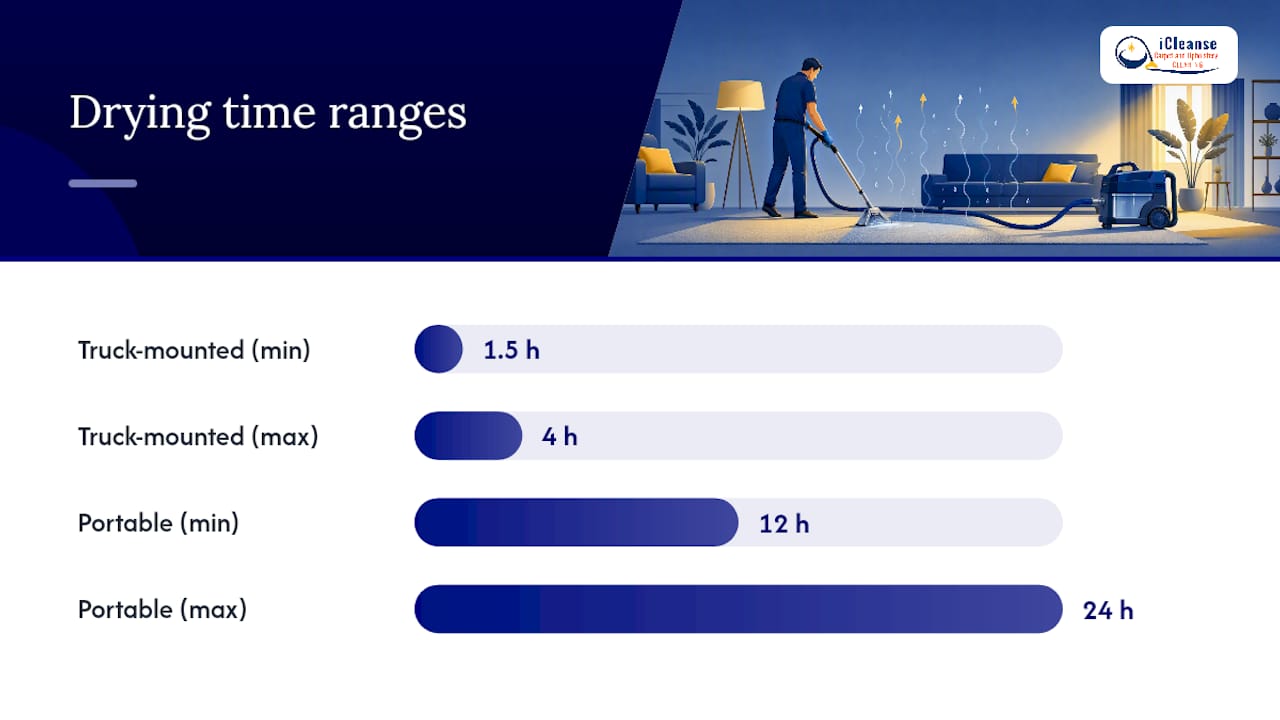
Drying time is where truck-mounted and portable equipment really separate. Truck-mounted systems, which draw more power and stronger vacuum lift, typically dry carpet in 1.5 to 4 hours, while portable units, limited by weaker suction and lower water temperature, often leave carpets damp for 12 to 24 hours. Ventilation, room humidity, and how dense the pile is all shift those numbers in either direction.
- Open windows or run fans and air conditioning to speed up airflow across the carpet.
- Avoid heavy foot traffic and don't put furniture back until the carpet is fully dry to the touch.
- Ask your technician which system they're running. It's a fair question, and a fair answer.
Pro Tip: If a low bid comes with a portable machine and same-day furniture placement, be skeptical. Carpet that's still damp underneath when furniture goes back on it is a common cause of rust rings and lingering odour.
Risks and common mistakes with hot water extraction
Extraction is a reliable method, but it's not foolproof, and most complaints trace back to a handful of avoidable mistakes.
- Over-wetting from insufficient extraction leaves moisture trapped in the pad, which invites mould and that musty smell days later.
- Wrong pre-spray chemistry for the carpet fibre type can cause discolouration, especially on wool or older synthetic blends.
- Rushed extraction passes, where the technician moves too fast to pull enough water back out, are the single biggest cause of a "clean carpet that smells bad."
To confirm a job was done right, ask the technician to check with a moisture meter before they leave, and request written notes on the products and equipment used. That documentation is also what you'll want on file if a warranty question ever comes up. For stubborn pet odours or old set-in stains, a repeat extraction pass with an enzyme-based pre-spray usually resolves what a single pass misses, and a quick look under the pad confirms whether the smell is coming from the carpet itself or from below it.
Practitioner notes from iCleanseCUC
iCleanseCUC provides professional carpet cleaning, upholstery cleaning, ceramic tile and grout cleaning, and move-out cleaning services across the Greater Toronto Area, using commercial-grade equipment and eco-friendly cleaning solutions rather than the lower-powered rental units available to homeowners.
- The team focuses on removing deep-set dirt, stubborn stains, odours, and allergens rather than just refreshing the surface appearance of a carpet.
- Truck-mounted carpet cleaning at iCleanseCUC typically dries within 1.5 to 4 hours, which reflects the stronger heat and vacuum recovery that truck-mounted systems generally deliver over portable machines.
- Jobs are documented so homeowners and property managers have a record to reference for warranty requirements.
That combination of equipment and documentation is what separates a professional extraction job from a weekend rental.
Why the "just rent a machine" advice misses the point
The conventional advice you'll see everywhere is some version of "rent a machine, it's cheaper." That's true on price, and false on outcome. A rental unit runs cooler water at lower pressure with weaker vacuum recovery, which means more moisture stays in the pad and drying stretches toward a full day or more. That extra dwell time is exactly the window where mould and odour take hold, so the "budget" clean can end up costing more once you factor in a callback or a ruined pad.
What gets underrated is documentation. Homeowners fixate on price per room, but the paperwork from a professional visit is what protects a manufacturer warranty claim down the line, and a DIY receipt for a rented machine rarely satisfies that requirement. If there's one thing to prioritize, it's asking the crew what temperature and vacuum lift their equipment runs, and getting a written service note before they leave. That single habit does more for long-term carpet health than any pre-spray or air freshener trick.
— Rob
Book a professional hot water extraction visit
This cleaning service uses commercial-grade, truck-mounted equipment that operates at higher temperature and vacuum recovery than portable machines, with drying typically wrapping up in 1.5 to 4 hours instead of a full day.
Booking is straightforward. Pricing for residential jobs is listed by room on our residential cleaning page, covering everything from a Living Room or Master Bedroom at $70 to a Regular Room or Set of Stairs at $60, with smaller spaces like a Closet at $10. Commercial spaces are priced by square footage through our commercial cleaning services. Every job comes with a written service record, useful if you ever need to show proof of professional maintenance for a manufacturer warranty. If you've got area rugs that need separate attention, from wool and Persian pieces to synthetic rugs, those are handled through our area rug cleaning options at their own per-square-foot rates.
Ready to get a room, a hallway, or a whole main floor booked? Request a quote and a technician will confirm scheduling and equipment details before the visit.
Sources
FAQ
Is hot water extraction good for carpet?
Yes. It's the method most carpet manufacturers point to for maintaining fibre condition and protecting a warranty, since it removes residue and embedded allergens that shampooing or bonnet cleaning often leaves behind. It's suitable for most synthetic and many natural fibre carpets when a professional uses the correct pre-spray for that fibre type.
What is the best hot water extraction carpet cleaner?
There's no single "best" machine since results depend more on temperature, pressure, and vacuum recovery than brand name. Truck-mounted systems generally outperform portable units on all three, which is why professional appointments dry faster and clean deeper than rental machines.
What's the best way to extract water from carpet?
A truck-mounted extraction system pulls water back out fastest, since it combines stronger vacuum lift with higher water temperature during the same pass that applies the cleaning solution. Portable units can do the job but leave more residual moisture in the pad, extending drying time significantly.
How long does water extraction from carpet take?
Truck-mounted equipment typically dries carpet in 1.5 to 4 hours, depending on ventilation, humidity, and pile density. Portable machines often take 12 to 24 hours because of weaker suction and lower vacuum recovery.