
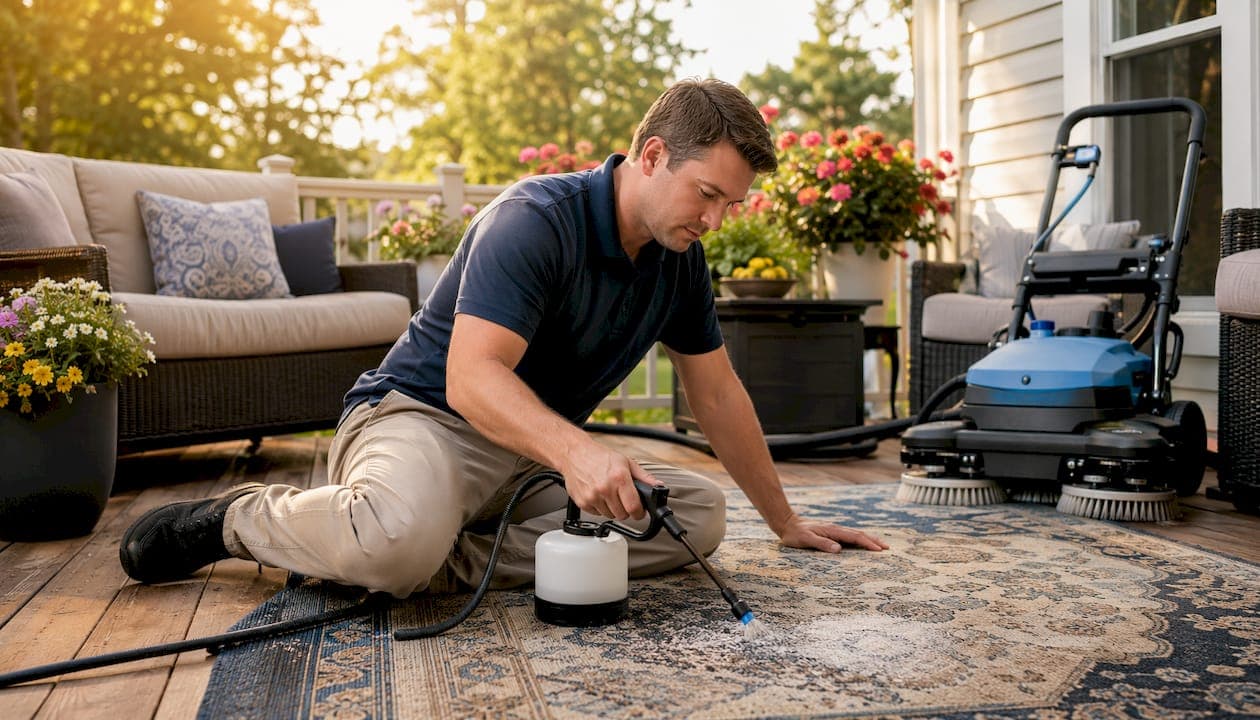
Dry carpet cleaning uses little to no water to lift surface soil from carpet fibres, leaving the carpet walkable quickly. That single fact is why it is the go-to choice for busy households, rental units, and commercial spaces where a long drying window simply is not practical. The three main approaches are encapsulation, dry compound, and dry foam, each removing soil through different chemistry rather than water volume. Bonnet and solvent-based systems round out the category.
Choose dry or very low moisture (VLM) cleaning when:
- You need the carpet usable within an hour or two
- The carpet is glued down or moisture-sensitive
- You are doing routine maintenance between deep cleans
- Downtime in a commercial or rental space must be minimal
Choose hot water extraction (HWE) instead when:
- The carpet has heavy soiling, set-in stains, or strong odours
- You need allergen or bacteria removal (restorative deep clean)
- The carpet has not been professionally cleaned in over a year
- Pet urine or uric acid crystals are present near the backing
Table of Contents
- What are the main dry carpet cleaning methods?
- What happens during a professional dry carpet clean?
- What are the real benefits and limitations of dry cleaning?
- When should you choose dry cleaning over steam cleaning?
- Which carpet fibres and stains suit dry methods?
- What does the research say about VLM cleaning in Canada?
- Key takeaways
- What the field actually teaches you about dry cleaning
- Professional dry and VLM carpet cleaning in the Greater Toronto Area
- Useful sources and further reading
What are the main dry carpet cleaning methods?
The term "dry carpet cleaning" covers several distinct techniques. Knowing the difference matters because each one performs differently depending on soil type, fibre, and how much time you have.
Encapsulation (VLM) is the most widely used professional method. A liquid polymer solution is applied to the carpet, surrounds soil particles as it dries, and crystallises into a brittle shell. Those crystals release from the fibre and are vacuumed away. Because the solution uses very little water, encapsulation dries in under 90 minutes, making it a strong fit for glued-down commercial carpet where saturating the backing risks adhesive failure. The crystals are designed not to re-release soil into the pile, which keeps carpets cleaner between visits.
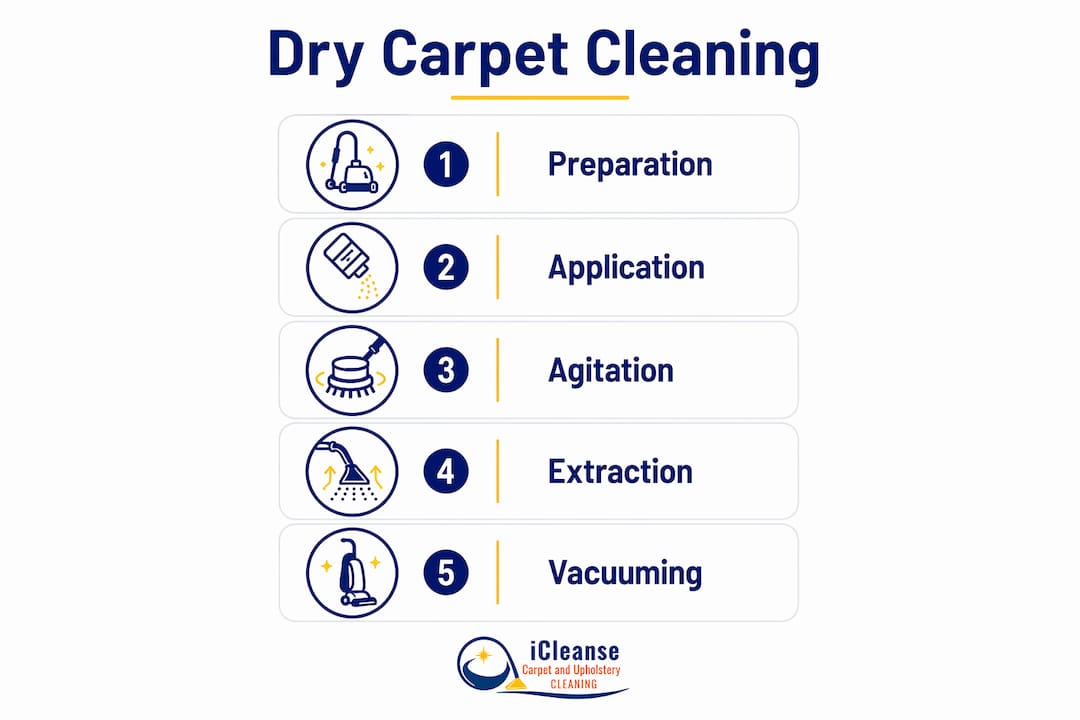
Dry compound uses absorbent granules, often a mixture of biodegradable material and cleaning agents, worked into the carpet with a brush machine. The granules absorb soil and are then vacuumed out. The carpet is immediately walkable after vacuuming, which is about as fast as it gets. The trade-off is that compound works primarily on surface and near-surface grit; it does not penetrate deep into the pile the way a liquid system can.
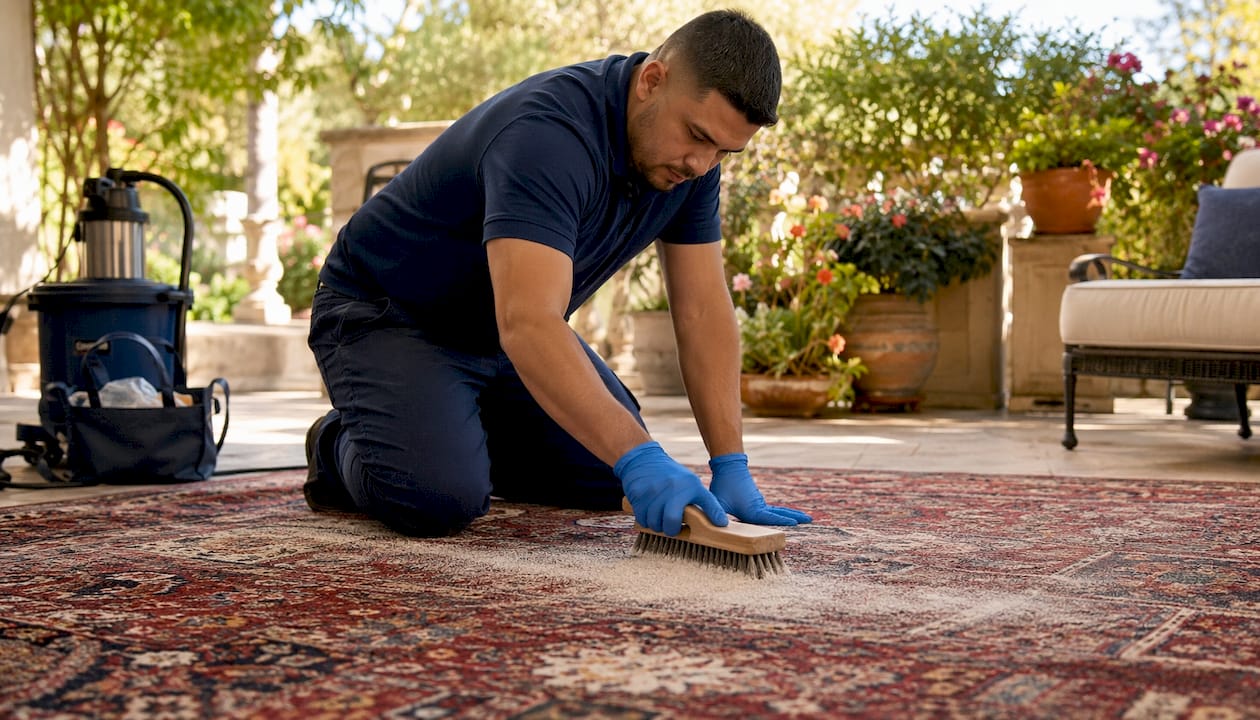
Dry foam sits between the two. A shampoo solution is whipped into foam with very low water content, worked into the carpet, and then extracted. Drying is faster than HWE but slower than true dry compound, typically 30–90 minutes. Re-soiling can be a concern if foam residue is not fully extracted.
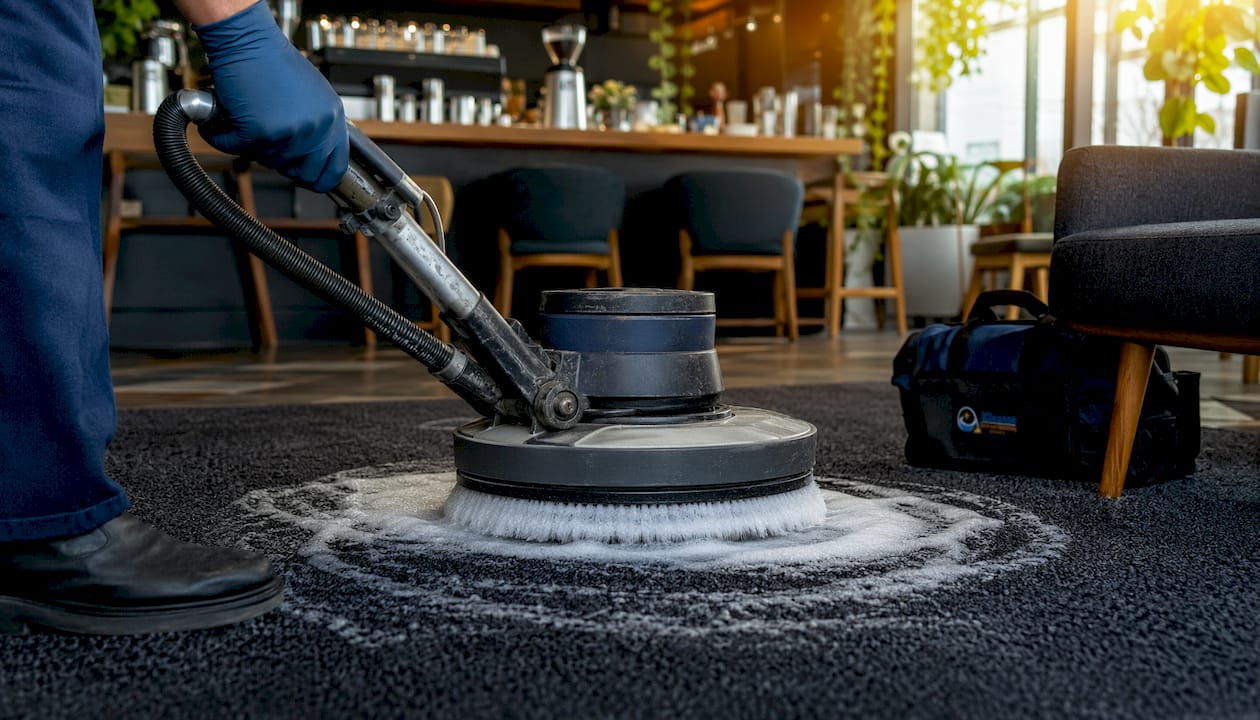
Bonnet cleaning uses a rotating pad soaked in a cleaning solution to buff the carpet surface. It is fast and inexpensive, but it displaces rather than removes soil, pushing contaminants deeper into the pile. Most cleaning professionals consider it a cosmetic fix rather than a genuine clean.
Solvent-based spot systems target specific stains using chemical solvents rather than water. They are useful for grease and oil-based spots but are not a whole-carpet solution.
Pro Tip: When comparing methods, ask whether the technician uses a counter-rotating brush (CRB) machine for encapsulation. A CRB agitates fibres from multiple directions, distributing the encapsulant evenly and lifting more soil than a bonnet pad, which can simply smear it.
What happens during a professional dry carpet clean?
A professional dry or VLM clean follows a consistent workflow. Here is what to expect from start to finish.
- Inspection and fibre testing. The technician checks fibre type, existing stains, and any areas of concern. Wool and natural fibres get extra scrutiny because they react differently to cleaning chemistry.
- Pre-vacuum. A thorough vacuuming removes loose grit and debris before any product is applied. Skipping this step traps dry soil under the cleaning agent, reducing results significantly.
- Pre-treatment of stains. Spot stains receive a targeted pre-treatment product matched to the stain type. This dwell time loosens the bond between the stain and the fibre before the main clean begins.
- Application of the dry or VLM product. The chosen agent, encapsulant, dry compound, or dry foam, is applied evenly across the carpet.
- Agitation. A machine works the product into the pile. For encapsulation, a CRB machine is the professional standard. For dry compound, a cylindrical brush machine is common. Bonnet pads are used for surface buffing only.
- Dwell and dry. The product sits for the manufacturer-specified dwell time, typically 10–20 minutes, allowing the chemistry to work.
- Final vacuum and grooming. Once dry, a thorough vacuum removes the crystallised encapsulant or spent compound along with the trapped soil. A grooming rake or brush realigns the pile.
The full process for an average-sized room typically takes 45–90 minutes on-site, not counting drying time.
Pro Tip: When booking, ask whether the company is IICRC-certified and what machine they use for encapsulation. A technician who cannot answer that question may be using a bonnet pad and calling it encapsulation, which is a meaningful difference in result.
What are the real benefits and limitations of dry cleaning?
The speed advantage is genuine. Dry and VLM methods dry quickly compared with hot water extraction, which requires a much longer drying period. For a family with young children or pets, or a landlord turning over a rental unit, that difference is not abstract.
Lower water use is the other major benefit. VLM cleaning uses significantly less water than traditional HWE, which matters both for the environment and for the carpet itself. Glued-down broadloom and carpet tiles are particularly vulnerable to moisture; over-wetting can cause backing delamination, adhesive failure, and mould growth beneath the surface. Dry methods sidestep that risk almost entirely.
Regular interim dry cleaning also extends carpet life. Abrasive grit left in the pile cuts fibre over time, so frequent cleaning prevents premature carpet replacement by removing that grit before it causes permanent damage.
The limitations are equally real. Dry methods clean the upper portion of the pile. They do not reliably extract deep-seated contaminants, abrasive grit lodged at the backing level, or uric acid crystals from pet urine. Heavy oil-based stains and persistent odours are also beyond what encapsulation or dry compound can address.
Dry carpet cleaning is best understood as a maintenance tool, not a restorative one. It keeps a clean carpet clean. It cannot make a dirty carpet truly clean again. For that, hot water extraction is the right call.
A common homeowner mistake is using dry methods to treat a heavy pet urine problem. The encapsulant may mask the odour temporarily, but the urine salts embedded near the backing remain. The smell returns, often worse, once humidity rises. That is a job for HWE with an enzyme pre-treatment, not a dry compound.
When should you choose dry cleaning over steam cleaning?
The decision comes down to the carpet's condition and your timeline.
Use dry or VLM methods for:
- Routine maintenance cleans every three to six months
- High-traffic commercial areas, hallways, and office spaces where downtime is costly
- Glued-down carpet tiles or broadloom where moisture risks adhesive failure
- Situations where the carpet must be usable within a couple of hours
Use hot water extraction for:
- Restorative deep cleans once or twice a year
- Heavy soiling, embedded grit, or stains that dry methods have not shifted
- Allergen and bacteria removal (HWE reaches deeper into the pile)
- Any carpet with pet urine, mould, or significant odour
Timeline comparison: Dry and VLM methods leave carpets walkable in 30–90 minutes and fully dry within a few hours. HWE typically requires six to 24 hours before the carpet is fully dry, depending on airflow, humidity, and pile depth.
Cost signals for Canadian homeowners: Pricing varies by square footage, stain complexity, and access. As a general range, professional dry or VLM cleaning for a typical home room runs less than a full HWE service, reflecting the shorter on-site time and lower equipment overhead. Factors that push the price up include heavy pre-treatment needs, multiple rooms, and difficult access. Always get a written quote that specifies the method being used.
Statistic callout: Dry and VLM carpet cleaning methods dry much faster than hot water extraction, a difference that directly affects how quickly a home or business is back to normal.
Which carpet fibres and stains suit dry methods?
Not every carpet is a good candidate for dry cleaning, and not every stain responds to it.
| Fibre | Dry/VLM suitability | Notes |
|---|---|---|
| Nylon | Excellent | Handles encapsulation and dry compound well; resilient to agitation |
| Polyester | Good | Responds well to VLM; avoid over-wetting regardless of method |
| Olefin (polypropylene) | Good | Moisture-resistant fibre; dry methods reduce re-soiling risk |
| Wool | Use with caution | Sensitive to alkaline chemistry and aggressive agitation; test first |
| Glued-down broadloom | Preferred | VLM/dry methods strongly preferred to avoid adhesive and backing damage |
| Carpet tiles | Preferred | Same moisture risk as glued-down; dry methods are the standard choice |
Stains dry methods can address reasonably well:
- Surface grit and general light soil
- Fresh food spills (caught quickly, before setting)
- Dust and dry particulate matter
Stains that typically require HWE:
- Set-in oil or grease
- Pet urine and uric acid crystals
- Heavy food stains that have dried and bonded to the fibre
- Mould or mildew at the backing level
Wool carpets deserve a specific note. Wool is protein-based and reacts badly to high-alkaline cleaners and rough mechanical agitation. If you have wool, confirm the technician is using a pH-neutral encapsulant and a gentle brush setting. For glued-down installations, the carpet cleaning methods guide at Icleansecuc covers how method selection changes by installation type.
What does the research say about VLM cleaning in Canada?
VLM cleaning is increasingly used across Canada precisely because it uses far less water than HWE, reducing drying time and lowering the risk of backing or adhesive damage. In a country where basements and ground-floor suites are common, over-wetting a carpet is a genuine mould risk, not a theoretical one.
The encapsulation mechanism is worth understanding. When the polymer solution is applied and agitated into the pile, it surrounds individual soil particles and begins to crystallise as the water in the solution evaporates. Once fully dry, those crystals are brittle and no longer bonded to the fibre. A thorough vacuum removes them along with the trapped soil. The key design feature is that the crystallised polymer does not re-release soil back into the carpet, which is why encapsulation-cleaned carpets tend to stay cleaner longer than carpets cleaned with older detergent-based methods that leave sticky residue.
Statistic callout: Encapsulation with controlled moisture dries quickly, making it the practical standard for commercial glued-down carpets where extended downtime is not an option.
The professional standard for encapsulation, as described by cleaning practitioners, is to apply the solution, agitate with a CRB machine, allow the dwell period, and then vacuum thoroughly once dry. That final vacuum is not optional. Incomplete vacuuming leaves crystallised residue in the pile, which can attract new soil and reduce the benefit of the clean.
Key takeaways
Dry carpet cleaning is the right maintenance tool for fast turnaround and moisture-sensitive installations, but it does not replace periodic hot water extraction for restorative deep cleaning.
| Point | Details |
|---|---|
| Drying time advantage | Dry and VLM methods dry quickly and allow walkability much faster than HWE. |
| Best use case | Use dry/VLM for routine maintenance, high-traffic areas, and glued-down or moisture-sensitive carpets. |
| When HWE is required | Heavy soiling, pet urine, persistent odours, and allergen removal need hot water extraction. |
| Machine matters | Encapsulation performed with a CRB machine outperforms bonnet-pad application; ask before booking. |
| Icleansecuc's approach | Icleansecuc offers both VLM/encapsulation and full HWE services across the Greater Toronto Area. |
Vacuum regularly between professional cleans and schedule a restorative HWE at least once a year to keep carpets genuinely clean at the fibre and backing level.
What the field actually teaches you about dry cleaning
The conventional framing of dry versus steam cleaning misses the point. The real question is never which method is universally better. It is which method the carpet needs right now.
What I see most often in the field is homeowners who have been using dry methods exclusively for years on a carpet that needed a restorative HWE two years ago. The carpet looks acceptable on the surface because encapsulation keeps the top of the pile presentable. But the backing is carrying years of abrasive grit, and in some cases, old pet urine that no dry method has touched. When we finally run hot water extraction on those carpets, the extraction water tells the story clearly.
The flip side is also true. Homeowners who insist on HWE for every clean, even routine maintenance visits, are adding unnecessary moisture to their carpets and floors. For a glued-down installation or a basement suite, that is a real risk over time.
The practical rule is straightforward: dry and VLM methods for maintenance, HWE for restoration. Use them in rotation, not in competition. A carpet cleaned with encapsulation every three to four months and given a thorough HWE once a year will outlast one that gets either method exclusively.
One thing worth asking any technician: what machine are you using for encapsulation? If the answer is a bonnet pad, that is not encapsulation in any meaningful sense. A CRB machine is the standard for a reason.
Professional dry and VLM carpet cleaning in the Greater Toronto Area
If you have read this far and you are still not sure which method your carpet needs, that is exactly the kind of question Icleansecuc is set up to answer.
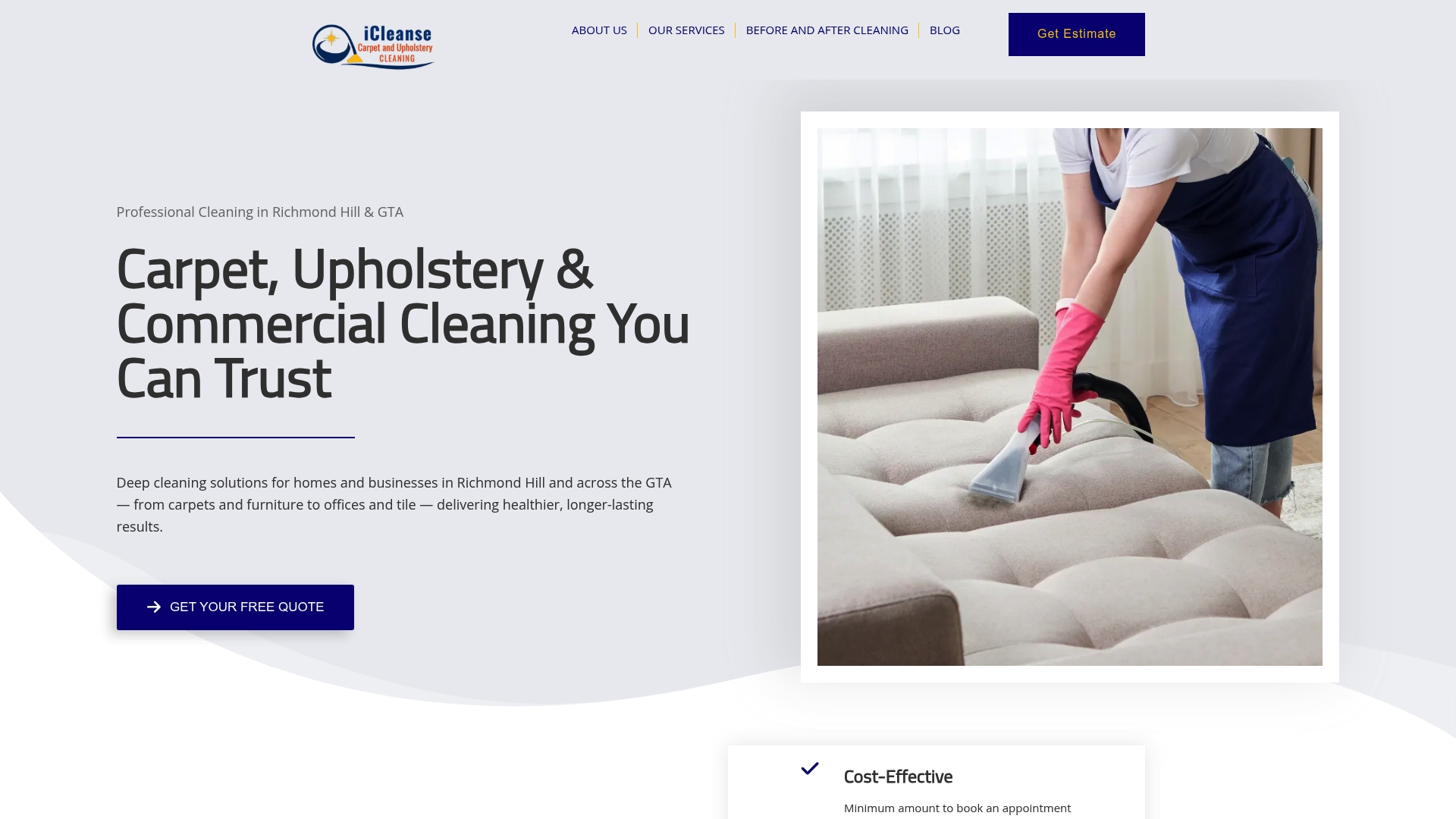
Icleansecuc provides VLM encapsulation, dry compound, and full hot water extraction services across the Greater Toronto Area, using professional-grade equipment and eco-friendly solutions. Whether your carpet needs a fast maintenance clean before a showing, a move-out deep clean, or a restorative HWE after years of heavy use, the team will inspect the carpet, identify the right method, and give you a transparent quote before any work begins. No guesswork about what method is being used or why.
Request a quote to get a same-day or next-day estimate, or browse the full services overview to see what each cleaning option covers.
Useful sources and further reading
- IICRC Carpet Cleaning Consumer Guide — The Institute of Inspection, Cleaning and Restoration Certification's consumer-facing guidance on carpet cleaning methods and standards. General industry reference, widely applicable in Canada.
- What is VLM Carpet Cleaning? – Neat Freak Cleaning — Canada-focused explanation of very low moisture cleaning, water use, and drying time benefits.
- Ultra Low Moisture Carpet Cleaning – KW Cleaning — Canadian source covering encapsulation for glued-down commercial carpets, including drying time data.
- How to Dry Clean Carpet at Home – BeMiteyClean — Practical guide covering dry compound, encapsulation, and dry foam with drying time comparisons.
- Dry Carpet Cleaning vs. Steam Cleaning – HGTV — Consumer-facing comparison of dry methods and HWE, covering maintenance versus restorative use cases.
- The Process and Benefits of Low Moisture Carpet Cleaning – Monarch Cleaning Solutions — Step-by-step encapsulation workflow as used by professional cleaning services.
- Dry Carpet Cleaning – Wikipedia — General reference covering the history and classification of dry carpet cleaning methods.
- CRI Seal of Approval Program — The Carpet and Rug Institute's testing programme for cleaning products and equipment; a useful benchmark when evaluating professional services.