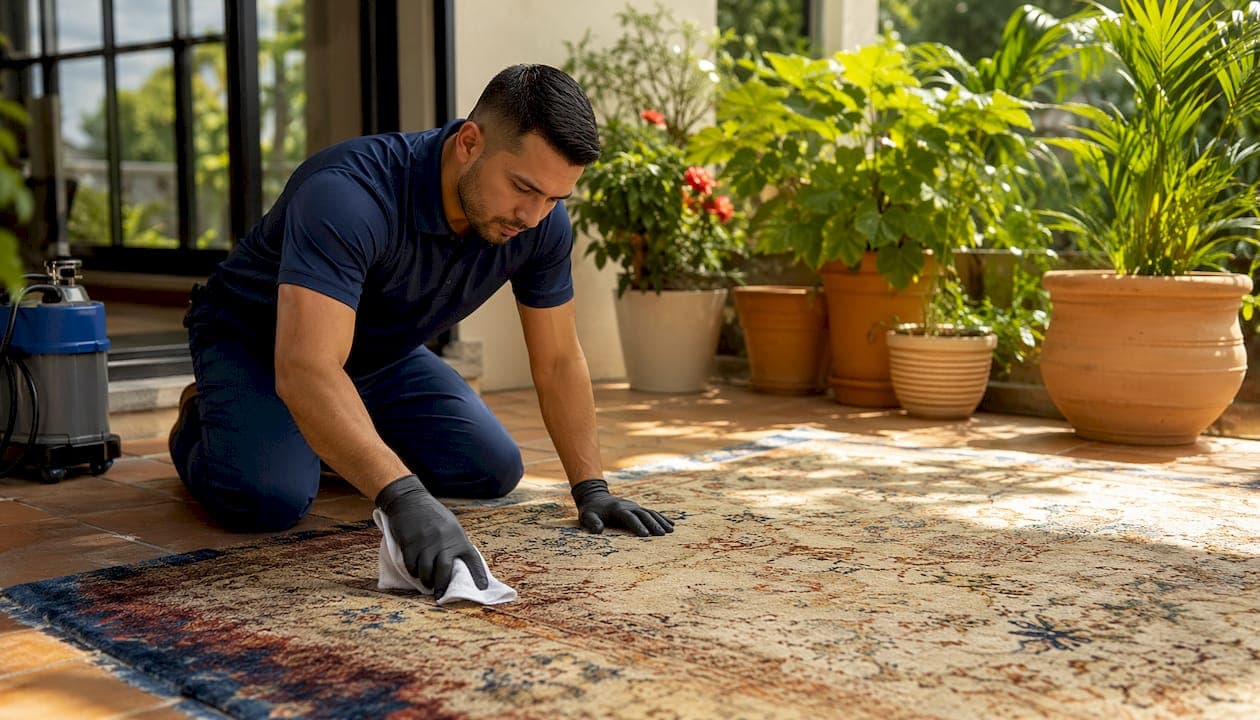
What is colour bleeding in carpets and why does it happen?
Colour bleeding in carpets and rugs occurs when dye detaches from fibres and migrates into adjacent areas during moisture exposure, leaving visible stains or discolouration. The technical term is dye migration, and it happens because the chemical bond between dye and fibre breaks down under wet, alkaline, or heat-altered conditions.
Several factors determine whether a carpet bleeds:
- Dye-fibre bond strength: Weak or poorly fixed dyes release easily when wet.
- Moisture: Water activates loosely bound dye molecules, allowing them to travel.
- pH levels: Alkaline conditions destabilise many natural and synthetic dyes.
- Heat: Higher temperatures accelerate dye detachment and movement.
- Dye fixation quality: Poor manufacturing leaves excess, unsecured dye near fibre surfaces.
High-contrast rugs — deep reds, blues, or blacks against light backgrounds — show even minor dye migration very visibly. The bleeding typically becomes most apparent during drying, as evaporating moisture carries dissolved dye toward pattern edges, creating a feathered halo effect around colour boundaries.
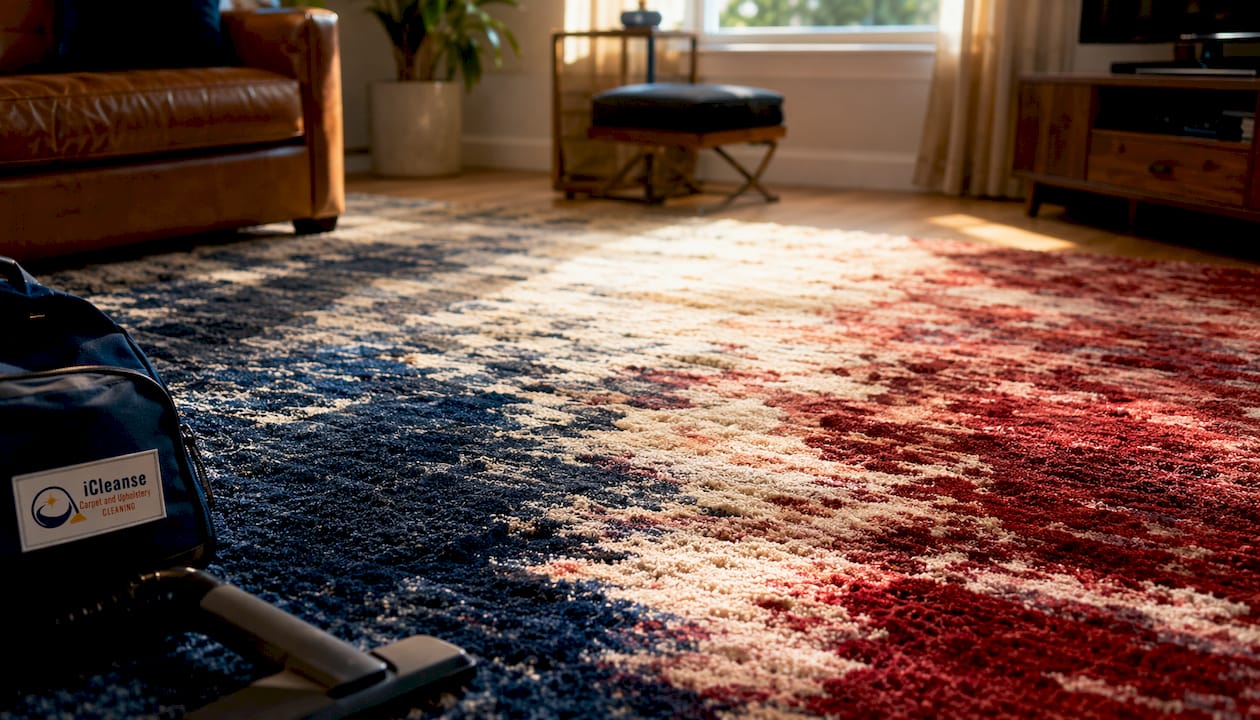
Major causes of colour bleeding during carpet cleaning
Colour bleeding during a carpet wash rarely has a single cause. It usually results from a combination of manufacturing weaknesses and cleaning conditions that push unstable dyes past their limit.
- Fugitive dyes and poor fixation: When a carpet is manufactured with defective dyes or excess dye that never fully bonded to the fibre, dye instability is built in from the start. These fugitive dyes sit near the fibre surface and wash away easily.
- Alkaline cleaning solutions: Many household carpet detergents are alkaline, and alkaline pH destabilises natural dyes, causing them to run even on carpets that previously appeared colourfast.
- Hot water: Heat accelerates every chemical reaction involved in dye release. Hot water is one of the fastest ways to trigger bleeding in a vulnerable rug.
- Aggressive agitation: Scrubbing or machine agitation physically dislodges dye particles that moisture has already loosened, spreading the problem further.
- Chemical residues from past spills: Old spill residues or prior cleaning products can reactivate unstable dyes during a professional cleaning, even when the carpet looked fine beforehand.
- Cumulative weakening: Repeated cleanings with alkaline solutions weaken dye-fibre bonds incrementally. Repeated cleanings with alkaline solutions weaken dye-fibre bonds incrementally, so a rug that previously did not bleed can eventually begin to bleed.
- Soil wicking vs. true bleeding: Soil wicking pulls dirt to the surface during drying and looks like discolouration, but it is not dye migration. Confusing the two leads to the wrong treatment.
Pro Tip: Always check the pH of any cleaning solution before applying it to a rug. A pH above 8 puts natural and many synthetic dyes at risk. Neutral to mildly acidic solutions (pH 5–7) are far safer for colourfast maintenance.
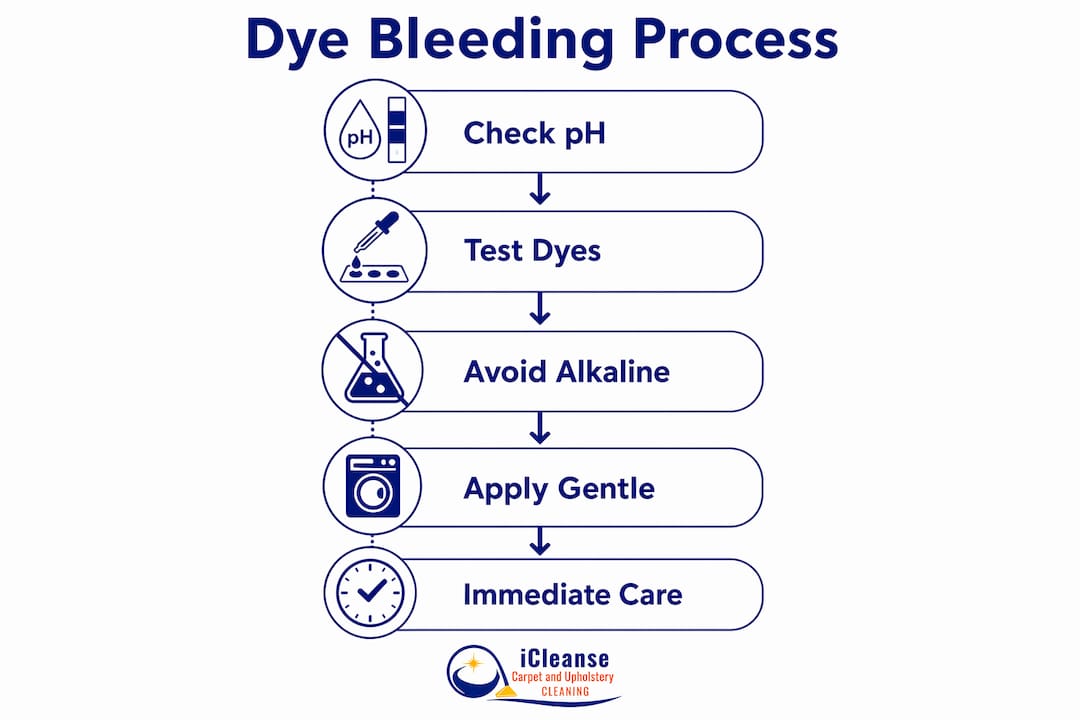
How professional cleaners prevent and manage dye bleeding
Experienced cleaners do not guess whether a rug will bleed. They test first, then choose a method matched to what the test reveals.
- Colourfastness testing: Pre-cleaning moisture tests and white cloth transfer tests identify unstable dyes before any water touches the full rug. Technicians apply small amounts of water to hidden areas and observe dye transfer on a white cloth.
- pH testing: Some dyes bleed under alkaline conditions but stay stable at neutral or slightly acidic pH. Knowing the rug's pH sensitivity guides solution selection.
- Cold water washing: Cold water keeps dyes more stable and reduces migration risk significantly compared to warm or hot water.
- pH-balanced detergents: Professional-grade, pH-neutral or mildly acidic solutions protect dye bonds that alkaline household cleaners would break.
- Dye stabilisers: Specialised products applied before washing chemically bond with loose dye molecules, locking them to fibres before moisture can mobilise them.
- Controlled hand-cleaning: For antique or highly vulnerable rugs, section-by-section hand-cleaning limits water exposure and lets technicians address any bleeding immediately.
- Reputable cleaners carry liability awareness: If pre-testing shows stable dyes and bleeding still occurs, the cause is typically a pre-existing manufacturing defect. Experienced cleaners document test results precisely for this reason.
Professional rug cleaning services that follow these testing protocols protect both the rug and the client from preventable damage.
Pro Tip: If you notice bleeding starting during a cleaning, do not rinse with more water. Water spreads migrating dye deeper into the carpet structure. A controlled acidic solution and immediate moisture extraction are what stop it.
What to do if colour bleeding happens during or after cleaning
Catching bleeding early limits the damage. The first few minutes matter more than anything that follows.
- Stop applying water immediately. More moisture spreads the dissolved dye further into surrounding fibres.
- Blot, never rub. Press a clean white cloth firmly onto the affected area to absorb dye. Rubbing drives it deeper and widens the stain.
- Contact a professional cleaner. Controlled acidic buffer solutions and prompt extraction equipment are needed to stop active migration. This is not a job for household products.
- Avoid alkaline cleaners and hot water. Both accelerate dye movement and can turn a manageable bleed into permanent discolouration.
- Test valuable rugs before every cleaning. A quick colourfastness test before each wash costs nothing and prevents irreversible damage to rugs worth protecting.
The science behind dye bleeding: chemistry and physical factors
Dye bleeding is a chemistry problem at its core. Understanding what breaks the dye-fibre bond explains why certain cleaning choices cause damage that looks accidental but is entirely predictable.
Dyes bond to fibres through chemical attraction, covalent bonds, or with the help of mordants — metallic salts that act as a bridge between dye and fibre. When mordants and dye fixing agents are applied correctly during manufacturing, dyes stay locked in place through washing and wear. Poor fixation leaves dye molecules loosely attached, vulnerable to any moisture or pH shift.
Alkaline conditions are particularly destructive. Reactive dyes, which dominate modern cellulosic fibres, require alkaline pH during the dyeing process — but that same alkalinity in a cleaning solution can reverse the bond, causing hydrolysis of the dye and releasing it from the fibre. Light exposure and residual chemicals from previous spills compound this by weakening bonds before cleaning even begins.
| Factor | Effect on dye stability |
|---|---|
| Alkaline pH (above 8) | Breaks dye-fibre bonds; triggers dye release |
| Heat | Accelerates dye detachment and migration speed |
| Poor mordanting or fixation | Leaves dye loosely attached; bleeds on first wetting |
| Residual chemicals | Reactivates unstable dyes during subsequent cleanings |
| Aggressive agitation | Physically dislodges moisture-loosened dye particles |
| Cold water, acidic pH | Increases dye substantivity; reduces migration risk |
High-contrast rugs amplify the visual impact of even minor dye migration. A small amount of red dye moving into a cream field is immediately obvious, while the same quantity migrating between two dark tones might go unnoticed entirely.
Key takeaways
Colour bleeding during carpet cleaning is a chemistry problem caused by unstable dye-fibre bonds, and preventing it requires testing, cold water, and pH-controlled solutions before any cleaning begins.
| Point | Details |
|---|---|
| Dye-fibre bond is the root cause | Weak fixation or poor mordanting leaves dyes vulnerable to moisture and pH shifts. |
| Alkaline cleaners trigger bleeding | Household detergents above pH 8 destabilise natural and reactive dyes, causing migration. |
| Test before every wash | White cloth transfer and moisture tests identify unstable colours before full cleaning begins. |
| Cold water and acidic solutions protect dyes | Lower temperatures and neutral-to-acidic pH reduce dye release and migration risk significantly. |
| Stop water immediately if bleeding starts | More water spreads migrating dye; prompt extraction and acidic buffers are needed to halt it. |
Worried about colour bleeding in your carpets or rugs? The Icleansecuc team serves homeowners across the Greater Toronto Area with professional cleaning methods that protect your carpet's colour from the first test to the final dry. Get a quote today.