
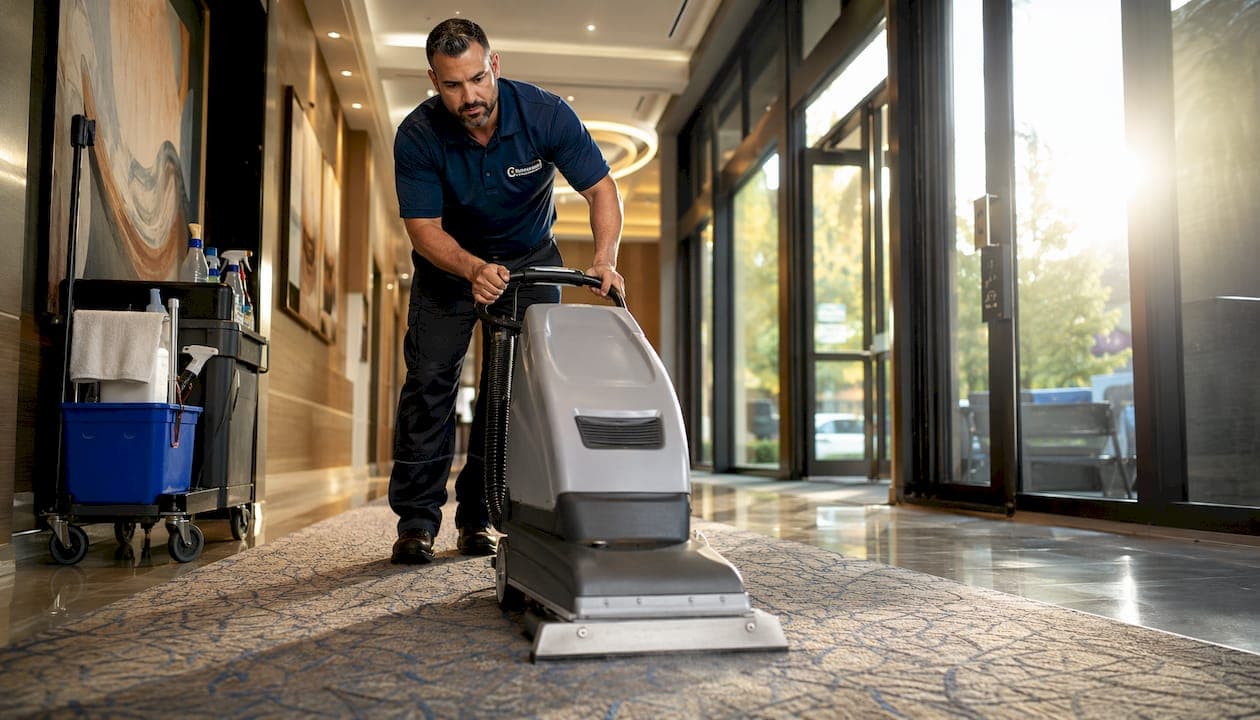
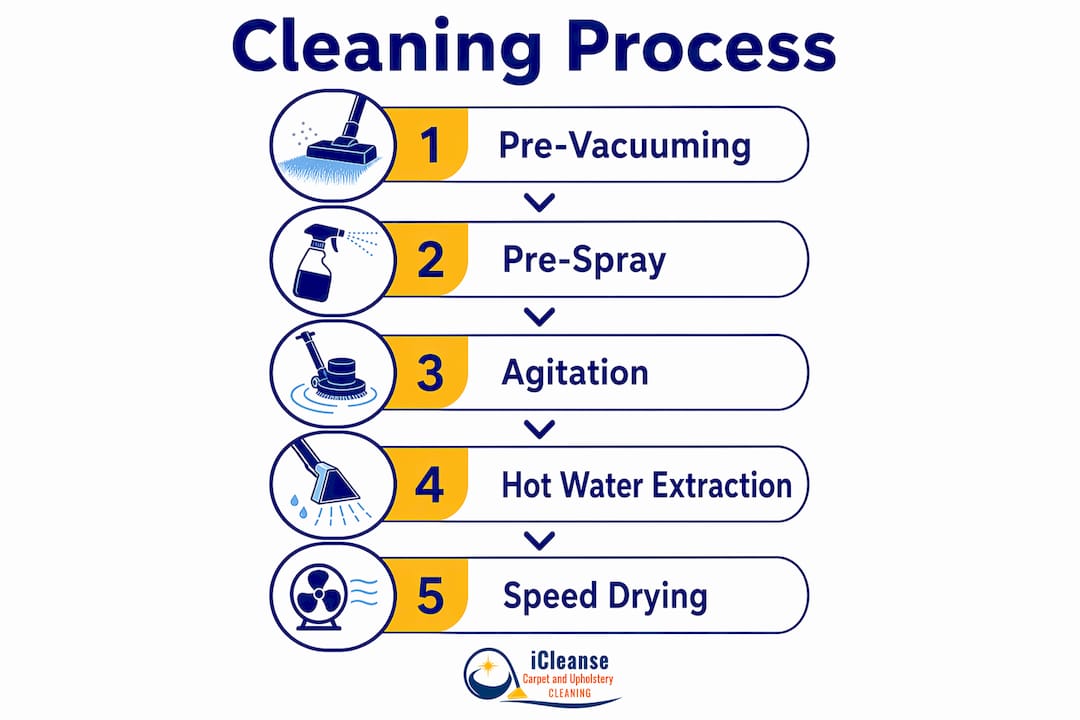
Professionals clean high-traffic hallway carpets through a five-step process: thorough pre-vacuuming, high-strength pre-spray application, mechanical agitation, hot water extraction, and speed drying. Each step targets a specific problem that ordinary vacuuming simply cannot address.
Here is what that process looks like in practice:
- Pre-vacuuming: Removes loose grit before any moisture is introduced. Dry soil causes the most abrasion, so pulling it out first protects fibres during the wet stages.
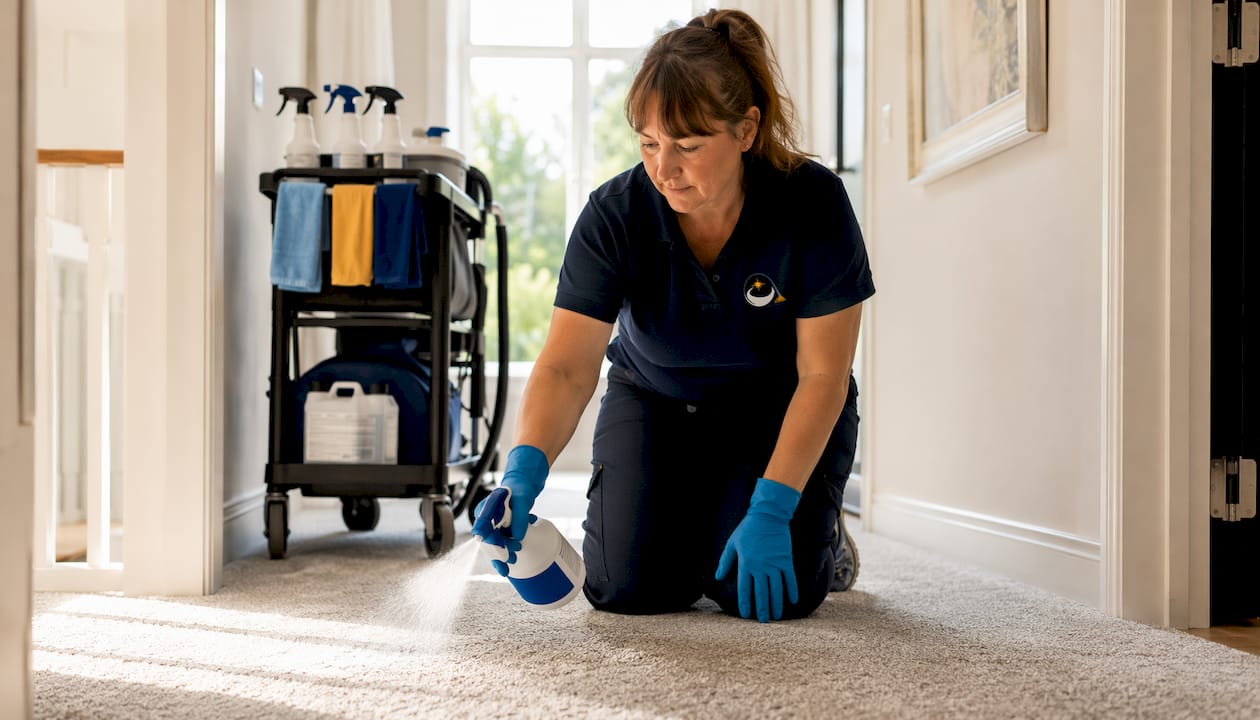
- Pre-spray application: A professional-grade surfactant is applied and left to dwell, breaking down oily foot-traffic residue and bonded soils that have worked their way into the pile.
- Mechanical agitation: A rotary brush or counter-rotating brush (CRB) machine works the solution deep into the fibres. This step is especially critical for looped constructions like berber, where soil sits low in the loops and resists surface-level rinsing.
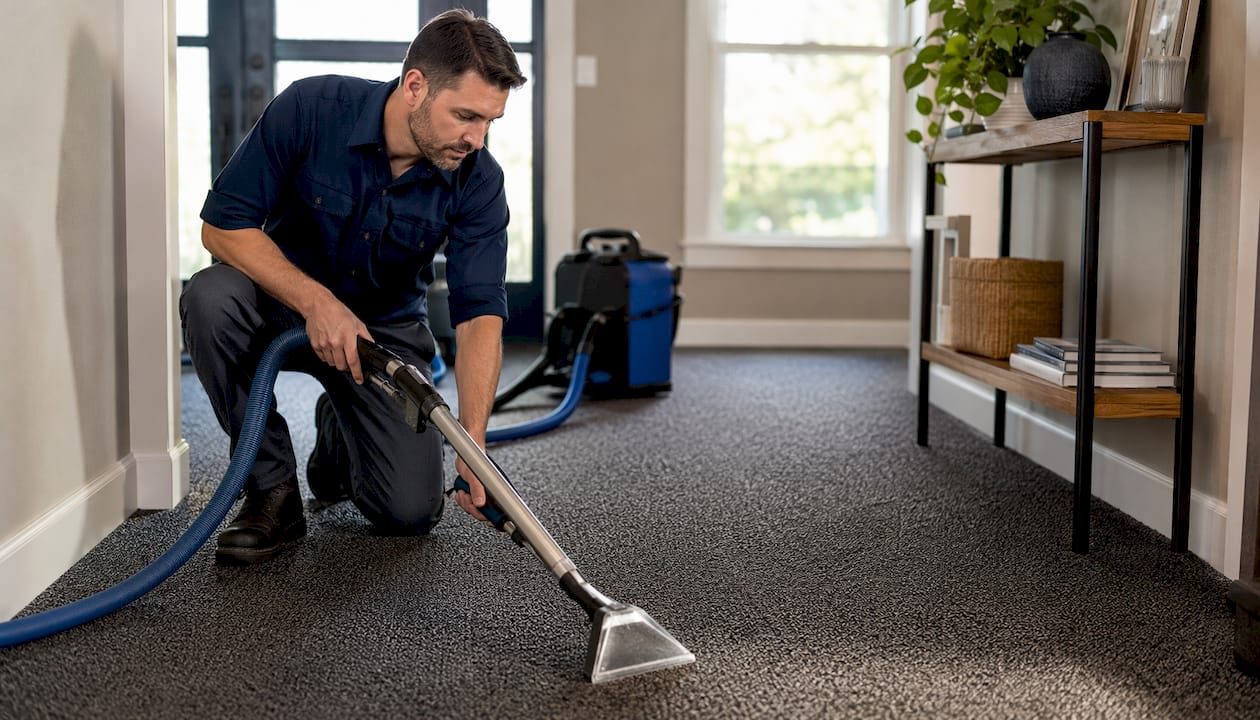
- Hot water extraction: Hot water extraction at 150–200°F, combined with high-powered vacuum recovery, flushes suspended soils out of the pile and backing without over-wetting.
- Speed drying: High-velocity fans are set up immediately after extraction to prevent moisture from wicking contaminants back up from the pad and to stop mould from developing in the backing.
For hallways specifically, professionals recommend cleaning every 3–6 months to prevent abrasive grit from grinding fibres into permanent traffic lanes. Homes with pets, children, or allergy sufferers should move to a 2–3 month schedule. Icleansecuc uses professional-grade equipment and eco-friendly solutions across the Greater Toronto Area, following exactly this protocol to restore hallway carpets that look beyond saving.
How does the professional cleaning process actually work, step by step?
The five-step process described above is not arbitrary. Each stage exists because the previous one creates the conditions for the next to work.
Pre-vacuuming is where most homeowners underestimate the difference between professional and DIY results. A technician uses a commercial-grade upright with strong suction and slow, overlapping passes to dislodge compacted grit from the base of the pile. Vacuuming quickly only catches the top layer. Regular vacuuming before a professional visit also significantly improves cleaning outcomes and reduces the need for aggressive chemical treatments.
Pre-spray chemistry matters more than most people realise. Professional formulations contain surfactants, emulsifiers, and sometimes enzyme components calibrated to the soil type. An oily hallway near a kitchen entrance needs a different pre-spray than a dry-grit entryway. Dwell time, typically 5–10 minutes, lets the chemistry do the work before any mechanical action begins.
Mechanical agitation is the step that separates a thorough clean from a surface rinse. For berber and looped carpets, soil sits low in the loops and standard extraction alone leaves permanently damaged fibre tips visible. A CRB machine or rotary tool lifts that compacted soil to the surface where extraction can remove it.
Hot water extraction then flushes everything out. Consumer rental machines often lack the heat stability, vacuum lift, and airflow needed to rinse thoroughly in dense, compacted traffic lanes. Professional truck-mounted or high-capacity portable units maintain consistent temperature and recovery throughout the job. A typical hallway cleaning session runs about an hour or more on site, including setup, drying fan placement, and a post-clean walkthrough. Icleansecuc technicians are trained to industry standards and assess fibre type before selecting chemistry and agitation method, which is what separates a genuine restoration from a cosmetic rinse.
What does professional hallway carpet cleaning cost in Canada?
Pricing for professional carpet cleaning in Canada varies by city, carpet condition, and the scope of work. Hallways are typically priced per square foot or as a flat fee for a defined area.
| Scenario | Typical price range (CAD) | Notes |
|---|---|---|
| Small hallway | — | Basic extraction, no heavy staining |
| Medium hallway | $90–$150 | Includes pre-spray and standard agitation |
| Heavy soiling or traffic lanes | — | Pre-treatment, extended dwell time, possible repeat pass |
| Stain spot treatment (per area) | — | Coffee, wine, pet waste, oil |
| Full home with hallway included | — | Zone-based pricing, varies by city |
Prices in Toronto, Vancouver, and Calgary tend to run higher than in smaller Ontario cities, reflecting labour and overhead differences. A hallway that has not been professionally cleaned in two or more years takes longer to extract properly and almost always requires pre-treatment, which adds to the cost.
Several variables push the price up or down. Carpet condition is the biggest one: a hallway cleaned every six months costs less per visit than one that has been neglected for three years. Traffic level, stain presence, and whether the job requires a second extraction pass all affect the final quote. Fibre type also plays a role, since wool and natural fibre carpets require gentler chemistry and longer dwell times.
Icleansecuc operates on transparent, upfront pricing with no hidden fees. You receive a clear quote before any work begins, and the scope, including pre-spray, agitation, and extraction, is included rather than itemised as add-ons. For a personalized quote based on your hallway's size and condition, Icleansecuc can assess and price the job accurately.
Which carpet types are most common in hallways, and how does each one clean?
The fibre and construction of a hallway carpet directly determines how it responds to professional cleaning and how quickly it shows wear.
Nylon is the most common fibre in residential hallways because it resists abrasion better than most synthetics. It responds well to hot water extraction and bounces back after agitation. Nylon carpets in hallways can handle the full professional process without risk of shrinkage or colour bleed.
Polyester is softer and less expensive but holds oily residues more stubbornly than nylon. In high-traffic hallways, polyester pile tends to mat faster and requires a stronger pre-spray to release the oily film that builds up from foot traffic.
Wool is durable and naturally soil-resistant, but it demands careful handling. High temperatures and aggressive agitation can cause shrinkage or pile distortion. Professional technicians lower extraction temperature and use pH-neutral chemistry on wool hallway carpets.
Berber (looped pile) is where most cleaning challenges concentrate. Embedded soil in berber causes fibre abrasion and matting; standard extraction alone leaves permanently damaged fibre tips visible in traffic lanes. High-strength pre-spray and mechanical agitation are non-negotiable for berber in busy hallways.
| Fibre type | Traffic wear risk | Cleaning approach | Key caution |
|---|---|---|---|
| Nylon | Low to moderate | Full HWE process | None significant |
| Polyester | Moderate to high | Strong pre-spray, full extraction | Oily residue retention |
| Wool | Low (if maintained) | Gentle chemistry, lower temp | Shrinkage risk |
| Berber (loop) | High | Pre-spray + CRB agitation + HWE | Fibre tip abrasion permanent |
| Cut pile (plush) | Moderate | Standard HWE | Crushing in traffic lanes |
Most carpet manufacturer warranties require professional cleaning every 12–18 months. Skipping that schedule does not just affect appearance. It voids warranty coverage and accelerates fibre wear that shortens carpet lifespan by 3–5 years due to trapped abrasive grit. If you are unsure of your carpet's fibre type, a professional technician can identify it on site before selecting the appropriate method.
Pro Tip: Check the back of a loose carpet tile or a corner tuck for the manufacturer label. It lists the fibre content and often the recommended cleaning method, which you can share with your technician before the appointment.
How do you keep a hallway carpet clean between professional visits?
Maintenance between professional visits determines how much work the next cleaning has to do. A well-maintained hallway carpet cleans up dramatically better than a neglected one, and the difference shows in both the result and the cost.
- Vacuum high-traffic lanes 2–4 times per week using slow, overlapping strokes. Fast vacuuming only catches the top millimetre of debris. The grit that damages fibres sits lower in the pile.
- Place doormats at every exterior entry. Entrance mats capture a substantial portion of tracked-in soil before it reaches the hallway carpet. Use both an outdoor scraper mat and an indoor absorbent mat for maximum effect.
- Adopt a shoes-off policy. Outdoor shoes carry fine mineral particles, oils, and de-icing salt (a real issue in Canadian winters) directly into the pile. Removing shoes at the door is the single most effective soil-reduction habit available.
- Blot spills immediately. Press a clean white cloth onto the spill to lift moisture. Never rub. Rubbing pushes the stain deeper into the fibres and spreads it laterally. For protein stains like blood or dairy, use cool water; hot water sets them.
- Rotate furniture slightly every few months. Even a few centimetres shifts the traffic path and prevents the same fibre lines from being compressed repeatedly into permanent lanes.
- Spot clean with minimal product. Leftover detergent residue attracts new soil and causes spots to reappear within days. Rinse thoroughly after any spot treatment and blot dry.
Pro Tip: Integrate your professional cleaning schedule with seasonal changes. Book a deep clean in late autumn before salt season begins, and again in spring after the worst of the tracked-in grit has accumulated. That two-visit annual rhythm covers most Canadian households without over-spending.
For more detail on carpet cleaning methods and how they interact with your maintenance routine, Icleansecuc's resource library covers the full range of techniques used in residential hallways.
What does research say about cleaning frequency and carpet longevity?
The case for routine professional cleaning is not just about appearance. It is about the physics of what grit does inside a carpet pile.
Fine mineral particles, the kind tracked in from driveways, sidewalks, and parking lots, act as abrasives once they work their way to the base of the fibres. Every footstep grinds those particles against the fibre surface, cutting microscopic notches that scatter light differently and create the dull, dark appearance of a traffic lane. Visible dark traffic lanes are a result of fibre damage from embedded grit acting like sandpaper. Professional cleaning can lighten these lanes by removing soil, but cannot fully restore crushed or abraded fibre texture once the damage is done.
That distinction matters for scheduling. Routine professional cleaning before traffic lanes become visibly permanent is the only way to maintain fibre integrity and avoid costly premature carpet replacement. Once the fibres are physically worn, no cleaning process reverses the shading.
Cleaning frequency by household type (high-traffic zones): No pets, no kids, shoes-off household: every 4–6 months. Kids or frequent guests: every 2–4 months. Pets with outdoor access: every 2–3 months. Allergy or asthma-sensitive occupants: every 2–3 months.
A zone-based maintenance schedule, cleaning hallways and entry areas every 3 months while extending bedroom intervals to 12 months, is more cost-effective than treating the whole home on a single annual cycle. You spend less per visit and protect the areas that actually need it. The IICRC S100 standard, the principal industry benchmark for professional carpet cleaning, links cleaning intervals directly to occupancy type, foot traffic, and allergen-generating factors rather than to a fixed calendar date.
One documented case involving a light-coloured berber carpet with heavy traffic lanes, never professionally cleaned in recent memory, achieved approximately 90% visual improvement after a single professional session using the pre-spray, agitation, and extraction protocol. The remaining shading was consistent with physical fibre wear, not soil, confirming that cleaning suspends damage but cannot undo it once fibres are abraded.
Understanding why professional equipment matters in this context is straightforward: consumer machines cannot maintain the heat stability or vacuum recovery needed to flush compacted traffic lanes thoroughly. The difference between a professional extraction and a rental machine shows up most clearly in hallways, where soil density is highest and the margin for incomplete rinsing is lowest.
For homeowners who want to understand how frequent cleaning prevents carpet replacement, the logic is simple: the cost of two professional visits per year is a fraction of the cost of replacing a hallway carpet five years early.
Key takeaways
Professional hallway carpet cleaning requires a five-step process of pre-vacuuming, pre-spray, mechanical agitation, hot water extraction at 150–200°F, and speed drying, combined with a 3–6 month cleaning schedule for high-traffic hallways to prevent permanent fibre damage from abrasive grit; homes with pets, children, or allergy sufferers should follow a 2–3 month rotation, as supported by research.
| Point | Details |
|---|---|
| Five-step process | Pre-vacuuming, pre-spray, agitation, hot water extraction, and speed drying each address a distinct layer of soil. |
| Cleaning frequency | High-traffic hallways need professional cleaning every 3–6 months; pets, children, or allergies push that to every 2–3 months. |
| Fibre type affects method | Berber and looped carpets require mechanical agitation alongside extraction; standard rinsing alone leaves damaged fibre tips visible. |
| Warranty compliance | Most carpet manufacturer warranties require professional cleaning every 12–18 months; skipping this shortens carpet lifespan by 3–5 years. |
| Maintenance between visits | Slow vacuuming 2–4 times per week, entrance mats, and a shoes-off policy dramatically reduce soil load and improve professional cleaning results. |
Ready to restore your hallway carpet?

Hallway carpets take more abuse than any other surface in the home, and they show it fastest. Icleansecuc brings professional-grade equipment, eco-friendly solutions, and trained technicians to homes and rental units across the Greater Toronto Area. Whether your hallway has visible traffic lanes, a gritty feel underfoot, or odours that keep coming back, the five-step extraction process delivers results that vacuuming and rental machines cannot match.
Transparent pricing. No hidden fees. Results you can see the same day.
Book your cleaning or request a quote to get started. You can also explore Icleansecuc's full range of carpet and upholstery services to find the right solution for your space.