
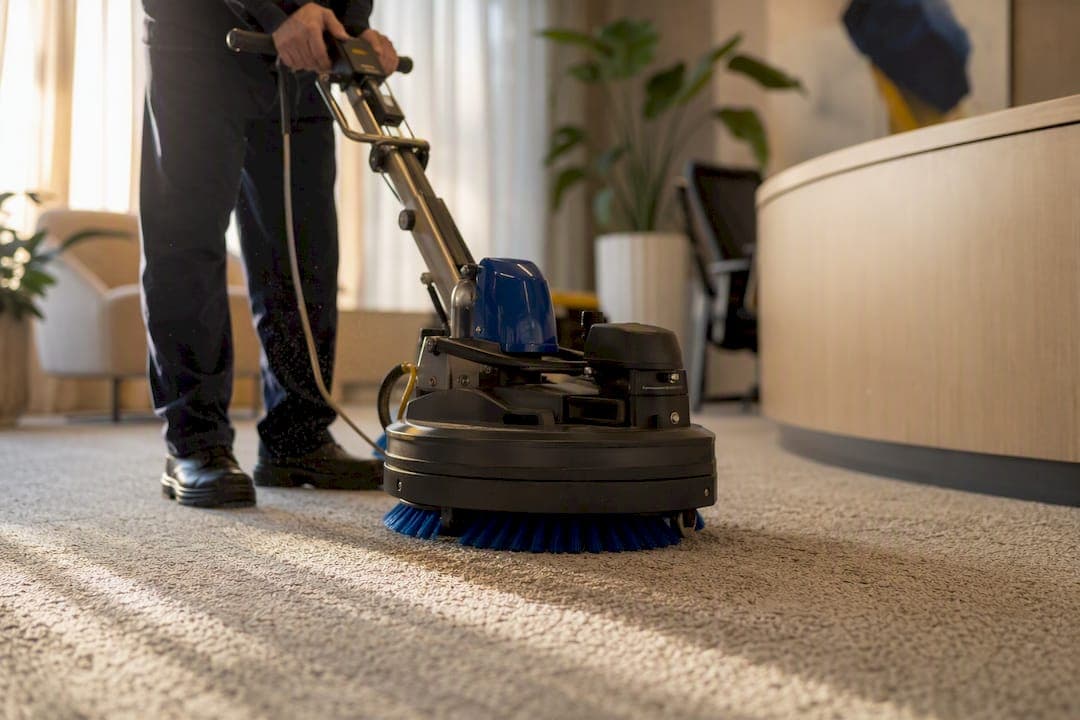
Vacuum entrances and corridors daily, spot-treat spills the moment they happen, run interim low-moisture cleaning monthly to quarterly depending on foot traffic, and book restorative hot water extraction once or twice a year for most offices, more often in heavy-traffic zones. That's the whole system, aligned with the IICRC S100 standard and the CRI 204 commercial carpet standard that most professional cleaners, including Icleansecuc, use to set schedules. The checklist below breaks that into six steps:
- Vacuum high-traffic paths daily
- Spot clean spills within minutes
- Pile lift before any interim treatment
- Deep clean with hot water extraction on schedule
- Inspect for lanes, odour, and matting
- Document every service date and method
Key Takeaways
A traffic-driven office carpet cleaning checklist, daily vacuuming, immediate spot response, and interval-based professional cleaning tied to zone traffic, preserves carpet life and protects warranty coverage.
| Point | Details |
|---|---|
| Vacuum daily, methodically | Slow, overlapping passes in entrances and corridors remove embedded soil before it sets. |
| Match interval to traffic tier | Very high traffic zones need cleaning every 6 to 12 weeks; low traffic can stretch to 9 to 12 months. |
| Respond to spills within minutes | Blot, don't scrub, and match spotting chemistry to the stain type to prevent wicking. |
| Log every service visit | Date, zone, method, and photos protect manufacturer warranty coverage. |
| Book through Icleansecuc | A site survey and zone-based quote turn the checklist into a documented, bookable maintenance plan. |
Table of Contents
- Building your office carpet cleaning checklist for daily, weekly, and monthly tasks
- How often should each zone get professional carpet cleaning?
- Which carpet cleaning methods fit which office zones?
- What's the right response when a spill or stain happens?
- What to inspect and document to protect your warranty
- Turning the checklist into a bookable service plan
- How Icleansecuc runs a site visit from start to finish
- Book a site survey and get your schedule set with Icleansecuc
- Sources
Building your office carpet cleaning checklist for daily, weekly, and monthly tasks
A checklist only works if someone actually owns each line item. Split the routine by frequency and assign it to whoever is realistically on-site that day, whether that's your custodial staff or a contracted crew.
- Daily — Vacuum entrances, hallways, and any area between desks and the break room. Spot-check doorways for tracked-in debris and empty walk-off mats before they saturate.
- Weekly — Vacuum under furniture and along baseboards where dust collects unnoticed. Run a pile-lifting pass in main corridors, and note any recurring stain locations for the next professional visit.
- Monthly — Schedule interim low-moisture cleaning, such as encapsulation or dry compound, in your busiest lanes. Launder or replace entrance mats, and review your cleaning log for patterns that suggest a zone needs more attention.
Daily vacuuming, done slowly rather than rushed, pulls embedded soil out before it grinds into the fibre, which cuts down how often you need expensive restorative work.
Pro Tip: Assign pile lifting to whoever handles weekly deep vacuuming, not the daily crew. It takes longer and works best with a counter-rotating brush machine run against the direction of the pile, so it deserves its own slot on the calendar rather than getting squeezed into a daily pass.
How often should each zone get professional carpet cleaning?
Not every square foot of your office wears out at the same rate, so a single blanket schedule wastes money in some zones and under-serves others. Mapping traffic by zone and setting a different professional-clean interval for each one is more cost-effective than treating the whole floor plan the same way.
- Very high traffic (entrances, lobbies, reception): clean every 6 to 12 weeks.
- High traffic (main corridors, elevator lobbies, cafeteria approaches): clean every 3 to 4 months.
- Moderate traffic (open-plan desk areas, meeting rooms): clean every 4 to 6 months.
- Low traffic (private offices, storage rooms): clean every 9 to 12 months.
| Traffic tier | Example areas | Suggested professional interval |
|---|---|---|
| Very high | Entrances, lobbies | Every 6 to 12 weeks |
| High | Corridors, elevator lobbies | Every 3 to 4 months |
| Moderate | Open-plan desks, meeting rooms | Every 4 to 6 months |
| Low | Private offices, storage | Every 9 to 12 months |
These intervals come straight from traffic-tier scheduling guidance used across commercial cleaning. Shorten any tier if you run seasonal events, construction nearby, or a spike in wet-weather foot traffic.
Which carpet cleaning methods fit which office zones?
Matching the method to the zone matters more than picking one "best" technique. Hot water extraction (HWE) is the restorative method most endorsed for pulling embedded soil out of the pile, and it's what most office carpet warranties expect for annual or biannual deep cleaning. Encapsulation and dry compound cleaning work well as interim treatments when you need a lane back in service the same day. Bonnet cleaning handles light surface refresh but shouldn't substitute for extraction long-term, and pile lifting should happen before either interim or restorative work to loosen soil first.
- Require slow, overlapping vacuum passes, roughly 1.8 feet per second, in your service contract, not quick single-direction sweeps.
- Specify HEPA-filtered vacuums where indoor air quality is a concern.
- Ask for air movers and stated drying-hour estimates so you can plan around wet floors.
Statistic callout: Contractors following CRI-approved procedures split maintenance into three levels: routine, interim, and deep cleaning, each tied to traffic and soil load rather than a fixed calendar date.
What's the right response when a spill or stain happens?
Speed decides whether a spill becomes a permanent stain. Wicking, where a spill dries at the surface but keeps spreading underneath, sets in fast if nobody responds within the first few minutes.
- Contain the spill and keep foot traffic away from it.
- Blot with a clean cloth, working from the outside in. Never scrub, which pushes the substance deeper into the pile.
- Remove any solids before applying a cleaning solution.
- Test your chosen spotting product in a hidden corner first to check for colour change.
- Match the chemistry to the stain: water-based cleaners for coffee or juice, solvent-based for grease or ink, enzyme cleaners for protein stains like food or blood.
- If the spot resists a hand-held extractor or keeps reappearing, flag it for your next professional visit rather than repeating harsher treatments.
What to inspect and document to protect your warranty
Most manufacturer warranties tie coverage to a documented maintenance history, so a folder of dated service records is worth as much as the cleaning itself. Log the date, zones treated, method used, technician notes, and photos after every visit.
- Check your carpet's warranty terms for a minimum professional-cleaning frequency, since some manufacturers void coverage without it.
- Watch for visible traffic lanes, lingering odour, stains that won't lift, and matted or crushed pile.
- Treat any of those signs as a trigger to shorten your interval rather than waiting for the next scheduled date.
- Keep a simple site map noting which zone sits in which traffic tier, so records stay easy to audit.
Turning the checklist into a bookable service plan
Getting a contractor to "clean the carpets" without a scope is how good checklists fall apart. Specify the method, drying window, mat handling, and access rules in writing before anyone shows up.
- Before service: Conduct a site survey, agree on scope by zone, confirm which method applies where, set access windows, and decide who moves furniture.
- During service: Post safety signage around wet areas, position air movers, keep a technician contact on-site, and do a walk-through inspection while work is underway.
- After service: Sign off on the completed zones, log the visit, confirm the next rebooking date, and flag anything needing a follow-up treatment.
Pro Tip: Build your rebooking cadence into the contract upfront. Chasing a new quote every time a service is due wastes more staff hours than the cleaning itself.
How Icleansecuc runs a site visit from start to finish
A typical visit follows the same sequence every time: survey the space, vacuum and pile-lift the traffic lanes, apply the interim or restorative method the zone calls for, dry with air movers, then walk the floor for a final inspection. Icleansecuc brings commercial-grade extraction equipment, eco-friendly spotting solutions, and enough air movers to keep drying times realistic for a working office.
- Scope broken down by zone, not a flat "whole office" price.
- A stated drying plan so you know when furniture can go back.
- A post-service report you can drop straight into your maintenance log.
A facility manager who can hand a contractor a zone map and a documented history gets a faster, more accurate quote than one who just says "the carpets need cleaning."
A practitioner's take on prioritizing the schedule
Preventive, zone-based cleaning costs less over a year than reactive deep cleans after a lane already looks worn. Put your budget toward entrances, corridors, and break rooms first. They fail fastest, and a documented log lets you test whether your intervals are actually holding up.
— Rob
Book a site survey and get your schedule set with Icleansecuc
Icleansecuc gives Greater Toronto Area offices a way to run this entire checklist without pulling facility staff off their other work. Instead of juggling in-house vacuuming schedules against guesswork on when a deep clean is overdue, you get a zone-by-zone plan, commercial-grade hot water extraction, and eco-friendly interim treatments handled by one crew who documents every visit for you.
A quote from Icleansecuc starts with a site survey: someone walks your floor plan, tags traffic tiers, and scopes out which zones need restorative cleaning versus interim maintenance. You'll get a drying plan before anyone starts, and a written report after, so your warranty documentation stays intact without extra admin on your end. Icleansecuc also handles upholstery and tile cleaning for offices that want one contractor for the whole space rather than juggling separate vendors.
If your current schedule is a guess rather than a plan, request a quote and get a site survey booked.
Sources
- How often should office carpets be cleaned? (Citywide Cleaning Company)
- Bentley maintenance guidelines for broadloom and carpet tile
- How often should commercial carpets be professionally cleaned? — RBM Building Services