
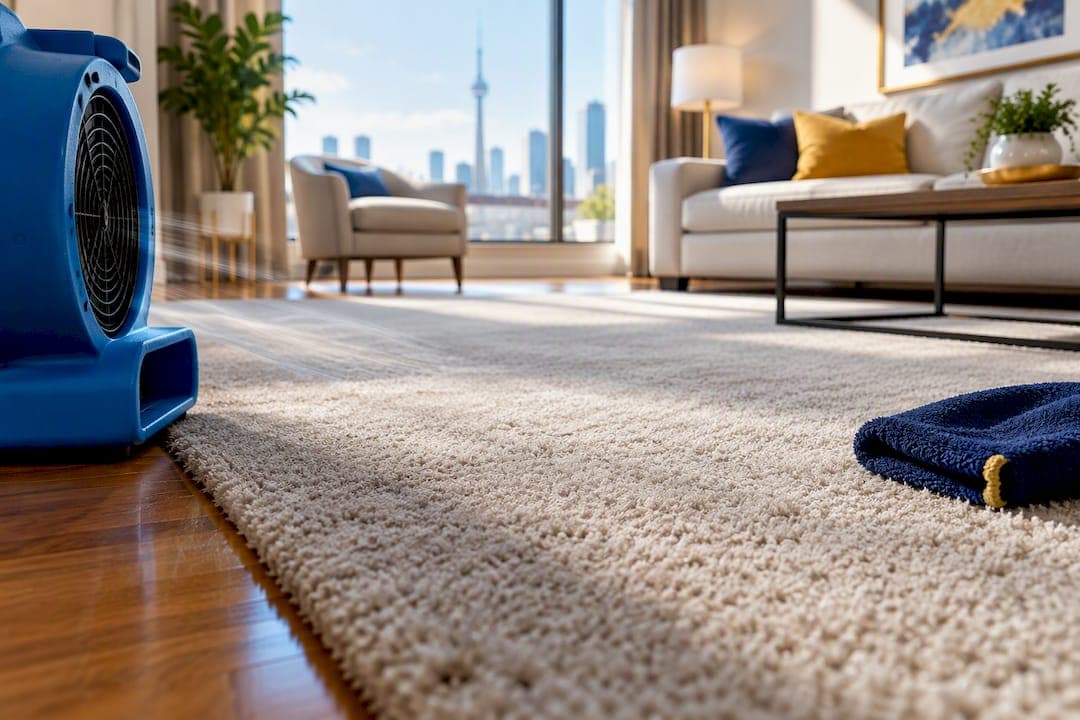
Most carpets dry within 6 to 12 hours after professional cleaning, though the single biggest factor is how much water the technician removed during extraction. A well-extracted carpet in a ventilated room can feel dry in as little as 2 to 6 hours, while thick pile or humid conditions can stretch that toward a conservative 24-hour mark.
TL;DR:
- Proper extraction can reduce drying time to as little as 2 to 6 hours in well-ventilated conditions, but thicker carpets or high humidity can extend this up to 24 hours.
- To speed drying, use surface-oriented fans, run a dehumidifier in humid spaces, and only open windows when outside air is drier than indoor air.
- Walking on the carpet should be limited to sock-footed or light traffic once surface dryness is confirmed, and full dryness is necessary before placing furniture or sleeping in the room.
- Professional equipment like truck-mounted extractors and multiple fans significantly cut drying times and promote faster moisture removal compared to standard home devices.
- If the carpet remains damp after 24 hours, especially in basement or low-airflow rooms, contacting the cleaner for a follow-up is recommended to prevent mold growth.
Table of Contents
- Typical drying times at a glance
- Factors that determine how long a cleaned carpet takes to dry
- How to speed drying safely after cleaning
- What to avoid and the risks of slow drying
- Material-specific notes for wool, antique, and thick-pile rugs
- When it's safe to walk on or sleep in the room again
- What professionals do to reduce drying time
- How we schedule jobs to protect your drying time
- Get your carpet dry faster with a professional visit
- Sources
- FAQ
Typical drying times at a glance
Hot-water extraction, sometimes called steam cleaning, pushes water and cleaning solution deep into the pile and then pulls most of it back out. Done well, this method leaves carpet damp rather than soaked, and professional cleaners in scraped Canadian business FAQs commonly cite windows of 2 to 6 hours or 4 to 12 hours depending on airflow and carpet type. Low-moisture methods such as bonnet cleaning or encapsulation use far less water and typically dry faster, often within a couple of hours, though they tend to lift less deep-set soil than full extraction.
A few quick comparisons help set expectations:
- A thin, short-pile carpet in a bright, ventilated living room with good extraction often dries within 4 to 6 hours.
- A thick, dense carpet in a closed, humid basement can take closer to the conservative 24-hour window, even with solid extraction.
- Low-moisture bonnet or encapsulation cleaning on a lightly soiled carpet may leave the surface touch-dry within 1 to 3 hours.
The gap between these numbers comes down to how much moisture went in, how much came out, and how quickly the air around the carpet can carry the rest away.
Factors that determine how long a cleaned carpet takes to dry
Extraction is the first lever. A cleaner who runs a slow pass or uses underpowered equipment leaves more water sitting in the fibres, and that water has to evaporate on its own. Carpet construction matters just as much: pile height, fibre density, the backing material, and any cushioned padding underneath all change how much water the carpet can hold and how easily it releases it.
Temperature and humidity work together. Warm air can hold more moisture than cold air, but if the room is already humid, that warm air fills up fast and stops pulling moisture from the carpet. This is why Health Canada's guidance on addressing moisture and mould points to dehumidification, not just heat, as the more reliable way to dry indoor spaces when humidity is already high.
Airflow ties it together. Moving air carries away the water vapour leaving the carpet, so a room with a fan or open window (when outdoor air is drier) dries faster than a still, closed one. Finally, residual soil or leftover cleaning product can make a carpet feel damp or stiff even after the bulk of the water has evaporated, which is one reason rinse passes and proper extraction settings matter.
- Extraction power removes the majority of moisture before drying even starts.
- Pile height, density, and padding determine how much water the carpet can hold.
- Airflow and humidity control how fast the remaining moisture leaves the room.
Health Canada's guidance on moisture and mould recommends maximizing extraction and increasing ventilation or dehumidification so carpets dry within 24 hours where possible. That 24-hour figure functions as a practical outer limit, not a typical result.
How to speed drying safely after cleaning
You do not need special equipment to shave hours off drying time. A short, deliberate routine right after the cleaner leaves makes the biggest difference.
- Confirm with your technician what extraction mode was used and ask whether a deep-extract or dry pass is available for problem areas.
- Set floor-level fans to blow air across the carpet's surface rather than straight down, which moves moist air out faster than a single overhead fan.
- Run a dehumidifier in the room if you have one, especially in basements or during humid weather, since removing moisture from the air is often more effective than adding heat.
- Open windows only if the air outside is drier than the air inside, following the same logic conservation guidance applies to airing out damp materials.
- Keep your HVAC system on a moderate setting rather than cranking the heat, since warm humid air alone will not remove moisture from the carpet.
- If you need to cross the room, use a single towel-lined path and keep foot traffic to a minimum until the carpet feels dry throughout.
Pro Tip: Point fans across the pile rather than down onto it. Airflow along the surface clears moist air faster than airflow pressed straight into the fibres.
What to avoid and the risks of slow drying
Carpet that stays wet too long is more than an inconvenience. Health Canada's flood cleanup guidance notes that drying within 48 hours limits mould growth, and mould can begin establishing itself well before that window closes if a room stays damp and still.
A few habits raise that risk without you realizing it:
- Walking across the whole carpet instead of a single protected path spreads moisture and flattens the pile.
- Closing windows and doors in a warm, humid room traps moisture instead of letting it escape.
- Ignoring a musty smell or a carpet that still feels cool and damp after 24 hours, both signs that drying stalled and a follow-up visit may be needed.
If your carpet still feels wet a full day after cleaning, especially in a basement or low-airflow room, call your cleaner back rather than waiting it out.
Material-specific notes for wool, antique, and thick-pile rugs
Wool and other delicate fibres respond better to lower-moisture methods and gentle handling, since high heat and heavy saturation can affect the fibre over time, a caution echoed by fibre-specific bodies like WoolSafe. Deep pile and dense carpets hold more water by nature, so they need stronger extraction and longer airflow to reach the same dryness as a thinner carpet. Area rugs have an advantage here: lifting them off their pad and propping an edge for airflow underneath can cut drying time noticeably compared with a wall-to-wall carpet, which retains moisture in both the fibre and the padding beneath it.

When it's safe to walk on or sleep in the room again
A simple touch test tells you most of what you need to know. Press the back of your hand into the pile: if it feels cool or damp, the carpet needs more time. Light, sock-footed traffic is usually fine once the surface feels dry to the touch, but heavier use, furniture placement, or removing floor protectors should wait until the carpet is dry all the way through, not just on the surface.
Sleeping in a freshly cleaned room is generally fine once it's fully dry and aired out, but anyone sensitive to odours or with respiratory concerns should ventilate the space and wait for that full dryness rather than the earlier surface-dry stage. Health Canada's indoor air quality guidance lists carpets and cleaning products among common indoor air sources, and recommends ventilation and HEPA filtration for anyone more sensitive to particles or residual scent.

What professionals do to reduce drying time
Professional teams lean on equipment most homeowners don't have access to. Truck-mounted extractors generally pull more water out of the carpet than portable units, which is why drying times vary so much between a mall-based rental machine and a scheduled professional visit. Technicians also bring floor-level drying fans and dehumidifiers as standard, not as an add-on, because green-cleaning guidance for institutional settings treats fast extraction and ventilation as the standard for getting a floor dry within 24 hours.
Before booking, it's worth asking a few direct questions:
- What extraction mode will you use, and does it change for thicker or older carpet?
- What drying window should I expect for this room, given its size and airflow?
- What aftercare steps do you recommend once the job is done?
Professionals emphasize extraction first because every litre of water removed mechanically is one the air doesn't have to evaporate on its own, which is the real reason a good cleaning job dries faster than a mediocre one.
How we schedule jobs to protect your drying time
We time carpet cleaning jobs around the room's airflow and the season, not just the calendar, because a basement in July dries differently than a sunlit living room in January. Our aftercare instructions always include fan placement and, where needed, a recommended dehumidifier setting, and we follow up if a carpet is taking longer than expected. If your space has unusual humidity or a fibre that needs extra care, ask us directly before the appointment.
— Rob
Get your carpet dry faster with a professional visit
Slow drying almost always traces back to weak extraction, and that's the part a professional visit is built to solve. iCleanseCUC's residential cleaning services cover everything from a single regular room to a full recreation room, with heavy-traffic and light-traffic options available for denser carpet through our commercial cleaning line.

When you request a quote, ask about extraction capability, expected drying time for your specific room, and whether your carpet's fibre needs special handling. You can request a quote directly and get a clear answer before the technician arrives.
FAQ
How long should carpet dry after cleaning?
Most carpets dry within 6 to 12 hours after professional cleaning, with well-extracted carpet in good airflow sometimes reaching 2 to 6 hours. Thicker pile, higher humidity, or poor ventilation can push that closer to the conservative 24-hour institutional target.
How long after carpet cleaning can I walk on carpet?
Light, sock-footed walking is usually fine once the surface feels dry to the touch, though heavier traffic should wait until the carpet is dry all the way through. Using a single protected path for necessary trips limits moisture spread and pile flattening in the meantime.
How many times should I go over my carpet with a carpet cleaner?
There's no fixed number since it depends on soil level and the machine's extraction power, but most professional jobs use one thorough cleaning pass followed by a dry or rinse pass to pull out excess moisture. Going over heavily soiled or high-traffic areas an extra time can help, provided the final pass focuses on extraction rather than adding more water.
Can I sleep in a room after carpet cleaning?
Sleeping in the room is generally fine once the carpet is fully dry and the space has been ventilated, not just surface-dry. Anyone sensitive to odours or with respiratory concerns should wait for complete dryness and keep airflow going, in line with indoor air quality guidance on carpets as a source of indoor particles and scent.