
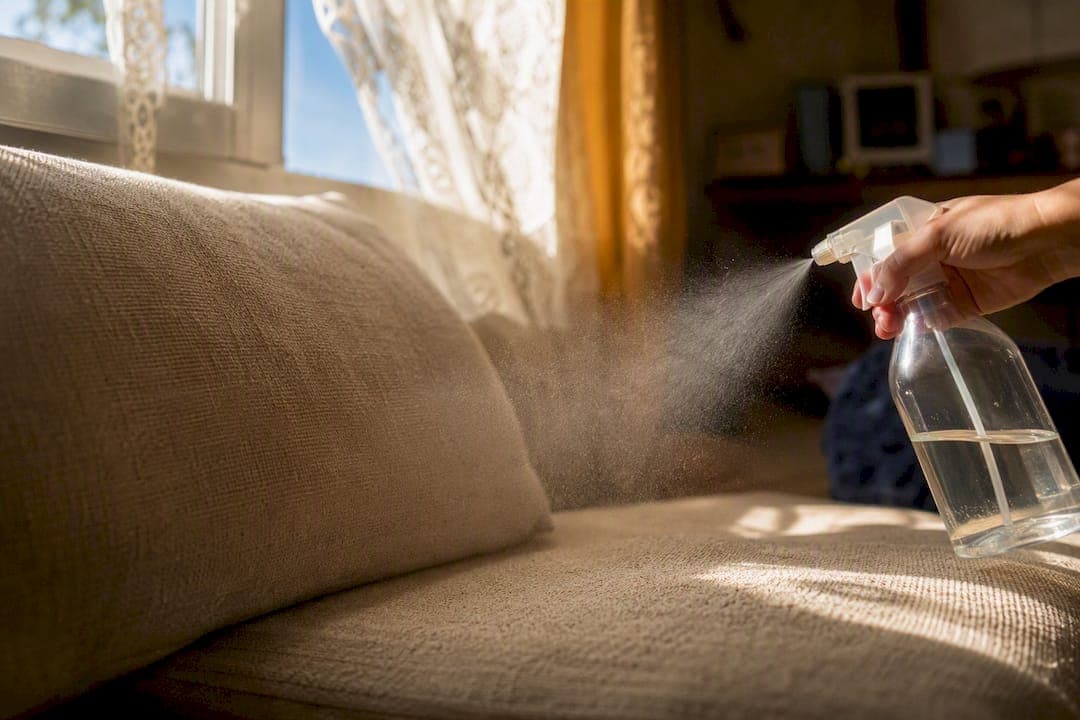
Start with baking soda, a slow vacuum pass, and open windows. That combination lifts most fresh cooking smells out of fabric within a day. If the odour comes back after airing, you're dealing with grease that's bonded to the fibres, not just trapped air, and you'll need an enzyme cleaner or professional hot-water extraction to actually pull it out.
Here's the order that works:
- Sprinkle baking soda over the affected area and let it sit before vacuuming with an upholstery attachment.
- Open windows, run the range hood, and let sunlight hit the fabric if the care tag allows it.
- Repeat the baking soda and vacuum cycle once, about 24 hours later, if the smell lingers.
- If it's still there after two rounds, move to an enzyme cleaner or book professional steam extraction.
Baking soda neutralises many household odours when left on fabric for 15 to 60 minutes before vacuuming, which is why it's the go-to first move rather than a fragranced spray. A spray only covers a smell temporarily; it doesn't remove what's stuck in the fibres.
TL;DR:
- Baking soda effectively neutralizes surface cooking odors when left on fabric for up to an hour and vacuumed thoroughly; longer dwell times improve results.
- For persistent oilborne smells, enzyme cleaners or professional hot-water extraction are necessary, especially when odors penetrate deep into cushion cores.
- Ventilation during and after cooking, including range hood use and opening windows, helps prevent odors from settling into fabrics and cushions.
- Leather sofas are less porous and typically only require surface wipe-down, but improper cleaning products can damage the material, unlike fabric.
- Activated charcoal sachets serve as maintenance tools for ongoing odor control but are ineffective against deep-set, oil-based smells.
Table of Contents
- How to remove cooking odours in sofa cushions with DIY methods
- Why do cooking smells need deeper cleaning than a quick freshen-up?
- What daily habits actually stop cooking odours from settling in?
- When is it time to call a professional cleaner?
- Does activated charcoal actually pull odours out of a sofa?
- How do you clean odours out of a sofa you can't take apart?
- Does leather hold cooking smells differently than fabric?
- Key Takeaways
- Sources
How to remove cooking odours in sofa cushions with DIY methods
Baking soda works because it's alkaline and porous, which lets it absorb acidic and oily odour compounds sitting on the surface of the fabric. Here's how to do it properly.
- Vacuum first. Before you apply anything, run the upholstery attachment over the whole cushion to lift loose crumbs, hair, and surface debris. Skipping this step just means you're working baking soda into a dirtier surface than you need to.
- Sprinkle generously. Cover the smelly area with a visible, even layer. Don't be shy. A thin dusting won't have enough surface contact to absorb much.
- Let it sit for a short period that can vary up to about an hour. Longer dwell time helps with stronger smells, so if the sofa reeks of last night's fried onions, lean toward the 60-minute end.
- Vacuum in slow, overlapping passes. Fast passes leave powder behind in the weave. Go slowly with the upholstery tool, working in one direction, then a second pass perpendicular to the first.
- Mist lightly with a vinegar solution if the smell persists. Mix water and white vinegar in a 1:1 ratio in a spray bottle. Test it on a hidden patch first, like the underside of a cushion, and wait ten minutes to check for discoloration.
- Mist, don't soak. A light vinegar mist freshens fabric surfaces but oversaturating the cushion invites mildew, which smells worse than the cooking odour you started with.
- Let it air dry completely before sitting on it again, ideally near an open window or a fan.
- Air the room out. Open windows on opposite sides of the room if you can, to create cross ventilation. Run the range hood fan for at least twenty minutes after cooking, not just during it.
- Use sunlight carefully. A short stint of direct sun can help dry and freshen fabric, but limit it to an hour or two. Extended sun exposure fades dyes and can weaken certain synthetic fibres over time.
- Repeat once after 24 hours if needed. One extra round of baking soda and vacuuming handles most lingering smells that survived the first pass.
Pro Tip: Vacuum your sofa with the upholstery tool once a week, even when nothing smells. Grease particles from cooking settle into fibres gradually, and catching them before they bond permanently is a lot easier than removing them after the fact.
Why do cooking smells need deeper cleaning than a quick freshen-up?
Some smells shrug off baking soda and vinegar entirely, and that's not a sign you did it wrong. It usually means the odour has moved past the surface.
Frying, fish, garlic, and heavy spice cooking release oilborne molecules that bind with synthetic fibres and can penetrate cushion cores, sitting deep inside the foam rather than just on the woven surface. Airing the room clears the smell floating in the air, but it does nothing for the oil molecules already lodged in the padding.
Check the care tag before you do anything with water or cleaning solution:
- W means water-based cleaners are safe.
- S means solvent-based cleaners only. Water can cause rings, shrinkage, or colour bleed.
- WS means either works.
- X means vacuum only. No liquid of any kind.
For removable covers rated W or WS, wash on a cool or warm cycle with a mild detergent, then air dry rather than tumble dry to avoid shrinkage. Enzyme cleaners are worth having on hand specifically for cooking odours, because enzyme-based products break down organic residues like food proteins and grease rather than just masking them. Apply the enzyme cleaner to the affected spot, let it sit for the dwell time listed on the bottle (usually 10 to 20 minutes), then blot with a clean, damp cloth rather than rubbing.
For smells that survive all of this, professional hot-water extraction pulls odour-bearing particles out of deep fibres and cushion cores using heat, pressure, and high-suction removal, which reaches material a spray bottle never will. Home extraction machines exist, but they're prone to over-wetting cushions, and a sofa that doesn't dry fully within 24 hours risks mildew growing inside the foam. If you rent one, use fans and keep windows open the entire drying period.
What daily habits actually stop cooking odours from settling in?
Prevention is cheaper and easier than any cleaning method on this list, and most of it comes down to airflow during the ten minutes that actually matter: while food is cooking.
- Turn the range hood on before you start cooking, not after the smell hits you, and leave it running for 20 minutes afterward.
- Crack a window near the kitchen, even in colder months, to give odour molecules somewhere to go besides your upholstery.
- Set your HVAC fan to "on" instead of "auto" while cooking so air keeps circulating through the house rather than sitting still.
- Close doors between the kitchen and living room when frying or cooking anything heavily spiced.
- Throw a washable slipcover or throw blanket over the sofa on frying nights. It's far easier to launder a $20 throw than to deep clean an entire cushion.
- Vacuum the sofa weekly with the upholstery tool so grease particles don't get the chance to bond permanently.
Open-plan layouts let cooking odours travel farther and settle on soft furnishings more readily than a closed kitchen would, so if your living room and kitchen share one space, ventilation habits matter even more than they would in a house with a door between the two.
When is it time to call a professional cleaner?
DIY methods handle most everyday cooking smells, but a few signs mean it's time to stop repeating baking soda cycles and book an inspection instead.
- The smell returns within a day or two of airing, even after washing removable covers.
- You can smell it specifically when you press down on a cushion, which suggests the odour is inside the foam, not just the fabric surface.
- The cushion feels slightly greasy or damp to the touch, even when it looks clean.
- Spice or smoke notes persist after two full rounds of baking soda, vinegar, and cover washing.
A professional visit typically starts with an inspection of the fabric type and an assessment of how deep the odour sits, followed by a test on a hidden patch. From there, technicians use hot-water extraction, often paired with enzyme-assisted pre-treatment for grease-heavy odours, and finish with controlled drying to prevent the mildew risk that comes with DIY extraction attempts.
Pro Tip: Before a technician arrives, vacuum the sofa yourself and clear the surrounding area. It shortens the appointment and lets them focus entirely on the odour rather than surface debris.
Does activated charcoal actually pull odours out of a sofa?
Activated charcoal and silica-based odour gels work differently than baking soda. Instead of neutralizing odour through an alkaline reaction, charcoal relies on a huge internal surface area riddled with microscopic pores that trap odour molecules by adsorption, meaning the molecules stick to the surface of the pores rather than reacting chemically.
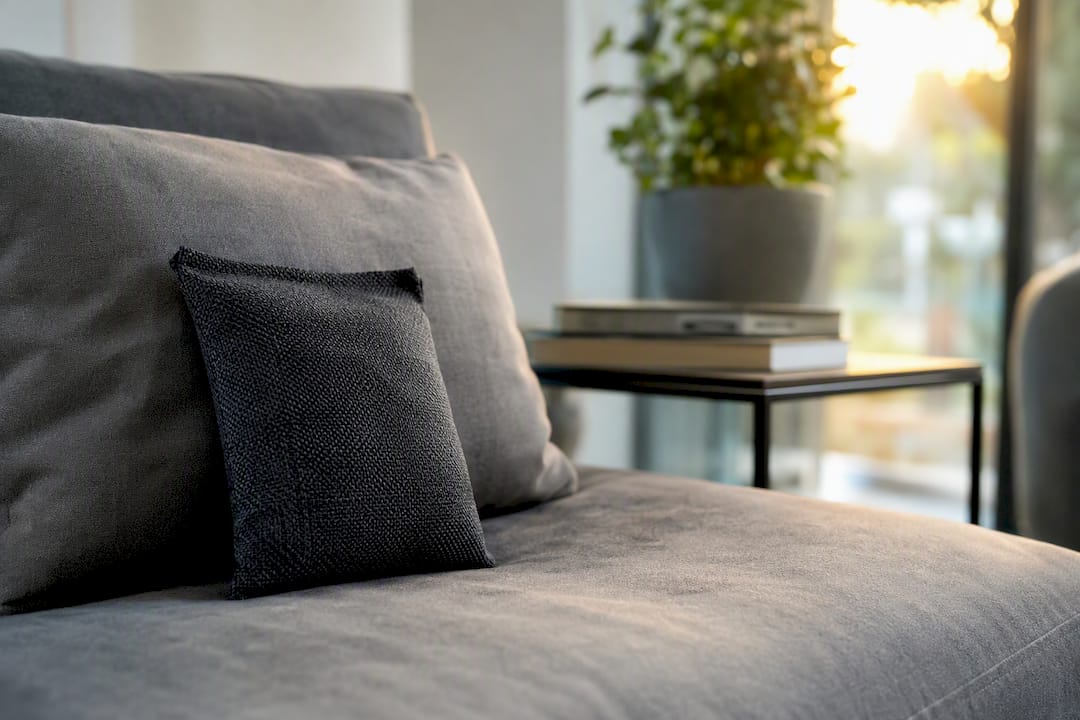
For a fabric sofa, the most practical approach is a charcoal bag or sachet placed directly on the cushion overnight, or tucked between cushions where cooking smells tend to concentrate. Unlike baking soda, charcoal doesn't need to be vacuumed off afterward since it's contained in a porous bag, which makes it a low-effort option for ongoing maintenance between deeper cleans.
Charcoal is best treated as a maintenance tool rather than a fix for an already-set-in smell. It works on airborne and lightly surface-bound odours sitting in the fabric's outer layer. It does very little for oilborne molecules that have already worked their way into the cushion core, the same limitation that airing and ventilation run into. Think of charcoal as a complement to baking soda and vacuuming, not a replacement: use baking soda for the active cleaning cycle, then leave a charcoal sachet in place afterward to catch anything that resettles before it bonds again.
Odour-absorbing gels, often silica-based, work on a similar adsorption principle and tend to last longer in humid environments than loose baking soda, though they cost more per use.
How do you clean odours out of a sofa you can't take apart?
Not every sofa gives you the luxury of removable, washable covers. Sectionals with fixed upholstery, older sofas with stapled fabric, and many sleeper sofas fall into this category, and it changes your approach significantly.
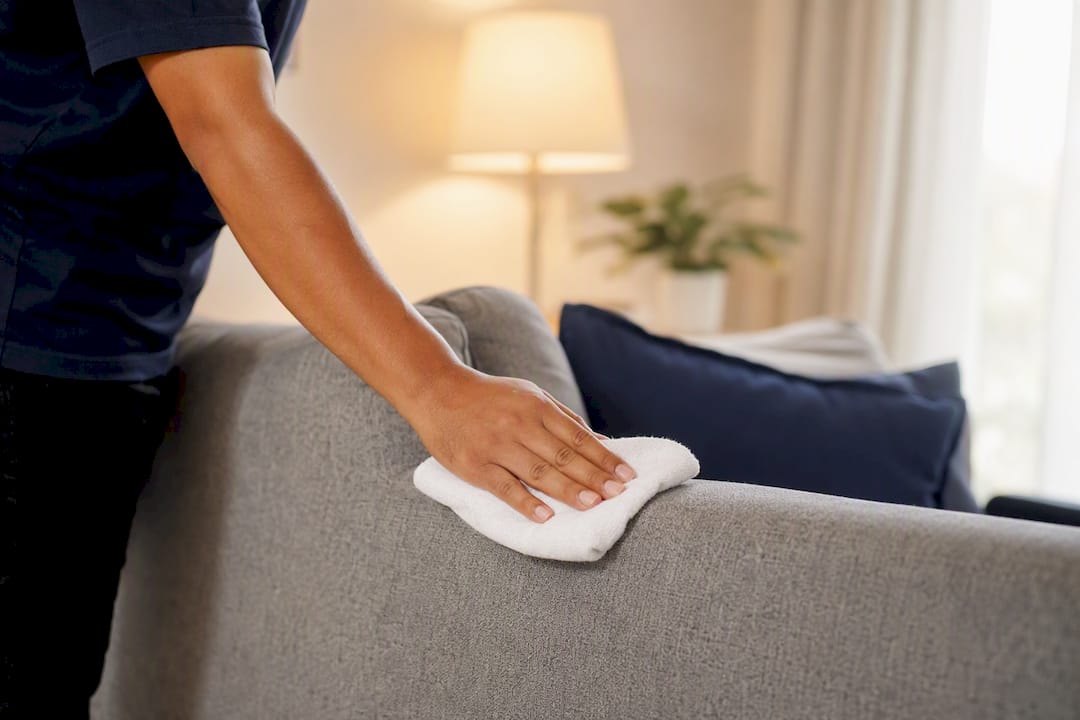
Start by checking the care tag, which is usually found underneath the frame or tucked into a cushion seam even on non-removable pieces. That W, S, WS, or X code still governs what you can safely use, regardless of whether the fabric comes off.
For W or WS-rated non-removable fabric, you can mist vinegar solution or apply an enzyme cleaner directly to the surface, but you need to be far more careful about saturation than you would with a removable cover you can wring out or toss in the wash. Blot rather than rub, and use a dry towel to press out excess moisture immediately after treatment. Point a fan at the area for several hours to speed drying, since trapped moisture inside a fixed sofa has nowhere to escape except through the fabric itself.
For S-rated fabric, skip water-based treatments entirely and stick to dry solvent-based cleaners or baking soda and vacuuming only. Using water on an S-rated fabric risks permanent rings or fibre damage that no amount of cleaning fixes afterward.
This is also where professional equipment earns its keep. A technician's extraction tools apply controlled moisture and immediate high-powered suction in the same pass, which limits the saturation risk that makes DIY wet cleaning on fixed upholstery genuinely nerve-wracking.
Does leather hold cooking smells differently than fabric?
Leather and fabric behave almost like opposites when it comes to cooking odours, and that difference should shape how you treat each one.
Fabric, especially synthetic weaves like polyester or microfibre, has a porous, fibrous structure that gives oilborne odour molecules countless surfaces to bond to. That's why these molecules can penetrate cushion cores and internal layers, making them tough to reach without extraction. Leather, by contrast, has a much less porous surface. Cooking odours tend to sit on top of leather rather than soaking in, which is why a simple wipe-down with a damp cloth and mild soap often resolves cooking smells on leather that would take a full deep clean on fabric.
The exception is leather with a very open, unfinished grain, like some aniline leathers, which absorb slightly more than the coated, protected leathers used in most sofas. Even then, leather rarely needs enzyme treatment or hot-water extraction the way fabric does, since there's no cushion core fibre for the odour to hide in.
The tradeoff is that leather is far less forgiving of the wrong cleaning product. Vinegar and baking soda, both fine on fabric, can dry out or discolour leather if used incorrectly. Stick to leather-specific cleaners and conditioners, and treat any fabric-focused advice in this article as fabric-only unless stated otherwise.
A field note on what actually works
Most of the stubborn cases Icleansecuc gets called for share one thing: frying oil, and often curry or fried-food smells that survived weeks of febreze and open windows. In one job, a client had aired the room daily for two weeks with no improvement, because the smell wasn't in the air anymore. It was sitting in the cushion foam. One extraction pass with enzyme pre-treatment resolved it in a single visit. Before you get to that point, try the vinegar mist on a hidden patch first. It catches more than people expect.
— Rob
Book a cooking-odour cleanup with Icleansecuc
When baking soda, vinegar, and two rounds of airing haven't touched the smell, the sofa doesn't need another home remedy. It needs equipment that reaches the cushion core, not just the surface. Icleansecuc runs hot-water extraction and enzyme-assisted treatments built specifically for oilborne cooking odours, paired with eco-friendly cleaning solutions and controlled drying protocols so you're not left with a damp sofa and a mildew problem instead of a smelly one.
Every job starts with fabric testing and transparent pricing before anything gets sprayed, so you know what you're paying for and why. If your sofa still smells like last month's cooking after doing everything in this article, request a quote or book an appointment and get it handled properly.
Key Takeaways
Removing cooking odours from a fabric sofa requires baking soda and ventilation for surface smells, enzyme cleaners or professional extraction for oil bound into cushion cores.
| Point | Details |
|---|---|
| Start with baking soda | Sprinkle, let sit 15 to 60 minutes, then vacuum slowly with an upholstery attachment. |
| Test before wetting fabric | Always check the care tag (W, S, WS, X) and try a hidden patch before vinegar or enzyme cleaners. |
| Know the escalation point | If odour returns after two DIY rounds, switch to enzyme cleaners or professional extraction. |
| Prevent, don't just react | Run the range hood, crack a window, and set HVAC fans to "on" while cooking. |
| Call Icleansecuc for embedded smells | Icleansecuc offers hot-water extraction and enzyme treatments for odours DIY methods can't reach. |
Sources
- How to clean your sofa: A complete guide | Canada.com
- Why cooking odours settle into your couch | Upholstery Steamers
- How to get smell out of a sofa (Fast fixes) – OMHU
- Why cooking smells linger in soft furnishings – NUHR Home