
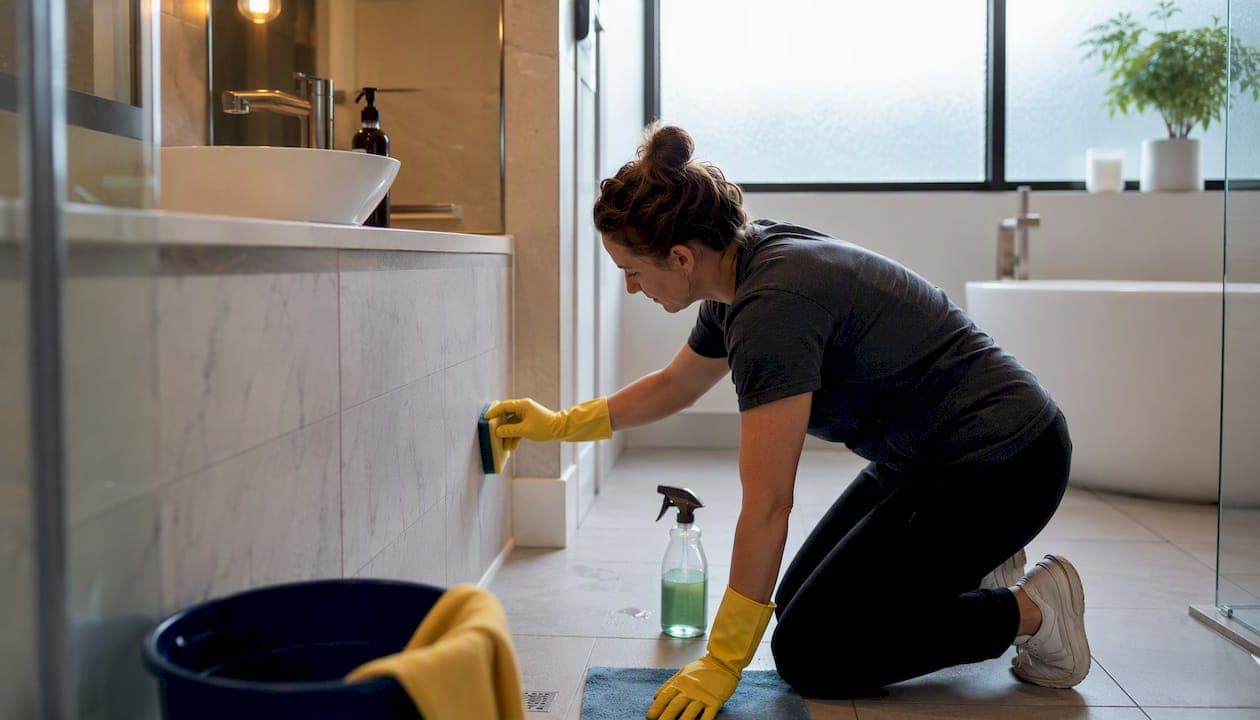
Leave the unit inspection-ready by working through a room-by-room checklist, photographing every area after cleaning, and keeping all receipts. That combination is your strongest protection against unfair deposit deductions.
Before you read further, here are the highest-impact tasks landlords and rental tribunals most commonly check:
- Oven interior, rangehood filters, and stovetop grates scrubbed free of grease
- Fridge and freezer emptied, defrosted, and wiped inside and out
- Bathroom fixtures (toilet, tub, sink, shower) descaled and scrubbed
- Cupboards and drawers wiped inside and out, free of crumbs and residue
- Floors vacuumed, mopped, and spot-treated for stains
- Windows, tracks, and mirrors cleaned
- Walls wiped for scuff marks; small nail holes filled
Take dated photos of every room after cleaning and keep copies of any professional cleaning receipts.
Key takeaways
Tenants who document their clean with dated photos, a completed condition report, and professional receipts have the strongest defence against unfair deposit deductions under Canadian provincial law.
| Point | Details |
|---|---|
| Clean high-impact areas first | Oven, rangehood, bathroom fixtures, and carpets are the most commonly disputed items on inspection reports. |
| Document after cleaning | Complete the condition report and take dated photos once the unit is empty and fully cleaned, not before. |
| Know your legal standard | Ontario, BC, and Manitoba all require "ordinary cleanliness," not professional-level perfection; mandatory pro-clean clauses may be void in Ontario. |
| Keep all receipts | Professional cleaning invoices with the address, date, and scope are your primary evidence in any deposit dispute. |
| Icleansecuc covers the GTA | Move-out cleaning, carpet steam extraction, and tile and grout restoration with a written invoice for your deposit file. |
Table of Contents
- How far ahead should you plan your move-out cleaning?
- Your room-by-room end of lease cleaning checklist
- What do you need to know about carpets and hard floors?
- Practical tools and stain-removal tricks that actually work
- How to do your final walkthrough and protect your deposit
- What are your legal rights as a tenant in Canada at move-out?
- What tenants consistently get wrong about move-out cleaning
- Professional move-out cleaning in the Greater Toronto Area
- Sources
How far ahead should you plan your move-out cleaning?
Most tenants underestimate how long a thorough clean takes. A standard two-bedroom apartment typically needs a full day of cleaning, and if carpets or appliances need professional attention, you need to book those trades at least two weeks out.
Four or more weeks before handover: Decide which tasks you will handle yourself and which need a professional. Carpet cleaning, oven deep-cleans, and grout restoration are the three areas most commonly flagged on inspection reports. Get quotes in writing and confirm the scope of work before booking.
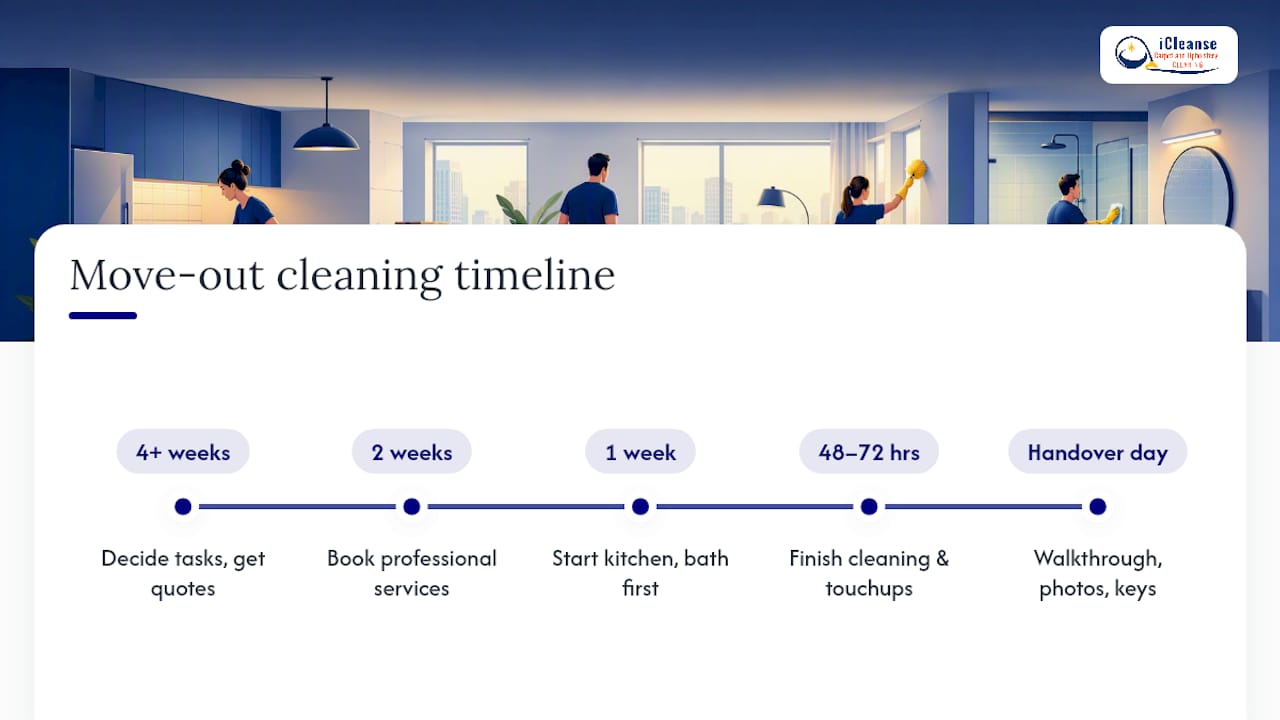
Two weeks out: Book any professional services. Carpet cleaners in the Greater Toronto Area can fill up quickly, especially at month-end. Confirm the appointment date, arrival window, and what the invoice will include. A receipt showing the address, date, and scope of work is what matters for deposit defence.
One week out: Start cleaning room by room, beginning with the kitchen and bathroom. These take the longest and reveal secondary tasks (grout, caulking, vent covers) you may not have noticed.
48–72 hours before handover: Complete all cleaning, fill small nail holes, and touch up scuff marks. Do not leave this for the morning of.
Day of handover: Walk through the empty unit with your condition report, take final photos, record meter readings, and return keys.
Cost note: Professional move-out cleaning in Ontario generally costs an amount that increases with the size of the unit and the condition, with one-bedroom and three-bedroom units priced accordingly; exact amounts vary by provider and scope. Carpet cleaning is typically priced separately per room or by square footage. These are ballpark figures; get written quotes for your specific unit.
Pro Tip: Confirm the cleaning scope in writing before any professional arrives. A brief email exchange stating "carpet cleaning of three bedrooms, including moving furniture" protects you if there is a dispute about what was done.
Your room-by-room end of lease cleaning checklist
Work through each room in the order below. Finish one room completely before moving to the next so you do not miss anything.
Kitchen
- Pull the oven away from the wall, clean behind and beneath it, then scrub the interior racks, door glass, and cavity with a degreaser
- Remove and soak rangehood filters; wipe the fan housing and exterior
- Empty the fridge and freezer, defrost, and wipe all surfaces including door seals
- Wipe all cupboard and drawer interiors and exteriors, including hinges
- Clean benchtops, splashbacks, and the sink; descale taps
- Sweep and mop the floor, including under appliances
Pro Tip: A paste of baking soda and dish soap left on oven grime for 20 minutes cuts through grease without harsh fumes. Rinse thoroughly before the inspection.
Bathroom
- Scrub the toilet bowl, seat, lid, and base
- Clean the shower or tub, including grout lines and the drain cover
- Descale the showerhead and taps
- Wipe the sink, vanity, and mirror
- Clean the extractor fan cover (remove and rinse if possible)
- Wipe cupboard interiors and the underside of the vanity
- Mop the floor and clean the floor drain
Bedrooms and living areas
- Wipe walls for scuff marks using a slightly damp microfibre cloth; fill small nail holes with a ready-mix filler and touch up paint if needed
- Dust and wipe skirting boards, light fittings, and ceiling fan blades
- Clean window glass, frames, and tracks
- Vacuum curtains or wipe blinds slat by slat
- Wipe closet shelves and rods; vacuum closet floors
- Clean air vents and return-air grilles
Entry and hallways
- Wipe light switches, door handles, and door frames
- Clean the front door interior and exterior
- Record meter readings (gas, electricity, water) and photograph the meters
- Sweep and mop hard floors; vacuum carpet runners
- Wipe baseboards
Minor repairs belong here too. Fill nail holes, tighten loose door handles, and replace any burnt-out light bulbs before the inspection. These small fixes take minutes and prevent deductions.
What do you need to know about carpets and hard floors?
Carpets are the single most disputed item on move-out inspections. The BC RTB Policy Guideline GL01 notes that tenants may be expected to arrange steam or shampoo cleaning after long tenancies, or where there has been smoking or pet use. Even outside BC, that standard is a useful benchmark.
For spot stains you are tackling yourself:
- Blot (never rub) fresh stains immediately with a clean white cloth
- Apply a small amount of cold water and a drop of dish soap; blot again
- For pet stains, use an enzyme-based cleaner to neutralise odour
- For grease, sprinkle baking soda, let it sit 15 minutes, then vacuum before applying a degreaser
- Test any product on an inconspicuous area first
When to book a professional instead:
- Stains that have set for more than a few days
- Pet odour that persists after spot treatment
- Carpets not cleaned professionally during the tenancy
- Any carpet in a unit where smoking occurred
Keep the professional cleaning invoice. It should show the address, date, and method used. That receipt is your evidence if the landlord claims the carpet was left dirty. For more on what professional methods involve, the carpet cleaning methods guide at Icleansecuc explains the difference between steam extraction and dry cleaning and when each applies.
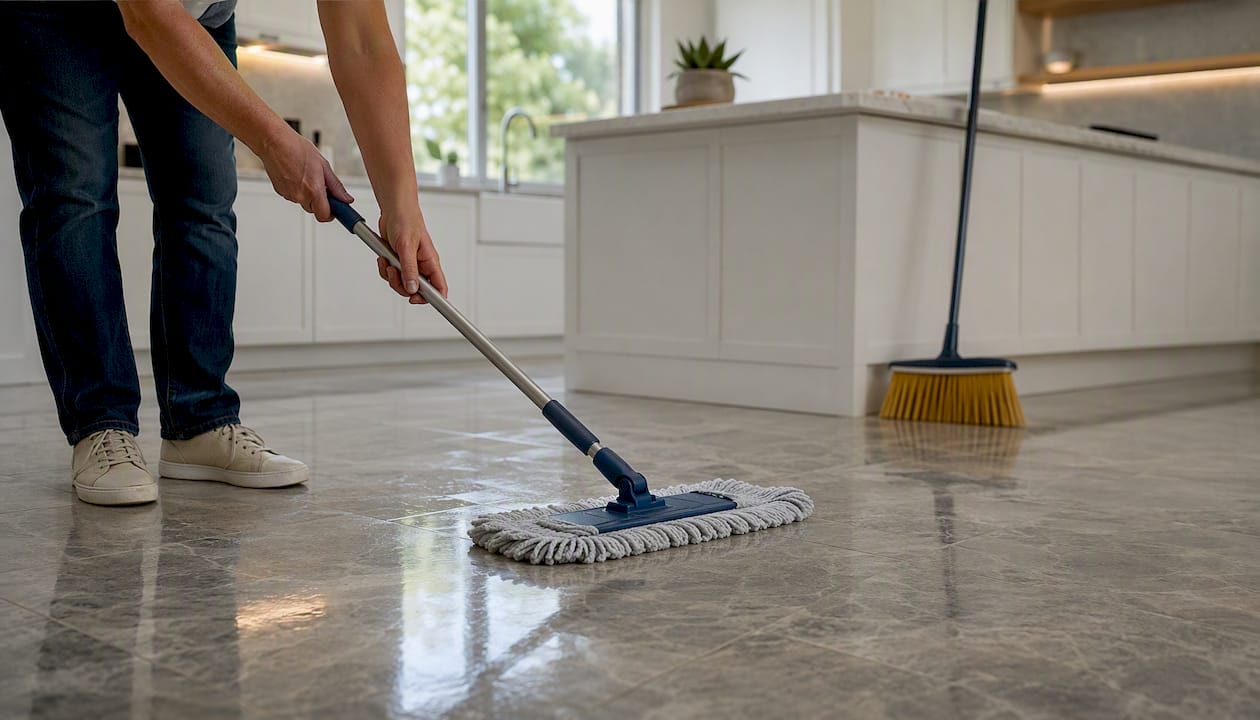
For hard floors, sweep first, then damp-mop with a pH-neutral cleaner. Avoid excess water on hardwood. Move appliances and furniture to clean underneath before the final walkthrough.
Pro Tip: Check whether your carpet shows signs it needs professional cleaning before deciding to DIY. Matted fibres, persistent odour, or visible traffic-lane discolouration are reliable indicators that a machine clean will be needed to pass inspection.
Practical tools and stain-removal tricks that actually work
You do not need a cupboard full of specialty products. A focused kit handles most inspection-point failures:
- Microfibre cloths (at least six): one per room prevents cross-contamination and picks up dust without scratching surfaces
- Bucket and mop with a wringer: flat-head mops cover more floor area faster
- Stiff grout brush: the single most effective tool for bathroom tile lines
- Non-bleach bathroom cleaner with citric acid: descales fixtures without damaging chrome
- Kitchen degreaser: essential for rangehood, stovetop, and oven exteriors
- Enzyme-based cleaner: for pet stains and odours on carpet or upholstery; see upholstery stain tips for fabric-specific guidance
- Ready-mix wall filler and a small putty knife: for nail holes
Stain-removal quick reference:
- Mould on grout or caulking: apply a paste of baking soda and white vinegar, scrub with a grout brush, rinse well. For persistent mould, a diluted hydrogen peroxide solution (3%) works without the fumes of bleach.
- Ink on walls: rubbing alcohol on a microfibre cloth, applied with light pressure.
- Grease on walls or surfaces: dish soap diluted in warm water, then rinse.
- Hard-water scale on taps and shower screens: white vinegar soaked on a cloth and left for 10–15 minutes.
Safety note: Never mix bleach with ammonia-based cleaners. Work with windows open when using any solvent or strong degreaser. Always test a cleaner on a small, hidden area before applying it to a full surface.
How to do your final walkthrough and protect your deposit
The final walkthrough is not a second cleaning pass. It is a documentation exercise. Do it after the unit is empty and fully cleaned.
Work through each room in this order:
- Start at the front door and move clockwise through each room
- Check every surface at eye level, then crouch to check lower surfaces and floors
- Open every cupboard, drawer, and appliance
- Run taps briefly to confirm no blockages
- Check all light switches and outlets are functional
Photograph and video everything:
- Take wide shots of each room, then close-ups of any pre-existing marks or damage
- Open appliances and photograph the interiors
- Photograph meter readings with the date visible
- Record a slow walk-through video as a single continuous file
Complete the move-out portion of your condition report after cleaning and after the unit is empty. Manitoba RTB guidance specifically recommends this timing because adjudicators use the condition report as primary evidence in disputes.
At handover:
- Return all keys and fobs; get written confirmation of return
- Send an exit email to the landlord or property manager summarising the handover date, meter readings, and attaching a selection of your photos
- Keep copies of the condition report, all photos, all professional cleaning receipts, and the exit email
That email creates a timestamped record outside your phone's camera roll, which matters if a dispute arises months later.
What are your legal rights as a tenant in Canada at move-out?
Provincial standards vary, but the core principle is consistent: tenants must leave the unit clean, not perfect.
| Province | Standard | Key source |
|---|---|---|
| Ontario | "Ordinary cleanliness" (RTA s. 33); lease clauses requiring professional cleans may be void | Ontario RTA |
| British Columbia | Tenant responsible for cleanliness; reasonable wear and tear excluded; cleaning costs charged if standard not met | BC RTB moving-out guidance |
| Manitoba | "Ordinarily clean" standard; condition report used as primary evidence in disputes | Manitoba RTB guidance |
Ontario: The Residential Tenancies Act section 33 sets the tenant's obligation at "ordinary cleanliness." A lease clause that requires you to hire a professional cleaner on move-out is likely void under the RTA. Legal guidance confirms that such clauses are often unenforceable and recommends documenting your clean, refusing to pay an illegal invoice, and filing with the Landlord and Tenant Board if the landlord pursues a deduction.
British Columbia: The BC RTB draws a clear line between cleaning obligations and reasonable wear and tear. Scuffs from normal furniture use are wear and tear; a grease-coated oven is not. GL01 lists specific tenant duties for carpets, window coverings, and appliances.
Manitoba: The RTB recommends completing the condition report after cleaning and keeping dated photos. Adjudicators treat the condition report as the primary record.
If a dispute arises:
- Gather your condition report, dated photos, and professional cleaning receipts
- Contact your provincial tribunal (LTB in Ontario, RTB in BC and Manitoba) for the correct dispute form
- Respond in writing to any deduction notice within the deadline your province sets
What tenants consistently get wrong about move-out cleaning
Most tenants who lose deposit disputes do not lose because they cleaned badly. They lose because they cannot prove they cleaned at all.
The condition report is the document adjudicators reach for first. A tenant who fills it out after moving furniture but before cleaning is recording the wrong state. Fill it out after the unit is empty and spotless, then photograph it alongside the unit.
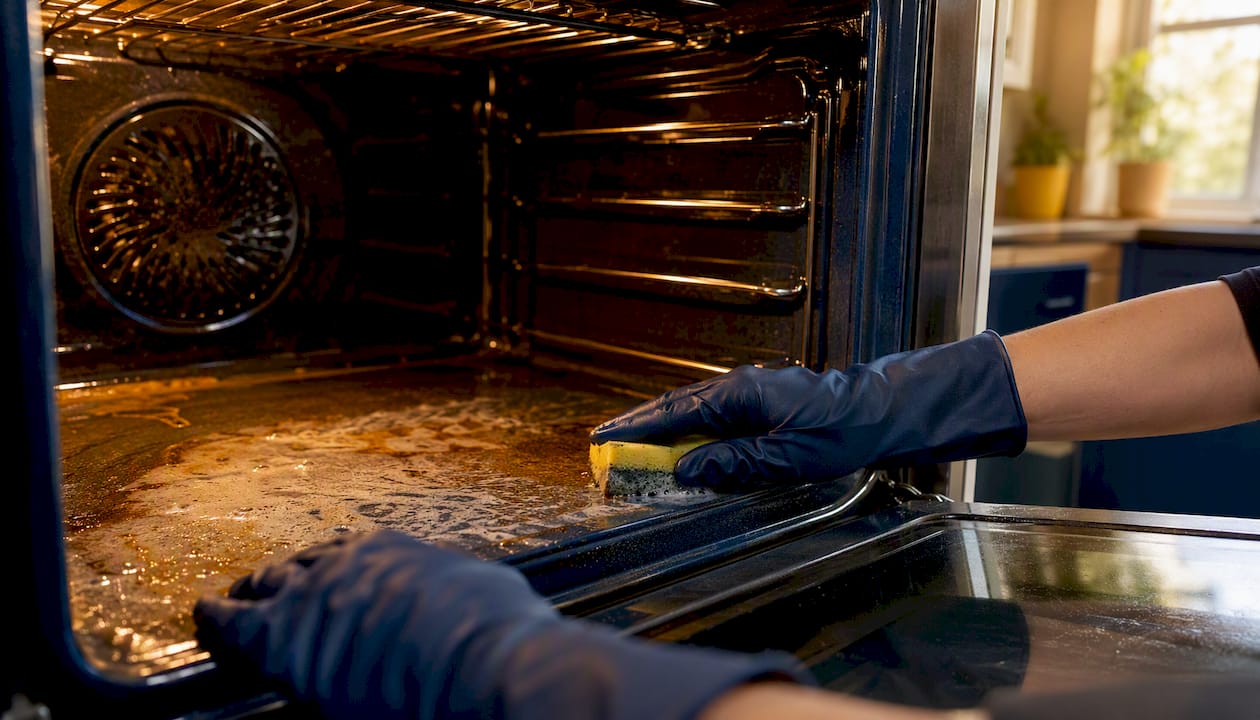
The second mistake is treating the oven and rangehood as optional. These two items appear on more disputed inspection reports than any other fixture. A landlord who can photograph a grease-coated oven has a straightforward case. Spend the time there.
The third is ignoring the paper trail. A professional cleaning receipt with the address, date, and scope written on it is worth more than any verbal agreement. Even if you clean yourself, a brief exit email with attached photos creates a timestamped record that a landlord's later claims have to overcome.
Professional move-out cleaning in the Greater Toronto Area
When the checklist feels too long for the time you have left, Icleansecuc handles the heavy work. The move-out and carpet cleaning services cover the areas that most commonly trigger deposit disputes: deep oven and appliance cleaning, carpet steam extraction, upholstery cleaning, and ceramic tile and grout restoration throughout the Greater Toronto Area.

Every booked service includes a written invoice showing the address, date, and scope of work. That receipt goes straight into your move-out evidence file. Icleansecuc uses commercial-grade equipment and eco-friendly solutions, and the team confirms the scope before starting so there are no surprises on the day.
Request a quote before your move-out date to lock in availability. Month-end slots fill quickly, and a written quote lets you compare the cost against your deposit before you commit.
Sources
- Ontario
- Moving out of rental units - Province of British Columbia
- Policy Guideline 1: Landlord & Tenant – Responsibility for Residential Premises
- Can a landlord enforce a clause requiring you to hire professional cleaners upon move-out in Ontario? | LawyerInfo
For province-specific dispute forms and contact numbers, visit your provincial tribunal directly: the Landlord and Tenant Board (Ontario) at ltb.gov.on.ca, the BC Residential Tenancy Branch at gov.bc.ca/landlordtenant, and the Manitoba RTB at gov.mb.ca/cca/rtb.
This article is general information, not a substitute for advice from a qualified lawyer. Consult a qualified legal professional about your own circumstances before acting on anything here.