
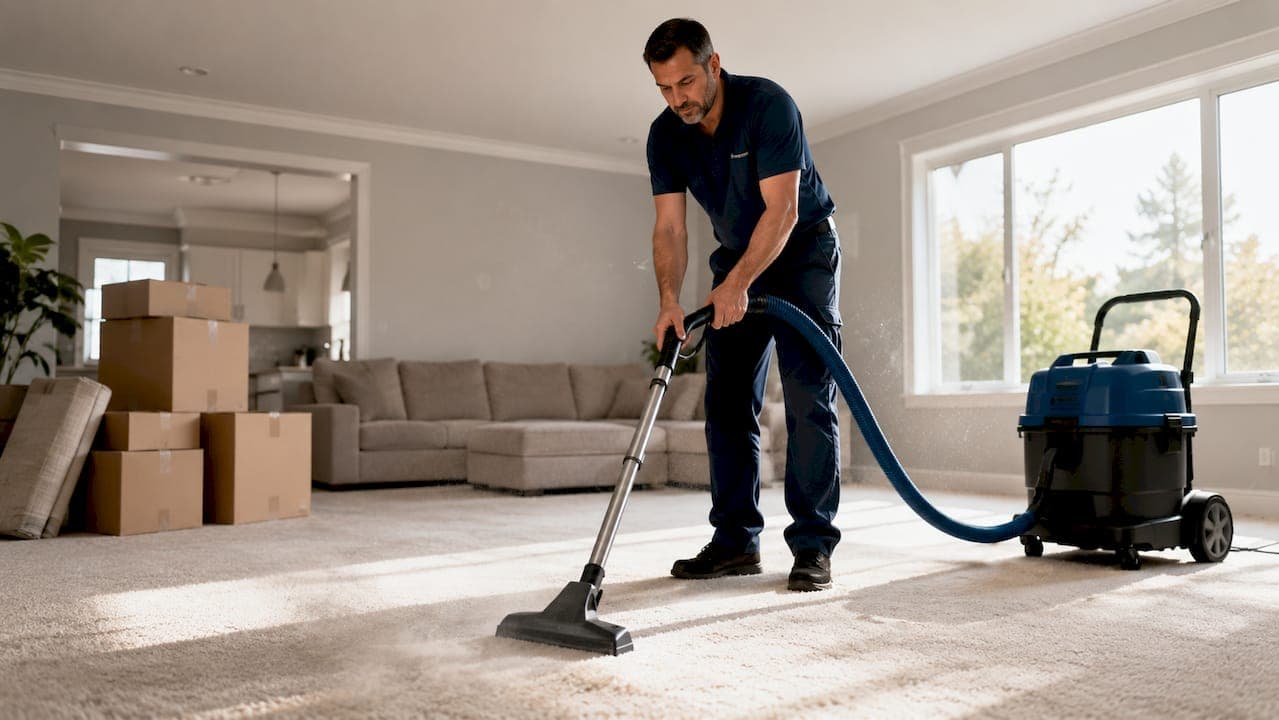
Post-renovation carpet cleaning is the targeted removal of construction dust, chemical residues, and debris embedded deep in carpet fibres after home renovations. Standard vacuuming cannot address what is post-renovation carpet cleaning need at its core: microscopic particles ranging from 1–10 microns that slip through ordinary filters and settle into carpet backing. Professionals use HEPA-rated vacuums and hot water extraction to reach these particles. Skipping this step shortens carpet life, degrades indoor air quality, and leaves your newly renovated home far less clean than it looks.
What is post-renovation carpet cleaning need, and why does it matter?
Post-renovation carpet cleaning, known in the industry as post-construction deep cleaning, addresses a problem that most homeowners underestimate. Drywall dust measures 1–10 microns in size. That is small enough to pass straight through the filters in most household vacuums and embed itself in the carpet backing where it stays, invisible, until it causes damage.
The damage is not cosmetic. Renovation dust acts as abrasive grit on carpet fibres, grinding them down with every footstep. Think of it as walking on fine sandpaper laid across your floor. Over time, this accelerates fibre breakdown and dulls the carpet's appearance permanently.
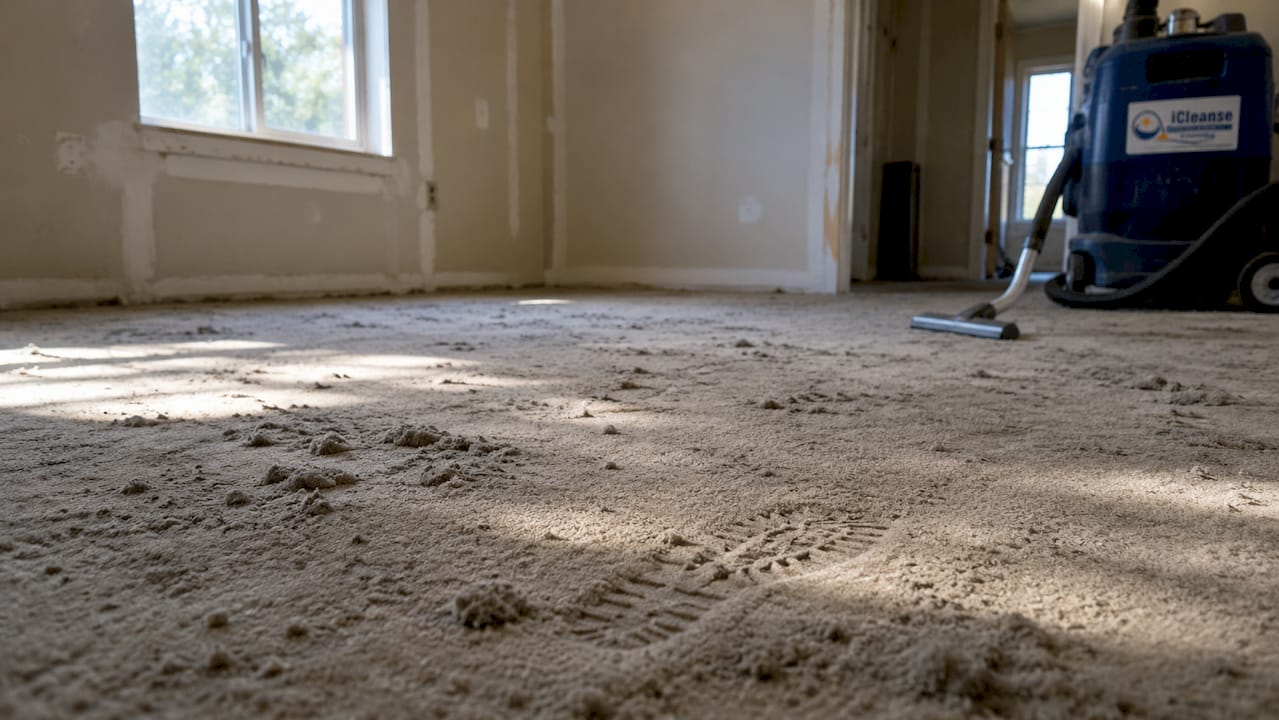
Beyond physical damage, construction dust carries volatile organic compounds, or VOCs. These are chemical off-gases from paints, adhesives, and sealants used during the renovation. VOC-laden dust requires steam cleaning to break the chemical bonds and extract the compounds from fibres. A regular vacuum pass does nothing to address the smell or the chemical load.
Contractor cleanups typically remove only large debris. Fine dust removal falls to the homeowner. Planning for a professional post-renovation clean is not optional if you want your space truly move-in ready.
Why cleaning floors first is the most expensive mistake
The order in which you clean after a renovation determines whether you clean once or twice. Most homeowners start with the floors because they look the worst. This is the wrong call.
Dust from ceilings, walls, and HVAC vents resettles downward after any disturbance. Cleaning floors before ceilings and vents guarantees that freshly cleaned carpets collect a second layer of dust within hours. You end up paying to clean the same surface twice.
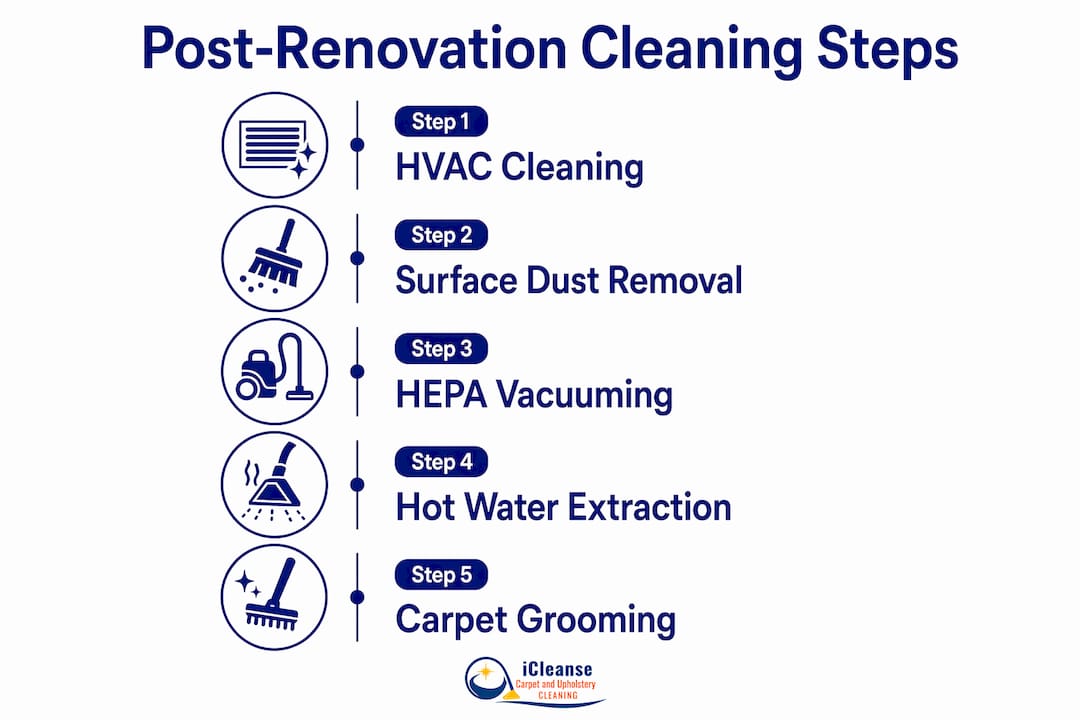
The correct sequence follows a top-to-bottom, inside-to-outside logic:
- HVAC ducts and vents — clean and replace filters first to stop dust from recirculating through the air system during the entire cleaning process.
- Ceilings and walls — wipe down surfaces so dust falls to lower levels.
- Horizontal surfaces — shelves, ledges, and countertops come next.
- Cabinets and appliances — interior and exterior surfaces.
- Windows — frames, sills, and glass.
- Bathrooms — fixtures and tile.
- Floors last — carpets receive HEPA vacuuming and professional steam cleaning only after every surface above them is clean.
Cleaning HVAC systems and replacing filters before any other step is the single most overlooked action in post-renovation cleaning. Dust circulating through an unchanged filter undoes every other effort.
Pro Tip: Before the cleaning crew arrives, run your HVAC fan on the highest setting for 30 minutes with new filters installed. This pulls airborne particles into the filter rather than letting them resettle on surfaces you are about to clean.
What equipment actually removes renovation dust from carpets?
Standard household vacuums are built for everyday dirt. Renovation dust is a different problem entirely. HEPA filters rated to 0.3 microns are required to trap the fine particles produced by drywall cutting, sanding, and demolition. Without that filtration rating, the vacuum exhausts fine dust back into the air and redeposits it on the carpet.
Professional post-renovation cleaning relies on two core tools:
- Commercial HEPA backpack vacuums — sealed units that capture particles down to 0.3 microns. Pro-grade backpack vacuums are the industry standard for post-construction carpet work because they combine strong suction with true HEPA filtration in a sealed system.
- Hot water extraction machines — commonly called steam cleaners, these inject heated water and cleaning solution deep into carpet fibres, then extract the loosened dirt, dust, and chemical residues. This method breaks down VOC bonds that dry vacuuming cannot touch.
- Air scrubbers — professional-grade units that filter airborne particulates during the cleaning process, reducing the chance of dust resettling on surfaces being cleaned.
- Carpet grooming rakes — used after steam cleaning to lift flattened fibres, restore pile direction, and speed drying. This step is what professionals call post-cleaning carpet grooming.
Post-cleaning carpet grooming is worth understanding on its own. After hot water extraction, carpet fibres are wet and compressed. A grooming rake lifts the pile, which speeds drying, prevents mould growth, and restores the carpet's original texture. Skipping this step leaves carpets looking flat and taking longer to dry, which increases the risk of mildew in the backing.
Pro Tip: Ask your cleaning provider whether they include carpet grooming in their post-renovation service. Many do not list it separately, but it makes a visible difference in how the carpet looks and how quickly it dries.
Benefits of carpet cleaning after renovation: health, money, and comfort
The benefits of carpet cleaning after renovation go well beyond appearance. They fall into three clear categories: health, finances, and liveability.
Health and air quality
Removing fine dust and VOCs post-renovation protects respiratory health and improves overall indoor air quality. Fine particles that remain in carpet fibres become airborne again every time someone walks across the floor. Children and anyone with asthma or allergies face the highest risk. Professional extraction removes the source rather than just suppressing it temporarily.
Financial protection
Frequent professional cleaning prevents premature carpet replacement by removing the abrasive particles that grind down fibres over time. For renters, this matters even more. Damage deposits are at risk if carpets show wear or staining that a landlord attributes to negligence. A documented professional clean after renovation work provides clear evidence of due care.
Liveability and comfort
A renovated home should feel fresh, not smell like construction materials. Persistent odours from adhesives, paint, and drywall compound are a sign that VOCs remain in the carpet. Steam cleaning extracts these compounds and eliminates the smell at its source. The result is a home that matches the investment you made in the renovation itself.
Key benefits at a glance:
- Removes abrasive particles that shorten carpet lifespan
- Extracts VOCs and eliminates construction odours
- Improves indoor air quality and reduces respiratory risk
- Protects damage deposits for renters
- Restores carpet appearance and texture through grooming
- Reduces allergen load for households with children or pets
Key takeaways
Post-renovation carpet cleaning requires HEPA-rated vacuums and hot water extraction to remove construction dust and VOCs that standard cleaning cannot reach.
| Point | Details |
|---|---|
| Floors must be cleaned last | Cleaning carpets before ceilings and vents causes dust to resettle, requiring the work to be done again. |
| HEPA filtration is non-negotiable | Only vacuums rated to 0.3 microns capture the fine drywall dust that embeds in carpet backing. |
| Steam cleaning removes VOCs | Hot water extraction breaks chemical bonds in VOC-laden dust that dry vacuuming leaves behind. |
| Contractors do not finish the job | Fine dust removal is typically outside contractor scope; homeowners must plan for a separate professional clean. |
| Carpet grooming completes the process | Post-cleaning grooming lifts fibres, speeds drying, and restores carpet texture after steam extraction. |
What I have learned from watching homeowners skip this step
Homeowners consistently underestimate post-renovation carpet cleaning for one reason: the carpet looks clean. Dust that measures 1–10 microns is invisible to the naked eye. A carpet that appears fine after a kitchen renovation can hold weeks' worth of abrasive particles in its backing, and you will not notice until the pile starts to look dull and worn.
The mistake I see most often is cleaning floors first. A homeowner vacuums the carpet the day after the contractor leaves, feels satisfied, and moves furniture back in. Two days later, the dust that settled from the ceiling and the HVAC vents has recoated the carpet. The vacuum run was wasted effort.
The second most common oversight is ignoring the HVAC system. Renovation dust travels through ductwork and gets redistributed every time the furnace or air conditioning runs. Replacing filters before cleaning is not a bonus step. It is the step that makes every other step count.
My honest advice: do not rely on how the carpet looks. Rely on the process. A professional who follows the correct sequence, uses sealed HEPA equipment, and includes carpet grooming will deliver a result that a household vacuum simply cannot match. Budget for this clean as part of your renovation cost, not as an afterthought.
— Rob
Icleansecuc: professional post-renovation carpet cleaning in the Greater Toronto Area
Post-renovation cleaning requires the right equipment and the right sequence. Icleansecuc uses professional HEPA-rated vacuums and hot water extraction to remove construction dust, VOC residues, and embedded debris from carpet fibres throughout the Greater Toronto Area.

Every service follows the top-to-bottom cleaning sequence that prevents dust from resettling on freshly cleaned carpets. Carpet grooming is included to restore pile and speed drying after extraction. You can review the full range of carpet cleaning methods Icleansecuc uses, or request a quote directly to get a price for your post-renovation clean. The team brings the equipment and the process so you can move back into a home that is genuinely clean, not just clean-looking.
FAQ
What is post-renovation carpet cleaning?
Post-renovation carpet cleaning is the professional removal of construction dust, VOC residues, and debris embedded in carpet fibres after home renovations. It requires HEPA-rated vacuums and hot water extraction because standard household vacuums cannot capture particles smaller than 10 microns.
Why can't I just vacuum my carpets after a renovation?
Household vacuums lack the HEPA filtration needed to trap drywall dust at 1–10 microns, so they exhaust fine particles back into the air rather than removing them. Professional equipment rated to 0.3 microns is required for true removal.
When should I clean carpets after a renovation?
Carpets should be cleaned last, after HVAC filters are replaced and all ceilings, walls, and horizontal surfaces have been cleaned. Cleaning carpets before upper surfaces guarantees dust will resettle and the process will need to be repeated.
What is post-cleaning carpet grooming?
Post-cleaning carpet grooming is the use of a grooming rake after steam extraction to lift compressed fibres, restore pile direction, and speed drying. It prevents mildew in the backing and restores the carpet's original texture.
Does renovation dust affect indoor air quality?
Yes. Fine dust and VOCs from construction become airborne again with foot traffic and degrade indoor air quality, increasing respiratory risk. Professional extraction removes the source and eliminates persistent construction odours.