
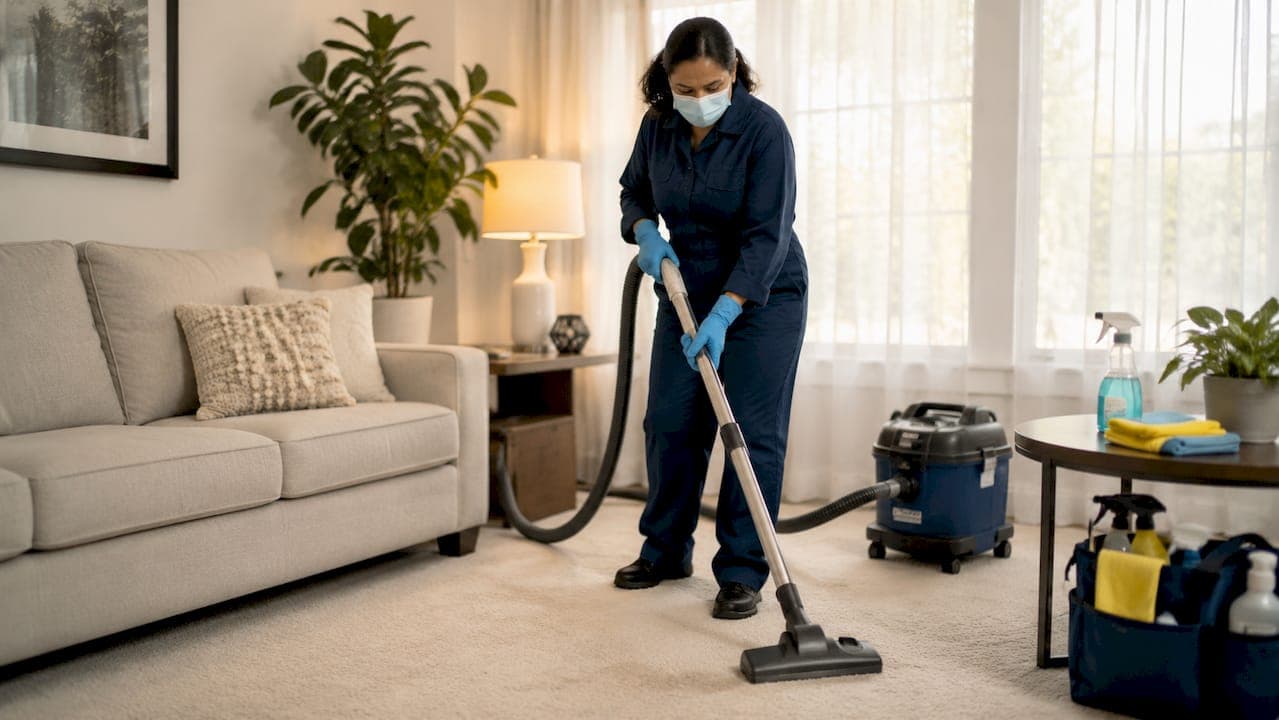
Lead dust in carpets is defined as microscopic particles of lead, typically under 1 micron in size, that settle deep into carpet fibres and cannot be seen with the naked eye. Understanding how cleaning removes lead dust from carpets is the first step toward protecting your household. Canadian authorities classify lead-based paint as containing 0.5% or more lead by weight, and homes built before 1990 carry the highest risk of lead dust contamination. The correct cleaning method combines certified HEPA vacuuming with wet-cleaning techniques, and skipping either step leaves hazardous residue behind.
How cleaning removes lead dust from carpets: why method matters
Standard vacuuming does not remove lead dust. Household vacuum filters capture particles down to roughly 10 microns, but lead dust particles are often under 1 micron. That gap means a regular vacuum pulls lead particles off the carpet surface and blows them back into the air you breathe.
Dry sweeping creates the same problem. Disturbing lead dust without capturing it causes it to become airborne, where it stays suspended for hours and settles on every surface in the room. Health Canada and environmental health specialists consistently warn against any dry method for lead dust removal.
Steam cleaning is also off the table. Steam heat can aerosolize lead dust particles, sending them into the air rather than trapping them. Containment and minimal disturbance are the two priorities in any lead-safe cleaning process, and steam cleaning violates both.
Common cleaning methods that make contamination worse:
- Regular upright or canister vacuums without HEPA filtration
- Dry sweeping or dusting with a broom or dry mop
- Steam cleaners and hot-water extraction units not rated for lead dust
- Dry carpet powders or chemical dry-cleaning methods
- Shaking or beating rugs outdoors, which disperses particles widely
Pro Tip: Check your vacuum's filter rating before cleaning any area with suspected lead dust. If the packaging does not state "true HEPA" and cite 99.97% capture at 0.3 microns, the vacuum is not safe for this job.
What is the correct process for removing lead dust from carpets?
Effective lead dust removal follows a three-pass system. True HEPA vacuums capture 99.97% of particles at 0.3 microns, which is the minimum standard for safely trapping lead dust without recirculating it. Each pass in the process serves a distinct purpose, and skipping any step reduces the overall effectiveness significantly.
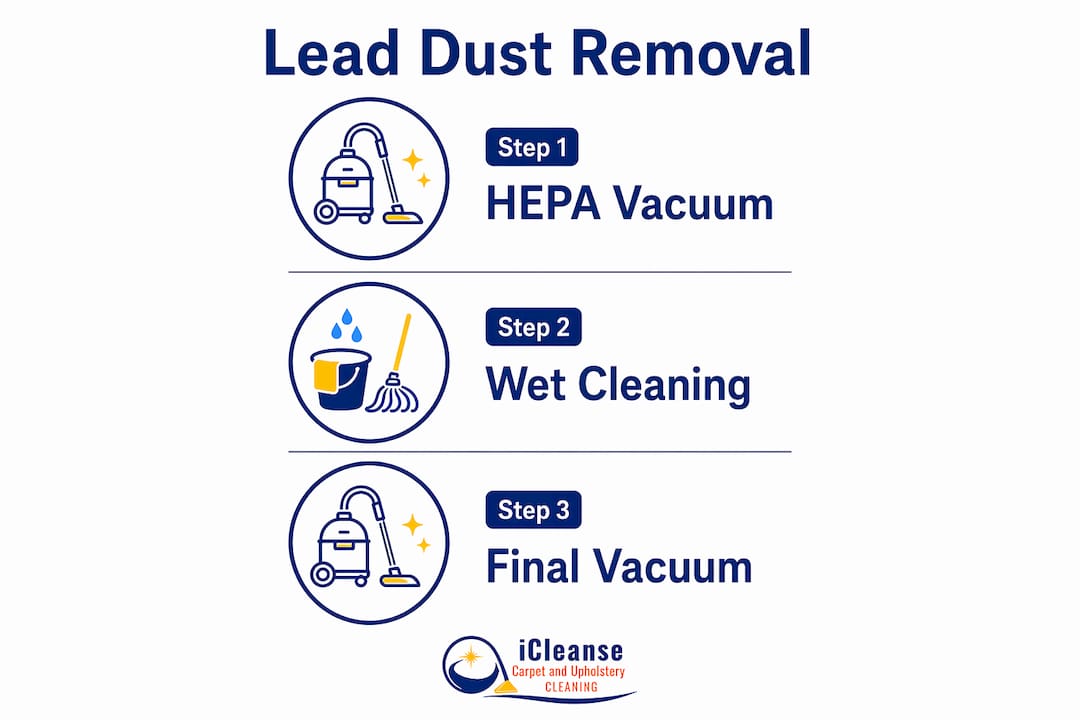
Pass 1: Initial HEPA vacuum
Begin with a thorough HEPA vacuum pass across the entire carpet. Use slow, overlapping strokes, moving at roughly half the speed you would use for regular vacuuming. Slow strokes give the suction time to pull particles up from deep within the carpet pile rather than just skimming the surface. Vacuum in two directions, first lengthwise and then across, to cover fibres from multiple angles.
Pass 2: Wet-cleaning with a lead-specific detergent
After the initial vacuum, wet-clean the carpet using a detergent formulated for lead dust removal. Apply the solution with a disposable mop head or single-use cloth, working in sections. Disposable materials are non-negotiable here. Reusable cloths carry lead particles from one area to another, spreading contamination rather than eliminating it. Allow the surface to dry fully before the final pass.
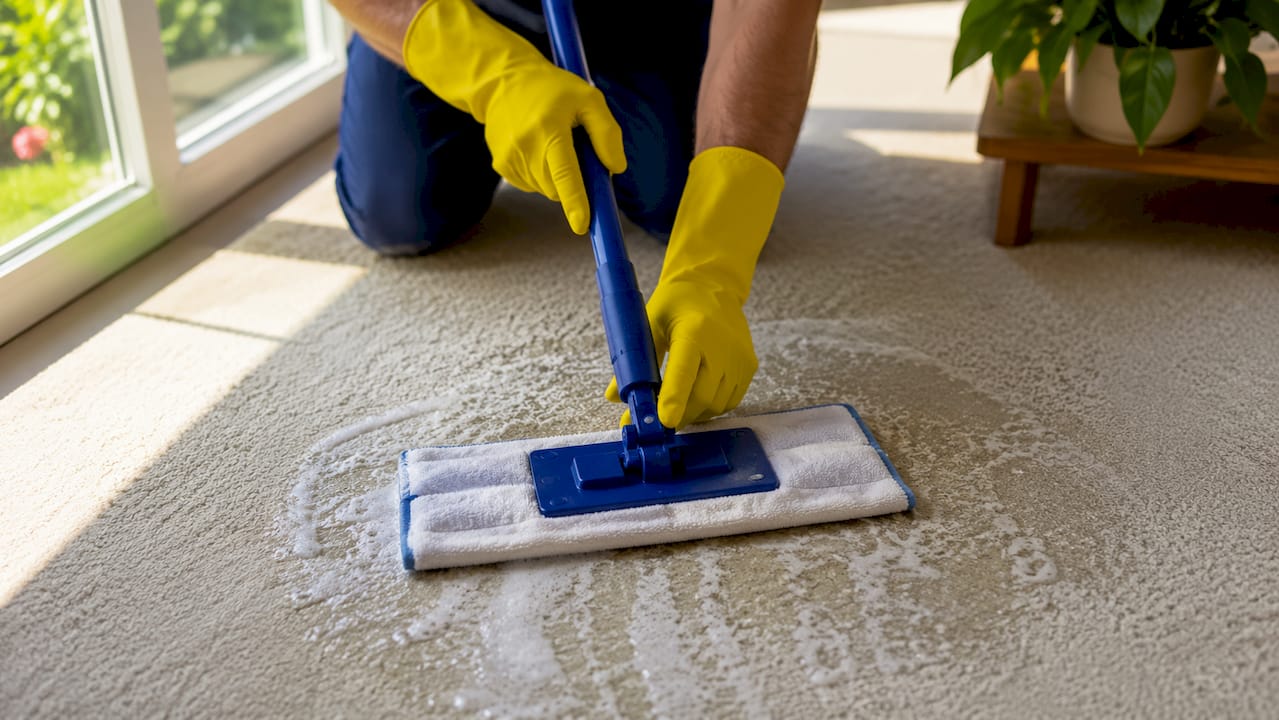
Pass 3: Final HEPA vacuum
The three-pass cleaning method closes with a second full HEPA vacuum pass to capture any particles loosened by the wet-cleaning step. This final pass is what separates professional lead-safe cleaning from ordinary carpet maintenance. Without it, loosened particles remain in the carpet pile.
Pro Tip: Seal all used disposable materials, including vacuum bags, mop heads, and cloths, in heavy-duty plastic bags before placing them in the bin. Lead-contaminated waste requires careful disposal to prevent secondary contamination.
The table below compares cleaning tools and methods by their effectiveness for lead dust removal:
| Method | Lead dust capture | Recommended? |
|---|---|---|
| True HEPA vacuum (0.3 micron rated) | 99.97% of particles | Yes |
| Standard household vacuum | Misses particles under 10 microns | No |
| Wet-cleaning with lead-specific detergent | Binds and lifts embedded particles | Yes |
| Dry sweeping or dry mopping | Aerosolizes particles | No |
| Steam cleaning | Aerosolizes particles | No |
| Disposable single-use cloths | Prevents cross-contamination | Yes |
For a broader look at professional carpet cleaning methods that meet health-grade standards, the Icleansecuc resource library covers the full range of techniques used in residential and commercial settings.
How do you confirm lead dust has been safely removed?
A visually clean carpet does not confirm lead safety. Clearance testing is the only definitive method to verify that lead dust levels have dropped below hazardous thresholds. Environmental health specialists describe clearance testing as the gold standard for post-cleaning confirmation, particularly in homes with children under six.
The clearance testing process works as follows:
- A certified inspector collects dust samples from the cleaned carpet and surrounding surfaces using standardised wipe sampling kits.
- Samples are sent to an accredited laboratory for analysis.
- The lab measures lead concentration in micrograms per square foot and compares results against established safety thresholds.
- If results fall below the threshold, the space is cleared for normal occupancy.
- If results remain elevated, the three-pass cleaning process repeats before a second round of testing.
Clearance testing identifies residual lead missed by cleaning and protects families from hazards that are completely invisible to the eye. This step is especially critical in households where young children spend time on the floor, since hand-to-mouth contact is the primary exposure route for children.
Renters dealing with lead dust concerns can also review guidance on cleaning carpets before moving to understand what documentation landlords may require after professional cleaning.
What are the legal responsibilities for homeowners, renters, and landlords?
Canadian law places clear obligations on landlords when lead dust is present in a rental property. Provincial Residential Tenancies Acts and Environmental Protection Acts require landlords to maintain safe, habitable environments, which includes remediating identified lead hazards. Tenants who discover lead dust have the right to contact their local public health unit or tenancy authority if a landlord fails to act.
Key responsibilities and best practices for all parties:
- Homeowners: Arrange professional assessment and cleaning if your home was built before 1990 and shows signs of deteriorating paint or recent renovation work.
- Landlords: Disclose known lead hazards, arrange certified remediation, and provide clearance test results to tenants before reoccupation.
- Renters: Document the condition of carpets with photos, notify your landlord in writing, and request written confirmation of any cleaning or testing performed.
- All parties: Avoid DIY abatement. Professional experts warn that mismanaging lead dust carries both health and legal consequences, particularly when children are present.
- During remediation: Consider temporary relocation, especially for households with children under six or pregnant women, during any significant cleaning or abatement work.
Interim cleaning measures, meaning regular HEPA vacuuming of carpets in at-risk areas, reduce ongoing exposure while longer-term remediation is arranged. They do not replace professional abatement but they do lower daily dust levels meaningfully.
Key takeaways
Effective lead dust removal from carpets requires a certified HEPA vacuum, a wet-cleaning pass with a lead-specific detergent, and confirmed clearance testing before the space is considered safe.
| Point | Details |
|---|---|
| Standard vacuums fail | Household filters miss particles under 10 microns, recirculating lead dust into the air. |
| Three-pass method is required | HEPA vacuum, wet-clean with lead detergent, then a final HEPA vacuum pass. |
| Clearance testing is the only proof | Visual cleanliness does not confirm safety; lab-tested dust samples are required. |
| Landlords have legal obligations | Canadian provincial law requires landlords to remediate lead hazards in rental properties. |
| Disposable materials prevent spread | Single-use cloths and sealed waste bags stop cross-contamination during cleaning. |
What I've learned cleaning carpets in lead-affected homes
The most common mistake I see homeowners make is reaching for their regular vacuum the moment they suspect lead dust. It feels like the logical first step. The problem is that a standard vacuum turns a contained surface hazard into an airborne one, and the particles settle right back down on every surface in the room.
The second mistake is trusting the look of the carpet. A carpet can look spotless and still carry lead dust levels that are unsafe for a child who plays on the floor. I've seen this confirmed by clearance tests more times than I can count. The carpet fibres hold particles deep in the pile where no amount of visual inspection will find them.
Professional-grade HEPA equipment genuinely changes the outcome. The suction power and filtration standard of a true HEPA unit are not comparable to a consumer vacuum marketed as "HEPA-style." That distinction matters enormously when the particles you are trying to capture are smaller than a bacterium.
My strongest recommendation is this: if you have any reason to suspect lead dust in your carpets, do not attempt to manage it alone. Arrange a professional assessment, use certified equipment and processes, and follow up with clearance testing. The cost of doing it right is far lower than the cost of getting it wrong.
— Rob
Professional lead-safe carpet cleaning in the Greater Toronto Area
Lead dust removal is not a job for standard cleaning equipment. Icleansecuc uses professional-grade HEPA vacuums and wet-cleaning processes designed to capture microscopic particles safely, without aerosolizing them or spreading contamination to other areas of your home.
Whether you are a homeowner, renter, or landlord dealing with a potential lead hazard, the Icleansecuc team serves the Greater Toronto Area with the equipment and expertise the job requires. You can review the full range of professional cleaning services or request a quote to discuss your specific situation. Clean carpets and confirmed safety are not the same thing. Icleansecuc helps you achieve both.
FAQ
Can a regular vacuum remove lead dust from carpets?
No. Standard household vacuums filter particles down to roughly 10 microns, but lead dust is often under 1 micron, meaning the vacuum redistributes it into the air rather than capturing it.
What does a true HEPA vacuum do differently?
A true HEPA vacuum captures 99.97% of particles at 0.3 microns, which is the size range that includes lead dust. This prevents particles from being exhausted back into the room during cleaning.
Is clearance testing necessary after cleaning carpets for lead?
Yes. Clearance testing is the only way to confirm that lead dust levels have dropped to safe thresholds. Visual cleanliness alone is not sufficient evidence of safety.
Can a landlord be held responsible for lead dust in a rental property?
Yes. Under provincial tenancy and environmental legislation, Canadian landlords are required to maintain safe living conditions, which includes addressing identified lead hazards. Tenants can contact their local public health unit if a landlord fails to act.
Should I steam clean my carpet to remove lead dust?
No. Steam cleaning aerosolizes lead dust particles, which increases inhalation risk rather than reducing it. The correct method is a three-pass process using a true HEPA vacuum and a lead-specific wet-cleaning detergent.