
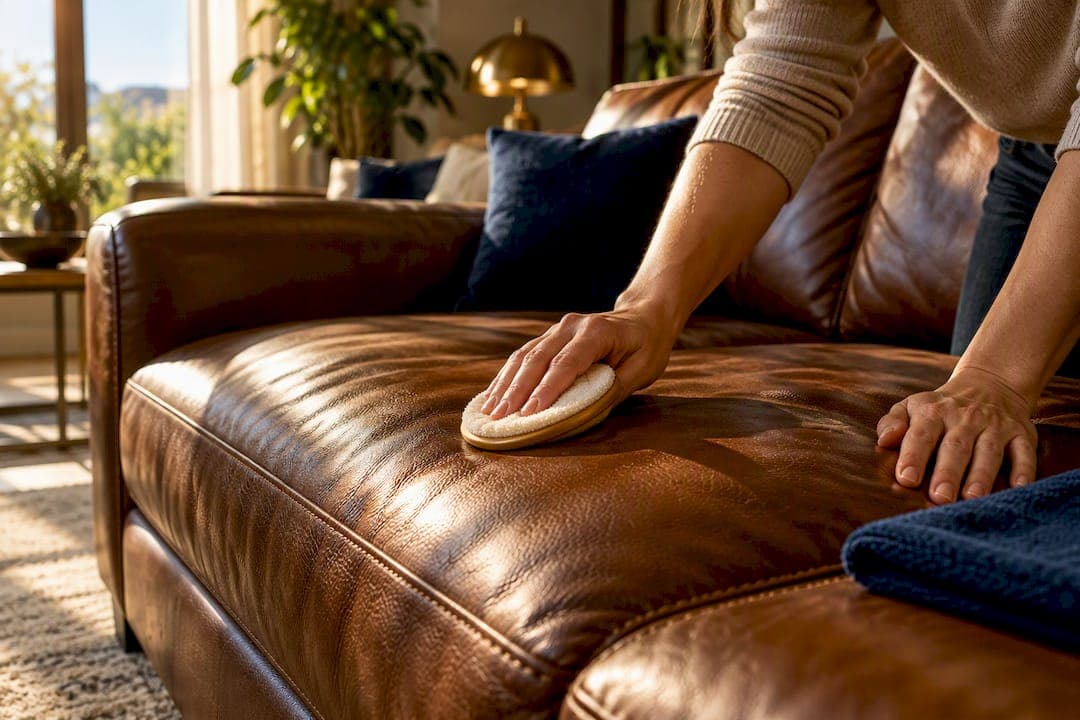
For routine upkeep, dust and vacuum your leather sofa weekly, then wipe it with a soft, slightly damp cloth. Skip saddle soap, bleach, ammonia, and alcohol-based cleaners since they damage the surface over time, according to the Canadian Conservation Institute. If a stain sets in or the leather feels dry, cracked, or discoloured, a technician trained through IICRC upholstery courses can assess the damage safely.
TL;DR:
- Weekly dusting and vacuuming with a soft brush attachment prevent dirt buildup that requires harsh cleaning methods.
- Immediate blotting with a dry cloth is crucial for spills, especially on greasy stains, with a neutral soap used cautiously if needed.
- Deep cleaning should be done sparingly with diluted pH-appropriate cleaners to avoid long-term damage, and professional assessment is recommended for stubborn stains or damage.
- Never use alkaline products like saddle soap, bleach, ammonia, or alcohol-based cleaners, as they can damage leather's surface and structure.
- Protect the sofa from direct sunlight, heat sources, and humidity fluctuations to prevent fading, cracking, or mold growth.
Table of Contents
- Routine care that keeps leather looking new
- How to spot-clean spills before they set
- Deep cleaning without damaging the leather
- What never to put on leather
- Conditioning and protecting leather the right way
- Protecting leather from sunlight, heat, and humidity
- Signs it's time to call in a professional
- Why we approach leather cleaning the way we do
- Book a professional deep clean when DIY isn't enough
- Where this guidance comes from
- Sources
- FAQ
Routine care that keeps leather looking new
Leather sofas need regular attention, not heavy cleaning. A weekly habit prevents the grime buildup that eventually needs aggressive treatment to remove.
Start by dusting the entire surface, including seams and crevices where debris collects. A vacuum with a soft brush attachment lifts loose dirt without scratching the finish. Once a week is usually enough for a sofa in normal use; homes with pets or kids may need it twice weekly.

For a deeper routine wipe, use a lint-free cloth dampened, not soaked, with water. Wring it out until it feels barely moist before touching the leather. If the surface still looks dull after that, a small amount of a pH-appropriate leather cleaner works better than reaching for a household all-purpose spray. Leather sits at an acidic pH of about 4.5 to 5.5, and many common cleaners are alkaline enough to disrupt that balance, per the Canadian Conservation Institute.
Before using anything beyond plain water, patch-test it:
- Pick a hidden spot, such as the underside of a cushion or the back panel against the wall.
- Apply a small amount and wait 10 minutes to check for colour change, stiffening, or a sticky residue.
- Only proceed on the visible surface once the patch shows no reaction.
A simple weekly and monthly rhythm keeps the routine manageable:
- Weekly: dust, vacuum with a soft brush, wipe with a barely damp cloth.
- Monthly: check for dryness, apply cleaner only where needed, patch-test anything new before wider use.
Pro Tip: Keep a dedicated microfibre cloth just for the sofa. Cloths used on other surfaces can carry grit or cleaning residue that scratches leather.
For more detail on matching cleaning methods to material, iCleanseCUC's upholstery cleaning tips walk through compatible techniques by fabric and finish.
How to spot-clean spills before they set
Speed matters more than product choice when something spills on leather. The faster you blot, the less chance the liquid has to soak into the grain.
- Blot immediately with a clean, dry cloth, pressing straight down rather than rubbing, which pushes the spill deeper and can spread it.
- For grease or oily spills, sprinkle cornstarch or talcum powder over the spot, let it sit for a few hours to absorb the oil, then brush it away gently.
- If a mild cleaner is needed after blotting, use a drop of gentle soap diluted in water on a soft cloth, working from the outside of the stain inward.
- For ink or dye transfer from newspaper, denim, or coloured textiles, dab gently with a slightly damp cloth and stop immediately if the mark spreads or the leather's colour lifts. This is a case where testing on a hidden area first, and stopping at the first sign of trouble, protects the sofa more than any specific product.
- Let the area air dry fully, away from direct heat, then check the finish once dry to see if a second light treatment is needed.
Dawn dish soap and Murphy's oil soap come up often in home forums, but neither is formulated for leather. Retail furniture-care guidance points toward pH-neutral, manufacturer-recommended cleaners instead of general household soaps, since the wrong pH can leave residue or dull the finish over the Crate & Barrel long term. If you want something gentler than a dedicated leather cleaner, a few drops of a neutral soap in water, well diluted, is a safer bet than either of those two products.
Pro Tip: Keep a stack of plain white cloths near the sofa. Coloured or printed towels can transfer dye onto damp leather.
Stop and call a professional if a stain has already dried in, if the leather has darkened permanently, or if you're dealing with a large pet accident that has soaked into the cushion foam underneath.
Deep cleaning without damaging the leather
Routine wiping handles daily wear, but some situations call for a more thorough pass. Overall greying, a faint odour that lingers after airing out the room, or a buildup of body oils along the headrest and armrests all signal it's time for deeper attention rather than another quick wipe.
A safe DIY deep clean follows the same logic as spot cleaning, just applied more broadly:
- Dilute a pH-appropriate cleaner well beyond the label's spot-cleaning ratio.
- Apply with a soft cloth or sponge, working in small sections rather than soaking the whole surface at once.
- Blot repeatedly instead of scrubbing, and change cloths as they pick up dirt.
- Let each section dry mostly before moving to the next, and allow the full sofa to air dry away from heat sources.
Resist the urge to reach for anything alkaline or to repeat the process multiple times in one sitting. The Canadian Conservation Institute notes that repeated wetting and alkaline products cause long-term degradation, staining, and scummy deposits on leather surfaces, damage that shows up gradually rather than all at once.
This is also where professional cleaning earns its cost. A trained technician can assess the leather type before touching it, run a test patch in an inconspicuous spot, and use extraction equipment with HEPA filtration to lift allergens from the cushion fill, not just the surface. That combination of assessment and equipment is difficult to replicate at home, particularly on a sofa with sentimental or financial value.
What never to put on leather
Some products cause damage that no amount of conditioning will reverse. Keep these away from your sofa entirely:
- Saddle soap, which is alkaline and works against leather's naturally acidic pH.
- Bleach, ammonia, and acetone, all of which strip or break down the finish.
- Alcohol-based cleaners and glass or window cleaners, which dry out the leather's surface.
- Excessive water from steam cleaners or soaked cloths, which can warp, stain, or stiffen the material.
The saddle soap most people assume is safe for leather is actually alkaline, and conservation guidance specifically advises against it because leather's ideal pH sits in the 4.5 to 5.5 range. Overusing oils and dressings creates its own problem too: conservators have documented that repeated oiling can lead to oxidation and a sticky, scummy film building up on the surface rather than keeping leather supple.
If you're unsure whether a product is safe, dilute it more than you think necessary and patch-test on a hidden panel first. A cautious, minimal approach protects the sofa far better than reaching for whatever is already under the sink.
Conditioning and protecting leather the right way
Conditioning matters, but less often than most people assume. For most leather sofas, once a year is plenty, and checking the manufacturer's own care instructions first should guide how often and with what product.
When choosing a conditioner, look for one that's non-oily and formulated for the specific type of leather on your sofa, aniline, semi-aniline, or pigmented finishes each respond differently to treatment. Aniline leather, which has no protective coating, absorbs conditioner readily and shows stains more easily, so it needs the gentlest handling. Semi-aniline has a light protective layer that offers a bit more resistance to spills. Pigmented leather, the most common and durable type, has a polymer coating that tolerates cleaning and conditioning best.
To apply conditioner safely:
- Test on a hidden area first, exactly as with any cleaner.
- Apply a light coat with a soft cloth, working in small sections.
- Buff gently once absorbed rather than leaving a heavy film on the surface.
- Check the treated area after a few hours for stickiness or colour change before doing the rest of the sofa.
A cozy home furnishing guide on type-based leather routines suggests spacing conditioning treatments across a three-to-six-month window depending on the leather type and how much the sofa is used, which lines up with the conservative, manufacturer-first approach conservators recommend.
Pro Tip: Skip fabric protectors and stain repellent sprays unless they're explicitly labelled safe for leather. Many are formulated for textiles and can leave a cloudy residue on leather's finish.
Covers can help protect a sofa in a high-traffic home, but they trap moisture against the leather if left on too long, so removing them periodically to let the surface breathe matters as much as using them in the first place.
Protecting leather from sunlight, heat, and humidity
Where a sofa sits in a room affects its lifespan as much as how it's cleaned. Environmental damage happens slowly and is much harder to reverse than a stain.
- Keep the sofa out of direct sunlight, or use blinds or UV window film to cut exposure.
- Rotate and flip cushions periodically so wear and fading spread evenly.
- Keep the sofa away from radiators, vents, and fireplaces, since heat accelerates the chemical breakdown that dries and cracks leather.
- Maintain stable indoor humidity rather than letting a room swing between very dry and very damp conditions.
Relative humidity above roughly 65% raises the risk of mould growth on leather surfaces, a threshold worth watching in basements or poorly ventilated rooms, according to the Canadian Conservation Institute. A room humidifier or dehumidifier, depending on the season, keeps conditions closer to the stable range leather needs.
If you're storing a leather sofa rather than using it, keep it upright on its legs rather than resting on cushions for long periods, and avoid covering it with plastic, which traps moisture against the surface.
Signs it's time to call in a professional
Some problems go beyond what a cloth and a bottle of conditioner can fix. Watch for these signs:
- Red rot, a powdery, crumbling texture that signals the leather's fibres are breaking down.
- Dye transfer that has soaked in rather than sitting on the surface.
- Structural cracks or splits along seams and high-wear areas.
- A persistent odour that doesn't clear after airing out the room.
A professional visit typically starts with an assessment of the leather type and condition, followed by a test patch before any product touches the full sofa. From there, technicians use solutions matched to the specific leather and, where allergens or pet dander are a concern, HEPA extraction equipment that pulls contaminants out of the cushion fill rather than just the surface.
When vetting a cleaner, ask whether they test patch before treating the whole piece, what solutions they use on leather specifically, and what their guarantee actually covers. A vague answer on any of those three is a reason to keep looking, as is a company willing to apply the same chemical treatment to leather as they would to fabric upholstery.
Why we approach leather cleaning the way we do
Leather rewards patience and punishes shortcuts. Over years of cleaning upholstery across different homes, the pattern is consistent: sofas that hold up longest are the ones where owners caught small problems early and avoided harsh products altogether.
Some professional cleaners start every leather job with an assessment rather than a standard chemical routine, because pigmented, aniline, and semi-aniline leathers each respond differently to the same product. They test patch before full treatment, use eco-friendly solutions suited to the leather type, and may bring HEPA extraction equipment for homes dealing with pet dander or allergens. That conservative approach, assess first, clean second, takes longer than a blanket treatment, but can help prolong the sofa's life.
— Rob
Book a professional deep clean when DIY isn't enough
If your leather sofa has a stubborn stain, a lingering odour, or damage you're not sure how to treat, a professional assessment beats guessing. Some cleaning services serve homeowners, tenants, landlords, and businesses with upholstery cleaning that starts with a proper look at the specific leather before any product touches it.
Professional cleaners often test every treatment on an inconspicuous area first, use eco-friendly solutions, and aim for clear pricing before starting work to avoid surprises. For sofas beyond what a home routine can fix, request a quote and we'll assess what your leather actually needs.
Where this guidance comes from
- The Canadian Conservation Institute publishes conservation-grade care guidelines for leather, skin, and fur.
- IICRC training through CFCRA sets the standard for professional upholstery cleaning technicians.
- Crate and Barrel's furniture care guide offers practical retail-level maintenance advice.
Sources
FAQ
What is the best way to clean a leather sofa at home?
Dust and vacuum weekly with a soft brush attachment, then wipe with a lint-free cloth dampened with water, not soaked. For deeper cleaning, use a diluted, pH-appropriate leather cleaner and always patch-test on a hidden area first, following guidance from the Canadian Conservation Institute.
Can you use Dawn dish soap to clean a leather sofa?
Dish soap isn't formulated for leather and can leave residue that dulls the finish or disrupts its natural pH. Retail furniture-care guidance from Crate and Barrel recommends pH-neutral, leather-specific cleaners instead.
Is Murphy's oil soap good for leather furniture?
Murphy's oil soap is designed for wood, not leather, and isn't among the pH-appropriate products recommended for upholstery. A diluted, pH-neutral leather cleaner or plain water on a damp cloth is the safer choice for routine care.
How can I deep clean my leather couch?
Work in small sections with a well-diluted, pH-appropriate cleaner, blotting repeatedly rather than scrubbing, and let each area dry before moving on. Avoid soaking the leather or repeating the process multiple times in one session, since repeated wetting can cause long-term damage, according to the Canadian Conservation Institute.