
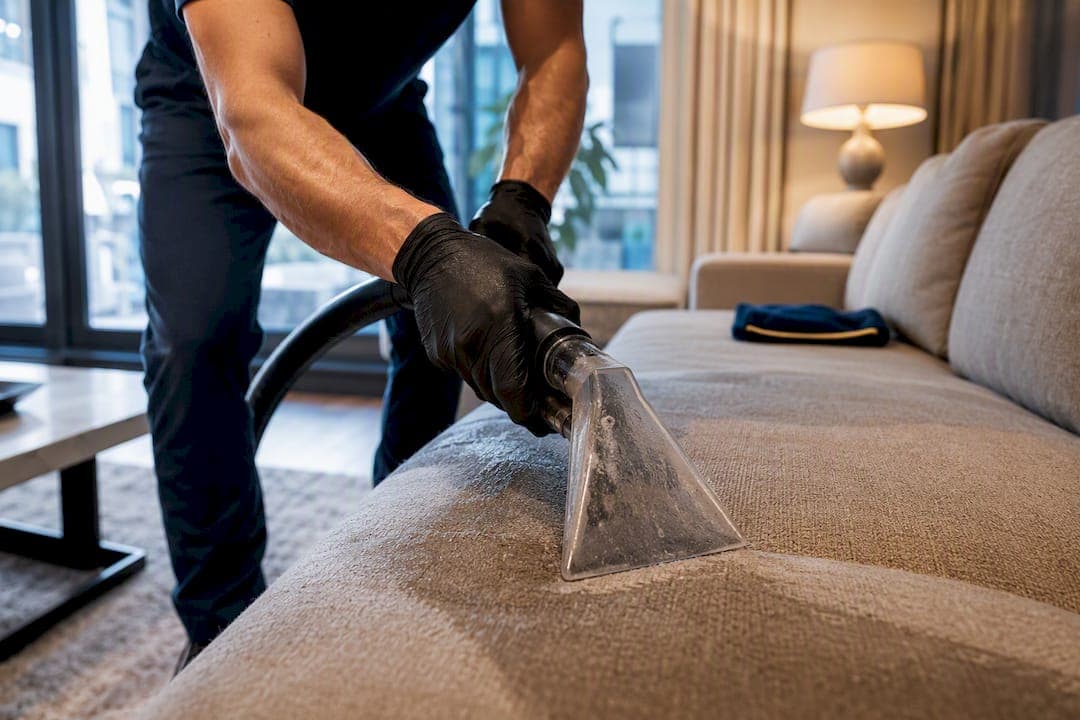
Pet dander embedded in upholstery comes out with a combination of deep hot-water extraction and regular sealed-body HEPA vacuuming; surface cleaning and scented sprays only mask the problem. Start today by running a HEPA vacuum slowly over every cushion and seam, and skip the perfumed pet odour spray sitting under your sink. It does nothing for the actual allergen.
TL;DR:
- Pet dander proteins can stay active in upholstery for months, requiring deep hot-water extraction and sealed HEPA vacuuming to remove embedded allergens effectively.
- Pre-treatment with enzyme-based neutralisers and controlled steam extraction are necessary for breaking down dander proteins beyond surface cleaning.
- Natural woven, leather, and tightly woven performance fabrics are more resistant to dander buildup, while loosely woven natural fibers trap more allergens.
- Static-charged synthetic fabrics attract and retain dander, so maintaining indoor humidity and using anti-static methods can reduce accumulation.
- Professional cleaning with commercial-grade equipment is recommended if symptoms persist after DIY cleaning, especially in heavily contaminated or delicate fabrics.
Table of Contents
- Why pet dander in upholstery is so hard to get rid of
- Check your fabric before you clean it
- How to deep-clean upholstery to remove embedded dander
- Should you clean it yourself or call a professional?
- Keeping dander levels down between deep cleans
- Why upholstery attracts static, and why that makes dander worse
- Getting dander out of seams, crevices, and cushion gaps
- Choosing upholstery fabric that resists dander buildup
- How to know your cleaning actually worked
- A realistic take on what deep cleaning can achieve
- Book a professional deep clean with Icleansecuc
- Sources
- FAQ
Why pet dander in upholstery is so hard to get rid of
Pet dander is not hair. It is microscopic skin flakes carrying proteins, Fel d 1 in cats and Can f 1 in dogs, and those proteins cling to fabric fibres the way lint clings to wool. The American Lung Association notes dander can stay biologically active for months, getting kicked back into the air every time someone sits down or plumps a cushion.
Upholstery functions like a passive air filter. Every time your dog jumps up or your cat kneads a cushion, body weight compresses the fabric and forces particles further into the padding underneath. That is why vacuuming the surface once a week never solves the problem on its own.
A few reasons surface cleaning falls short:
- Standard vacuums without sealed filtration blow fine particles right back into the room instead of trapping them.
- Fabric weave and foam padding hold proteins well below where a brush attachment can reach.
- Scented sprays cover the smell but leave the allergenic protein sitting on the fibre, ready to become airborne again.
Practitioners who work with upholstery daily often describe the fabric itself as functioning like a filter medium, one that needs periodic extraction, not just brushing, to actually release what it has trapped.
Check your fabric before you clean it
Every fabric reacts differently to heat, water, and cleaning agents, so skipping this step is how people end up with a shrunken cushion or a faded stripe down the arm of the sofa. Follow this order before touching a single product.
- Read the manufacturer's tag. Look for the standard cleaning code (W for water-safe, S for solvent-only, WS for either, X for vacuum-only).
- Identify the general fabric family. Natural woven fabrics like cotton and linen usually tolerate water; performance microfibre handles extraction well; leather and vinyl need wipe-down treatment rather than soaking; delicate blends like silk or rayon often fall into the S or X category.
- Spot-test a hidden patch. Apply your chosen cleaner to an inconspicuous area, such as the underside of a cushion, wait ten minutes, then check for colour bleed, texture change, or shrinkage.
- Watch for structural red flags. Seam puckering, foam that feels stiffer after drying, or dye transfer onto your cloth means stop and switch methods.
Avoid uncontrolled steam on anything labelled S or X, skip oxygen bleach on darker or dyed fabrics, and never rely on a sticky, perfumed spray as a substitute for actual cleaning. If you are unsure what you are dealing with, this guide on identifying delicate upholstery fabrics walks through the common trouble spots before you commit to a method.
How to deep-clean upholstery to remove embedded dander
This is the sequence that actually pulls allergenic proteins out of fabric rather than just rearranging visible hair. Skipping a stage is the most common reason DIY attempts fall short.
Stage 1: HEPA vacuuming. Use a sealed-body vacuum with true HEPA filtration, not a standard household unit with a basic filter bag. A sealed body matters because a leaky housing lets fine particles escape back into the room even with a good filter installed. Work slowly, using a crevice tool along seams and a upholstery brush on flat panels, and go over each area in overlapping passes rather than one quick sweep. Vacuuming high-traffic upholstery at least twice weekly in pet households keeps loose dander from working further into the padding between deep cleans.
Stage 2: pre-treatment. Choose an enzyme-based or protein-neutralising product rated safe for your fabric type, not a fragrance-forward spray. Canadian guides on pet allergen proteins point out that neutralisers work by breaking down the protein structure itself, while masking sprays simply cover the smell. The Asthma and Allergy Foundation of America makes the same point: many over-the-counter sprays leave the allergen fully intact underneath a pleasant scent.
- Apply the pre-treatment lightly and let it sit for the time listed on the label, usually 5 to 10 minutes.
- Never soak the fabric at this stage. You want penetration, not saturation.
Stage 3: hot-water or steam extraction. This is the step that separates a genuinely clean sofa from one that just smells clean. Heat helps break down the protein structure of dander, and controlled suction pulls the loosened residue back out of the fibre instead of leaving it to dry in place. Industry guidance on upholstery extraction methods explains why this combination reaches allergens that surface cleaning simply cannot touch. Temperature and suction both need to stay within a range the fabric can tolerate, which is exactly why the spot test in the previous section matters so much.
Pro Tip: If your extraction machine has adjustable heat, start on the lowest setting for any fabric you have not tested before, and only increase it once you have confirmed there is no colour change or texture shift.
Stage 4: rinse and dry. A clean-water rinse pass removes leftover cleaning residue, which otherwise attracts dirt and can irritate skin. Point a fan at the cushions and open a window if possible. Upholstery that stays damp for more than a day risks mildew, which creates its own allergen problem on top of the one you just solved. Removable cushion covers can go through a hot wash cycle separately, which is often faster and more thorough than treating them in place.
Realistically, DIY extraction handles light to moderate contamination well. Padding that has absorbed years of dander, especially in a home with multiple pets, sometimes needs commercial-grade heat and suction that consumer rental machines cannot match. That is the point where professional equipment stops being a luxury and starts being the only method that finishes the job.
Should you clean it yourself or call a professional?
A few signs point clearly toward professional service rather than another DIY attempt.
- Allergy symptoms persist even after a thorough vacuum and extraction cycle.
- Odour keeps returning within days of cleaning, which usually means the contamination sits in the padding, not just the fabric surface.
- Cushion covers are not removable, making a full wash impossible.
- The fabric is delicate enough that home extraction equipment feels risky.
Professional cleaners work with commercial hot-water extraction systems that generate stronger suction and more consistent heat control than rental units, paired with HEPA-rated vacuums for the pre-clean pass. They also adjust settings by fabric type and manage drying time to avoid the mildew risk that trips up a lot of DIY jobs.
Before booking anyone, ask these five questions: Do you use sealed HEPA-rated vacuums? What extraction method do you use on upholstery specifically? Are your cleaning solutions eco-friendly and pet-safe? What is the expected drying time? Do you offer any satisfaction guarantee? A cleaner who hesitates on the equipment question is a red flag worth noting.
If the padding itself has degraded, smells persist through professional cleaning, or the fabric is failing structurally, replacement becomes the more sensible long-term call rather than repeated deep cleans on furniture that is past its useful life.
Keeping dander levels down between deep cleans
One deep clean resets the clock, but it does not stop new dander from accumulating. A simple maintenance rhythm keeps allergen load low without much daily effort.
- Vacuum pet-frequented upholstery with a HEPA unit twice weekly, and give the whole room a pass weekly.
- Wash removable covers and pet bedding weekly in hot water.
- Book professional upholstery extraction periodically in homes with pets, adjusting frequency based on shedding season and pet activity on the furniture.
- Check HVAC filters monthly and use pleated filters rated MERV 8 to 11 in return vents, which is enough to catch dander-sized particles without straining most residential systems, according to Filterbuy's guidance on airborne pet dander.
- Add a True HEPA room purifier sized to your room's square footage using its CADR rating, particularly in bedrooms you want kept pet-free.
- Groom pets outdoors or in an easy-to-clean space to cut down on what lands on the furniture in the first place.
Why upholstery attracts static, and why that makes dander worse
Static cling is not just an annoyance that makes your sofa fabric stick to your clothes. It actively pulls dander toward upholstery and holds it there. Dry indoor air, especially common through Canadian winters when furnaces run constantly, strips moisture from fabric fibres and builds up an electrical charge that attracts airborne particles like a magnet.
Synthetic fabrics such as polyester and certain microfibre blends hold a static charge far longer than natural fibres like cotton or wool. If your sofa seems to collect dander faster than it should, the fabric composition itself may be part of the problem.
A few practical fixes cut down on static-driven dander buildup:
- Run a humidifier to keep indoor relative humidity between 40 and 50 percent, which reduces the fabric's ability to hold a charge.
- Apply a fabric-safe anti-static spray periodically, checking it against your care tag first since some sprays leave residue on delicate materials.
- Use a dryer sheet lightly rubbed over dry cushions between deep cleans as a quick, low-cost static knockdown.
- Choose natural fibre or tightly woven performance fabrics for new furniture, since they generate less static than loosely woven synthetics.
None of this replaces extraction cleaning, but reducing static buildup means fewer particles accumulate between your regular vacuuming sessions.
Getting dander out of seams, crevices, and cushion gaps
Most of the dander that survives a routine cleaning hides in exactly the places a vacuum head glosses over: the crevice where the cushion meets the arm, the seam stitching along the back, and the gap under a removable cushion.
A narrow crevice attachment on your HEPA vacuum is the starting point, run slowly along every seam rather than dragged quickly across the surface. Compressed air in a can, the kind sold for cleaning electronics, works well for blasting dander out of tight seam channels before vacuuming picks it up.
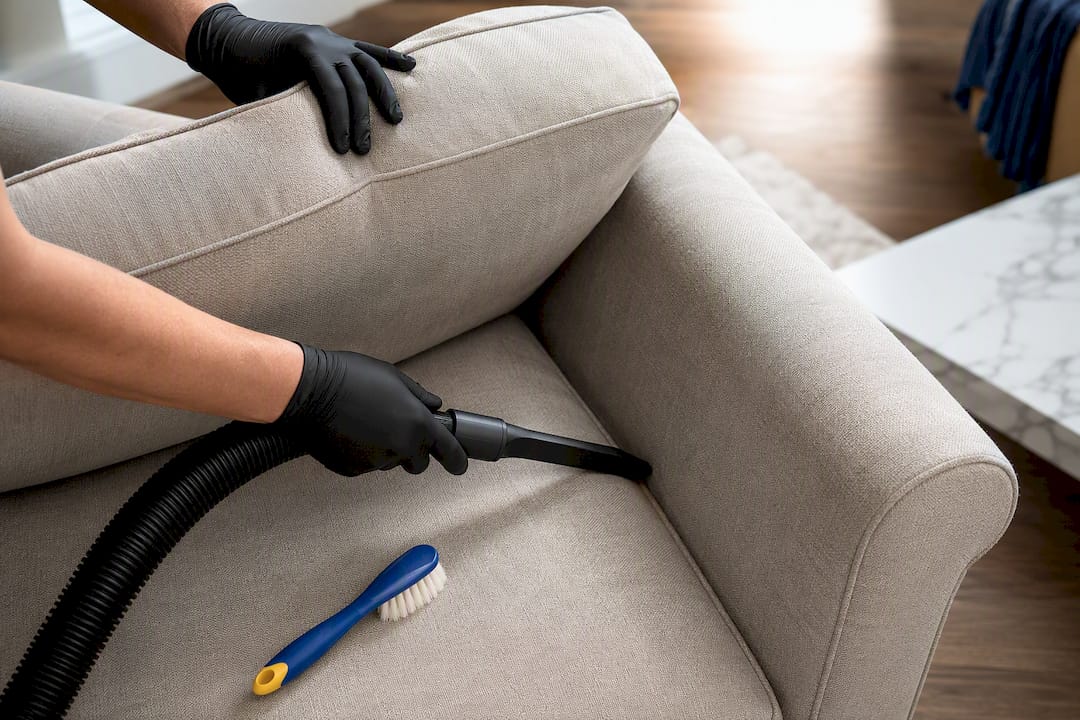
For cushion gaps, remove every cushion entirely rather than vacuuming around it. Dander and pet hair collect in the crease at the base of each cushion well, and that spot rarely gets touched during a quick weekly pass. A stiff-bristled brush loosens compacted dander from woven fabric before the vacuum goes over it a second time.
Piping and tufted buttons trap an outsized amount of debris relative to their size. A soft toothbrush or detailing brush, worked in small circles, dislodges what a standard attachment cannot reach. Do this pass before extraction cleaning, not after, so loosened particles get pulled out by the extraction rather than redistributed across clean fabric.
Choosing upholstery fabric that resists dander buildup
If you are shopping for new furniture with allergies in mind, fabric choice matters as much as your cleaning routine. Tightly woven fabrics with a smooth, low-pile surface give dander less to grip onto compared to plush, deep-pile textures.
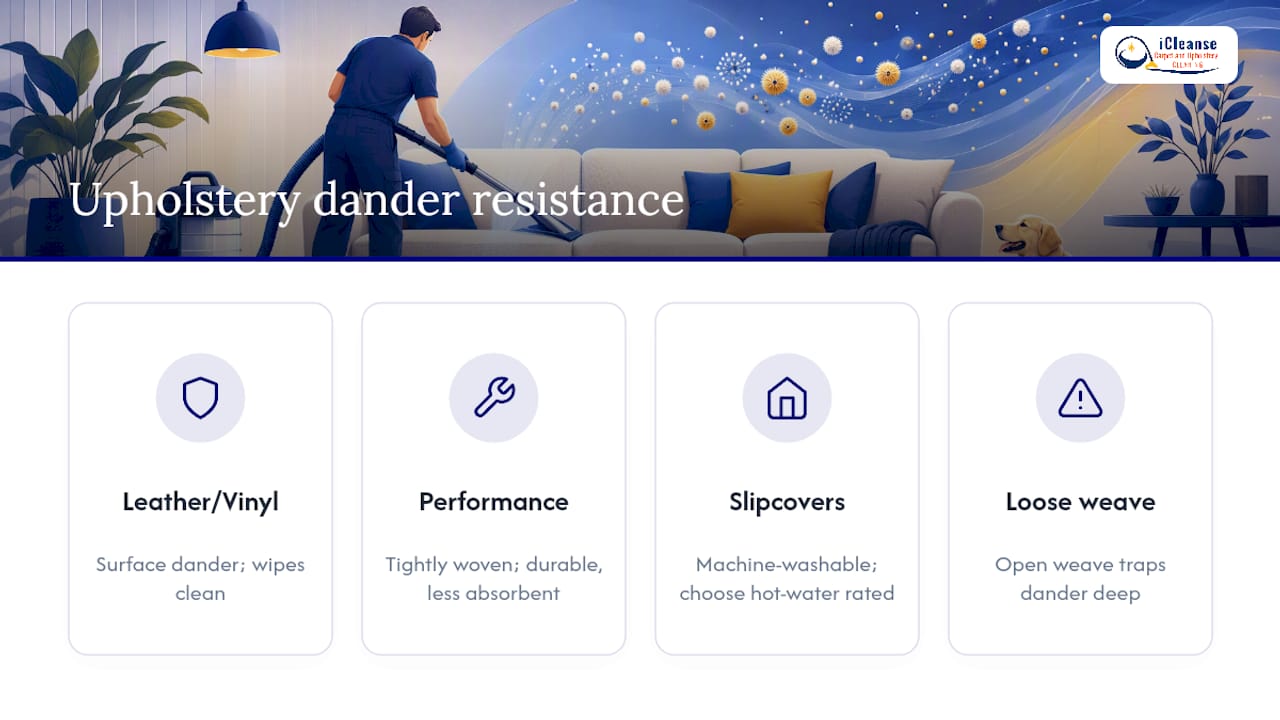
Leather and high-quality vinyl top the list for allergy-friendly upholstery because dander sits on the surface rather than working into fibres, and a quick wipe-down removes most of it. Performance fabrics, the tightly woven synthetic blends now common in mid-range furniture, offer a reasonable middle ground: durable, wipeable, and less absorbent than traditional cotton or linen weaves.
If leather is not the right look for your space, removable and washable slipcovers give you a practical workaround. A washable cotton or cotton-blend cover lets you machine-wash dander away on a regular schedule instead of relying entirely on extraction cleaning. Look for covers rated for hot-water washing specifically, since a cool-wash-only cover will not fully neutralize embedded allergens.
Avoid loosely woven natural fibres like chenille or boucle if allergy control is the priority. They look and feel great, but their open weave structure is close to ideal for trapping dander deep in the fabric.
How to know your cleaning actually worked
Visual inspection only tells part of the story, since dander is microscopic and invisible even on freshly cleaned fabric. A cushion that looks spotless can still carry a meaningful allergen load.
That said, a few visual and practical checks give you a reasonable read on progress. Run a clean white cloth firmly over the fabric after cleaning and drying; noticeable dust or residue on the cloth suggests contamination remains. Pay attention to whether allergy symptoms, sneezing, itchy eyes, or nasal congestion near the furniture, actually improve within a few days of a deep clean. If they do not, the cleaning likely did not reach deep enough.
For a more concrete answer, home allergen test kits are available that swab a surface and indicate whether Fel d 1 or Can f 1 protein is present above a threshold level. These kits will not give you a precise number the way a lab analysis would, but they offer a reasonable go or no-go signal on whether your cleaning method actually reduced the allergen load, rather than just the smell or visible dirt.
The most reliable confirmation over time is simply tracking symptoms and re-checking with a swab test every few months, especially after switching cleaning methods or hiring a new professional service.
A realistic take on what deep cleaning can achieve
Deep extraction genuinely reduces allergen load, but expecting one clean to solve chronic allergy symptoms permanently sets you up for disappointment. Realistic maintenance, paired with eco-friendly methods and straightforward, upfront communication about what a service actually does, is what makes the difference over months, not one appointment.
— Rob
Book a professional deep clean with Icleansecuc
If you have worked through the DIY steps above and symptoms or odour are still hanging around, that is usually a sign the contamination sits deeper than home equipment can reach. Professional cleaning services address that gap directly with eco-friendly solutions paired with commercial-grade hot-water extraction, transparent upfront pricing, and satisfaction guarantees, so you know what to expect before service begins.
A Living Room upholstery clean starts at $70 with the same extraction approach outlined earlier in this article, scaled up with professional-grade suction and controlled drying to avoid the mildew risk that trips up a lot of rental-machine attempts. For homes across Markham, Richmond Hill, Vaughan, Mississauga, and the wider Greater Toronto Area, booking is straightforward: request a quote online, describe your furniture and any pet-related concerns, and get clear pricing before anyone arrives. If you are still weighing options, the full residential services list breaks down what each cleaning includes.
Sources
- Pet dander — American Lung Association
- Asthma and Allergy Foundation of America — pet allergies overview
- Šapice pet wellness — pet allergens guide (Canada)
FAQ
Can you get pet dander out of a couch?
Yes. Sealed-body HEPA vacuuming combined with hot-water or steam extraction removes most embedded dander, though heavily contaminated padding sometimes needs professional-grade equipment to fully clear.
What are the symptoms of a fabric sofa allergy?
Sneezing, itchy or watery eyes, nasal congestion, and skin irritation after contact with the fabric are the most common signs, and symptoms that ease when you leave the room point toward the upholstery as the trigger.
How do you remove pet dander from fabric?
Vacuum thoroughly with a HEPA-filtered vacuum, apply an enzyme or protein-neutralising pre-treatment safe for the fabric, then use hot-water extraction to pull loosened residue out, finishing with fast, thorough drying.
What is the best pet dander spray for furniture?
Look for an enzyme-based or protein-neutralising product rather than a fragranced masking spray. Neutralisers break down the allergenic protein itself, while masking sprays only cover the smell and leave the allergen behind.
How much does professional upholstery cleaning cost?
Pricing varies by furniture type and size. Icleansecuc lists a Living Room clean at $70 and a Regular Room at $60, with current pricing for all services available on the site.