
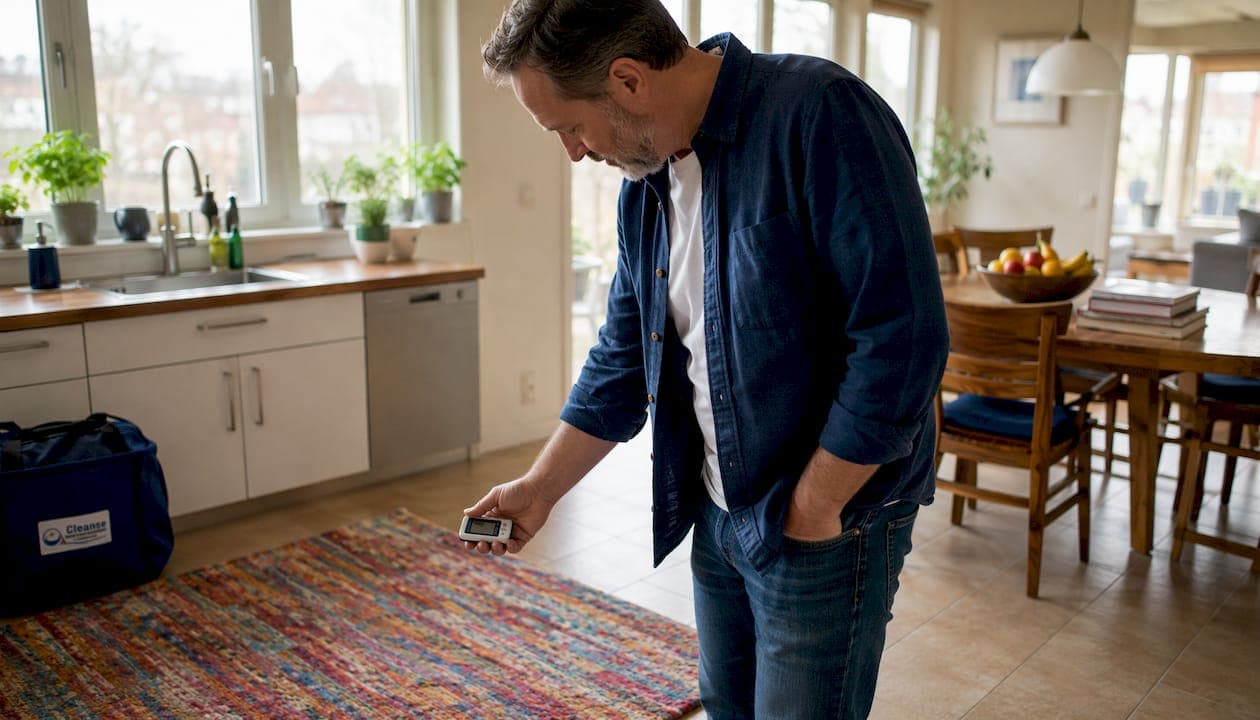
Carpets can affect indoor air quality, but the risk is manageable. The key levers are cleaning frequency, moisture control, and ventilation — not necessarily ripping out every rug you own. Health Canada classifies carpets as reservoirs for dust, dust mites, allergens, and particles. The catch: a well-maintained carpet can hold those particles out of the breathing zone, while a neglected or wet one releases them back into the air.
Do these two things today:
- Run a HEPA-equipped vacuum over high-traffic areas and check your home's relative humidity with an inexpensive hygrometer (available at most Canadian hardware stores).
- If you see visible mould, smell a persistent musty odour, or know the carpet got wet and wasn't dried within 24 hours, isolate that area and plan for removal — cleaning alone won't fix it.
Stat to know: Mould can begin growing within 48 hours of moisture exposure, and carpets should dry quickly after cleaning to prevent microbial growth.
Table of Contents
- How carpets affect indoor air quality — what the science actually says
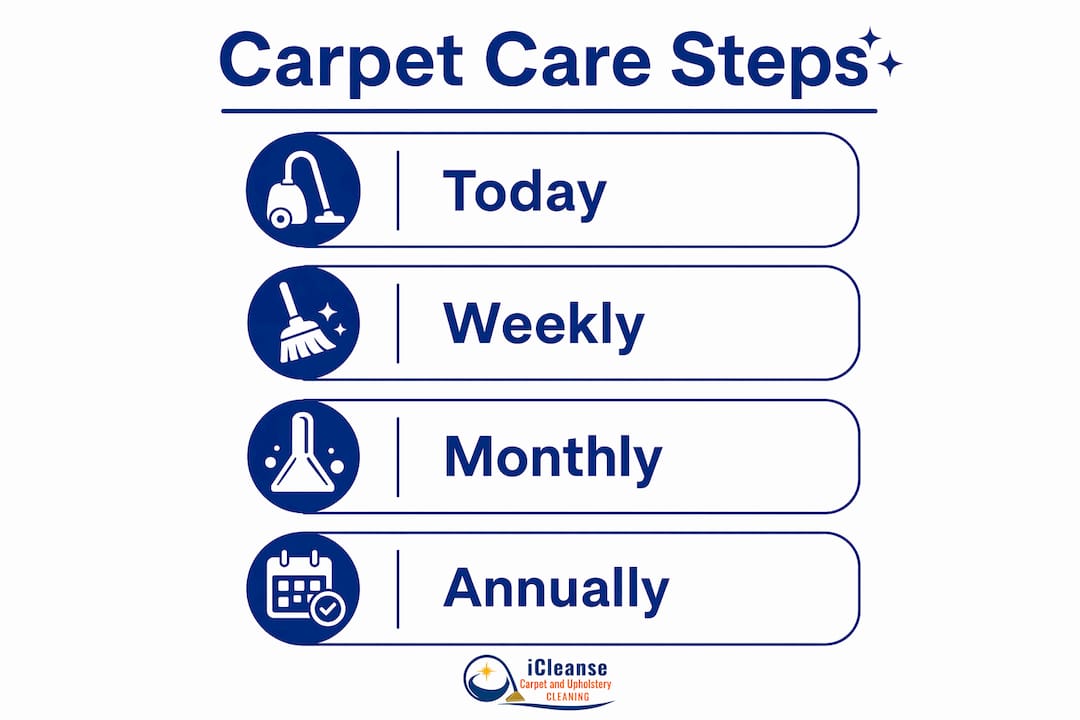
- A prioritised plan you can follow today, weekly, and annually
- When to deep-clean, and when to remove carpet entirely
- How to choose a cleaning method or hire a pro in Canada
- How a Canadian pro implements these steps
- Key takeaways
- What most homeowners get wrong about carpets and air quality
- Get a professional assessment from Icleansecuc
- Useful sources and further reading
How carpets affect indoor air quality — what the science actually says
Carpets behave like a filter. They trap airborne particles — pollen, pet dander, dust mite waste, fine particulate matter — and keep them out of the air you breathe, at least temporarily. That's the "sink" effect. The problem is that the same carpet becomes a "source" the moment someone walks across it, a child plays on it, or a vacuum with a clogged filter stirs the surface. Peer-reviewed research finds no clear evidence that carpet provides a net dust-reducing benefit; many studies report higher indoor dust levels and increased resuspension with carpet compared to hard flooring.
Health Canada and the U.S. EPA both take a conditional position: carpets aren't automatically harmful, but they become a problem when poorly maintained or exposed to moisture. The EPA's guidance on school environments specifically flags new carpet off-gassing as a short-term concern — volatile organic compounds (VOCs) from carpet fibres, adhesives, and backing materials emit at their highest rate in the first 72 hours after installation. Intensive ventilation during that window cuts occupant exposure substantially.
Humidity is the other major variable. Health Canada recommends keeping indoor relative humidity between 30% and 50%. Below that range, carpets dry quickly and dust mites struggle to survive. Above it, moisture accumulates in the pile and underpad, creating exactly the conditions mould needs.
| Factor | Target or threshold | Source |
|---|---|---|
| Indoor relative humidity | 30%–50% | Health Canada |
| Mould growth onset after wetting | Within 48 hours | Health Canada |
| Carpet drying time after cleaning | Within 24 hours | Health Canada |
| New carpet VOC peak emissions | First 72 hours | U.S. EPA / Health Canada |
The sink-to-source shift in plain terms: think of your carpet as a sponge. A dry, regularly wrung-out sponge holds debris safely. Leave it wet or never wring it out, and it starts releasing everything it collected — plus whatever grew in the moisture.
A prioritised plan you can follow today, weekly, and annually
Today
Check your humidity. A basic hygrometer costs under $20 at Canadian Tire or Home Depot and tells you immediately whether your home is in the 30%–50% range. If it's above 50%, run a dehumidifier or air conditioner. While you're at it, do a quick visual scan of carpet edges, corners, and any area near windows or exterior walls for staining, discolouration, or a musty smell.
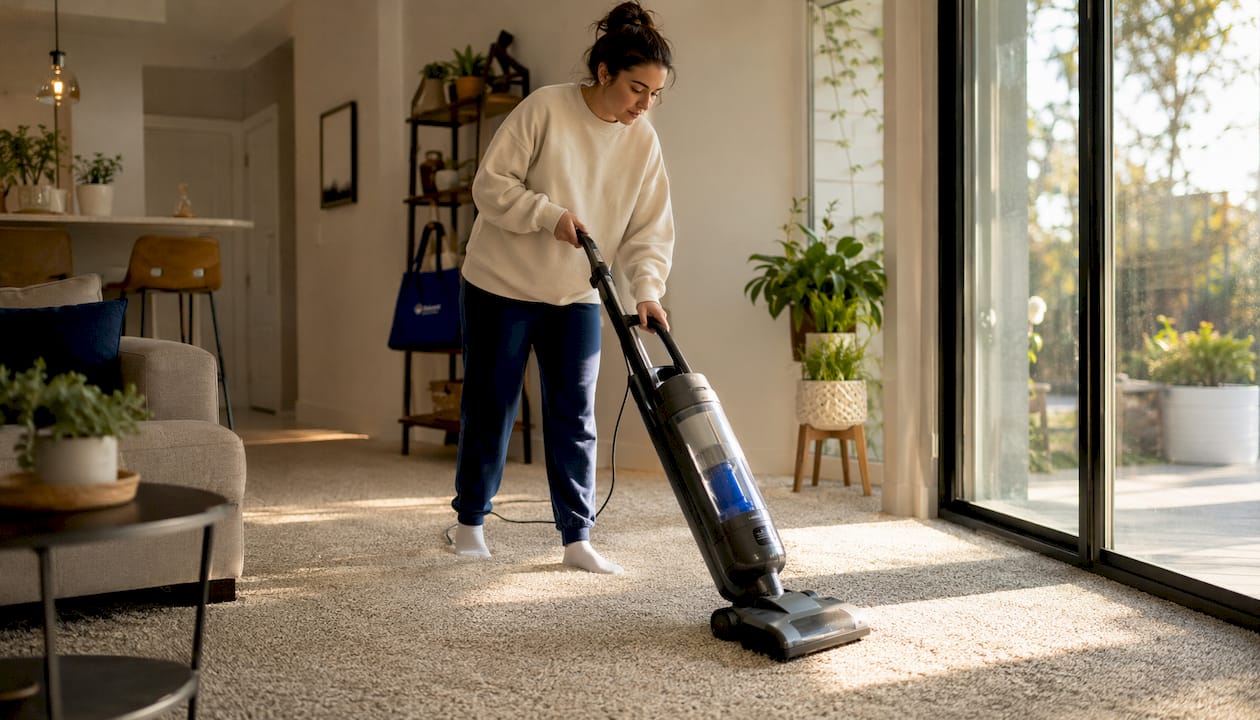
Then vacuum. Not a quick once-over — slow, overlapping passes in multiple directions. This matters because vacuum effectiveness depends heavily on maintenance: a full bag or clogged filter reduces suction and can actually push fine particles back into the air rather than capturing them.
Pro Tip: Empty the bag or clean the filter before you start, not after. A HEPA vacuum running at full suction removes more allergens per pass than the same machine with a partially filled bag.
Weekly
Vacuum all carpeted areas with a HEPA-fitted upright or canister vacuum. High-traffic zones — hallways, living rooms, areas near entryways — need it most. For stain prevention in homes with kids, address spills immediately with a clean cloth and a low-VOC spot cleaner; excess moisture from over-wetting a stain is a real mould risk in disguise.
Monthly
Inspect carpet edges and the perimeter of rooms where the carpet meets baseboards — moisture tends to accumulate there first. Address any stains you've been ignoring. For spot cleaning, choose products with low or no VOC content and follow the manufacturer's dilution instructions. Using a concentrated cleaner undiluted doesn't clean better; it leaves a residue that attracts more dirt and can off-gas into the room.
Annually
Schedule a professional hot-water extraction cleaning. This is the method Health Canada's building guidance endorses for maximising water removal and reducing microbial load. Time it for a period when the space will be unoccupied for several hours, and plan for increased ventilation and drying capacity immediately after — open windows if weather permits, run fans, and use a dehumidifier to get the carpet dry within 24 hours.
For equipment, HEPA-fitted vacuums and portable dehumidifiers are widely available at major Canadian retailers. A portable HEPA air cleaner is a useful addition in bedrooms or rooms where allergy sufferers spend significant time, though Health Canada notes that air filtration works best as a complement to source control and ventilation, not a replacement for either.
When to deep-clean, and when to remove carpet entirely
The decision comes down to two questions: Is there mould? And was the carpet wet for more than 24 hours?
Cleaning is sufficient when:
- Soiling is surface-level (tracked-in dirt, food stains, pet hair)
- The carpet has age-related wear but no odour after vacuuming
- There's no history of flooding or prolonged moisture exposure
- The underpad feels dry when you lift a corner
Removal is the right call when:
- Visible mould is present on the carpet or underpad
- A musty odour persists after thorough cleaning and drying
- The carpet was wet for more than 24 hours and wasn't professionally extracted immediately
- Water damage affected the underpad — underpads retain moisture and are extremely difficult to dry thoroughly, which creates ongoing mould risk even after the surface looks fine
Health Canada's mould guidance is direct: remove mouldy carpeting and underlay rather than attempting to clean them. Cleaning mould-contaminated carpet spreads spores and rarely eliminates the problem at its root.
One important caveat: removing carpet doesn't automatically fix poor indoor air quality. If the underlying moisture or ventilation problem isn't addressed, mould will simply grow on the next surface. Basements and below-grade rooms are particularly high-risk; hard flooring with area rugs that can be removed and washed is often a better long-term choice there. Frequent cleaning that prevents replacement is the smarter path for above-grade rooms with no moisture history.
How to choose a cleaning method or hire a pro in Canada
Hot-water extraction vs. low-moisture methods
Hot-water extraction (often called steam cleaning, though the water isn't actually steam) injects hot water and cleaning solution deep into the pile, then extracts it with high suction. It removes the most contaminants and is the method recommended by industry guidance for thorough allergen reduction. The trade-off is drying time: done correctly, carpets dry within 6–12 hours with good ventilation. Done poorly, with inadequate extraction, they stay wet long enough to grow mould.
Low-moisture or dry methods use encapsulation compounds or dry-cleaning powders that bind to soil and are then vacuumed out. They're faster to dry and appropriate for maintenance cleaning or situations where extended drying isn't practical. They don't penetrate as deeply, so they're less effective for heavy soiling or allergen reduction.
Questions to ask before you hire
- How do you control moisture after extraction, and what's your target drying time?
- What filtration does your equipment use? Do you use HEPA vacuums for pre- and post-cleaning?
- Do you bring fans or dehumidifiers, or do you rely on the homeowner's ventilation?
- Are your cleaning solutions low-VOC? Can you provide the product data sheet?
- Are you insured, and can you provide references from residential jobs?
Red flags
- A cleaner who promises bone-dry carpets in two hours without dehumidification is either using a very low-moisture method (which may not be appropriate for your situation) or overstating results.
- Inability to explain moisture control is a genuine warning sign — a professional who doesn't think about drying time is the cleaner most likely to leave you with a mould problem.
- Undiluted harsh solvents or products with strong chemical odours suggest the cleaner isn't thinking about VOC exposure.
When evaluating products and services, look for the Carpet and Rug Institute's Green Label Plus certification on carpet and cleaning products. Green Label Plus is a third-party testing programme that verifies low VOC emissions — it's the most widely recognised standard for low-emission carpets and cleaning solutions in North America and is available on products sold in Canada.
How a Canadian pro implements these steps
Here's what a professional visit from Icleansecuc actually looks like, from inspection to aftercare.
Inspection first. Before any equipment comes out, the technician walks the space, checks for visible staining, moisture at edges, and odour. Problem areas get flagged for targeted pre-treatment.
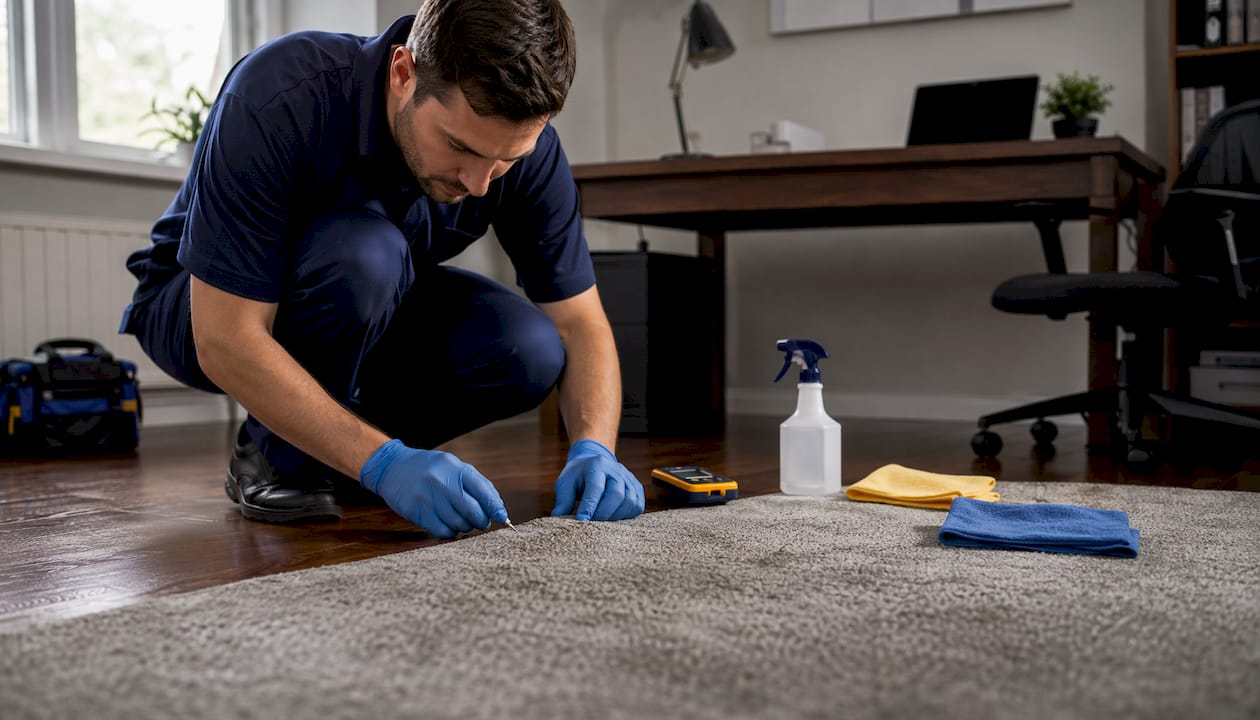
Pre-treatment and agitation. Low-VOC pre-treatment solution is applied to heavily soiled areas and allowed to dwell. A grooming tool or brush agitates the pile to loosen embedded particles — the step most DIY attempts skip entirely.
Hot-water extraction. A high-powered truck-mounted or portable extraction rig injects hot water and solution, then immediately extracts it at high suction. The goal is to remove as much moisture as possible in a single pass, which is why professional high-traffic cleaning produces results a rental machine can't replicate — the extraction power is simply in a different class.
Forced drying. Industrial fans and dehumidifiers are positioned to move air across the carpet surface. The target is full drying within 24 hours. Homeowners are advised to keep windows open if weather allows and to avoid heavy foot traffic until the carpet is dry.
Post-service check and aftercare advice. The technician does a final walk-through, confirms no wet spots remain, and leaves the homeowner with a short aftercare checklist: maintain humidity between 30%–50%, vacuum weekly with a HEPA machine, and treat spills immediately with a low-VOC spot cleaner. For soft furnishings that also affect air quality, odour removal from upholstery follows similar principles — prompt treatment and controlled drying matter just as much.
Equipment used: truck-mounted or portable hot-water extraction rigs, HEPA vacuums for pre- and post-work, industrial air movers, dehumidifiers, and low-VOC cleaning solutions. The full range of Icleansecuc services covers carpet, upholstery, tile and grout, and move-out cleaning throughout the Greater Toronto Area.
Key takeaways
Carpets are manageable — the combination of HEPA vacuuming, humidity control in the 30%–50% range, and annual professional extraction covers the vast majority of carpet-related indoor air quality risks.
| Point | Details |
|---|---|
| Control humidity first | Keep indoor relative humidity in a range that suppresses dust mites and prevents mould growth. |
| Vacuum with HEPA, correctly | Use a HEPA-fitted vacuum with a clean filter; slow passes in multiple directions remove far more allergens than a quick once-over. |
| Ventilate new carpet for 72 hours | VOC emissions from new carpet and adhesives are highest in the initial days after installation; open windows and run fans during that window. |
| Remove, don't clean, mouldy carpet | Mould can begin growing within 48 hours of wetting; if the carpet or underpad is mouldy, removal is the only reliable fix. |
| Icleansecuc for professional extraction | Icleansecuc provides hot-water extraction with forced drying throughout the Greater Toronto Area — the method Health Canada's guidance endorses for thorough allergen and moisture removal. |
What most homeowners get wrong about carpets and air quality
The conventional advice is to remove carpet if you care about air quality. That's not wrong exactly, but it's incomplete in a way that leads a lot of people to make expensive decisions that don't actually solve the problem.
The real issue isn't the carpet. It's moisture and maintenance. A dry, regularly vacuumed carpet in a well-ventilated home with humidity held at 40% is not a meaningful air quality hazard for most people. The same carpet in a basement with 65% humidity and a vacuum that hasn't had its filter changed in two years is a genuine problem — but the problem is the humidity and the neglected vacuum, not the carpet itself.
What I see consistently is homeowners who invest in hard flooring after a bad allergy season, then wonder why nothing improved. Hard floors don't trap particles the way carpet does, but they also don't hold them. Fine dust and allergens that would have settled into carpet pile now stay airborne longer and resettle on every surface in the room. The real fix — better ventilation, humidity control, and a proper HEPA vacuum — would have worked on the carpet too.
The one situation where removal is genuinely the right call: water damage with underpad involvement. Underpads hold moisture in a way that's nearly impossible to dry thoroughly after a flood or a prolonged leak. No amount of extraction fixes that. Get it out, fix the moisture source, and then decide what flooring you want.
Icleansecuc serves homeowners across the Greater Toronto Area who want a professional assessment before making that call. Sometimes the answer is a deep clean. Sometimes it's removal. The inspection tells you which.
Get a professional assessment from Icleansecuc
If your carpet has seen a few years of heavy use, a musty smell that won't quit, or you're simply not sure whether cleaning or removal is the right move, a professional inspection takes the guesswork out of it.
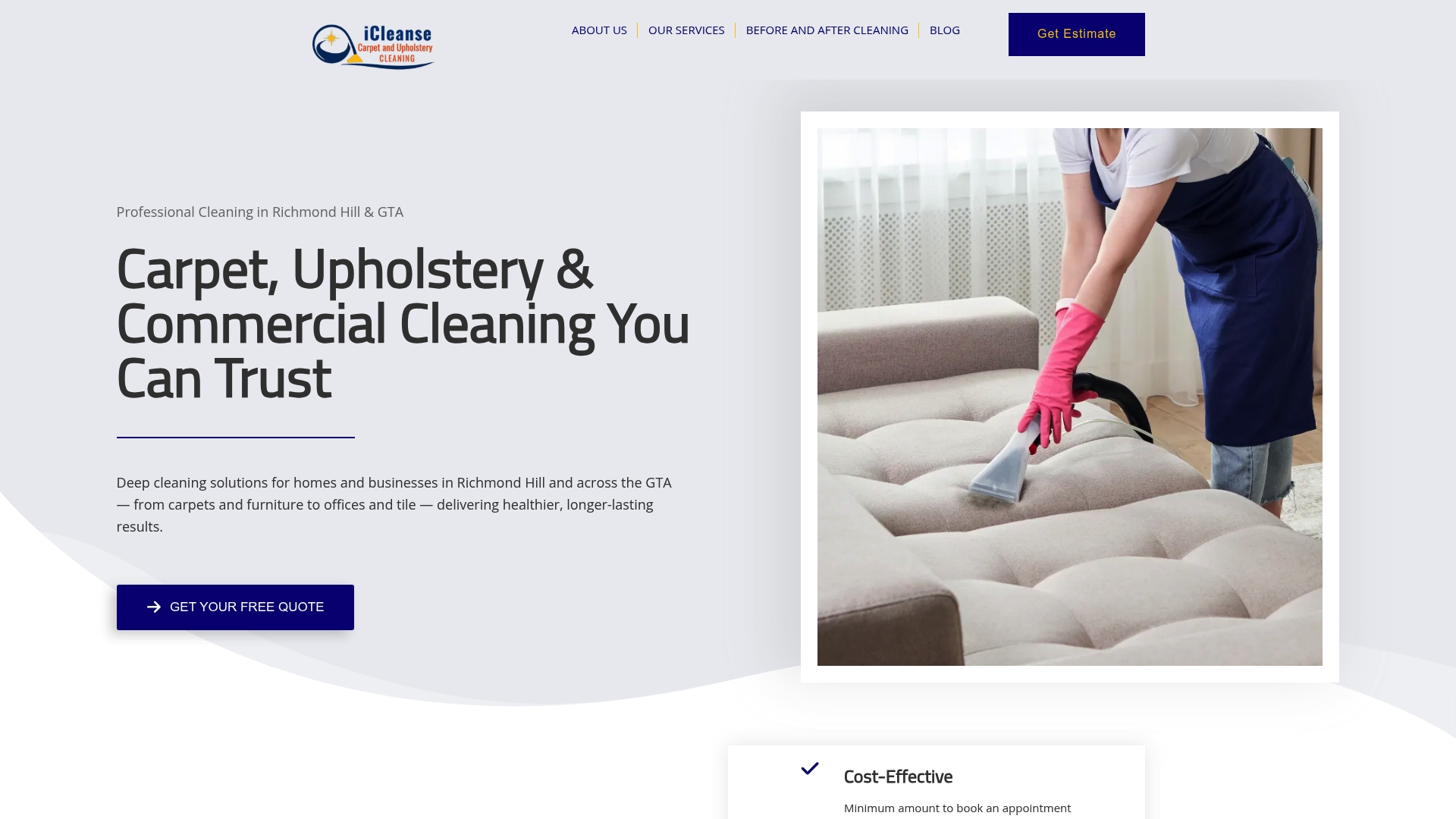
Icleansecuc provides carpet inspection, hot-water extraction cleaning, forced drying with industrial equipment, and HEPA vacuuming throughout the Greater Toronto Area. The process is straightforward: a technician assesses the carpet's condition, identifies any moisture or mould concerns, and gives you a clear recommendation before any cleaning begins. No pressure, no upselling — just an honest assessment and a quote you can act on.
Request a quote online, or browse the full range of services to see what's covered. Most residential jobs are completed in a single visit, with carpets dry and ready for use within 24 hours.
Useful sources and further reading
The following sources informed this guide. All are publicly available and worth bookmarking if you want to go deeper on any specific topic.
- Health Canada — Guidance on improving indoor air quality in office buildings: Covers carpet reservoir behaviour, HEPA vacuum recommendations, mould timelines, and cleaning protocols including the 24-hour drying standard.
- Health Canada — Addressing moisture and mould in your home: Practical guidance on mould prevention, humidity control, and when to remove rather than clean affected materials.
- Health Canada — Healthy home guide: Includes the 30%–50% relative humidity recommendation and guidance on VOC emissions from household materials including new carpet.
- Health Canada — Pollutants from furniture and building materials: Explains how carpets and underlay emit VOCs including formaldehyde, and recommends low-emission product selection and installation ventilation.
- U.S. EPA — Does carpet cause indoor air quality problems in schools?: Covers VOC off-gassing from new carpet and the 72-hour ventilation recommendation; applicable to residential settings.
- CCIAQB/IAQ Resource — Module 3: Custodial Activities, Maintenance, Repair and Renovation: Canadian industry guidance on custodial best practices, HEPA vacuum use, and CRI Green Label Plus certification for low-emission carpets and cleaning products.
- Peer-reviewed review — Carpets and indoor contaminants (PMC): Academic review of the evidence on carpets, resuspension, allergen accumulation, and how maintenance practices change the risk profile.
This article provides general information for homeowners and is not a substitute for professional advice. For your specific situation, consult Health Canada's guidance or a qualified indoor air quality professional.