
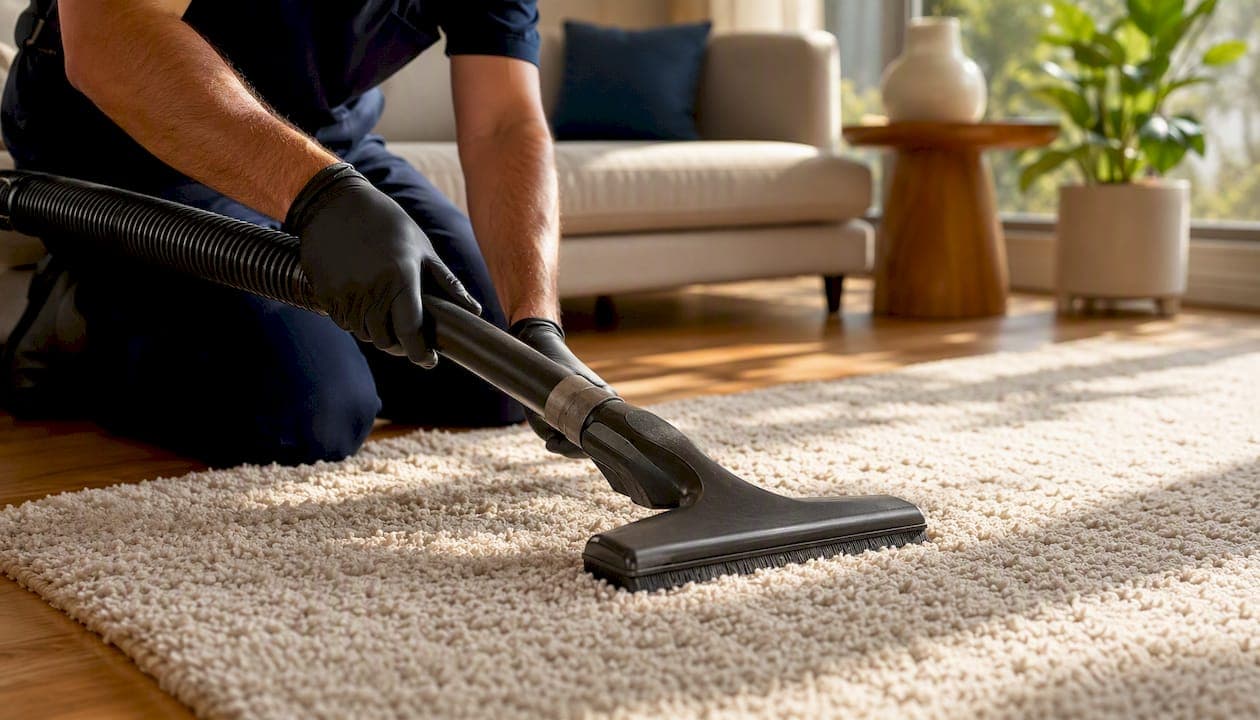
Vacuum gently with a suction-only setting, blot spills immediately with cold or lukewarm water, use only WoolSafe-approved products, and call a trained professional for any restorative wet cleaning. That is the short version. The rest of this guide explains exactly how to do each step without damaging the fibres, backing, or colour of your wool carpet.
When a spill happens, act within the first 60 seconds:
- Scoop up any solid material with a blunt spoon or butter knife, working inward from the edges.
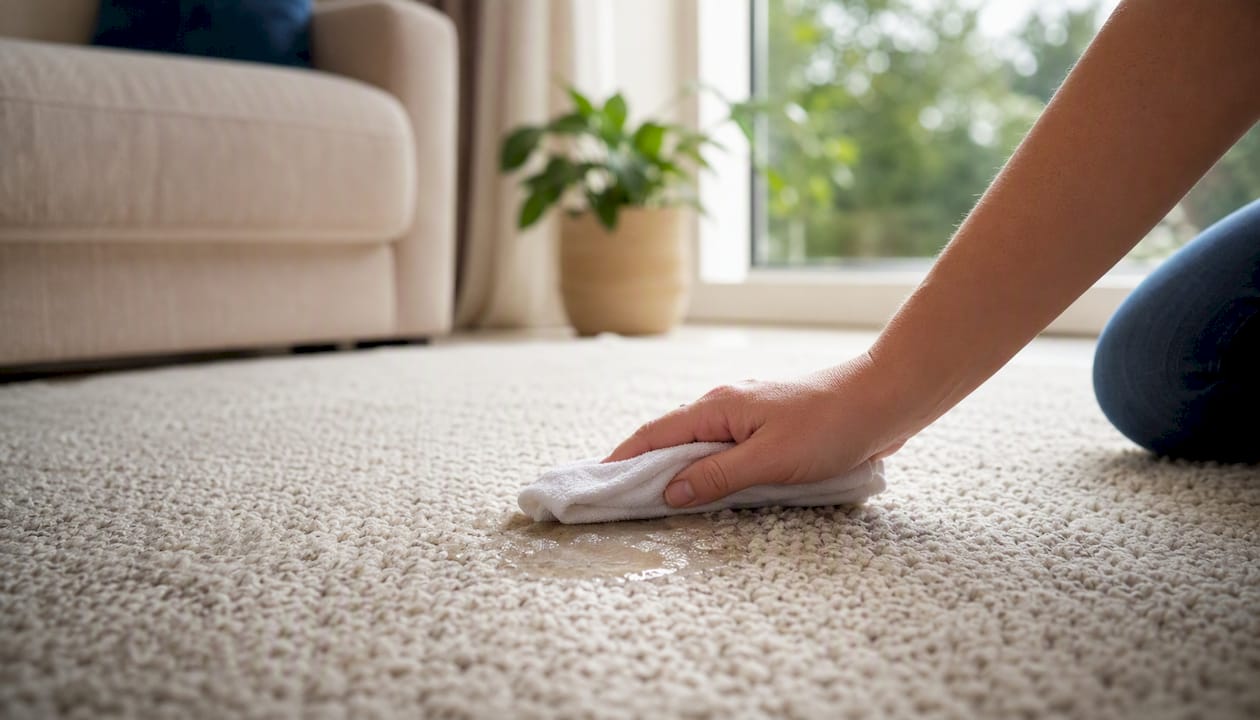
- Blot the liquid with a clean white cotton cloth. Press firmly, lift, repeat. Never rub.
- Apply cold or lukewarm water sparingly to dilute the stain, then blot again.
- Do not pour water freely over the area. Over-wetting is one of the fastest ways to damage wool.
Why this matters: wool absorbs moisture deeply, and if the backing stays wet too long, you risk colour bleeding, mildew, and fibre weakening that no amount of later cleaning can reverse.
Key takeaways
Proper wool carpet care comes down to three habits: vacuum gently and consistently, respond to spills by blotting with cold water and WoolSafe-approved products, and leave restorative wet cleaning to trained professionals who control moisture and drying.
| Point | Details |
|---|---|
| Vacuum safely and often | Use suction-only settings; vacuum high-traffic areas two to three times weekly. |
| Blot spills immediately | Use a clean white cloth and cold water; never rub, and always test for colourfastness first. |
| Use WoolSafe-approved products | Choose low-pH, bleach-free, residue-free cleaners bearing the WoolSafe Approved mark. |
| Book professional cleaning regularly | Most wool carpets benefit from trained restorative cleaning every 12–18 months. |
| Icleansecuc for GTA homeowners | Icleansecuc provides professional wool-aware carpet cleaning with moisture-controlled extraction throughout the Greater Toronto Area. |
Table of Contents
- How do you keep a wool carpet clean between professional visits?
- What is the safest step-by-step spot treatment for wool?
- Quick stain reference: what to do for common spills
- Which cleaning products are actually safe for wool?
- When should you schedule a professional deep clean?
- When should you call a professional instead of treating it yourself?
- Common mistakes that damage wool carpets
- Practitioner tips for Canadian homes: humidity, moths, and seasonal care
- Why trained professionals make the difference for wool
- Icleansecuc: professional wool-aware carpet cleaning in the Greater Toronto Area
- Sources
How do you keep a wool carpet clean between professional visits?
Routine maintenance is where most of the protection happens. The IWTO Wool Carpet Care and Maintenance Guide is clear on this: preventative care reduces how often restorative wet cleaning is needed, which is exactly what you want for a fibre as sensitive as wool.
Vacuuming
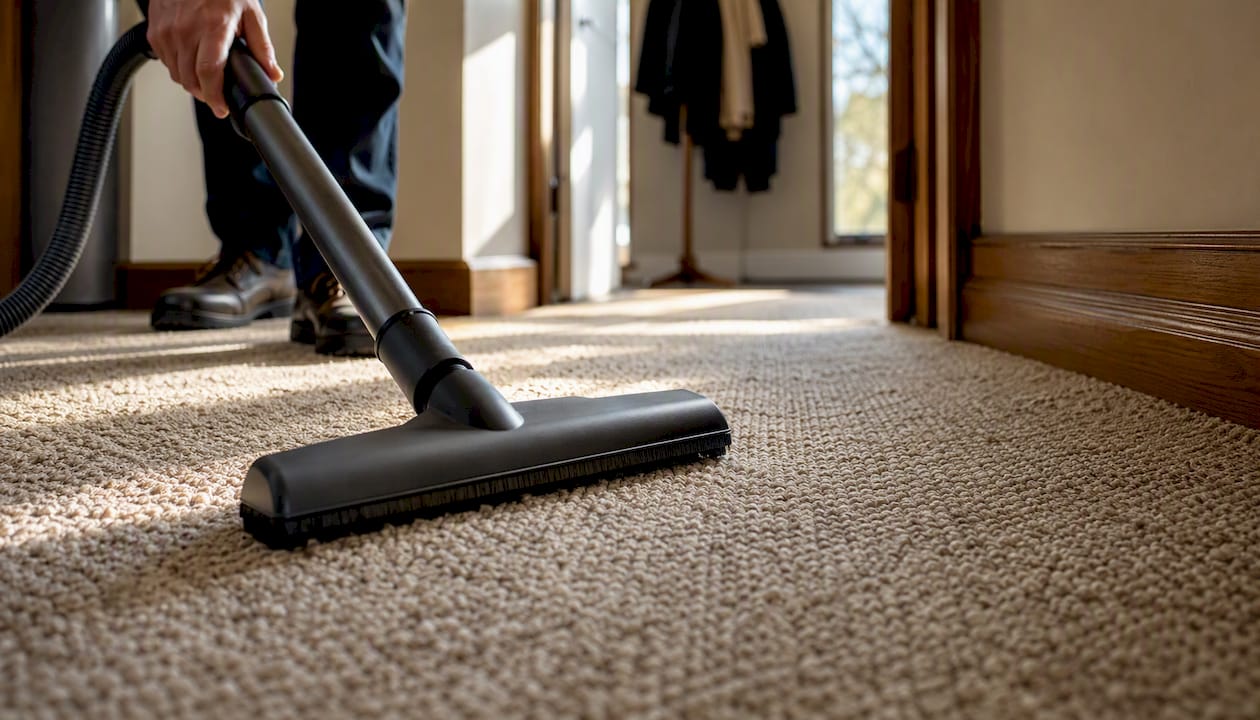
Vacuum low-traffic rooms regularly and increase vacuuming frequency in high-traffic areas such as hallways and living rooms. Use a suction-only setting or a soft-brush head. Hard beater bars and rotating brush rolls can pull and break wool fibres, especially in loop-pile or hand-knotted constructions. If your vacuum has a height adjustment, raise the head slightly so it glides rather than drags.
Entrance mats and entryway habits
A good barrier mat at every exterior door catches the grit and moisture that would otherwise grind into the pile. Encourage a no-shoes policy, or at least a shoe-change at the door. Tracked-in soil is abrasive; left in the pile, it cuts fibres from below with every footstep.
Rotation and furniture movement
- Rotate area rugs 180 degrees every six to twelve months to even out foot-traffic wear and sun exposure.
- Move heavy furniture slightly every few months to prevent permanent pile compression.
- Place furniture coasters or wide-base cups under legs to distribute weight.
Seasonal storage
If you store a wool rug seasonally, clean it thoroughly before rolling it up. Roll it pile-inward around an acid-free tube if possible, wrap it in breathable cotton or muslin (never plastic, which traps moisture), and store it in a cool, dry space. Plastic sheeting creates the humid microclimate that moths and mildew need.
Pro Tip: Canadian winters drive indoor humidity up in some homes as heating systems run continuously. Wool that stays in a persistently damp environment is slower to dry after any wet cleaning and more vulnerable to mildew.
What is the safest step-by-step spot treatment for wool?
The sequence matters as much as the product. Follow these steps in order, even when you are in a hurry.
- Contain the spill. Place clean dry cloths around the edges to stop it spreading.
- Scoop solids. Use a blunt spoon or the edge of a credit card, working from the outside toward the centre.
- Blot liquids. Press a clean white cotton cloth onto the stain. Lift. Repeat with a fresh section of cloth each time.
- Test for colourfastness. Before applying any cleaning product, dab a small amount onto a hidden corner of the carpet and wait two to three minutes. If colour transfers to the cloth, stop and call a professional. WoolSafe advises this pre-test as mandatory before any spot treatment.
- Apply your cleaning solution. Use a WoolSafe-approved spot remover or a small amount of cold water. Apply to the cloth first, not directly to the carpet.
- Work inward. Blot from the outer edge of the stain toward the centre to avoid spreading it.
- Rinse. Blot with a clean cloth dampened with cold water to remove any product residue. Residue left in the pile attracts soil and makes the area re-soil faster.
- Blot dry. Press a dry cloth firmly onto the area and leave a weighted stack of dry cloths on top for 20–30 minutes to wick out remaining moisture.
- Air dry completely. Open a window or use a fan. Never use a hair dryer or place the carpet near a heat source.
A few applicator notes:
- White cloths only. Coloured cloths can transfer dye to a wet wool pile.
- For gum or wax, apply ice in a sealed bag to harden the deposit before scraping.
- For dried mud, let it dry completely first, then vacuum before any wet treatment.
Quick stain reference: what to do for common spills
The Colin Campbell wool carpet care guide reinforces the same principle across every stain type: blot, never rub; use lukewarm water and wool-safe products; and get professional help for anything that has set.
| Stain | First step | Safe at-home treatment | Call a pro if… |
|---|---|---|---|
| Red wine | Blot immediately | Cold water + WoolSafe spot remover | Not lifted after two treatments |
| Grease / oil | Scrape solids; blot | WoolSafe dry-solvent spotter | Oily residue remains or spreads |
| Ink | Blot; do not spread | WoolSafe solvent-based remover | Ink has dried or spread widely |
| Pet urine | Blot thoroughly | Cold water rinse + WoolSafe enzyme cleaner | Odour persists; backing may be saturated |
| Gum / wax | Freeze with ice, scrape | Blunt tool removal; WoolSafe solvent for residue | Residue is bonded to fibres |
| Coffee / tea | Blot immediately | Lukewarm water + WoolSafe spotter | Tannin stain has dried and set |
Key principles that apply to every row above:
- Always work from the outside of the stain inward.
- Avoid hot water. Heat sets protein-based stains and can cause colour bleeding.
- Never use bleach, ammonia, or any product not rated for wool.
- Some stains, particularly oxidative stains from bleach splashes or long-set protein stains, may be irreversible regardless of treatment.
Which cleaning products are actually safe for wool?
Start with WoolSafe-approved products. The WoolSafe organisation maintains an approval programme specifically for wool fibre care, testing products against wool's chemistry before granting approval. That list is the most reliable shortcut available to a homeowner.
Why chemistry matters for wool
Wool is a protein fibre. High-alkalinity cleaners break down the protein structure, weakening the fibre and causing colour loss. The WoolSafe cleaning and maintenance guide confirms that wool's natural surface membrane offers some stain resistance, but harsh alkalis and bleaching agents strip that protection and cause irreversible damage.
What to look for on a product label:
- Low pH (ideally pH 5–8, close to neutral or mildly acidic)
- No sodium hypochlorite (bleach) or hydrogen peroxide
- No ammonia or high-alkalinity builders
- No optical brighteners, which can alter wool colour
- Non-sticky drying residue (sticky residues trap soil and accelerate re-soiling)
- WoolSafe Approved mark on the label
What to avoid:
- Oxygen-based stain removers marketed for synthetics
- Multi-surface spray cleaners with alkaline degreasers
- Any product labelled "heavy-duty" or "industrial strength" without a wool-safe rating
- DIY mixtures using dish soap, baking soda, or vinegar at full concentration
Dish soap and vinegar are popular home remedies, but both can leave residues or alter pH in ways that dull wool colour over time. A WoolSafe-approved product costs a few dollars more and removes the guesswork entirely.
When should you schedule a professional deep clean?
Restorative wet cleaning restores appearance and hygiene, but it should be done by trained operators who understand wool's sensitivity to moisture. The IWTO guide is direct: restorative cleaning must be performed by specialists who control moisture to prevent re-soiling and fibre damage.
Recommended frequency: most wool carpets in a typical Canadian household benefit from professional restorative cleaning every 12–18 months. High-traffic areas, homes with pets or young children, or carpets in humid zones may need attention annually.
Hot water extraction (spray extraction) is the preferred method for wool when performed correctly. The key word is correctly. A trained technician pre-conditions the carpet, uses appropriate chemistry, controls water volume, and extracts moisture thoroughly before leaving. That last step is where most damage happens when it is skipped or rushed.
Why DIY steamers and rental machines fall short:
- Consumer steam cleaners operate at temperatures that can shrink wool or cause browning.
- Rental extraction machines typically lack the suction power to remove sufficient moisture, leaving the backing wet for hours or days.
- Neither is calibrated for wool's specific chemistry or pile construction.
The IICRC notes that damage in wet cleaning typically results from over-wetting, excessive mechanical agitation, or unsuitable chemicals. Trained technicians reduce all three risks simultaneously.
Drying time matters enormously. Improperly dried carpets can harbour mould and allergens, which is a real health concern in Canadian homes where windows stay closed through winter. A professional will use air movers, monitor moisture levels, and groom the pile before leaving. That grooming step, often skipped by DIY attempts, sets the pile direction and prevents matting as the carpet dries.
When should you call a professional instead of treating it yourself?
Some situations are beyond safe home treatment. Call a professional for:
- Any stain that has been sitting for more than a few hours
- Pet urine that has reached the backing or underpad
- Large-area wetting from a flood, leak, or over-application of water
- Suspected moth or insect damage (visible larvae, bare patches, or webbing)
- Backing damage, delamination, or rippling
- Persistent odour after home treatment
- Any stain involving bleach, dye, or unknown chemicals
Questions to ask before you book:
- Are you a WoolSafe Approved Service Provider? WoolSafe operates a specific training and accreditation programme for wool fibre care.
- What certifications do your technicians hold? Look for IICRC certification as a baseline.
- What drying time should I expect, and how do you verify moisture levels before you leave?
- What extraction method do you use, and is it appropriate for wool pile?
- Do you carry liability insurance for fibre or colour damage?
- Can you provide references or reviews from wool carpet jobs specifically?
What a professional visit should include: a visual inspection before any cleaning begins, a colourfastness pre-test on an inconspicuous area, a method recommendation based on the carpet's construction, and a clear drying estimate.
Pro Tip: Ask for a written scope of work and confirm that moisture readings will be taken before the technician leaves. If a cleaner cannot tell you the moisture level at the end of the job, that is a red flag.
Common mistakes that damage wool carpets
Most wool carpet damage is preventable. These are the errors that show up most often.
- Rubbing a spill. Rubbing forces stain molecules deeper into the fibre, where they can bond chemically. Blot every time.
- Using hot water. Heat sets protein-based stains and can cause shrinkage. Cold or lukewarm water only.
- Reaching for bleach or ammonia. Both destroy wool's protein structure. There is no safe dilution for wool.
- Over-wetting during spot treatment. Pouring water onto a stain saturates the backing and creates mildew conditions. Use a damp cloth, not a running tap.
- Running a beater-bar vacuum on delicate pile. Rotating brush rolls fray and break wool fibres. Switch to suction-only.
- Using a consumer steam cleaner. The heat and water volume are calibrated for synthetics. On wool, they cause browning, shrinkage, and backing damage.
- Leaving detergent residue. Any product not fully rinsed out becomes a soil magnet. Always blot with clean water after treatment.
- Skipping the colourfastness test. Even a WoolSafe-approved product can react unpredictably with certain dyes. Test first, always.
Practitioner tips for Canadian homes: humidity, moths, and seasonal care
Canadian homes face specific challenges that standard care guides written for milder climates do not fully address.
Humidity and drying
Indoor humidity in Canadian homes swings considerably across seasons. In winter, forced-air heating dries the air, which is generally good for drying after wet cleaning. In spring and fall, humidity rises, and a wet carpet can take far longer to dry than expected. After any wet treatment, use a fan or dehumidifier to accelerate drying. The NCHH guidance on carpets and healthy homes is clear that inadequate drying creates conditions for mould and allergens.
Seasonal deep-cleaning cadence
Many Canadian households find that scheduling professional restorative cleaning in late spring (after winter salt and grit have been tracked in) and again in early autumn (before the heating season begins) works well. Avoid scheduling wet cleaning in the middle of a humid summer week when open-window drying is not practical.
Moth and insect prevention
Moths target wool that is stored in dark, undisturbed areas. Clean a rug thoroughly before storage, since moths are attracted to soiled fibres. Cedar blocks or cedar-lined storage chests deter moths naturally without chemical risk to the fibres. Pyrethrin-based moth treatments are effective but should be used cautiously on coloured wool; test on a hidden area first and follow label directions precisely.
Pro Tip: Rotate rugs near sunny windows or patio doors every few months. Consistent one-sided sun exposure causes uneven fading that is impossible to reverse. A simple 180-degree rotation every six months distributes both light and foot traffic evenly.
Pilling and matting
Pilling is normal in new wool carpets as loose fibres work their way to the surface. Clip pills with scissors rather than pulling them, which can loosen the weave. Matting in high-traffic areas is best addressed by a professional grooming rake or pile lifter, not by aggressive vacuuming.
The IWTO frames its wool carpet care guidance as a consensus of wool industry experts, and that consensus aligns with what the IICRC recommends for trained technicians: control moisture, use appropriate chemistry, and groom the pile after cleaning.
Why trained professionals make the difference for wool
Wool carpets are genuinely different from synthetic ones, and the gap between careful home maintenance and professional restoration is wider than most homeowners expect. The chemistry is unforgiving: one application of the wrong product, one pass with a too-hot steamer, or one backing left wet overnight can cause damage that no subsequent cleaning will fix. The advice in this guide is grounded in IWTO and WoolSafe standards, and it reflects what experienced cleaners see repeatedly in the field. Home care handles the day-to-day. But when a stain sets, a pet soaks the underpad, or it is simply time for a restorative clean, the right call is a trained professional who understands wool fibre, controls moisture precisely, and leaves the carpet genuinely dry.
Icleansecuc: professional wool-aware carpet cleaning in the Greater Toronto Area
Wool carpets deserve more than a rental machine and a bottle of general-purpose cleaner. Icleansecuc brings commercial-grade extraction equipment, eco-friendly cleaning solutions, and wool-aware technique to residential carpet cleaning throughout the Greater Toronto Area. Every job starts with a visual inspection and a colourfastness pre-test before any product touches your carpet. Moisture extraction is thorough, drying times are realistic, and the pile is groomed before the team leaves.

Whether you are dealing with a set stain, a pet urine situation that has reached the backing, or simply a carpet that is overdue for restorative cleaning, Icleansecuc handles it with the care wool requires. Learn more about the cleaning methods we use or request a quote today to book your wool carpet cleaning in the GTA.
Sources
These resources are worth bookmarking if you want to go deeper on any aspect of wool carpet maintenance.
- Wool carpet care and maintenance guide (IWTO, 2024)
- WoolSafe
- Wool carpet care & maintenance guide (Colin Campbell)
- IICRC
- Carpets and healthy homes (NCHH)