
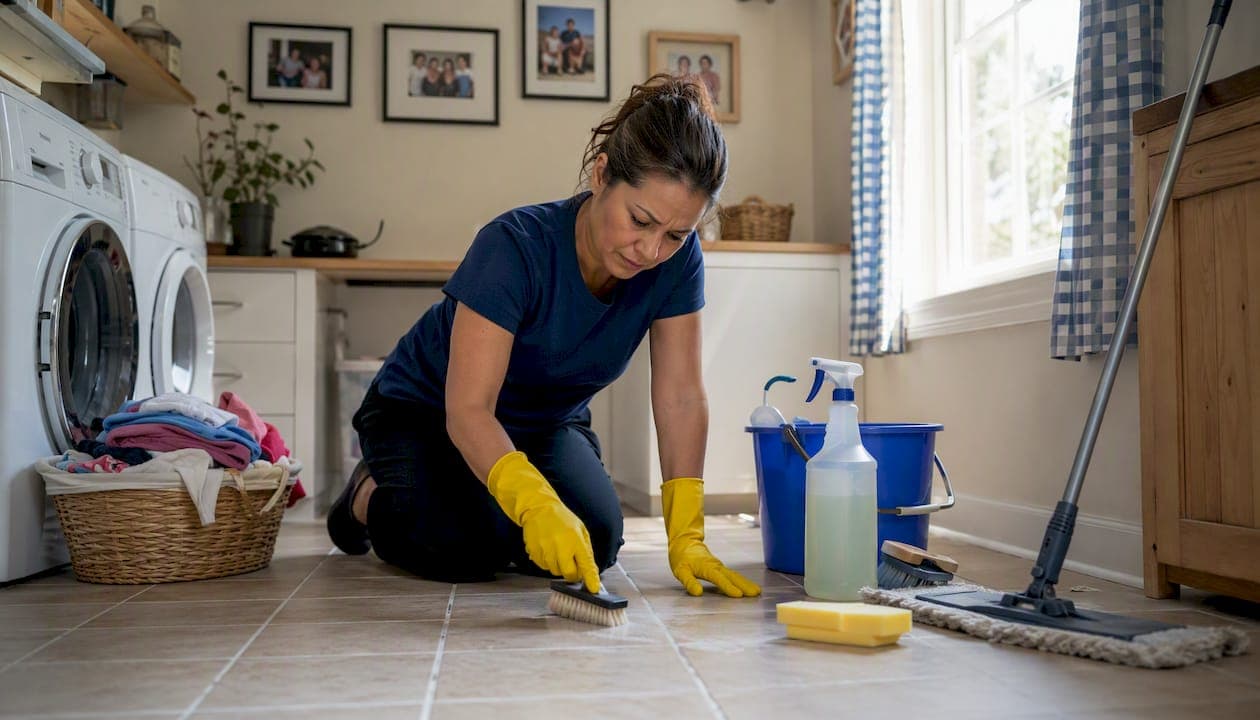
A deep clean refreshes an occupied home by tackling accumulated grime in lived-in spaces. A move-out clean resets an empty property to a condition that satisfies a landlord, inspector, or new buyer. The difference between the two services comes down to one thing: intent. Deep cleaning restores daily comfort for the people living there; move-out cleaning finalises condition for someone else's inspection.
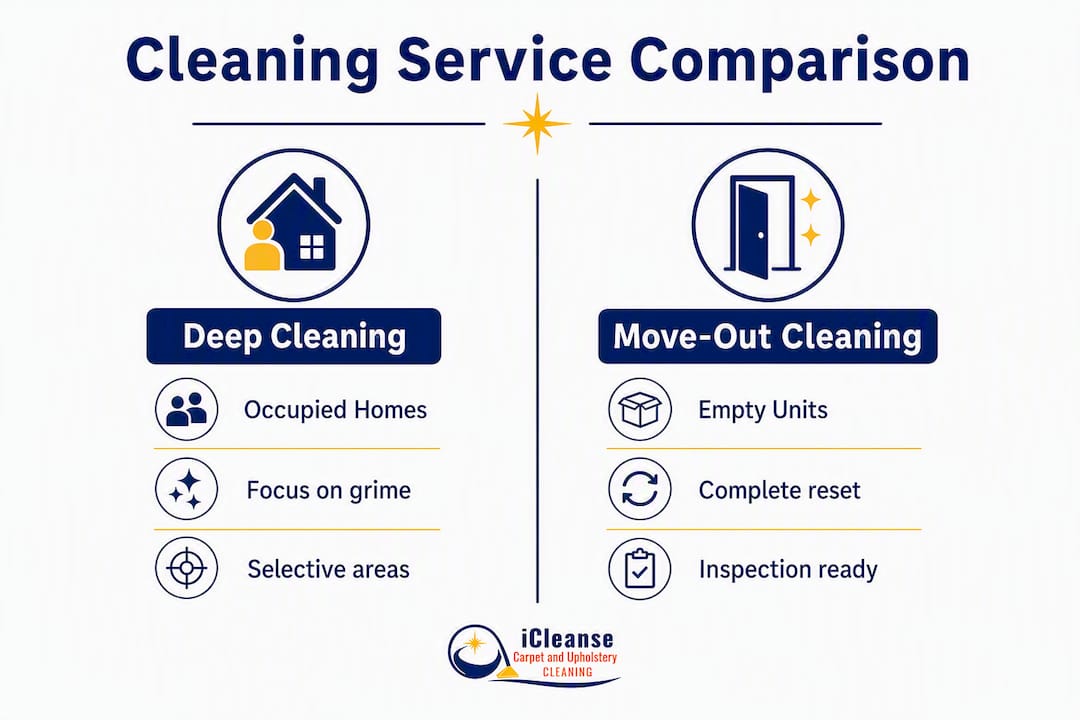
Quick decision rule: if the property will be empty and a deposit or tenancy inspection is on the line, book a move-out clean. If you are still living there and want a thorough seasonal refresh, book a deep clean.
TL;DR
- Tenants handing back keys need a move-out clean, not a deep clean. The scope is different and the stakes are higher.
- Homeowners wanting a seasonal reset or tackling years of built-up grime should book a deep clean.
- Landlords preparing a vacant unit for re-rental need a move-out clean to restore move-in condition.
The single most costly mistake tenants make is booking a deep clean for an empty unit. A deep clean is scoped for furnished, occupied spaces and typically excludes interior appliances, cabinet interiors, and behind-appliance cleaning. Those are exactly the items inspectors check first.
Table of Contents
- What do deep cleaning and move-out cleaning have in common?
- How does deep cleaning compare to move-out cleaning?
- What does a professional deep clean typically cover?
- What does a professional move-out clean typically cover?
- Who should book a deep clean and who needs a move-out clean?
- What affects the cost and timeline in Canada?
- How should you prepare your home for a move-out clean?
- What are your rights as a tenant or landlord in Canada?
- What should you ask a cleaner before booking?
- How do professionals at Icleansecuc approach these two services?
- Key takeaways
- The service you book matters more than how hard you clean
- Icleansecuc serves the Greater Toronto Area with move-out and deep cleaning
- Useful sources and further reading
What do deep cleaning and move-out cleaning have in common?
Both services go well beyond a standard weekly clean. A technician performing either one will scrub bathrooms top to bottom, degrease kitchen surfaces, clean baseboards, wipe vents, and address high-touch surfaces that routine cleaning skips. The methods overlap significantly: professional-grade HEPA vacuums, steam equipment, rotary scrubbers, and eco-friendly detergents are standard tools for both.
Shared tasks you can expect from either service:
- Full bathroom scrubbing (fixtures, grout, shower doors, taps, mirrors)
- Kitchen surface degreasing (stovetop, counters, backsplash, cabinet faces)
- Baseboard and vent cleaning
- Dusting light fixtures and ceiling fans
- Vacuuming and edge-cleaning carpets
Add-ons such as oven interior cleaning, fridge interior cleaning, carpet shampooing, and window washing are available for both services, though they are usually priced separately. The key difference is that move-out cleaning often includes those interiors as standard because the property is empty and fully accessible. For a deep clean in an occupied home, you typically need to request and confirm them explicitly.
Professional equipment matters here more than most people realise. A consumer vacuum pulls surface debris; a commercial HEPA unit extracts allergens and fine particulates embedded in carpet fibres. That gap in performance is why a professional deep clean or move-out clean produces results a DIY session rarely matches.
How does deep cleaning compare to move-out cleaning?
| Dimension | Deep cleaning | Move-out cleaning |
|---|---|---|
| Purpose | Restore cleanliness in an occupied home | Reset empty property for inspection or new occupant |
| Access requirement | Furnished/occupied — cleaners work around belongings | Empty property — full access to all surfaces |
| Typical scope | Kitchen surfaces, bathrooms, baseboards, vents, carpets, dusting | All of the above plus appliance interiors, cabinet interiors, behind/under appliances, window tracks |
| Frequency | Periodic (seasonal, quarterly, or as needed) | One-time at end of tenancy or before sale |
| Common add-ons | Oven, fridge, carpet shampoo, window washing | Carpet shampoo, window washing (appliance interiors often standard) |
| Pricing factors | Square footage, condition, number of rooms, add-ons | Square footage, condition, appliances, closets, add-ons, regional rates |
| Who books it | Homeowner, occupied tenant, Airbnb host between stays | Tenant vacating, landlord, property manager, buyer/seller |
| Inspection relevance | Low — not scoped for tenancy inspections | High — directly supports deposit recovery and re-rental readiness |
Use-case notes:
- Tenant handing back keys: book a move-out clean. The scope covers what inspectors actually check: appliance interiors, cabinet interiors, window tracks, and behind-appliance areas.
- Homeowner doing a spring reset: book a deep clean. You get a thorough top-to-bottom refresh without paying for access-based tasks that don't apply to a furnished home.
- Landlord preparing a vacant unit for re-rental: move-out cleaning restores the property to move-in condition and gives you dated receipts if a previous tenant disputes deductions.
Pro Tip: Always ask for a written, itemised estimate before booking either service. Scope overlap is common and a written quote prevents disputes about what was and wasn't included.
What does a professional deep clean typically cover?
Industry guidance is consistent: a deep clean is corrective and scoped for occupied spaces. Here is what a professional deep cleaning typically includes, room by room.
Kitchen
- Stovetop and burner grates (exterior surfaces)
- Backsplash degreasing
- Countertops and sink scrubbing
- Exterior of appliances (fridge, microwave, dishwasher)
- Cabinet faces and drawer fronts
- Spot-cleaning walls and light switches
- Light fixtures above the work area
Bathrooms
- Full fixture scrubbing (toilet, tub, shower)
- Grout spot treatment
- Shower doors and tracks
- Taps and hardware polishing
- Exhaust vents
- Mirrors and vanity surfaces
Living spaces and bedrooms
- Baseboards wiped down
- Vents dusted
- Light fixtures and ceiling fans
- Deep dusting including reachable undersides of furniture
- Vacuuming with edge cleaning along walls and under furniture where accessible
Typical exclusions for a standard deep clean: interior of the oven, interior of the fridge, inside cabinets and closets, and cleaning behind or under appliances. These require the cleaner to move furniture or open sealed compartments, which is usually only practical in an empty unit.
Pro Tip: When booking a deep clean, ask specifically: "Does this include the oven interior, fridge interior, and behind the stove?" If those matter to you, confirm them in writing before the appointment. Many providers offer them as paid add-ons.
What does a professional move-out clean typically cover?
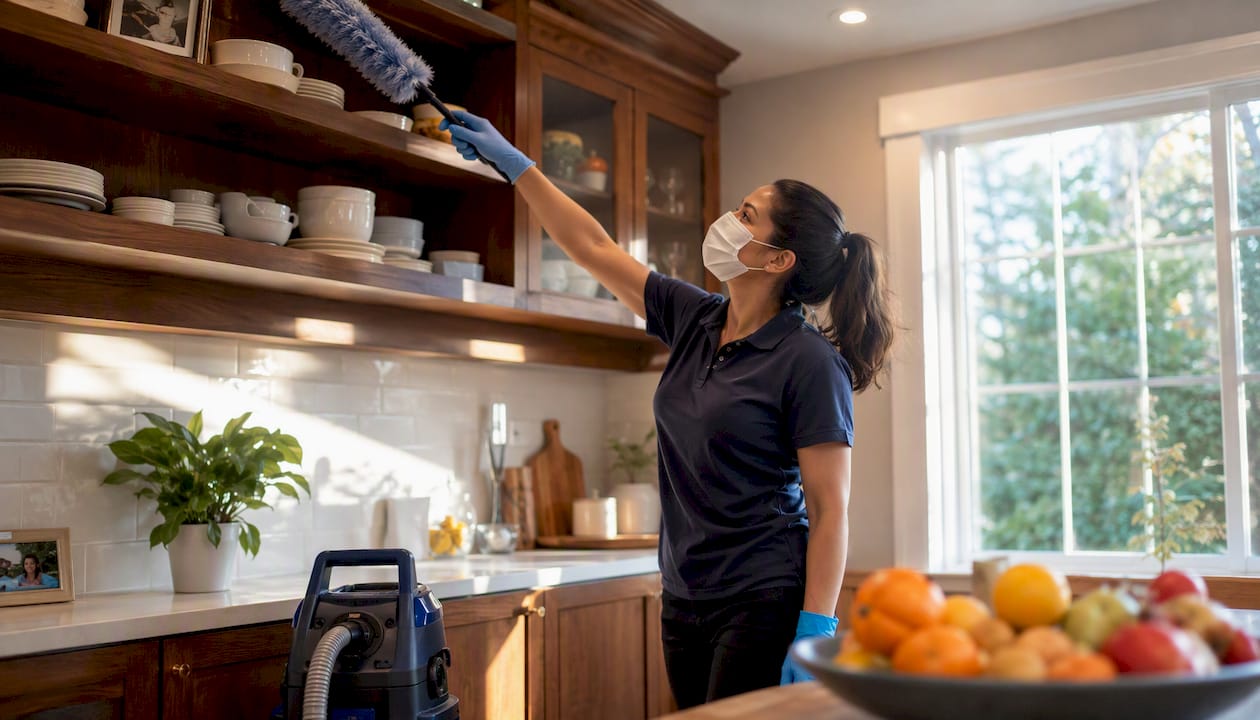
Move-out cleaning goes further than a deep clean because the property is empty. Every surface is accessible — behind the fridge, inside every cabinet, under the stove — and that access is what makes the service worth its higher price.
Standard move-out scope
- Kitchen: inside oven, inside fridge, inside all cabinets and drawers, behind and under appliances, stovetop, counters, sink, backsplash, cabinet faces
- Bathrooms: full fixture scrubbing, grout cleaning, shower doors and tracks, taps, vents, mirrors, inside medicine cabinets
- Bedrooms and living areas: baseboards, vents, light fixtures, window tracks, spot-cleaning walls, inside closets
- Floors: vacuuming and mopping throughout; carpet shampooing and steam cleaning are common add-ons
Floor and carpet treatments
Carpet shampooing is frequently added to move-out packages. Steam cleaning penetrates carpet fibres and removes odours that surface vacuuming leaves behind. Dry methods are sometimes used on delicate fibres. Either way, confirm the method with your provider before booking.
Post-clean inspection checklist for tenants
After the clean is complete, walk through the unit before returning keys:
- Open every cabinet and closet — check corners and shelves
- Pull out the oven rack and check the interior
- Check the fridge interior, including the door seals
- Run your finger along baseboards and window tracks
- Check carpet edges and corners for residue
- Photograph every room, every appliance interior, and every closet
- Keep the dated invoice and any before/after photos from the cleaner
A professional move-out clean is significantly faster and more thorough when the property is 100% empty. Partial occupancy often triggers surcharges or prevents the cleaner from completing the full scope.
Who should book a deep clean and who needs a move-out clean?
The right service depends on your situation, not just your preference.
Book a move-out clean if you are:
- A tenant vacating a rental and facing a landlord inspection or deposit return
- A landlord or property manager restoring a vacant unit to move-in condition
- A homeowner preparing a vacant property for sale or a new occupant
Book a deep clean if you are:
- A homeowner tackling seasonal grime or post-renovation dust in a furnished home
- A tenant in a long-term rental who wants a thorough refresh without vacating
- An Airbnb or short-term rental host doing a deep reset between longer stays
Short-term rental hosts sometimes need both: a move-out clean when a long-term guest vacates and the unit sits empty, then periodic deep cleans during active rental cycles when the unit stays furnished between bookings. The pros and cons of hiring a professional versus attempting either service yourself are worth reviewing before you decide.
What affects the cost and timeline in Canada?
Move-out cleans generally cost more than deep cleans on the same square footage. The reason is straightforward: an empty property exposes every surface, adding labour for cabinet interiors, appliance interiors, and behind-appliance cleaning that a furnished home simply doesn't require.
Time expectations
Professional move-out cleans typically run several hours depending on unit size. A small one-bedroom usually takes fewer hours; a two- to three-bedroom unit commonly takes longer. Deep cleans on occupied homes of similar size tend to run shorter because furniture limits access and some tasks (appliance interiors, cabinet interiors) are excluded.
Pricing drivers
- Square footage: the single biggest variable for both services
- Condition of the property: heavy grease, mould, or years of neglect add time and cost
- Number of appliances and closets: each one adds labour in a move-out clean
- Add-ons: oven cleaning, fridge cleaning, carpet shampooing, and window washing each carry their own price
- Regional variation: rates in the Greater Toronto Area differ from those in smaller Ontario cities or other provinces; always get a local quote
Getting a transparent quote
Ask for an itemised written estimate that breaks out the base service and each add-on separately. Know whether the provider charges by the hour or a flat rate, and confirm cancellation and deposit terms upfront. A provider who won't itemise is a provider worth skipping.
How should you prepare your home for a move-out clean?
Preparation directly affects what the cleaner can accomplish and whether you'll face surcharges. A well-prepped unit lets the technician focus entirely on cleaning rather than sorting, moving, or waiting.
- Remove all personal belongings from every room, including closets, cabinets, and storage areas
- Empty and defrost the fridge at least 24 hours before the appointment
- Remove shelf liners from all cabinets and drawers
- Disconnect and clear small appliances from countertops
- Take out all garbage and recyclables — cleaners are not waste removal services
- Do minor repairs first: fill nail holes and touch up badly scuffed paint before the clean, not after. Document anything you choose not to repair with a dated photo
- Take before photos of every room, appliance interior, and any existing damage before the cleaner arrives
Before-and-after photos are your strongest evidence in a deposit dispute. Photograph every room from the doorway, every appliance interior, and every closet. Keep the metadata (timestamp and location data) intact on your phone. Pair those photos with the dated, itemised invoice from your cleaner.
Pro Tip: If you can, arrange a brief walkthrough with the cleaner when they arrive. Point out any pre-existing damage and confirm the scope on-site. That five-minute conversation prevents misunderstandings and protects both parties if a dispute arises later.
What are your rights as a tenant or landlord in Canada?
Tenancy law in Canada is provincial, so the rules vary. The core principle is consistent across most provinces: tenants must return a rental unit in a reasonably clean condition, accounting for normal wear and tear. You are not required to return the unit in better condition than you received it.
Key points for tenants:
- Canadian tenancy guidance is clear: the legal standard is similar cleanliness accounting for normal wear and tear, not a showroom finish
- Move-in documentation (photos, written condition reports) is your most important evidence
- A dated, itemised cleaning invoice from a professional service strengthens your position significantly
- Keep receipts; they are admissible evidence in dispute proceedings
Key points for landlords:
- Provide a written inspection checklist at move-in and move-out
- Document deductions with receipts; vague claims are routinely rejected by adjudicators
- BC's Residential Tenancy Act requires tenants to "leave the rental unit reasonably clean, and undamaged except for reasonable wear and tear" — this is the statutory standard most other provinces mirror
The BC residential tenancy policy guidelines on security deposits also specify that security deposits must not exceed half a month's rent. If you are in another province, check your local residential tenancy authority for the equivalent rules, as thresholds and dispute processes differ.
If you are recovering a damage deposit through carpet cleaning, a professional invoice with before/after photos is the documentation that holds up.
What should you ask a cleaner before booking?
The right questions protect you from vague scope, hidden fees, and failed inspections.
Ask every provider:
- What is included in the base price, line by line?
- Are appliance interiors (oven, fridge) standard or add-ons?
- How long do you estimate for this property size and condition?
- Are you insured and bonded?
- What is your cancellation policy and do you require a deposit?
- Will you provide a written estimate before the appointment?
- Do you use eco-friendly or low-VOC cleaning products?
Red flags to watch for:
- A quote significantly below local market rates with no explanation
- Refusal to provide a written, itemised estimate
- Vague scope ("we clean everything") with no room-by-room breakdown
- No proof of insurance when asked
- Pressure to pay the full amount upfront before the job is done
The most common mismatch happens when a tenant books a deep clean for a vacant unit. Expert guidance consistently points to targeted professional help as the more effective route to deposit recovery — but only when the right service is booked. A deep clean scoped for a furnished home will not cover the appliance interiors and cabinet interiors an inspector checks first.
How do professionals at Icleansecuc approach these two services?
The planning stage is where the two jobs diverge most. For a move-out clean, a technician maps access points first: which appliances need to be pulled, which cabinets are floor-to-ceiling, whether the carpets require shampooing or steam treatment. For a deep clean in an occupied home, the planning centres on obstacle management: what furniture needs to be worked around, which surfaces are accessible, and which add-ons the client has confirmed.
What Icleansecuc brings to both services:
- Commercial-grade equipment including HEPA vacuums and steam units
- Eco-friendly, low-VOC cleaning solutions safe for families and pets
- Carpet and upholstery care as integrated add-ons, not afterthoughts
- Appliance interior cleaning available on request for both service types
- Written estimates with itemised scope before every appointment
- Before/after photos provided as standard — useful documentation for any deposit dispute
Operational trust signals matter as much as the clean itself. A written estimate means you know exactly what you paid for. Dated before/after photos from the technician, paired with your own, create a complete evidence record. For tenants, that combination is often the difference between a full deposit return and a deduction you can't contest.
Pro Tip: Ask your cleaning provider to photograph appliance interiors and cabinet interiors before and after the clean. Those are the areas inspectors focus on, and a timestamped photo from a professional carries more weight than a tenant's own phone shot.
Key takeaways
Move-out cleaning is the right choice for empty properties facing inspection; deep cleaning serves occupied homes that need a thorough refresh.
| Point | Details |
|---|---|
| Choose by occupancy | Book a move-out clean for empty units facing inspection; book a deep clean for furnished homes needing a refresh. |
| Move-out scope goes further | Move-out cleans include appliance interiors, cabinet interiors, and behind-appliance areas that deep cleans typically exclude. |
| Evidence protects your deposit | Keep dated before/after photos, a timestamped invoice, and a written scope confirmation for any tenancy dispute. |
| Provincial law sets the standard | Most provinces, including BC under the Residential Tenancy Act, require tenants to return units reasonably clean, not spotless. |
| Icleansecuc covers both services | Icleansecuc provides move-out cleaning and deep cleaning in the Greater Toronto Area, with written estimates and before/after photos as standard. |
The service you book matters more than how hard you clean
There is a version of this decision that trips up even careful tenants: they spend a weekend cleaning an empty apartment themselves, then book a deep clean to finish the job. The cleaner arrives, does excellent work, and the landlord still deducts from the deposit because the oven interior and the cabinet shelves weren't touched. Not because anyone did a bad job. Because the wrong service was booked.
The distinction between a deep clean and a move-out clean isn't about effort or quality. It's about scope. A deep clean is designed around a furnished home where access is limited. A move-out clean is designed around an empty property where every surface is reachable. Those two scopes produce different results on the same square footage, and inspectors know the difference immediately.
What I find most overlooked in the advice people get on this topic is the evidence piece. Most tenants photograph the unit when they move in, then forget to photograph it after the professional clean at move-out. That gap is where deposit disputes are lost. A dated invoice from a professional cleaner, paired with before/after photos, is a stronger argument than any verbal account of what was cleaned. Landlords who provide itemised inspection checklists at move-in and move-out are also far better positioned when a dispute goes to adjudication.
Book the right service, document everything, and the process is straightforward.
Icleansecuc serves the Greater Toronto Area with move-out and deep cleaning
When a deposit is on the line or a property needs to be ready for its next occupant, the margin for error is small. Icleansecuc provides professional move-out and deep cleaning services throughout the Greater Toronto Area, using commercial-grade equipment and eco-friendly solutions that meet the standard inspectors and landlords actually expect.

Every booking comes with a written, itemised estimate so you know exactly what is covered before the technician arrives. Before/after photos are provided as standard, giving you the dated documentation you need if a deposit dispute arises. Add-ons including oven and fridge interior cleaning, carpet shampooing, and upholstery care are available on request and priced transparently.
Whether you are a tenant preparing to hand back keys, a landlord restoring a vacant unit, or a homeowner ready for a thorough seasonal reset, request a quote and get a clear scope and price before you commit.
Useful sources and further reading
- BC Residential Tenancy Act — tenancy end obligations: the statutory text on cleanliness standards and deposit rules for British Columbia
- BC Residential Tenancy Policy Guideline 29 — Security Deposits: detailed provincial guidance on what landlords may and may not deduct
- Professional cleaning checklist for Canadian renters: practical move-out guidance including deposit evidence tips
- Deep clean vs move-out clean explained: industry-level breakdown of scope differences between the two service types
- Move-out cleaning: what to expect and how to prepare: time estimates and preparation advice for Canadian tenants
- Icleansecuc blog: articles on carpet cleaning methods, upholstery care, and post-move cleaning for Greater Toronto Area residents
- How carpet cleaning helps recover your damage deposit: practical guidance on using professional carpet cleaning as deposit evidence