
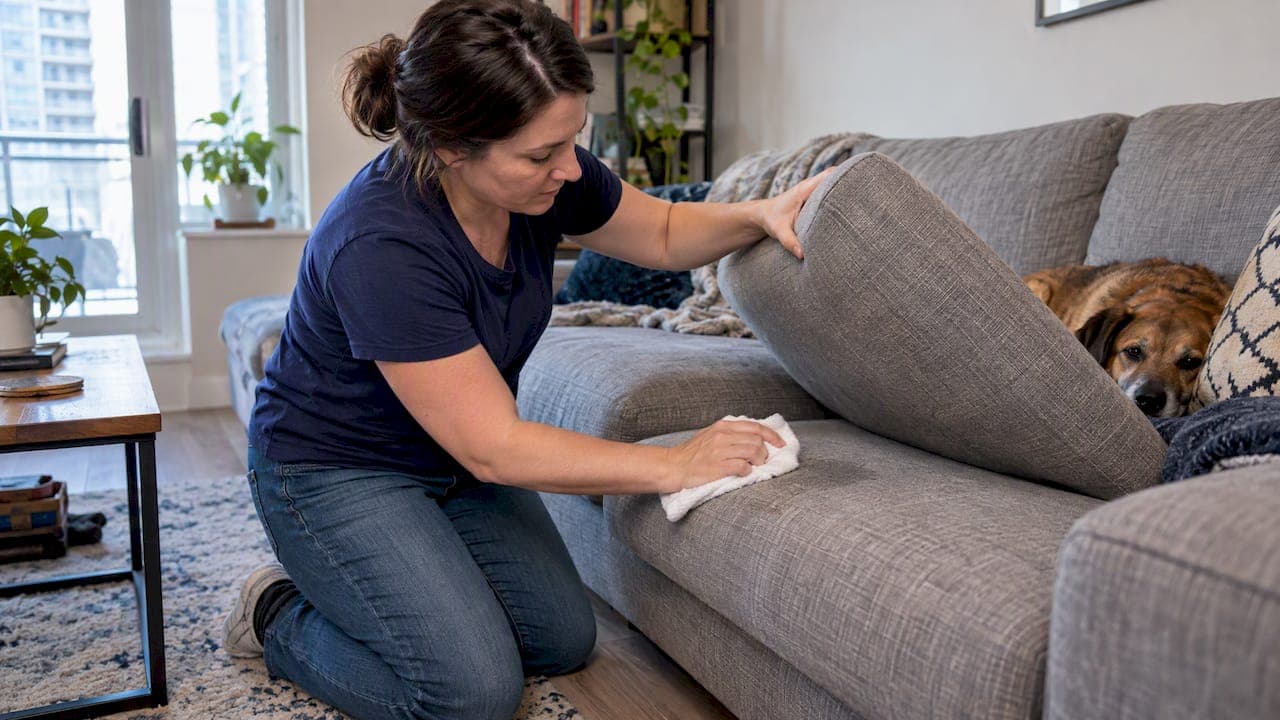
Vacuum the piece thoroughly, sprinkle on baking soda, then treat the spot with an enzyme cleaner once the surface soils are gone. That combination handles most everyday pet smells on fabric furniture. If the odour lingers after a careful enzyme treatment, or the padding itself smells musty, the contamination has likely gone deeper than a home fix can reach, and a professional visit makes more sense. Never mix bleach with ammonia or other cleaners, and always read the product label first.
TL;DR:
- Enzyme cleaners are essential for deep organic pet odours, especially when surface treatments no longer eliminate the smell from padding or frames.
- Professional cleaning becomes necessary when odours persist after multiple enzyme treatments or when contamination has penetrated beyond surface fibers.
- Always test fabric suitability and follow manufacturer instructions carefully, as aggressive cleaning can damage delicate or antique textiles permanently.
- Household bleach should never be mixed with ammonia or other cleaners, as dangerous gases could form, and bleach should only be used on bleach-safe fabrics when disinfection is truly needed.
- Regular maintenance, such as weekly vacuuming and prompt removal of new accidents, helps prevent odours from repeatedly setting and reaching padding or underlying structures.
Table of Contents
- Quick, step-by-step DIY odour removal
- Dealing specifically with urine and other organic pet odours
- Fabric and construction considerations before you treat anything
- Safe product choices and chemical cautions
- When to call a professional and what that actually involves
- Keeping upholstery fresh after the odour is gone
- Comparing commercial pet odour products: sprays, gels, and powders
- A realistic professional's take on DIY limits
- Booking a professional odour removal visit with us
- FAQ
- Sources
Quick, step-by-step DIY odour removal
The order matters here. Treating a cushion with liquid before removing loose hair and dust just pushes soil deeper into the fibres. Work through these steps in sequence rather than jumping straight to a spray bottle.
- Vacuum the entire piece with the upholstery attachment, including seams, crevices, and the undersides of cushions, to lift hair and dry soil before any wet work begins.
- Sprinkle baking soda generously over the affected area and let it sit for one to four hours, or overnight for stronger odours, then vacuum it up completely.
- Blot any fresh, wet accidents right away with a clean cloth. Press rather than rub, so the moisture doesn't spread into a wider patch of fabric.
- For odours that have already set in, apply an enzyme cleaner and follow the label's dwell time, then blot or lightly extract the area rather than soaking it.
- Dry the upholstery fully with fans or an open window. Trapped moisture inside cushions can lead to mildew, which creates a second odour problem on top of the first.
Expect to repeat the enzyme step multiple times over a few days for odours that have had time to soak in, since a single application rarely breaks down everything on the first pass.
Pro Tip: Keep a box of baking soda and a bottle of enzyme cleaner in the same cupboard as your vacuum, so the full routine is within reach the moment an accident happens.
Dealing specifically with urine and other organic pet odours
Urine, vomit, and similar organic messes don't respond well to air fresheners or scented sprays because those products only cover the smell rather than breaking down what's causing it. Enzyme cleaners work differently: they contain bacterial cultures that digest the proteins and nitrogen compounds in urine, which is the actual source of the odour, not just the surface scent.
A reliable protocol looks like this:
- Blot or extract as much liquid as possible before applying anything else, since a wet enzyme product can't work through standing moisture.
- Apply the enzyme cleaner generously enough to reach the same depth the contamination reached, including into cushion padding where the stain has soaked through.
- Let it sit for the full dwell time listed on the label, often several hours, so the enzymes have time to finish breaking down the residue.
- Blot the area afterward, and extract or rinse lightly if the fabric allows, then dry it completely.
If the smell is still there after this process, the padding or frame underneath may be holding onto contamination that a surface treatment can't reach, which usually means professional extraction or replacement is the next step. Resist the urge to scrub hard or pour on more product than the label calls for. Aggressive agitation tends to spread the contamination sideways into cleaner fabric rather than removing it, and overloading the fibres with liquid raises the risk of mildew underneath.
Fabric and construction considerations before you treat anything
Not every upholstery fabric tolerates the same treatment, and skipping a test step is one of the most common ways a well-intentioned cleaning turns into a bigger problem. Cleaning is an irreversible intervention for textiles, and excess water or overly aggressive action can permanently damage the fibres.
Before treating any stain, check the furniture's cleaning code tag if it has one, and always test an inconspicuous spot, like the back of a cushion or the underside of an arm, for colourfastness and fibre reaction.
- Microfibre and microsuede generally tolerate mild water-based enzyme treatments, but steer clear of high-heat steam or hard scrubbing, which can crush the nap and leave permanent marks.
- Leather needs its own dedicated cleaning and conditioning products rather than fabric-focused enzyme cleaners, which can dry it out or discolour it.
- Delicate woven textiles, antique upholstery, or anything with decorative trim may call for conservation-style handling rather than a home attempt, since the wet cleaning of such pieces is difficult to reverse if it goes wrong.
- Avoid household dry-cleaning solvents on upholstery, and don't run a steam cleaner over fabric and backing that aren't rated for that level of heat and moisture.
Pro Tip: When in doubt about a fabric, treat the smallest visible section first and wait a full day before deciding whether to continue on the rest of the piece.
Our upholstery cleaning tricks and tips page walks through this kind of spot-testing in more detail if you want a second reference before starting.

Safe product choices and chemical cautions
Household cleaning products can be dangerous when combined, and upholstery odour removal is exactly the kind of job where people reach for whatever's under the sink. The Canadian Centre for Occupational Health and Safety warns that household bleach should never be mixed with ammonia or other cleaning agents, since the combination can produce hazardous gases. Always follow the label and safety data sheet for any product you're using.
- For organic soils like urine, vomit, or food spills, an enzyme-based cleaner or mild detergent is the safer and more effective first choice, not bleach.
- Reserve bleach for durable, bleach-safe fabrics only, and only when actual disinfection is needed, diluted exactly as the label directs.
- Health Canada's guidance on soft-surface disinfection explains that disinfectant claims on fabric products require specific lab testing, so a spray labelled "disinfectant" for soft surfaces isn't automatically backed by that testing.
- Use gloves, eye protection, and good ventilation with stronger cleaners, and if you do use diluted bleach, mix a fresh batch each day rather than storing it.
When to call a professional and what that actually involves
Some odours are simply beyond what a vacuum and an enzyme bottle can fix; in that case, exploring cleaning service marketplaces can help you find professional help efficiently. It's time to call in a professional when the smell persists after a genuine enzyme attempt, when the padding or wood frame itself has absorbed the odour, when the fabric is delicate or expensive enough that a mistake would be costly, or when accidents keep happening in the same spot.
A professional visit typically includes:
- An inspection to identify the fabric type and the extent of the contamination before any product touches the furniture.
- Targeted chemistry matched to the specific odour source, rather than a one-size-fits-all spray.
- Controlled extraction, using hot-water or low-moisture systems depending on the fabric, which limits how much liquid soaks into the padding.
- HEPA extraction to pull dander and fine particles out of the air during the job, which matters for anyone in the home with allergies or asthma.
Controlled, targeted extraction methods limit moisture penetration into delicate textiles, which is a large part of why professional results tend to hold up better on deeply embedded odours than repeated home attempts.
In our own work across the Greater Toronto Area, this kind of visit has included HEPA extraction to reduce dander and odour buildup in pet-owning households, paired with moisture-controlled extraction to avoid soaking into cushion padding. Pricing for a single piece of furniture depends on its size, the fabric, how severe the odour is, and how easy the piece is to access, so it's worth requesting a quote rather than assuming a flat number applies.
Keeping upholstery fresh after the odour is gone
Getting rid of an odour once is only half the job. A few low-effort habits keep it from coming back.
- Vacuum upholstery weekly and treat any new accident immediately, before it has time to set into the fibres.
- Use washable covers or throws on cushions in areas where your pet spends the most time, so the fabric underneath rarely takes direct contact.
- Apply an enzyme treatment periodically in high-traffic pet zones, even without a visible stain, since residue can build up below what's noticeable.
- Keep litter boxes cleaned on a regular schedule and work on training where possible, since fewer accidents mean less cleaning overall.
- Book a professional cleaning once or twice a year depending on how active your pets are, which keeps buildup from reaching the padding in the first place.
Comparing commercial pet odour products: sprays, gels, and powders
Store shelves carry three main formats for pet odour removal, and each fits a different situation. Enzyme sprays are the most versatile option for fresh and set-in stains alike, since they penetrate fabric quickly and need only a dwell time before blotting, though they can leave fabric slightly damp if overused. Foam or gel-based cleaners stay put on vertical or angled surfaces better than a thin spray, which helps on cushion sides and arms, but they often need more work to spread evenly and fully rinse out. Powders, including plain baking soda, absorb odour and surface moisture without adding any liquid, making them the safest option for fabrics sensitive to water, though they only address surface-level odour and won't touch anything that has soaked into padding.

Retail listings for upholstery pet stain removers show enzyme-based options are the most commonly sold format for this exact problem, which lines up with how enzymes target the organic compounds behind the smell rather than masking them. For light, surface-level odour, a powder or spray is often enough. For anything that has had time to set, an enzyme product with a proper dwell time outperforms a quick-spray deodorizer.
A realistic professional's take on DIY limits
Enzyme treatment genuinely works for most odours that haven't had time to reach the padding. Once contamination sits in the foam or frame, though, no amount of surface treatment reliably clears it, and at that point reupholstering or replacing the piece is often the more honest long-term answer than another round of spray and hope. Conservator guidance is blunt about this too: wet cleaning is an irreversible step for textiles, so know the limits before you start pouring on more product.
— Rob
Booking a professional odour removal visit with us
When an enzyme treatment hasn't fully solved the problem, or the fabric is one you don't want to risk testing yourself, we handle the rest. We inspect the fabric and odour source, then use cleaning methods suited to that specific piece, paired with HEPA extraction to clear dander and fine particles from the air while we work.
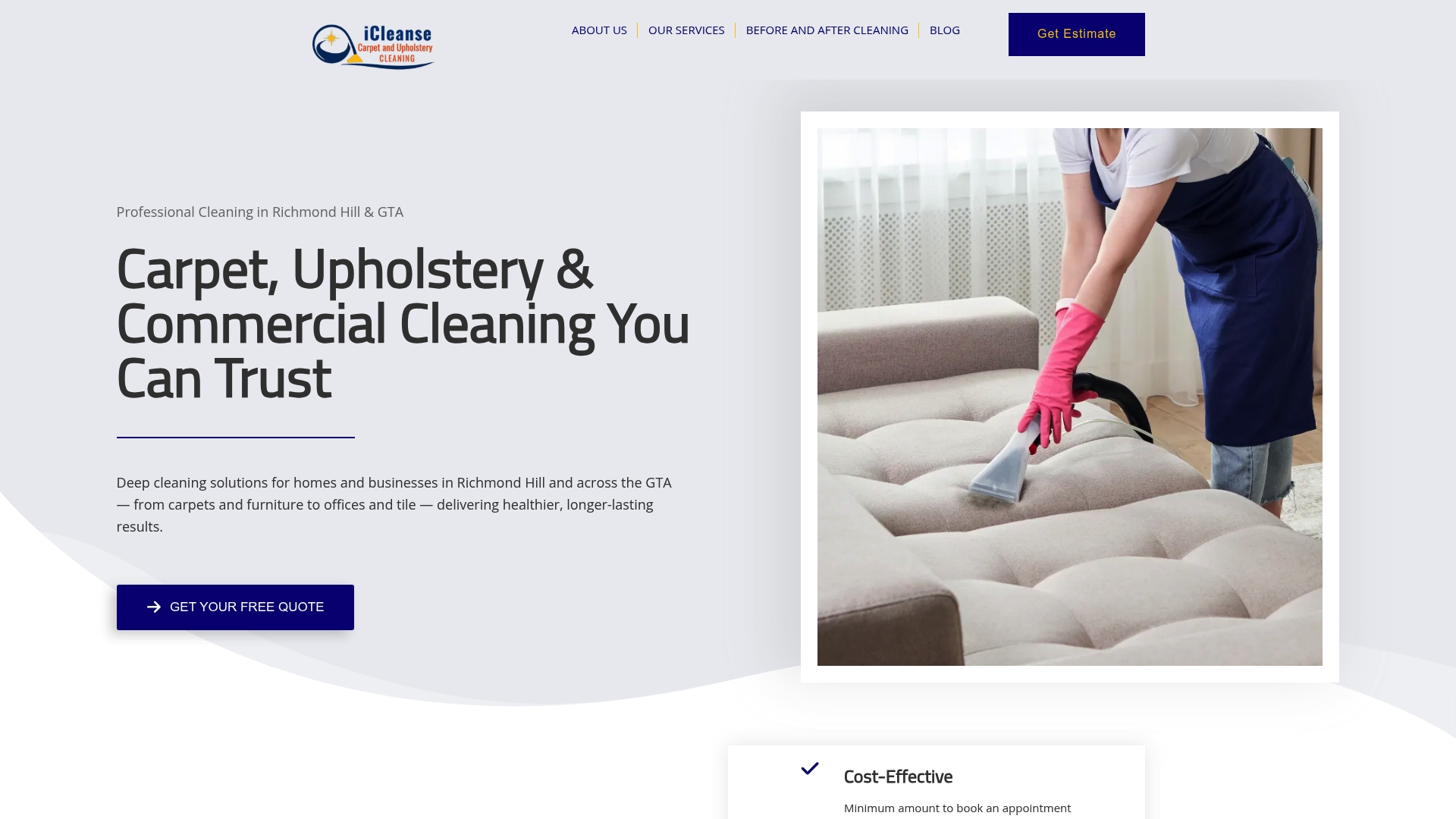
- We use eco-friendly cleaning solutions throughout the job.
- Extraction is moisture-controlled to help avoid mildew risk after we leave.
- Pricing is based on the room or piece involved. A living room or master bedroom seating cleaning is priced at $70, with other room sizes listed on the same page.
You can request a quote directly through our booking page, and most jobs are scheduled within a few days of your request. We stand behind the work with clear, upfront pricing and no surprises once we're on site.
FAQ
How do I remove dog odour from my upholstery?
Vacuum the area first, then sprinkle on baking soda and let it sit for a few hours before vacuuming again. Follow with an enzyme cleaner on any spots where the dog has had accidents, letting it sit for the full dwell time on the label before blotting dry.
How do I get rid of a bad smell from a fabric sofa?
Start with a thorough vacuum to remove hair and dust, then apply baking soda to absorb surface odour before treating any remaining smell with an enzyme-based cleaner. If the odour returns within a few days, it has likely reached the cushion padding and may need professional extraction.
What is the best upholstery cleaner for removing pet odour?
Enzyme-based cleaners are generally the most effective choice for pet odour because they break down the organic compounds causing the smell rather than covering it up. Mild detergents work for general soiling, but Health Canada's testing framework is worth knowing if a product claims to disinfect fabric, since that claim requires specific lab validation.
What can I use to remove smells from my fabric couch?
Baking soda handles light surface odour without adding moisture, while an enzyme spray is better for smells that have set into the fibres. For stronger or recurring odours, a professional visit with controlled extraction reaches contamination that home products can't fully clear.
When should I hire a professional instead of treating it myself?
Call a professional when the odour persists after a careful enzyme treatment, when the padding or frame itself smells, or when the fabric is delicate enough that a mistake could cause permanent damage. Frequent repeat incidents in the same spot are also a sign the contamination has gone deeper than surface treatment can reach.