
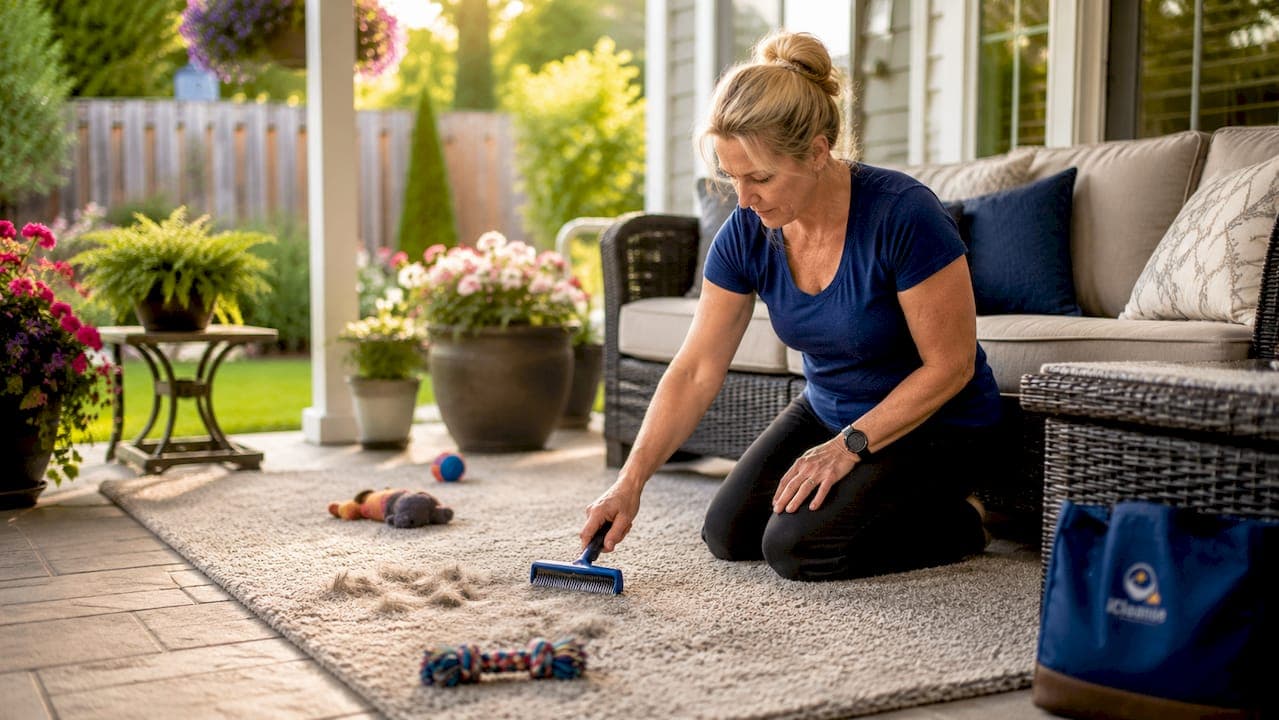
Pet hair carpet damage is defined as the progressive deterioration of carpet fibres caused by embedded hair, associated contaminants, and pet behaviour. The hair itself rarely tears fibres directly. The real culprits are the skin flakes, body oils, and grit that hair carries deep into your carpet pile. Left untreated, this buildup creates a sandpaper effect that dulls and thins fibres within months. Understanding the specific examples of pet hair carpet damage helps you spot problems early and act before repair becomes replacement.
1. Abrasion and fibre wear from pet hair contaminants
Pet hair acts as a delivery system for abrasive materials. Every strand carries sebum, dead skin cells, and outdoor grit directly into your carpet pile. Once embedded, these particles grind against fibres with every footstep, producing the same effect as fine sandpaper on wood.
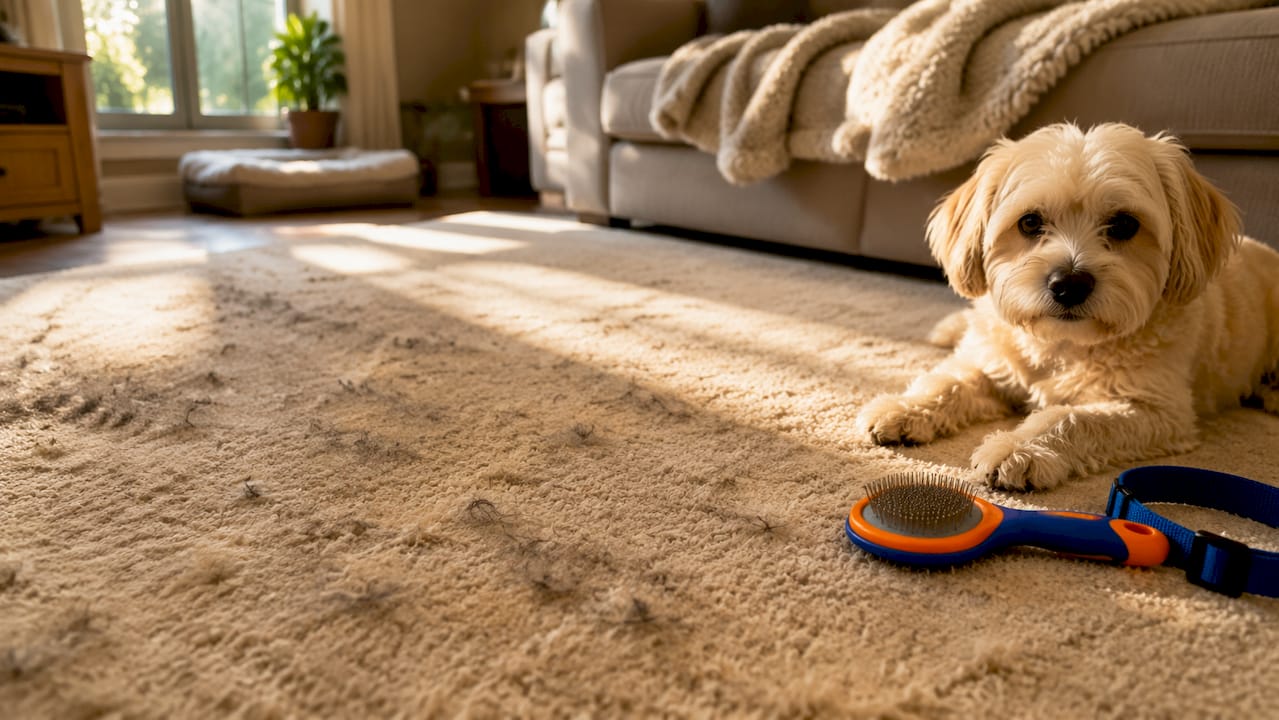
The damage is gradual and easy to miss. Accumulated grit and oils wear carpet fibres within 6–12 months if the carpet is not deep cleaned regularly. This is one of the most common examples of high-traffic carpet damage in homes with dogs or cats.
High-traffic zones and pet resting spots suffer the worst wear. You will notice:
- Flattened, matted pile in areas where your pet sleeps or walks repeatedly
- A dull, grey cast replacing the original colour in worn patches
- Thinning that exposes the carpet backing in severe cases
Pro Tip: Rotate area rugs every three months to distribute wear evenly and extend the life of your flooring.
Consistent vacuuming and grooming cut abrasive buildup and protect your carpet investment long term. Without both, the damage compounds faster than most pet owners expect.
2. Embedded pet hair and its effect on carpet appearance
Pet hair does not simply sit on top of your carpet. Static electricity causes individual strands to cling to fibres, and foot traffic presses them deeper into the pile over time. This is one of the most frustrating examples of high-traffic rental carpet damage because it is nearly invisible until the carpet looks permanently dull.
Standard vacuum suction alone often fails to lift deeply embedded hair. True suction only removes surface hair; friction lifts deeply embedded strands without damaging fibres. Rubber brooms and rubber rakes generate the friction needed to gather hair before vacuuming removes it.
High-traffic zones collect static-charged hair clumps, and vacuuming in only one direction leaves hair shielded by pile direction. The crosshatch method, where you vacuum in two perpendicular passes, removes significantly more embedded hair.
Practical tools that outperform suction alone:
- Rubber brooms or rubber rakes to agitate and gather hair
- Stiff-bristle brushes for working hair out of dense pile
- Multi-directional vacuuming using the crosshatch pattern
Pro Tip: Focus your crosshatch vacuuming on pet resting zones first. These spots hold the highest concentration of embedded hair and dander.
For a deeper look at what accumulates inside carpet fibres, the embedded carpet dirt guide from Icleansecuc covers the full picture for Canadian homeowners.
3. Pet urine and odour damage linked to hair and contamination
Urine damage is among the most serious effects of pet hair on carpets because it combines chemical damage with persistent odour. When a pet urinates on carpet, liquid soaks past the surface fibres, through the backing, and into the underpad. The hair already embedded in the pile wicks moisture deeper and holds it there.
Urine crystals cause odour that reacts to humidity changes in Canadian homes. This is why a carpet that smells fine in winter can suddenly reek in a humid july. The chemical reaction between moisture and dried urine salts reactivates the odour seasonally.
Treating urine damage requires a specific sequence:
- Blot fresh urine immediately with a clean cloth. Press firmly. Do not rub.
- Apply an enzyme-based cleaner directly to the stain. Enzymes break down urine proteins at the molecular level.
- Allow the enzyme cleaner to dwell for the time listed on the product label, typically 10–15 minutes.
- Blot again and allow the area to dry completely with airflow.
- Book a professional deep clean if odour persists after drying.
DIY cleaners often fail to reach urine crystals deep in carpet padding. Surface treatment only addresses the top layer. Professional equipment reaches the backing and pad where crystals actually live.
4. Physical damage from scratching, pulling, and fuzzing
Claw and chewing damage produces some of the most visible examples of pet hair carpet damage because the results are structural, not just cosmetic. When a dog or cat scratches at carpet, claws snag individual fibres and pull them upward. Repeated snagging creates fuzzing, loose loops, and eventually bald patches.
Loop-pile carpets are more susceptible to claw damage than cut-pile styles. A single claw catch on a loop-pile carpet can unravel an entire run of connected loops, creating a pulled thread that spreads with each subsequent scratch.
Common physical damage patterns include:
- Fuzzing at doorways and corners where pets scratch to enter or exit rooms
- Pulled loops forming visible ridges or runs across the carpet surface
- Frayed edges along walls where pets pace or dig
- Bald spots from repeated chewing, most common in puppies
Regular nail trimming is the single most effective way to reduce claw-related carpet damage. Keeping claws short means less surface area to snag fibres. If you have a puppy or a high-energy dog, cut-pile carpets are a far safer choice than loop-pile options.
5. Odour from sebum and HVAC recirculation
Pet hair carries sebum, the natural oil produced by skin. Sebum and static charge fuse hair to fibres, and heat from vacuum airflow vents oil-laden air back into rooms. This contributes directly to the "wet dog" smell that many pet owners notice even after vacuuming.
Your HVAC system makes this worse. Air recirculates through the home, picking up oil-laden particles from carpet fibres and redistributing them across every room. The smell is not coming from one spot. It is embedded throughout the carpet and circulating continuously.
Addressing sebum odour requires more than surface cleaning. Professional hot-water extraction reaches the base of the pile where oils accumulate. Icleansecuc uses professional equipment that removes contaminants standard vacuums leave behind, which is why professional cleaning every 3–6 months is the standard recommendation for homes with pets.
6. Prevention and maintenance to minimise pet hair damage
Pet hair damage prevention is most effective when it combines grooming, cleaning frequency, and smart carpet choices. No single action is enough on its own.
Vacuuming 2–4 times weekly and brushing pets 2–3 times weekly can reduce carpet hair load significantly during shedding seasons. Less hair reaching the carpet means less abrasive buildup and fewer embedded strands.
| Maintenance action | Recommended frequency | Benefit |
|---|---|---|
| Vacuuming (crosshatch method) | 2–4 times per week | Removes surface and embedded hair |
| Pet brushing | 2–3 times per week | Reduces shedding before hair reaches carpet |
| Rubber rake or broom use | Weekly | Lifts deeply embedded hair before vacuuming |
| Professional deep cleaning | Every 3–6 months | Removes allergens, oils, and urine crystals |
| Nail trimming | Every 2–3 weeks | Reduces claw snagging and fibre pulling |
Carpet choice matters too. Cut-pile carpets resist claw damage far better than loop-pile styles. If you are replacing flooring in a home with pets, cut-pile is the practical choice.
Avoid fabric softeners and adhesive rollers on carpets. Softener residues attract dirt and accelerate dullness. Adhesive rollers snag loops and cause irreversible damage on delicate carpets. These household shortcuts cause more damage than they prevent.
Pro Tip: Brush your pet outdoors before they come inside. Removing loose hair at the door cuts the amount that reaches your carpet by a significant margin.
Knowing how frequent cleaning prevents carpet replacement is the financial argument that convinces most pet owners to commit to a regular schedule.
Key takeaways
Pet hair carpet damage is caused primarily by the contaminants hair carries, not the hair itself, and consistent grooming, crosshatch vacuuming, and professional deep cleaning every 3–6 months are the most effective ways to prevent permanent fibre wear and odour.
| Point | Details |
|---|---|
| Hair carries the real damage | Grit, oils, and skin flakes abrade fibres within 6–12 months without deep cleaning. |
| Suction alone is not enough | Rubber friction tools lift embedded hair that vacuums leave behind. |
| Urine damage goes deep | Enzyme treatments and professional extraction are required to remove crystals from carpet backing. |
| Carpet type affects claw damage | Cut-pile carpets resist snagging far better than loop-pile styles for homes with pets. |
| Prevention beats repair | Vacuuming 2–4 times weekly and grooming pets 2–3 times weekly dramatically reduces long-term damage. |
What I have learned after years of watching pet owners fight carpet damage
The most common mistake I see is treating carpet cleaning as a reactive task. Pet owners wait until the smell is obvious or the pile looks matted before they act. By that point, the abrasive buildup has already done months of damage to the fibres.
Friction tools genuinely outperform suction alone. I have watched homeowners vacuum the same patch of carpet three times and still pull out a rubber rake full of embedded hair afterward. The physics are simple: suction lifts what is loose, friction lifts what is stuck. You need both.
The other thing most people underestimate is how much pet grooming affects carpet condition. Brushing your dog or cat regularly is not just about their coat. It is one of the most direct ways to protect your flooring. Every clump of hair you remove from the pet is a clump that never reaches the carpet.
Urine odour is the one area where I will always recommend professional help over DIY. The crystals sit in the padding, not the surface, and no spray bottle reaches them. Seasonal odour reactivation in Canadian homes is real. Humidity in july and august pulls those crystals back to life, and the smell returns even from stains you thought were resolved years ago.
Consistent habits, the right tools, and periodic professional treatment are what actually protect a carpet in a home with pets. Everything else is temporary.
— Rob
Carpet cleaning for pet owners in the Greater Toronto Area
Pet hair damage builds quietly and compounds fast. If your carpets have reached the point where vacuuming is not enough, Icleansecuc provides professional carpet cleaning throughout the Greater Toronto Area using equipment and solutions that reach what household tools cannot.
Icleansecuc's pet-friendly cleaning methods remove embedded hair, dander, urine crystals, and sebum oils from deep within carpet fibres and backing. The result is a carpet that looks cleaner and smells genuinely fresh, not just surface-treated. Whether you need a routine deep clean or are treating persistent odour, request a quote and get a clear price before any work begins.
FAQ
Does pet hair actually damage carpet fibres?
Pet hair rarely damages fibres directly. The contaminants it carries, including grit, skin flakes, and body oils, create an abrasive effect that wears fibres down within 6–12 months without deep cleaning.
What is the best way to remove embedded pet hair from carpet?
Rubber friction tools like rubber rakes or rubber brooms lift embedded hair more effectively than vacuum suction alone. Follow with crosshatch vacuuming to remove the gathered hair completely.
How often should pet owners deep clean their carpets?
Professional deep cleaning every 3–6 months is the standard recommendation for homes with pets. Standard vacuums cannot extract the dander, oils, and contaminants embedded alongside pet hair.
Why does pet urine smell return after cleaning?
Urine crystals in the carpet backing and underpad reactivate when exposed to humidity. DIY surface cleaners do not reach these crystals. Enzyme treatments and professional extraction are required to eliminate the odour at its source.
Are some carpets better suited to homes with pets?
Cut-pile carpets resist claw snagging far better than loop-pile styles. Loop-pile carpets are vulnerable to unravelling when a single loop is caught by a pet's claw, making them a poor choice for homes with active dogs or cats.