
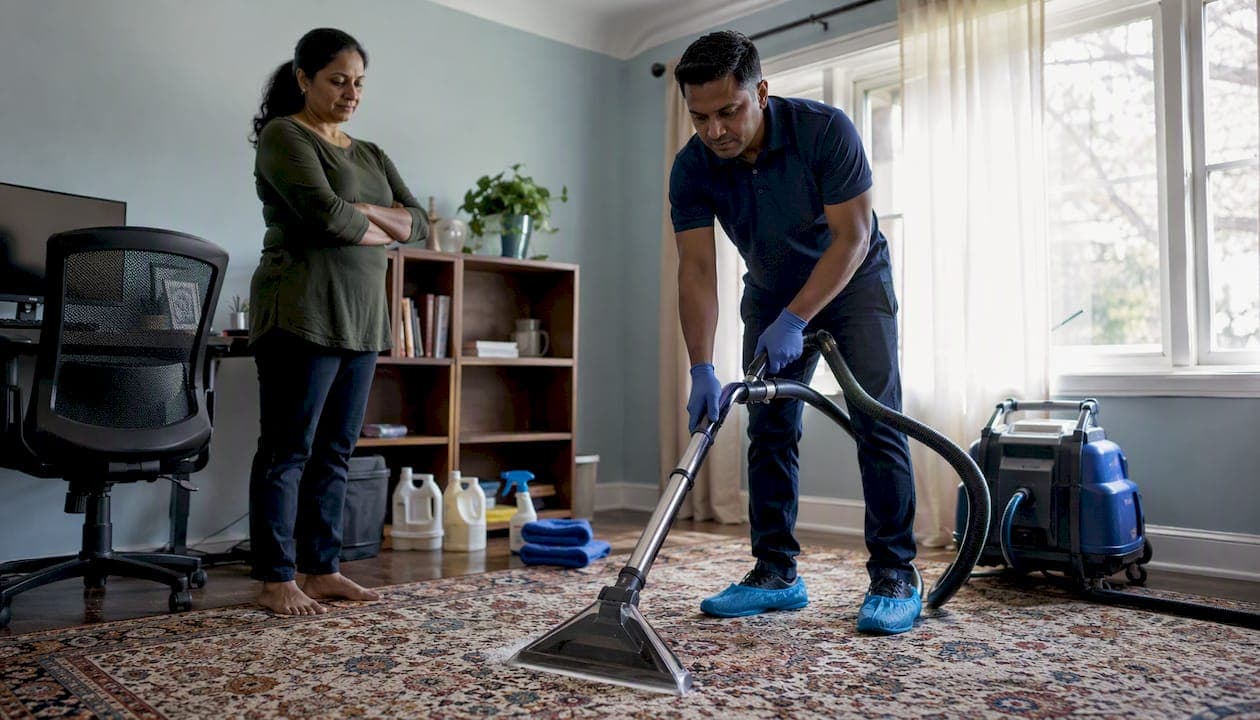
For quick touch-ups and tight budgets, renting a machine makes sense. For pet odours, set-in stains, warranty compliance, or anything larger than two rooms, hire a professional. Most Canadian households benefit from a hybrid approach: rental spot-cleans between professional deep cleans done roughly once every year to a year and a half.
Here is the fast version:
- Rent when you need a light surface refresh, have a small area, and are comfortable with the setup and drying time involved.
- Hire a professional when you are dealing with pet urine saturation, recurring odours, carpet warranty requirements, a move-out clean, or a home larger than two bedrooms. The Carpet and Rug Institute notes that many carpet warranties require documented professional cleaning every 12–18 months to stay valid.
- Use a hybrid schedule for routine upkeep: rental or spot-cleaning between sessions, with a professional deep clean annually. Icleansecuc serves homeowners and renters across the Greater Toronto Area for exactly these jobs.
Table of Contents
- Professional carpet cleaning vs rental: pros, cons, and the real trade-offs
- What it typically costs in Canada: rental fees, supplies, and professional pricing
- How effective is each method at removing stains, odours, and allergens?
- What can go wrong with rental DIY cleaning?
- How to rent and use a carpet cleaner properly
- What professional cleaners do differently: equipment, process, and what Icleansecuc brings
- When should you rent, hire a pro, or use both?
- How to choose a professional carpet cleaner: questions to ask and red flags to avoid
- How often should you clean your carpets?
- Key takeaways
- Why professional cleaning is worth it for certain jobs
- Icleansecuc brings professional-grade results to the Greater Toronto Area
- Sources and further reading
Professional carpet cleaning vs rental: pros, cons, and the real trade-offs
Rental machines
Pros:
- Lower upfront cost (day rental plus solution)
- Available at most major grocery and hardware stores across Canada
- Good for small areas or light surface soil
- No scheduling required
Cons:
- Weaker suction than professional equipment, leaving moisture and residue behind
- User technique and detergent dosing are common failure points
- Drying takes longer, raising mould risk in humid Canadian seasons
- Does not satisfy most carpet warranty documentation requirements
Professional cleaning
Pros:
- Industrial extraction removes soil from backing and underpad, not just surface fibres
- Shorter drying times due to stronger vacuum pumps
- Provides written documentation for warranty compliance
- Trained technicians handle pre-treatment, stain chemistry, and fibre-specific methods
Cons:
- Higher cost per session
- Requires scheduling and some preparation (moving furniture, booking in advance)
- Overkill for a single small spill or a light seasonal refresh
Side-by-side comparison
| Dimension | Rental machine | Professional cleaning |
|---|---|---|
| Typical cost (Canada) | About $30 CAD/day plus solution | Approximately $250 to $350 CAD for a 3-bedroom home |
| Cleaning depth | Surface fibres only | Fibres, backing, and underpad |
| Drying time | 6–24 hours | 4–6 hours (stronger extraction) |
| Stain and odour removal | Effective for light soil | Effective for heavy stains, pet urine, allergens |
| Warranty compliance | Rarely accepted | Documented receipts satisfy most clauses |
| Risk of residue/damage | Higher (user-dependent) | Lower (trained technician) |
| Best suited for | Small refreshes, tight budgets | Move-outs, pets, large homes, warranty needs |
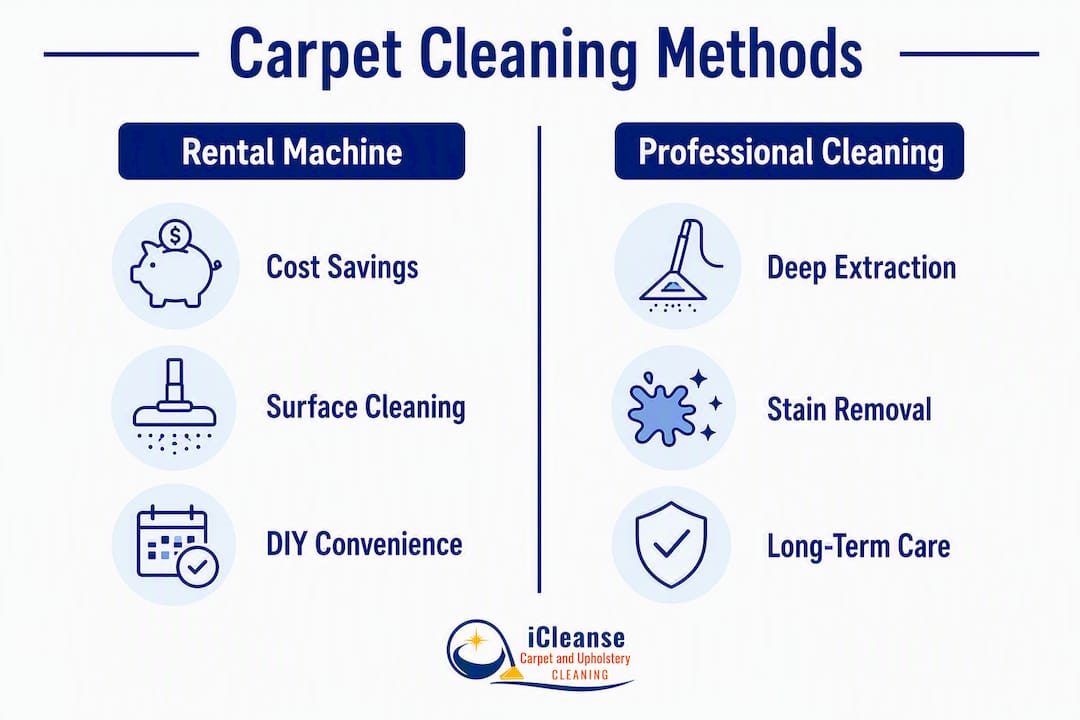
Rental brands like Rug Doctor and Bissell are widely available at Canadian grocery and hardware chains. They are genuinely useful machines for the right job. The gap shows up when the job demands more than surface extraction.
What it typically costs in Canada: rental fees, supplies, and professional pricing
Canadian pricing varies by region, home size, and the condition of the carpet, but the ranges below give a realistic starting point.
Typical rental costs:
- Day rental fee: about $30 CAD for a standard upright unit
- Cleaning solution: around $15 to $25 CAD per bottle (one bottle covers roughly one to two rooms)
- Optional attachments (upholstery tool, stair tool): a few dollars extra
- Total for a two-room job: generally around $50 to $65 CAD before your time
Typical professional costs:
- Per-room pricing: typically between $40 and $80 CAD per room depending on size and condition
- Whole-home jobs (3-bedroom): usually in the range of $250 to $350 CAD for a standard clean
- Add-ons that raise the price: pet urine treatment, heavy stain pre-treatment, stairs, Scotchgard protection
- Minimum charges: most GTA providers have a minimum charge in the low to mid-hundreds CAD regardless of area
What pushes costs up on either side:
- Stairs (rental machines are awkward; pros charge per flight)
- Pet urine saturation (requires enzymatic treatment and sometimes underpad work)
- Heavy furniture moving
- Travel fees for addresses outside a provider's core service zone
- Specialty fibres (wool, Berber) that need gentler chemistry
Pro Tip: Rental truly saves money on isolated small jobs you do infrequently. Once you factor in your time, solution costs, and the realistic chance of needing a re-clean within a few months, a professional job on a larger or problem area often costs less over 12 months than two or three rental attempts.
How effective is each method at removing stains, odours, and allergens?
The honest answer: rental machines clean the surface. Professional extraction cleans the carpet.
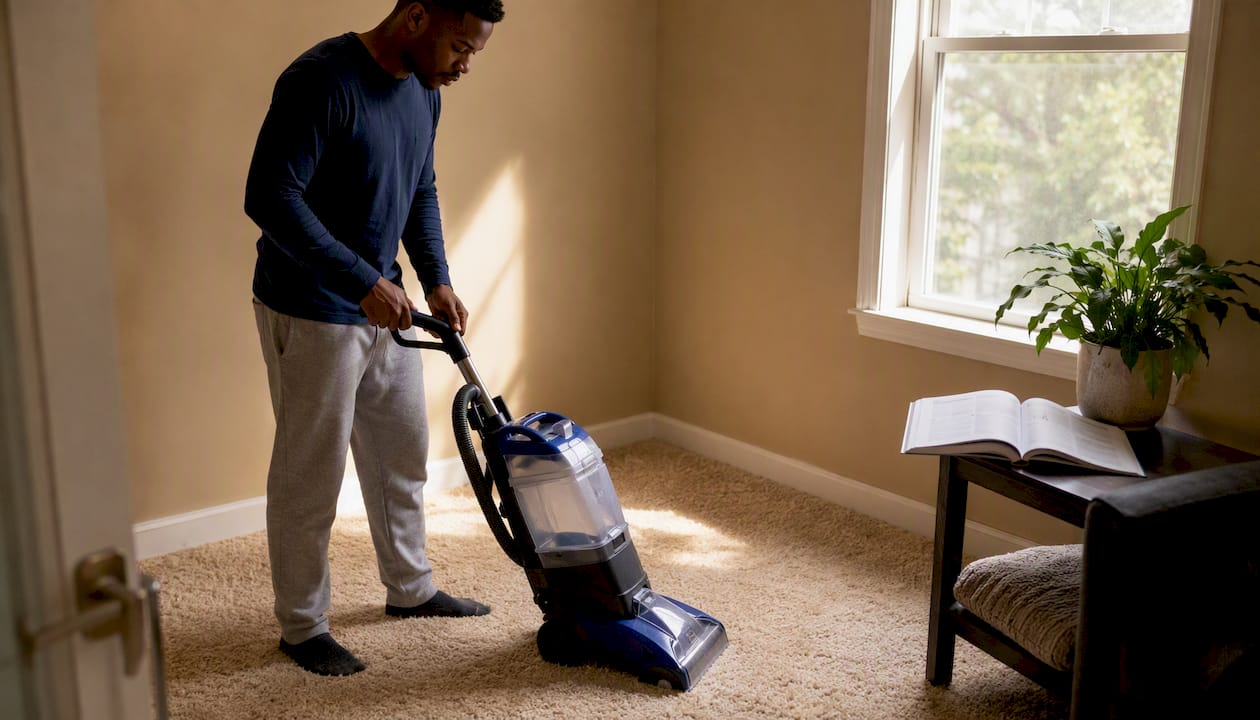
That distinction matters most with pet odours and allergens. Retail rental machines lack the suction power of professional equipment, which means moisture and detergent residue stay in the pile after the machine passes over it. That residue attracts new soil quickly, and any odour that has reached the backing or underpad will resurface within weeks once the carpet dries.
Professional teams use higher-temperature hot-water extraction, stronger industrial vacuum pumps, and staged pre-treatment chemistry. Those three elements together remove soil that portable rental machines cannot reliably reach. For pet urine saturation, professional-grade extraction and targeted enzymatic treatments that penetrate the backing and underpad are typically necessary to stop recurring smells.
"An apparently clean carpet after a DIY rental session often masks remaining moisture and residue that cause odour to return. Deep extraction that reaches the backing and padding eliminates odours more reliably." — Carpet and Rug Institute guidance on cleaning and maintenance
On allergens, the same logic applies. Dust mites, pet dander, and fine particulate matter settle into the base of carpet fibres. A rental machine agitates and partially removes surface-level debris. Industrial extraction pulls contaminants from deeper in the pile, which matters for households managing asthma or seasonal allergies.
The Carpet and Rug Institute estimates that regular professional cleaning can extend carpet life by approximately 5–10 years compared with irregular deep cleaning. That figure alone changes the cost calculation for anyone who has recently replaced flooring.
Before-and-after photos are a reasonable thing to request from any professional cleaner. A provider who documents the condition on arrival and after completion is giving you evidence you can use for warranty compliance, deposit disputes, or simply peace of mind.
What can go wrong with rental DIY cleaning?
The risks are real and specific. Most of them come down to moisture and chemistry.
Common failure points:
- Overwetting: Applying too much water saturates the carpet backing and underpad. If it does not dry within 24–48 hours, mould and mildew can develop beneath the surface.
- Detergent residue: Using too much solution or not rinsing thoroughly leaves a sticky film in the fibres. That film attracts dirt faster than a clean carpet would, so the area looks dirty again within weeks.
- Insufficient extraction: Rental machines leave more moisture behind than professional units. Wet padding is a slow-drying environment where bacteria and odour compounds thrive.
- Browning and water rings: Over-saturating light-coloured carpets can cause cellulosic browning as the backing wicks upward during drying. Water rings appear when soil migrates to the drying edge.
- Fibre damage: Aggressive scrubbing or the wrong chemistry on wool or Berber can distort pile and cause permanent texture changes.
How to reduce these risks:
- Use the minimum recommended detergent dose, then do a plain-water extraction pass to rinse
- Make multiple slow passes with the machine rather than one fast sweep
- Run fans and a dehumidifier immediately after cleaning
- Open windows when outdoor humidity allows
How to rent and use a carpet cleaner properly
If a rental is the right call for your situation, technique makes a significant difference in the result.
- Inspect and vacuum first. Vacuum the entire area thoroughly before the machine arrives. Rental units are not designed to handle loose debris; vacuuming first lets the machine focus on embedded soil.
- Move furniture out of the room. Partial cleaning around furniture legs leaves visible lines and uneven results. If pieces are too heavy to move, use furniture sliders or plastic tabs under legs to protect them during drying.
- Pre-treat stains. Apply a stain pre-treatment product to any visible spots and let it dwell for 5–10 minutes before running the machine. Most rental counters sell compatible pre-treatment sprays.
- Mix solution at the correct ratio. Follow the machine's instructions exactly. More solution does not mean a deeper clean; it means more residue and longer drying time.
- Work in slow, overlapping passes. Move the machine slowly on the forward stroke (solution down) and even more slowly on the back stroke (extraction). Overlap each pass by about half the machine width.
- Do a rinse pass. After cleaning, run a pass with plain warm water and no solution to pull out residue. This single step reduces re-soiling significantly.
- Dry aggressively. Open windows, run ceiling fans, and place a dehumidifier in the room. Aim for the carpet to be dry to the touch within 6–8 hours.
Rug Doctor and Bissell units are the most commonly available rental machines at Canadian grocery chains and home improvement stores. Both come with upholstery and stair attachments that extend their usefulness beyond floor carpets.
Pro Tip: Before cleaning the main area, test your solution and technique on a hidden patch, such as inside a closet or behind a door. This confirms the solution will not affect colour or texture before you commit to the full room.
What professional cleaners do differently: equipment, process, and what Icleansecuc brings
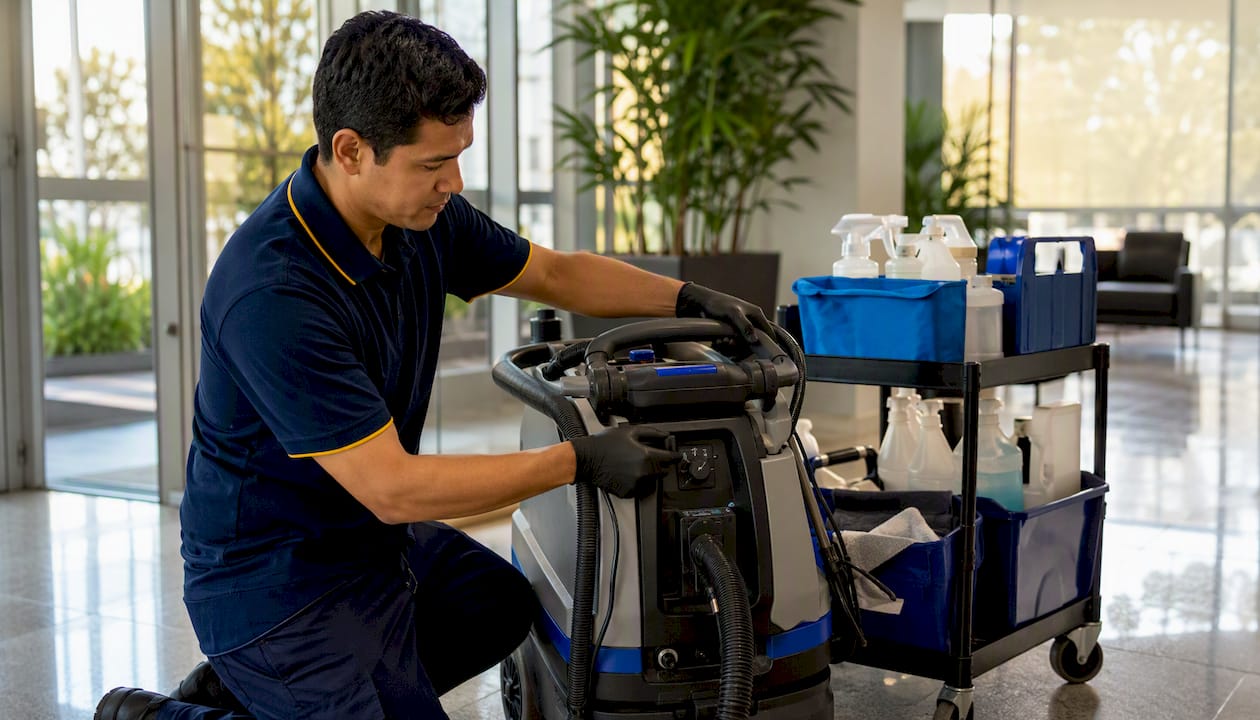
The gap between a rental machine and professional equipment is not incremental. It is the difference between a consumer appliance and an industrial system.
A typical professional cleaning workflow looks like this:
- Pre-inspection: The technician assesses fibre type, stain types, and any areas of concern before touching the carpet.
- Pre-vacuuming: Industrial dry vacuuming removes loose soil before any moisture is introduced.
- Pre-treatment: Targeted chemistry is applied to stains, high-traffic lanes, and pet-affected areas, with appropriate dwell time for each.
- Hot-water extraction: High-temperature water is injected into the pile under pressure, then extracted with a powerful vacuum pump. Truck-mounted systems generate significantly more heat and suction than portable units.
- Spot treatment: Any remaining stains receive targeted follow-up treatment.
- Grooming and drying management: The pile is groomed to promote even drying, and the technician advises on ventilation.
Icleansecuc follows this process using commercial-grade equipment and eco-friendly cleaning solutions across the Greater Toronto Area. The team provides written documentation of the work completed, which satisfies most carpet manufacturer warranty requirements. For landlords and tenants, that documentation also supports deposit disputes. You can review the carpet cleaning methods Icleansecuc uses before booking if you want to understand the technical specifics.
Ask any professional cleaner for before-and-after photos. A provider who declines that request is worth reconsidering.
When should you rent, hire a pro, or use both?
The right choice depends on what you are dealing with, not just what you want to spend.
Rent when:
- You need a light refresh before guests arrive and the carpet has no stains or odour
- You are cleaning one or two rooms with surface-level soil
- You are on a tight budget and the carpet is not under an active warranty
- You are comfortable with the setup, technique, and drying management
Hire a professional when:
- You are moving out and need documented evidence of cleaning for a deposit return. Documented professional receipts increase the chance of a full deposit return; check your lease before relying on DIY evidence.
- Pet urine has reached the backing or underpad
- Stains have been set for more than a few weeks
- Your carpet warranty requires professional cleaning documentation
- The home is larger than two bedrooms and time matters
- You have wool, Berber, or another specialty fibre that needs specific chemistry
Use a hybrid approach when:
- You want to maintain carpets between professional deep cleans
- You have kids or pets and need more frequent attention than an annual pro visit covers
- You want to spot-clean between scheduled appointments
For most Canadian households, the practical plan is: spot-treat spills immediately, vacuum weekly, use a rental for a light seasonal refresh if desired, and book a professional deep clean roughly once every year to year and a half. Households with pets or young children should move that professional interval to every 6–12 months.
Timing matters too. If you need the carpet dry before an event, a professional job completed two days prior is safer than a rental the night before. Rental drying times can stretch to 24 hours in humid conditions.
How to choose a professional carpet cleaner: questions to ask and red flags to avoid
Not every company that calls itself a professional cleaner delivers professional results. A short checklist protects you.
What to confirm before booking:
- Written estimate provided before work begins (not a verbal ballpark)
- Confirmation of the cleaning method used (hot-water extraction is the industry standard for deep cleaning)
- Whether the equipment is truck-mounted or portable (truck-mounted generates more heat and suction)
- Proof of liability insurance and bonding
- A satisfaction guarantee or re-clean policy in writing
- Availability of before-and-after documentation for warranty or deposit purposes
Questions worth asking directly:
- What chemistry do you use, and is it safe for pets and children?
- What is the expected drying time after the job?
- Do you treat pet odour at the backing level, or only the surface?
- Can you provide documentation I can submit to my carpet manufacturer?
Red flags:
- No written estimate (price jumps after the job starts)
- Unusually low pricing with aggressive upsells on arrival
- No evidence of insurance when asked
- Vague answers about chemistry or drying times
- No reviews, no before-and-after photos, no references
The 10 reasons professional carpet cleaning matters for homeowners on the Icleansecuc blog covers what a quality service should deliver, which is a useful benchmark when comparing quotes.
How often should you clean your carpets?
The answer depends on your household, not a universal rule.
Baseline frequency:
- Low-traffic homes with no pets or children: professional deep clean roughly once every year to year and a half
- Moderate traffic, no pets: professional clean annually, with spot-cleaning and vacuuming between sessions
- Households with pets or young children: professional clean every 6–12 months
- High-traffic commercial or rental properties: every 6 months or more frequently
Industry guidance recommends a combined approach for most households: spot-cleaning and rental touch-ups between professional deep cleans, with professional cleaning annually or every 12–18 months depending on pets and traffic.
Between professional cleans:
- Vacuum high-traffic areas at least twice a week
- Treat spills immediately with a clean cloth and appropriate spot cleaner (blot, never scrub)
- Rotate area rugs seasonally to even out wear
- Use doormats at every entry point to reduce tracked-in soil
- Consider a rental refresh once a year if the carpet sees heavy use
Time commitments to expect:
A rental job on a two-bedroom home typically takes 4 or more hours including setup, cleaning, and drying management. A professional team on the same home usually completes the labour in 1–2 hours, with carpets dry in approximately 4–6 hours. For large homes or heavily soiled carpets, that time difference is significant. Regular cleaning also prevents premature carpet replacement, which is the most expensive outcome of neglected maintenance.
Key takeaways
For most Canadian homeowners and renters, the right answer is not rental or professional cleaning exclusively. It is both, used at the right times.
| Point | Details |
|---|---|
| Rent for light refreshes | Rental machines work well for small areas and surface soil when budget is tight and no odour or stain issue exists. |
| Hire a pro for deep problems | Pet urine, set-in stains, allergen removal, and warranty compliance all require professional-grade extraction. |
| Hybrid schedule saves money | Spot-clean and vacuum regularly; book a professional deep clean approximately every year to year and a half (or more frequently if there are pets or kids). |
| Check your carpet warranty | Many manufacturers require documented professional cleaning every 12–18 months; a rental receipt will not satisfy that clause. |
| Icleansecuc for GTA deep cleans | Icleansecuc provides documented hot-water extraction with eco-friendly solutions across the Greater Toronto Area, with written estimates and before-and-after documentation. |
Why professional cleaning is worth it for certain jobs
There is a pattern that comes up repeatedly in this work. A homeowner rents a machine, the carpet looks clean the next morning, and three weeks later the same area smells worse than before. What happened is not a mystery: the rental unit cleaned the surface, left moisture in the backing, and the odour compounds that had soaked into the underpad wicked back up as the carpet dried. The DIY clean did not fail because the homeowner did something wrong. It failed because the equipment was not built for that job.
The cases where a rental genuinely makes sense are real. A light seasonal refresh on a carpet with no odour history, a single room before guests arrive, a quick clean on a low-pile area rug. For those jobs, renting is perfectly reasonable and there is no need to spend more.
The cases where it does not make sense are equally clear: pet urine that has been there for more than a day or two, stains that have been set for weeks, carpets under active manufacturer warranties, and move-out situations where documentation matters. Trying to save $200 on a professional clean and then needing to re-clean or replace the carpet within a year is not a saving.
One thing worth saying plainly: the hybrid approach is not a compromise. It is actually the smarter maintenance plan. Rental spot-cleans extend the time between professional visits, and professional visits restore what rental machines cannot reach. Used together, they protect the carpet and keep costs predictable.
Icleansecuc brings professional-grade results to the Greater Toronto Area
Renting a machine is a reasonable choice for the right job. When the job calls for documented deep extraction, pet odour treatment, or warranty-compliant cleaning, Icleansecuc delivers what a rental cannot.
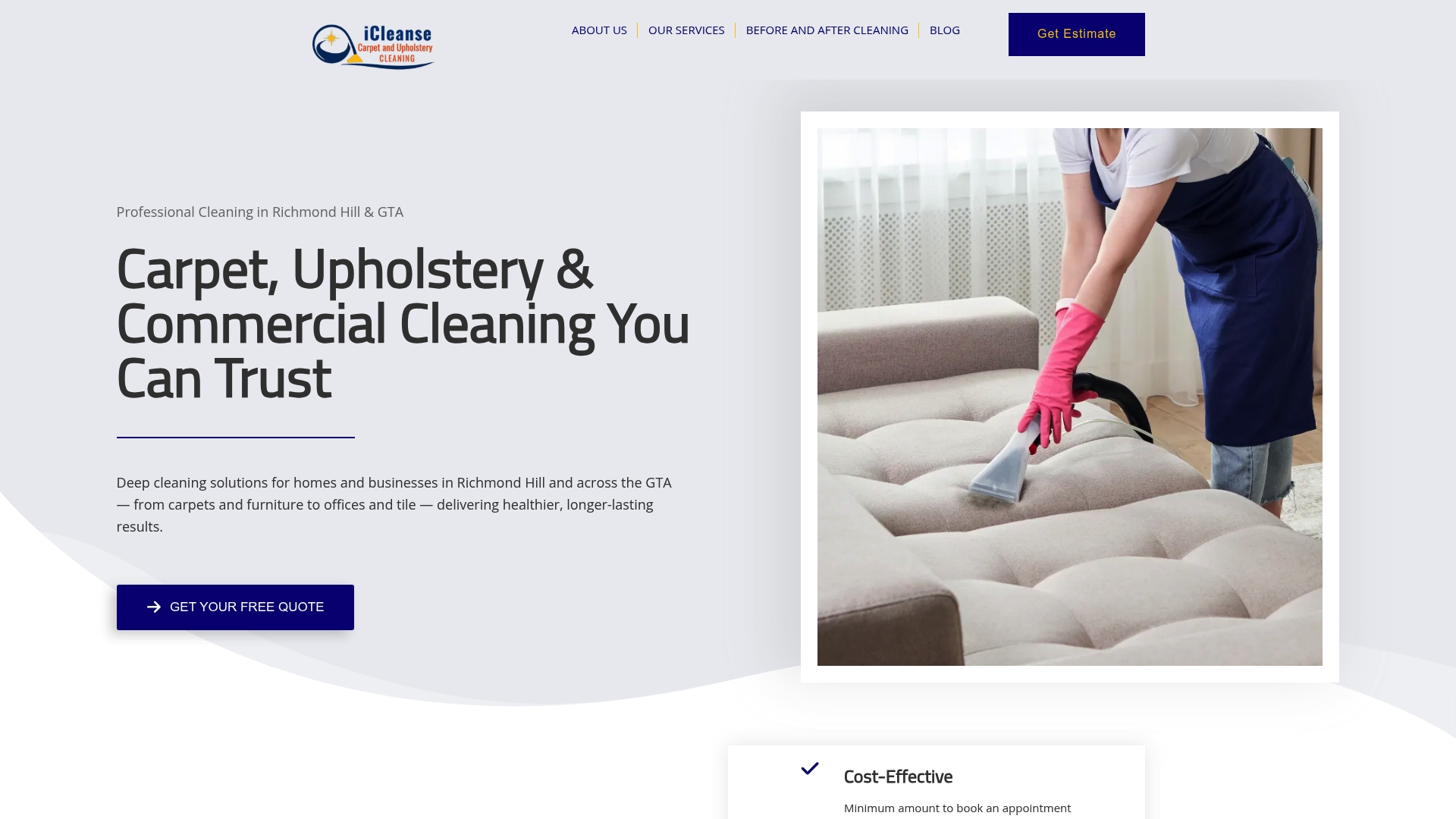
Icleansecuc serves homeowners, tenants, landlords, and businesses across the Greater Toronto Area with commercial-grade hot-water extraction, eco-friendly cleaning solutions, and written documentation for every job. Every booking starts with a written estimate, includes an on-site inspection, and ends with before-and-after documentation you can use for warranty compliance or deposit purposes. No surprise pricing, no pushy upsells.
- Written estimate before any work begins
- Hot-water extraction with professional-grade equipment
- Eco-friendly solutions safe for children and pets
- Before-and-after documentation for warranty and move-out needs
- Typical drying time: 4–6 hours
Request a quote or view the full range of services to book your professional clean.
Sources and further reading
The claims in this article draw on the following sources. Where carpet warranty and maintenance frequency guidance is cited, the Carpet and Rug Institute is the primary industry authority.
- Carpet for homes: cleaning and maintenance (Carpet and Rug Institute) — warranty intervals, carpet life extension, and professional cleaning standards
- When It Comes to Carpet Cleaning: Rent, Hire, or Buy? (Consumer Reports) — Consumer Reports style guidance on rental vs professional decisions
- Carpet cleaning DIY vs professional: 8 key differences (Good Cleaner) — Canadian cost ranges, rental brand availability, and hybrid scheduling guidance
- Carpet deep cleaning: DIY vs professional (Mobi Cleaning Canada) — extraction power differences and residue risk
- The truth about rentable carpet cleaners versus hiring professionals (InHomeCleaning) — time and drying comparisons
- Professional carpet cleaning vs rental carpet cleaning (Aberdeen Carpet Cleaning) — pet odour treatment and move-out documentation guidance
- Should I hire a professional carpet cleaner or rent one myself? (KW Cleaning) — detergent residue and re-soiling risks
- Carpet cleaning methods (Icleansecuc) — professional methods used by Icleansecuc
- How frequent cleaning prevents carpet replacement (Icleansecuc blog) — carpet longevity and maintenance frequency
This article provides general information for homeowners and renters. For warranty compliance, always confirm your carpet manufacturer's specific requirements with the manufacturer or a qualified professional before cleaning.