
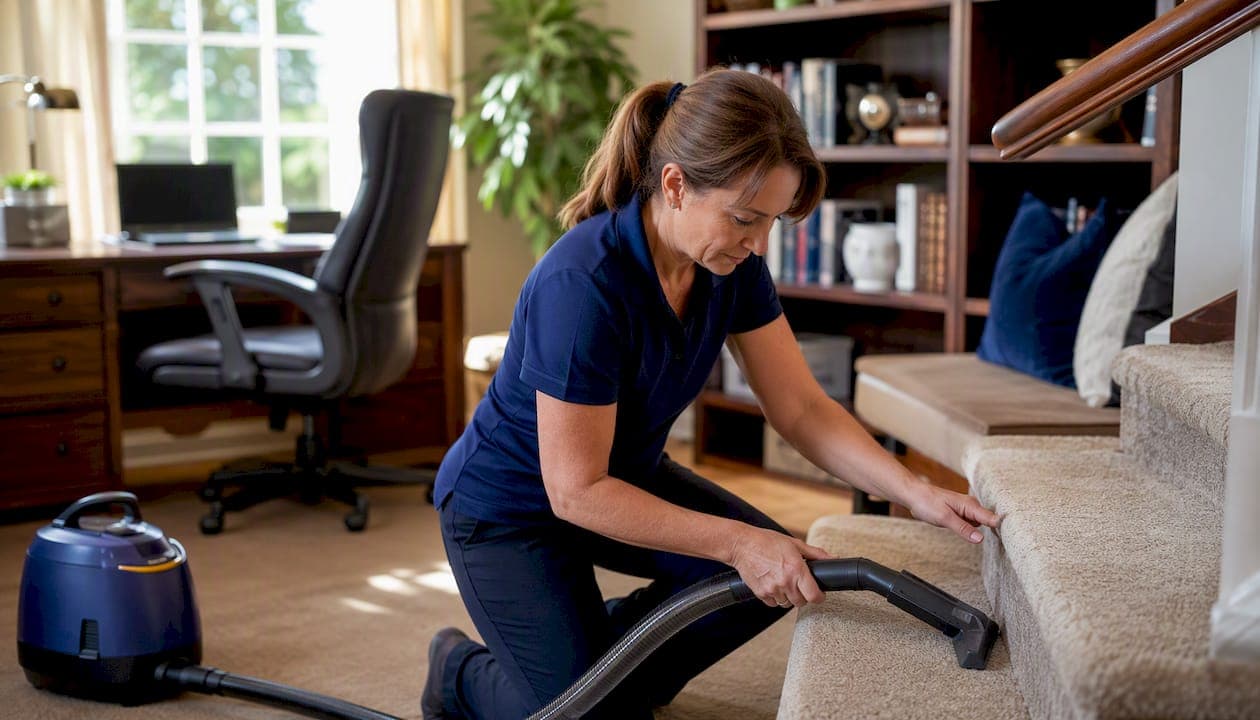
Routine vacuuming and fresh-spill spot treatment are solid DIY territory. Embedded traffic lanes, persistent pet odour, or stains that have been sitting for weeks — those call for a professional. Homes with pets or children benefit from deep cleaning stairs several times a year; for everyone else, at least once a year prevents permanent fibre wear. One safety note worth keeping front of mind: wet carpet on stairs is a slip hazard, so limit moisture and keep the staircase off-limits until it is fully dry.
Your immediate next steps:
- Vacuum the full staircase, top to bottom, with a crevice tool
- Spot-treat any visible stains before they set further
- Decide whether the job needs a professional (see the checklist below)
Table of Contents
- How to clean stair carpet safely, step by step
- What tools and products actually work on stairs?
- Which deep-cleaning method is best for stair carpets?
- When should you call a carpet-cleaning professional?
- What does professional stair cleaning cost in Canada?
- How Icleansecuc cleans stair carpets
- Key takeaways
- Icleansecuc brings professional stair cleaning to your door
How to clean stair carpet safely, step by step
Vacuuming first — not optional
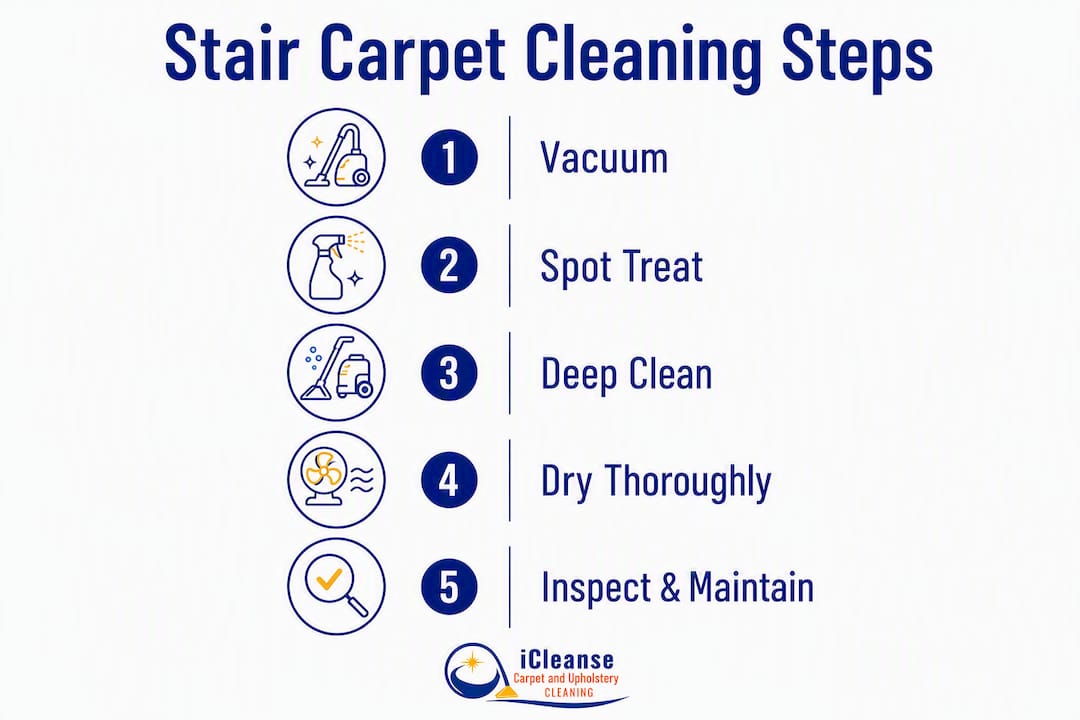
Vacuuming before any wet cleaning is the single most important prep step. It removes loose soil that would otherwise turn into muddy residue the moment cleaning solution hits the fibres, and it shortens drying time because less dirt gets suspended into the water. Use a detachable hand vac or a canister with a long hose so you are not lugging an upright up and down the steps. Work top to bottom — you push debris downward, not back onto clean treads.
Edges and the junction between tread and nosing collect the most concentrated dirt and pet hair, so run the crevice tool along every riser-tread seam. A turbo brush attachment handles stubborn pet hair better than a plain suction head.
Wet-cleaning the stairs
- Pre-test your cleaner. Apply a small amount to a hidden corner of one tread and wait five minutes. If the colour bleeds or the fibre distorts, stop and reassess the product.
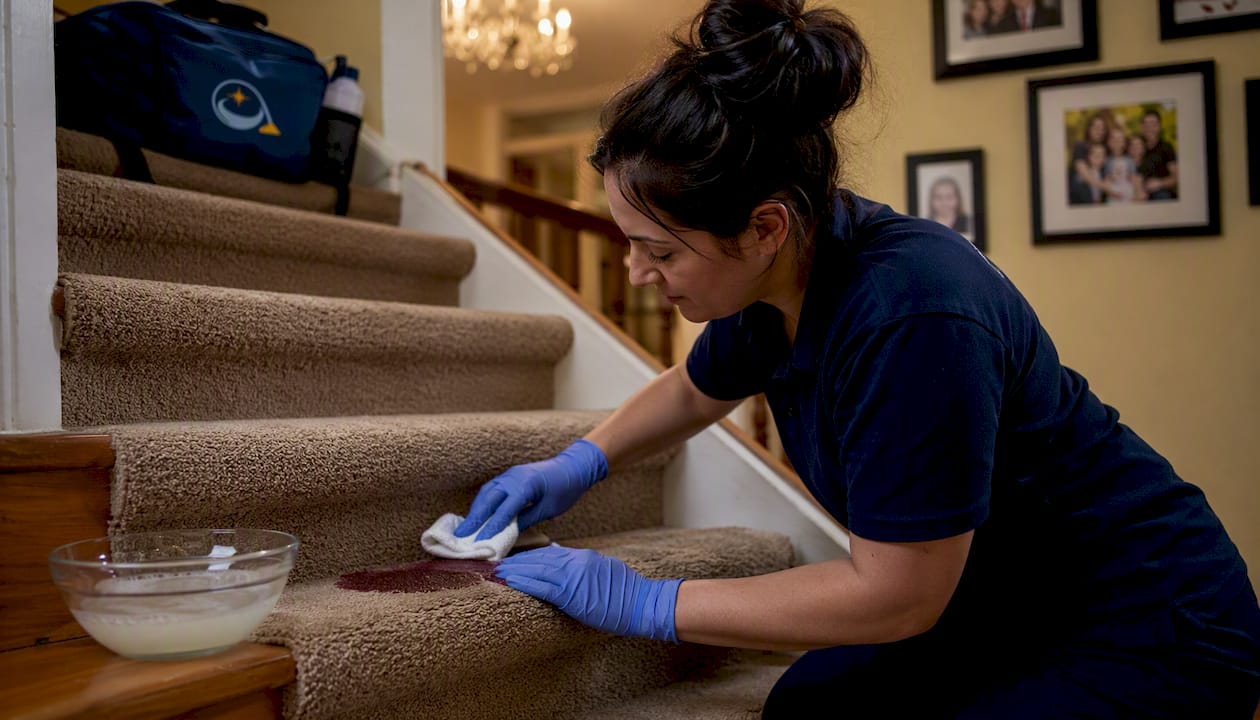
- Pre-treat visible stains. Apply your chosen solution (see stain guide below), let it dwell for two to five minutes, then blot gently with a microfibre cloth. Do not scrub — scrubbing spreads the stain and fuzzes the fibre.
- Extract with a compact portable cleaner. Fill the tank, work one tread at a time from the back edge to the nosing, and make slow overlapping passes. Slow passes extract more moisture than fast ones.
- Blot residual moisture. Press a dry microfibre cloth firmly onto each tread after extraction. This pulls out remaining liquid and cuts drying time.
- Dry with airflow. Open windows, run a fan at the base of the stairs, or set a dehumidifier nearby. Keep the staircase clear until the carpet is completely dry — usually one to four hours with good ventilation.
Quick stain fixes for common problems
Food and drink: Blot up solids first, then apply a small amount of mild dish soap diluted in warm water. Blot, do not rub, then extract or blot dry.
Mud: Let it dry completely before touching it. Vacuum the dried flakes, then treat the residue with a dilute solution of white vinegar and water — roughly a quarter cup of vinegar per litre of water works for soap or light organic residue.
Pet urine: Enzyme cleaners are the only chemistry that actually breaks down urine proteins rather than masking the odour. Apply generously, let it dwell for ten minutes, then extract.
Grease: A small amount of dish soap applied directly, worked in gently with a soft brush, then blotted and rinsed with cold water.
Pro Tip: Open a window at the top of the stairwell and place a fan at the bottom. This creates an upward airflow that pulls moisture out of the carpet far faster than a fan blowing directly at the surface. Aim for full dryness before anyone uses the stairs.
What tools and products actually work on stairs?
Stairs punish the wrong equipment. A full-size upright wand is awkward, heavy, and genuinely unsafe to manoeuvre on steps. Here is what to look for instead.
Tool categories worth having:
- Detachable hand vacuum with a crevice tool and a turbo brush head — handles daily and weekly maintenance without dragging a full machine up the stairs
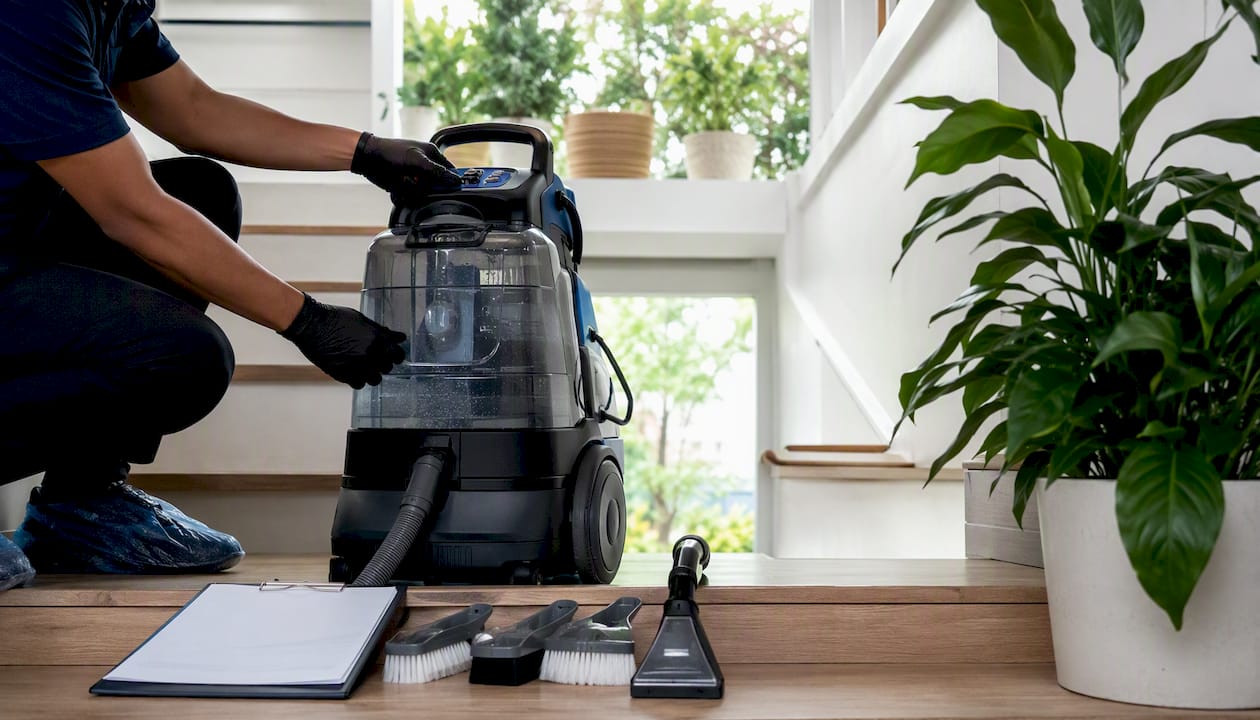
- Compact portable extractor (sometimes called a spot cleaner) with a small-diameter stair or tough-stain head, typically around 4 inches wide, that fits cleanly on a single tread
- Stiff-bristle scrub brush for agitating pre-treatment solutions on heavily soiled treads before extraction
- Microfibre cloths in quantity — you will go through several per flight when blotting
- Crevice tool as a dedicated attachment, not an afterthought
When choosing a portable extractor, the specs that matter most are tank size (at least 0.5 litres clean water so you are not refilling mid-flight), extraction suction power, hose length (a short hose forces awkward postures), and whether a stair-specific or small-diameter head is included. A machine with strong suction but a wide head leaves the nosing and riser junction unextracted.
Cleaning chemistry by soil type:
- Enzyme cleaners for pet urine and biological odours — they break down the proteins rather than covering them
- Oxygen-based (oxy) cleaners for organic stains like food, blood, or wine
- Mild dish soap or neutral detergent for grease and general grime
- Always test any product on an inconspicuous spot first, particularly on wool, sisal, or darker-dyed fibres where dye bleed is a real risk
For curated cleaning agents and upholstery-safe products, weloveupholstery.com is a useful reference for comparing formulations before you buy.
Pro Tip: Most tool-rental shops and some hardware stores in Canada carry compact extractors by the day. Ask specifically about the extraction ratio (how much water it pulls back versus what it puts in) and whether a stair head is included. A machine that leaves the carpet soaking wet is worse than no machine at all.
Which deep-cleaning method is best for stair carpets?
Not all cleaning methods suit the geometry and fibre stress of a staircase. Here is how the main approaches compare.
| Method | Cleaning power | Drying time | Stair suitability | Pet odour removal |
|---|---|---|---|---|
| Hot water extraction (HWE) | High | 1–4 hours | Excellent with compact head | Excellent |
| Low-moisture / dry cleaning | Moderate | Under 1 hour | Good for delicate fibres | Moderate |
| Bonnet / shampoo | Low–moderate | 2–6 hours | Poor (residue risk) | Poor |
Hot water extraction is the most reliable method for stairs in most Canadian homes. It reaches embedded soil that surface-only methods leave behind, and traffic lanes push dirt deep into fibres where vacuuming alone cannot reach it. The trade-off is moisture: over-wetting a staircase is the most common DIY mistake, and it creates two problems at once — a mildew risk if the backing stays damp, and a slip hazard while the carpet dries.
Low-moisture or dry-cleaning methods make sense for wool or other delicate fibres that shrink with excess water, or when you need the stairs back in use within an hour. They will not shift heavy pet odour or deeply embedded soil.
Bonnet and shampoo methods leave surfactant residue in the pile that attracts new dirt faster. On stairs, where soil load is already high, that residue cycle accelerates wear.
Common DIY mistakes to avoid:
- Over-wetting the carpet — use the minimum water needed and always extract thoroughly
- Skipping the vacuum step, which turns surface soil into muddy residue
- Using a full-size upright wand on stairs — the posture is unsafe and the head cannot reach the nosing properly
- Aggressive scrubbing that fuzzes or pills the fibre surface
Drying time matters more on stairs than anywhere else in the house. With hot water extraction and good ventilation, most stair carpets dry in 1–4 hours. Without airflow, that can stretch to six hours or more — long enough for mildew to begin forming in the backing.
When should you call a carpet-cleaning professional?
Some stair carpet problems are simply beyond what consumer tools can fix. If you recognise more than one of the following, book a professional rather than spending money on rental equipment.
Signs it is time to call a pro:
- Visible traffic lanes that do not lift after vacuuming
- Pet accidents that have soaked through to the backing or padding
- A persistent odour that returns within days of DIY cleaning
- Stains that have been sitting for more than a week
- Fibre matting, crushing, or any sign of backing separation
- Mould or mildew smell coming from the carpet
A reputable professional service will include a pre-inspection to identify fibre type and problem areas, targeted spot treatment before the main clean, method selection matched to the carpet (not a one-size-fits-all approach), strong extraction that pulls moisture back out, grooming to reset the pile direction, and a post-inspection to confirm results.
When you are evaluating a provider, ask for transparent pricing before they arrive, look for before-and-after photos from previous stair jobs, and check that they state their method clearly. A company that cannot tell you whether they use hot water extraction or low-moisture cleaning is one to avoid.
Pro Tip: Ask any prospective cleaner specifically how they handle the nosing and riser on each step. A technician who uses a compact hand tool that covers tread, riser, and bullnose in a single pass will get better results than one using a standard wand — and they are less likely to leave corners unextracted.
What does professional stair cleaning cost in Canada?
Pricing for stair carpet cleaning in Canada varies by region, carpet condition, and what is included, but regional guides give a workable starting point.
| Job type | Typical range (CAD) | Notes |
|---|---|---|
| Stairs per flight | $40–$70 | Standard hot water extraction |
| Minimum call-out | $80–$120 | Most providers have a minimum charge |
| Pet treatment add-on | $20–$40 per flight | Enzyme pre-treatment and deodoriser |
| Bundled (stairs + one room) | Often lower per-flight rate | Travel and setup costs shared |
On-site time for a single flight of stairs typically runs 20–40 minutes for a professional with the right equipment. Add pet treatment or heavy stain work and that extends to 45–60 minutes. Drying time after hot water extraction is generally a few hours; low-moisture methods dry more quickly.
Ways to keep costs down:
- Vacuum the stairs thoroughly before the technician arrives — it shortens their working time and can reduce the quoted price
- Bundle stairs with a hallway or one adjacent room; technicians optimise travel and setup when jobs are combined, which often brings the per-flight rate down
- Book during off-peak periods (mid-week, off-season) when some providers offer reduced rates
Pro Tip: Always ask for a written quote that itemises stairs separately from other areas. A bundled "whole home" price makes it impossible to compare providers or understand what you are actually paying per flight.
How Icleansecuc cleans stair carpets
Icleansecuc uses a structured process designed specifically for the geometry and soil load of carpeted stairs in Greater Toronto Area homes.
The Icleansecuc stair-cleaning process:
- Pre-inspection: Identify fibre type, existing damage, traffic lane depth, and any pet-affected areas before a drop of water goes down
- Spot treatment: Apply targeted chemistry to stains and high-soil zones — enzyme formulas for pet areas, oxy-based solutions for organic stains
- Compact hand-tool extraction: , avoiding the awkward postures and missed corners that come with standard wands
- Controlled moisture: Eco-friendly, commercial-grade solutions applied at the right dilution — enough to lift embedded soil without over-wetting the backing
- Grooming: Pile is reset after extraction to promote even drying and restore the carpet's appearance
- Post-inspection: Results are confirmed before the technician leaves
Icleansecuc's carpet cleaning methods include hot water extraction as the primary approach for stairs, with low-moisture options available for delicate fibres. The equipment is commercial-grade, which means stronger extraction ratios than consumer rentals — less residual moisture, faster drying, and better soil removal on high-traffic hallway and stair carpets.
Trust signals to look for when reviewing any professional service — and what Icleansecuc provides:
- Before-and-after photos from real stair jobs
- Transparent pricing with stairs itemised separately
- Stated method (hot water extraction vs low-moisture) before booking
- Eco-friendly, fibre-safe cleaning solutions
- A post-inspection before the technician leaves
Key takeaways
Hot water extraction with a compact stair head is the most reliable method for deep-cleaning carpeted stairs, and professional help is warranted whenever embedded soil, pet odour, or old stains are present.
| Point | Details |
|---|---|
| Vacuum before anything else | Vacuuming first prevents muddy residue and shortens drying time on every wet-clean method. |
| Match chemistry to the stain | Use enzyme cleaners for pet urine, oxy-based products for organic stains, and mild detergent for grease. |
| Deep-clean frequency | Homes with pets or children should deep-clean stairs several times per year; others at minimum once annually. |
| Drying time and safety | Hot water extraction dries in 1–4 hours with good ventilation; keep the staircase off-limits until fully dry. |
| Icleansecuc for deep cleaning | Icleansecuc uses compact hand-tool extraction covering tread, riser, and bullnose across the Greater Toronto Area. |
A technician's perspective on stair jobs
The most common surprise on a stair job is how much the traffic lane has compressed. Homeowners often describe their stairs as "a bit dirty," and what we find is a central strip of fibre that has been ground flat over years of foot traffic — sometimes to the point where the pile direction has reversed. Surface cleaning does not touch that. What restores it is slow, overlapping extraction passes with a compact head, enough dwell time on the pre-treatment, and patience.
The other thing worth saying plainly: always test your cleaner on a hidden spot, even if the label says it is safe for all fibres. Wool and some darker-dyed synthetics react unpredictably to products that work perfectly on standard nylon. A thirty-second test on the back of the bottom riser has saved more than a few carpets from permanent discolouration.
Stairs can look genuinely restored after a proper clean. The expectation should be realistic — heavy traffic wear in the fibre itself does not reverse — but embedded soil, odour, and most stains do lift with the right method and equipment.
Icleansecuc brings professional stair cleaning to your door
Dirty stair carpet is one of those problems that gets worse the longer it sits. Icleansecuc gives Greater Toronto Area homeowners and tenants a straightforward path to genuinely clean stairs: commercial-grade hot water extraction, eco-friendly solutions, and technicians who use compact stair-specific tools that reach every part of the tread. No rental equipment to haul up and down the steps, no guessing about drying times, and no residue left behind to attract new soil.
The process is transparent from the first contact. You get a clear quote before any work begins, with stairs itemised separately so you know exactly what you are paying. If pet treatment or heavy stain work is needed, that is discussed upfront, not added to the invoice after the fact.
Request a quote to get a transparent estimate for your staircase, or book directly if you are ready to schedule. You can also review Icleansecuc's cleaning methods before committing.
Useful sources and further reading
- Icleansecuc carpet cleaning methods — explains hot water extraction, low-moisture options, and how Icleansecuc selects the right approach for each job
- Request a quote from Icleansecuc — get a transparent stair-cleaning estimate for your Greater Toronto Area home
- Pet hair and carpet damage: a Canadian guide — background on why pet-heavy staircases need more frequent professional attention
- BISSELL: how to clean carpet on stairs — practical DIY technique guide covering vacuuming, crevice tools, and portable extractors