
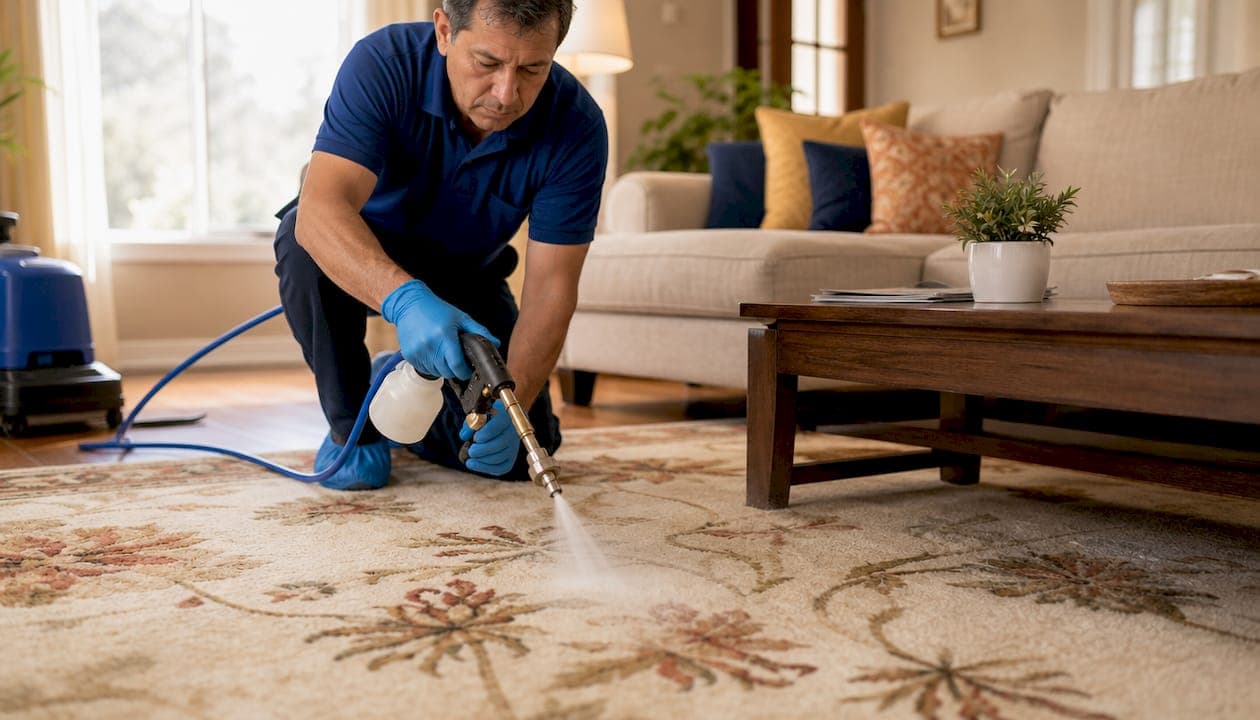
Carpet protector treatment is a specialised chemical coating applied directly to carpet fibres to create an invisible barrier against stains, soil, and liquid penetration. The industry term for this process is "carpet fibre protection," and it covers a range of formulations matched to specific fibre types. A professionally applied treatment lasts 12–18 months before reapplication is needed, though homes with children or pets may require more frequent service. For Canadian homeowners and renters, understanding what carpet protector treatment does and how it works is the first step toward getting real value from it.
How does carpet protector treatment work to prevent stains?
Carpet protector treatment works by coating each fibre with a chemical barrier that repels liquids and resists dry soil. When a liquid hits a treated fibre, it beads on the surface rather than soaking in. That gives you time to blot the spill before it sets into a stain.
Two distinct properties are at work here. Repellency pushes liquids away from the fibre surface. Stain resistance slows the bonding of colourants to the fibre. These are not the same thing, and the best treatments deliver both.
Dry soil resistance is the less obvious benefit. Carpet protectors prevent dirt from settling deeply into fibre bundles, which makes vacuuming more effective and keeps the carpet looking cleaner between professional cleans. Without protection, fine particles work their way down to the backing and act like sandpaper on every fibre with each footstep.
- Liquid repellency: Spills bead on the surface, buying you time to blot.
- Stain resistance: Slows colour bonding so stains are easier to remove.
- Dry soil resistance: Keeps dirt near the surface where vacuuming can reach it.
- Appearance preservation: Fibres stay upright and vibrant longer.
Pro Tip: Blot spills immediately after they happen, even on treated carpet. The protector buys you time, but it does not eliminate urgency.
What types of carpet protectors exist, and does fibre type matter?
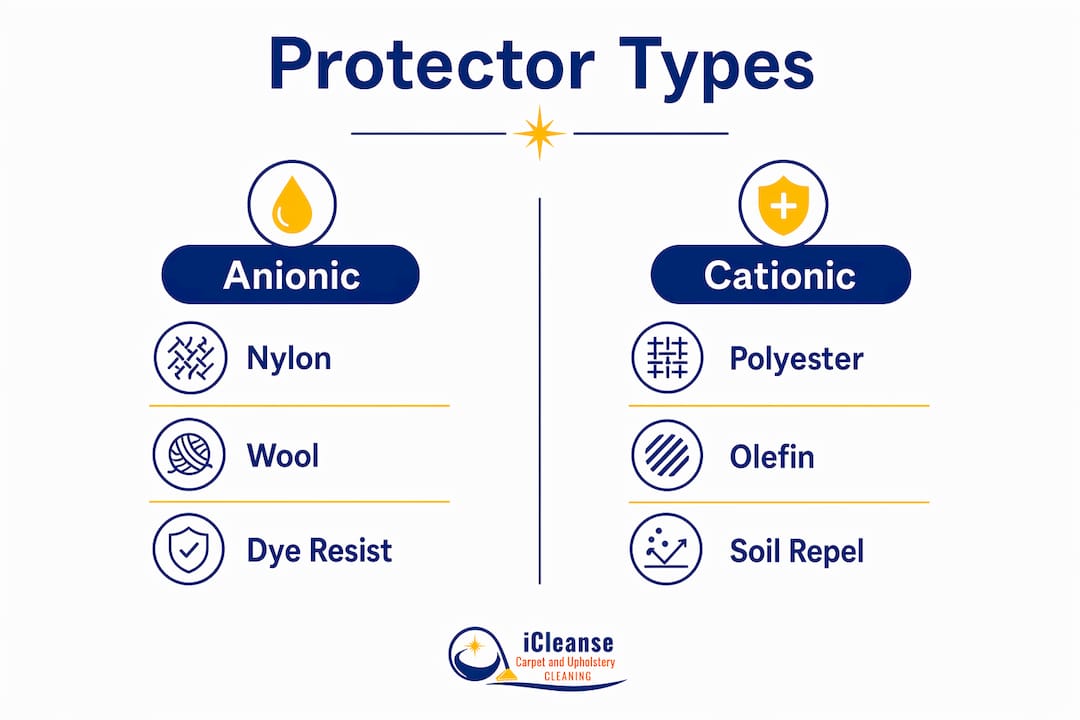
Fibre type is the single most important factor in choosing a carpet protector. Modern protectors divide into two main chemistries: anionic formulations for nylon and wool, and cationic formulations for polyester, olefin, and triexta.
Anionic protectors contain acid-dye resistors. They work by blocking the dye sites on nylon and wool fibres, which are the same sites that staining agents bond to. Cationic protectors carry oil-repellent chemistry suited to oleophilic fibres like polyester, which naturally attract oils and greasy soils.
Using the wrong protector type on a given fibre yields little to no benefit. A cationic product applied to wool, for example, will not block dye sites and leaves the fibre essentially unprotected against staining. This is why professional fibre identification before application matters.
| Fibre type | Protector chemistry | Primary benefit |
|---|---|---|
| Nylon | Anionic (acid-dye resistor) | Blocks dye sites, resists staining |
| Wool | Anionic (acid-dye resistor) | Protects natural dye sites |
| Polyester | Cationic (oil repellent) | Repels oils and greasy soils |
| Olefin / polypropylene | Cationic (oil repellent) | Prevents oil absorption |
| Triexta | Cationic (oil repellent) | Resists oily soils and spills |
Pro Tip: If you are unsure of your carpet's fibre type, check the manufacturer's label on the back of a corner piece or ask a professional before any treatment is applied.
What does the professional application process look like?
Professional application follows a specific sequence that DIY methods rarely replicate. Skipping any step reduces how long the protection lasts and how evenly it performs.
- Deep clean the carpet first. Protector applied over embedded soil seals the dirt in rather than protecting the fibre. A thorough hot-water extraction or steam clean removes that risk.
- Allow the carpet to dry completely. Applying protector to damp fibres dilutes the formula and prevents even bonding.
- Apply with a calibrated sprayer. Professional-grade protectors use calibrated sprayers to deliver a consistent, measured coat across the entire surface. Consumer spray cans cannot match this consistency.
- Rake or brush the fibres. Post-application brushing ensures the chemical coats all sides of each fibre, not just the tops. This 360-degree coverage is the step most DIY applications miss entirely.
- Allow full cure time. The protector needs time to bond before foot traffic resumes. Your technician will advise on the specific window, typically a few hours.
The difference between professional and DIY application is not just product strength. Professional-grade products contain higher concentrations of active ingredients that consumer products cannot legally or practically match. That concentration, combined with correct technique, is what delivers protection lasting 12–18 months rather than a few weeks.
What are the benefits and limitations of carpet protector treatment?
Carpet protector treatment delivers real, measurable benefits. It also has clear limits that every homeowner should understand before spending money on it.
What protector does well
The core benefit is time. When a spill hits a treated carpet, you have a window to blot it before it bonds. That window can be the difference between a quick clean-up and a permanent stain. Protector also keeps dry soil near the surface, so regular vacuuming removes more of it. Carpets stay brighter and feel cleaner for longer between professional services.
The cost case is straightforward. Professional-grade protector costs $30–$60 per room when applied after a deep clean. Compare that to spot stain treatment at $50–$100 for a single set-in stain, or carpet replacement at $500–$2,000 per room. The protection cost is modest against those risks.
What protector cannot do
- Protector does not make carpet stain-proof. It creates stain resistance, not immunity.
- It offers no defence against physical wear, crushing, or fibre damage from heavy furniture.
- Protection is not permanent. It degrades with foot traffic, cleaning, and time.
- It cannot restore a carpet that is already heavily soiled or damaged.
| Scenario | Protector helps? | Notes |
|---|---|---|
| Fresh liquid spill | Yes | Buys time to blot before staining |
| Dry soil and dust | Yes | Keeps particles near surface for vacuuming |
| Set-in or old stains | No | Must be removed before protector is applied |
| Physical wear and crushing | No | Protector does not reinforce fibre structure |
| Pet accidents (prompt cleanup) | Partially | Helps if cleaned immediately |
Homes with pets or children benefit most from frequent cleaning and protection cycles. In high-traffic areas, reapplication closer to the 12-month mark makes more sense than waiting the full 18 months.
Key takeaways
Carpet protector treatment is worth the cost when applied correctly to the right fibre type, maintained with prompt spill response, and reapplied on a 12–18 month schedule.
| Point | Details |
|---|---|
| Match protector to fibre | Anionic for nylon and wool; cationic for polyester, olefin, and triexta. |
| Clean before you protect | Applying protector over soil seals the dirt in and reduces effectiveness. |
| Professional application matters | Calibrated sprayers and fibre raking deliver 360-degree coverage DIY methods miss. |
| Protection is not permanent | Reapply every 12–18 months, or more often in high-traffic or pet households. |
| Cost offsets risk | At $30–$60 per room, protector is far cheaper than stain remediation or replacement. |
What I've learned after years of treating carpets
The biggest misconception I see from homeowners is treating carpet protector as a one-time fix. They get it done once, feel confident, and then wait three years before calling again. By that point, the protection is long gone and the carpet has taken damage that could have been avoided.
The second mistake is applying protector without cleaning first. I have seen carpets where the technician sprayed protector directly over embedded soil. The result is a carpet that looks protected but is actually sealing in the grime. The professional application process matters as much as the product itself.
Fibre matching is the detail most homeowners never think about. They assume all protectors work the same way. They do not. Applying a cationic product to a wool carpet is a waste of money. Getting this right requires knowing what you are working with before you open a bottle.
My honest advice: treat carpet protection as part of a regular maintenance schedule, not a one-off upgrade. Pair it with professional cleaning every 12–18 months, respond to spills immediately, and vacuum consistently. That combination extends carpet life far more than any single treatment ever could. The cost is predictable. The alternative, replacing carpets early, is not.
— Rob
Professional carpet protection from Icleansecuc
Icleansecuc applies professional-grade carpet fibre protection throughout the Greater Toronto Area, always after a thorough deep clean and always matched to your carpet's specific fibre type.

Every treatment uses calibrated equipment and includes post-application raking for full 360-degree fibre coverage. The result is protection that actually lasts, not a surface-level spray that wears off in weeks. Whether you have nylon in the living room or polyester in the bedrooms, the right chemistry goes on the right carpet. Request a quote to schedule your cleaning and protection service, or explore our carpet services to learn more about what professional application includes.
FAQ
What is carpet protector treatment, exactly?
Carpet protector treatment is a specialised chemical coating applied to carpet fibres to resist stains, repel liquids, and slow dry soil buildup. It creates an invisible barrier that buys time to clean spills before they set.
How long does carpet protector treatment last?
Professional carpet protector treatment lasts 12–18 months under normal conditions. Homes with pets, children, or heavy foot traffic should plan for reapplication closer to the 12-month mark.
Is carpet protector treatment worth it?
At $30–$60 per room, carpet protector treatment costs far less than a single spot stain treatment ($50–$100) or carpet replacement ($500–$2,000 per room). For most homeowners, the cost-to-benefit ratio is strong.
Can I apply carpet protector myself?
Consumer spray products are available, but they contain lower concentrations of active ingredients and lack the calibrated application and fibre-raking technique that professional services use. DIY results are typically uneven and short-lived.
Does carpet protector work on all carpet types?
No. Nylon and wool require anionic (acid-dye resistor) formulations, while polyester, olefin, and triexta need cationic (oil-repellent) chemistry. Applying the wrong type provides little to no protection.