
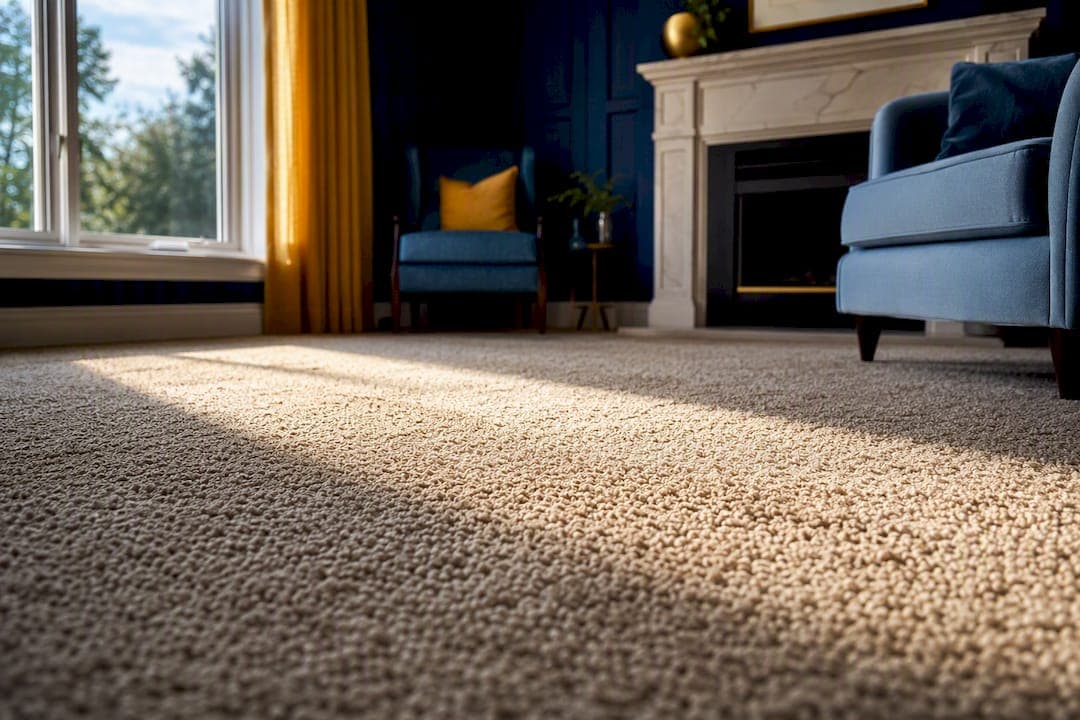
Wool is a protein fibre, not a synthetic one, and that single fact should drive every cleaning decision you make. Use pH-neutral, wool-safe products, keep water and heat to a minimum, blot spills instead of scrubbing, vacuum weekly, and book professional restorative cleaning every 12 to 18 months. Never use bleach or high-alkaline cleaners, and never let the carpet stay wet longer than necessary.
TL;DR:
- Regular vacuuming with a soft brush setting prevents soil from embedding and causing fiber damage, especially in high-traffic areas.
- Promptly blot spills with a white cloth and test cleaning solutions on hidden areas to avoid dye bleeding and fiber fraying.
- Professional cleaning every 12 to 18 months is recommended, with higher frequency for homes with pets or heavy foot traffic to prevent soil buildup.
- Avoid high heat, bleach, alkaline cleaners, and over-wetting during cleaning to prevent irreversible damage like felting, browning, or shrinkage.
- Managing humidity and exposure to sunlight can prolong wool carpet color and structural integrity, with dehumidifiers and UV protection as preventative measures.
Table of Contents
- Wool carpet maintenance: your weekly and seasonal routine
- How do you get a stain out of a wool carpet?
- How often should wool carpet get professionally cleaned?
- Why do wet wool carpets turn brown, and how do you stop it?
- What common mistakes damage wool carpet permanently?
- The wool-safe cleaning protocol that protects your investment
- Handling pet odours and damage on wool carpet
- Does sunlight or humidity affect wool carpet condition?
- Should you clean wool carpet yourself or hire a professional?
- Prevention beats repair every time
- Book professional wool-safe carpet cleaning in the GTA
- Sources
Wool carpet maintenance: your weekly and seasonal routine
Wool carpet cleaning care starts long before a stain happens. Regular, low-effort maintenance does more to protect a wool rug or broadloom than any single deep clean ever will, because it stops soil from working its way down into the pile where it acts like sandpaper on the fibres.
Vacuum regularly, for example about once a week, twice if you've got kids, pets, or a hallway that sees heavy foot traffic. Set your vacuum to a soft-brush or no-beater-bar setting. Wool fibres have a natural crimp and a protective scale layer, and an aggressive rotating brush can fray that surface over time the same way over-brushing damages human hair. On high-traffic lanes, like the path from your front door to the kitchen, run the vacuum over the same strip three to five times rather than once.
A few habits extend the life of wool carpet dramatically:
- Place walk-off mats at every exterior entrance to trap grit before it reaches the wool.
- Rotate area rugs every few months so wear and sun exposure distribute evenly.
- Use furniture pads or coasters under heavy pieces and shift them slightly every season to prevent permanent crush marks.
- Groom the pile occasionally with a carpet rake to lift crushed fibres and keep the surface looking fresh.
- Consider a WoolSafe-approved fibre protector after professional cleaning to buy extra time between spills and stains.
Between full restorative cleans, low-moisture methods work well as interim maintenance. Dry powder cleaning, encapsulation, and bonnet cleaning all lift surface soil without saturating the backing, which matters because wool dries slowly and dry compound methods are a genuinely useful interim tool when a full wet clean isn't warranted yet. If your household runs allergy-sensitive or you notice a musty smell creeping in between scheduled cleanings, that's a signal to book a professional check rather than wait out the full 18-month window.
How do you get a stain out of a wool carpet?
Fresh spills are winnable if you move fast and resist the urge to rub. Wool carpet stain removal comes down to technique, not brute force, and the wrong instinct (scrubbing hard) is exactly what drives a stain deeper and frays the fibre tips.
- Blot immediately with a clean white cloth or paper towel. Press straight down, don't wipe. Work from the outer edge of the spill toward the centre so you're not spreading it wider.
- Scrape off any solids with a spoon or dull knife before you add any liquid at all.
- Test your cleaning solution on a hidden patch first, like a closet corner or under a piece of furniture. Wait a few minutes and check for colour transfer onto your cloth before treating the visible stain.
- Apply a wool-safe, pH-neutral cleaner diluted per the label, or a very mild neutral detergent mixed with water. For general grease or beverage stains, a light distilled white vinegar and water rinse can help, but only after the colourfastness test checks out, and never on wool that's already showing wear.
- Blot again, don't saturate. Work the solution in gently with the cloth, then blot dry.
- Rinse with plain water if needed to remove any cleaning residue, then blot until the area is barely damp.
- Skip bleach, ammonia, and solvent-based spot removers entirely. These break down the protein structure of wool and can permanently discolour it.
If the stain spreads instead of lifting, if you see colour bleeding from a rug's dye lines, or if an odour lingers after the spot has dried, stop treating it yourself. That's a clear signal to call a specialist rather than keep applying product to an area that's already reacting badly.
How often should wool carpet get professionally cleaned?
Most residential wool carpet needs restorative cleaning every 12 to 18 months, and WoolSafe's own guidance backs that window as the point where embedded soil starts outrunning what vacuuming alone can remove. High-traffic homes, households with pets, or commercial spaces often need it closer to the 12-month mark.
Professional wool carpet cleaning earns its cost through control, not just equipment. A properly trained technician keeps cleaning solution temperature at or below roughly 60°C (130°F), because wool behaves like keratin, the same protein that makes up human hair, and excess heat combined with moisture starts to felt and shrink the fibre permanently. Pros also use neutral-to-slightly-acidic chemistry, limit dwell time so the cleaning solution isn't sitting on the fibre longer than it needs to, and follow with strong extraction and air movers to pull moisture out fast.
Call a professional sooner than your scheduled cleaning if you notice any of these:
- Soil that's visibly embedded and doesn't lift with vacuuming or spot cleaning.
- A persistent musty or sour odour, even after the surface looks clean.
- Dye migration or colour bleeding between different coloured sections of a rug.
- Fibres that feel matted, stiff, or "felted" in one section.
- Slow drying or lingering dampness after any DIY spot treatment you've attempted.
A reputable wool-safe operator will pre-test an inconspicuous area, explain the chemistry they're using before they touch your carpet, and bring air movers as standard, not as an upsell.
Why do wet wool carpets turn brown, and how do you stop it?
Cellulosic browning is the most common irreversible defect in wool cleaning, and it's almost entirely preventable. It happens when moisture wicks minerals or tannins up from a jute or cotton backing to the carpet surface as the carpet dries slowly, leaving a yellow or tan discolouration that looks like a stain but isn't one in the usual sense.
Wool can absorb a significant share of its own weight in moisture before it even feels wet to the touch, which is why drying takes far longer than most people expect and why active drying management matters so much. After any wet cleaning, run multiple air movers across the surface, add a dehumidifier if the room is humid or poorly ventilated, and keep foot traffic off the area completely until it's bone dry.
Heat is the other half of the equation. High heat combined with lingering moisture and any mechanical agitation is what causes felting and shrinkage, and that damage doesn't reverse.
Pro Tip: Keep a small fan pointed at any wet-cleaned wool area for the first several hours, even after it feels dry to the touch. The backing often holds moisture longer than the surface fibres show.
What common mistakes damage wool carpet permanently?
Most permanent wool carpet damage traces back to one of a handful of avoidable habits, and none of them require expensive tools to avoid.
- Using bleach or high-alkaline cleaners. These strip the protective scale layer on the fibre and can cause irreversible yellowing or weakening.
- Scrubbing instead of blotting. Hard mechanical agitation frays fibre tips and can push a stain deeper into the pile and backing.
- Running a steam cleaner at high heat. Excess heat combined with moisture is the direct cause of felting, a permanent matting and shrinkage of the fibre.
- Over-wetting during spot treatment. Too much liquid feeds cellulosic browning and gives mould a chance to take hold in the backing.
- Leaving cleaning product residue behind. Soapy residue attracts dirt fast, so a spot that was just cleaned can look dirty again within days. A plain water rinse and thorough blot removes that residue before it becomes a magnet for new soil.
If you've already made one of these mistakes, don't keep treating the same spot repeatedly. Stop, let it dry fully, and if the discolouration or texture change persists, that's the point to bring in a wool-safe specialist rather than experiment further.
The wool-safe cleaning protocol that protects your investment
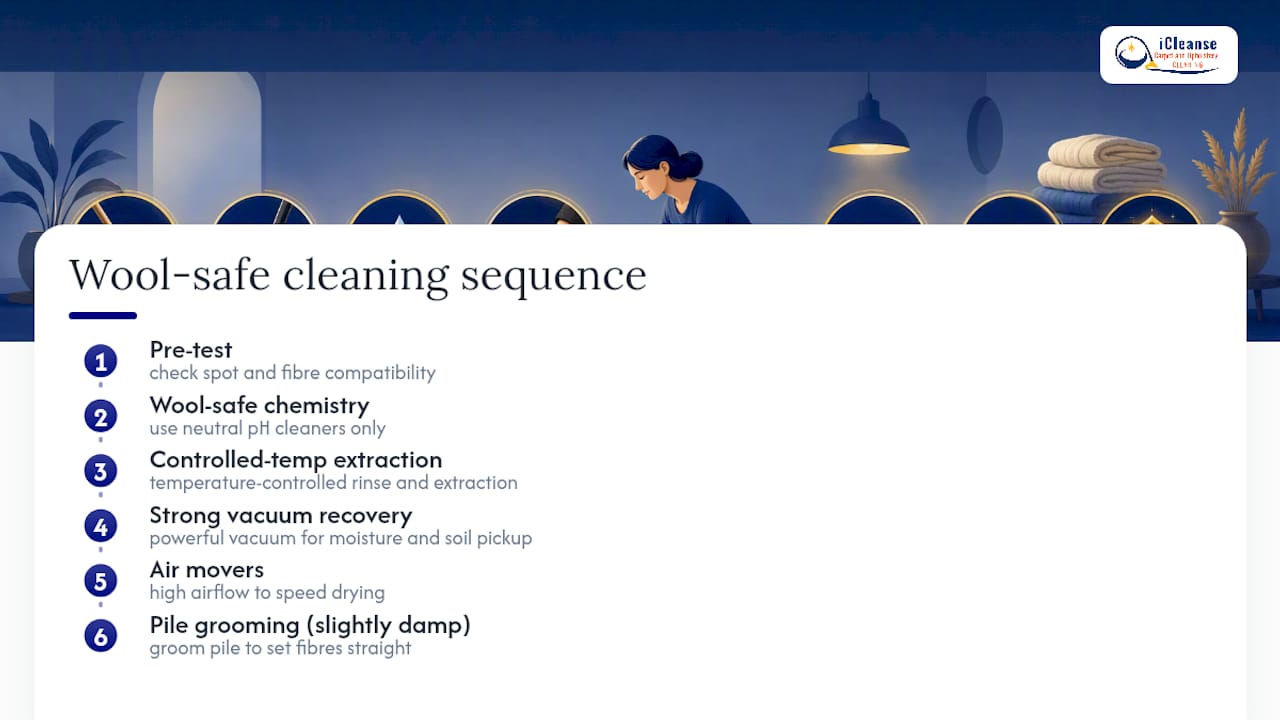
A safe wool job follows a sequence, and skipping a step is usually where damage starts. The process runs pre-test, wool-safe neutral pH chemistry, controlled-temperature extraction, strong vacuum recovery, air movers, then grooming the pile while it's still slightly damp to set the fibres straight.
Low-moisture maintenance methods fit between full restorative cleans, particularly for households that can't tolerate long drying windows or for rugs over sensitive flooring. Full restorative extraction cleaning makes sense on the 12 to 18 month schedule, or sooner if soil, odour, or traffic patterns call for it. For a deeper walkthrough of the maintenance side, our wool carpet care guide covers the day-to-day habits that stretch the time between professional visits.
Handling pet odours and damage on wool carpet
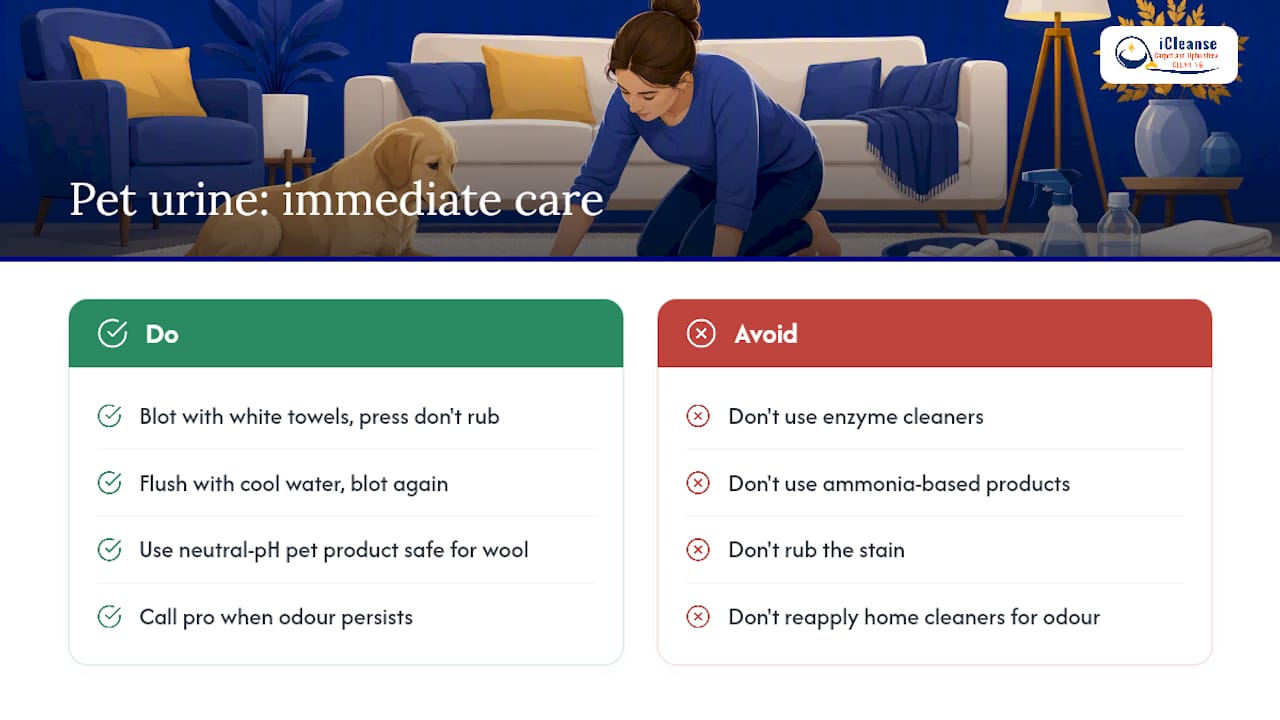
Pet accidents are one of the toughest tests for wool carpet cleaning care because urine is both a moisture problem and a chemistry problem at once. Blot up as much liquid as possible immediately with white towels, pressing rather than rubbing, then flush the area lightly with cool water and blot again before applying any wool-safe cleaner.
Skip enzyme cleaners and ammonia-based pet products marketed for synthetic carpet. Ammonia in particular can react badly with wool's protein structure, and some enzyme formulas run more alkaline than wool tolerates well. A neutral-pH pet-stain product labelled safe for wool or natural fibres is the safer call.
Odour is harder to solve than the visible stain because urine can seep into the backing and pad below, out of reach of surface cleaning. If a spot keeps smelling after it's dried, or if the same pet keeps returning to that exact area, the contamination has likely gone deeper than a topical treatment can reach. That's a case for a professional wool-safe extraction with sub-surface flushing, not another round of home spot cleaner.
Claw damage and matted fibres from pet traffic respond well to gentle grooming with a carpet rake once the area is clean and fully dry. Repeated matting in one high-traffic pet zone is also a good argument for a small area rug or runner placed strategically to take the wear instead of your wool carpet.
Does sunlight or humidity affect wool carpet condition?
Sunlight fades wool dye over time, and it happens faster than most homeowners expect near south-facing windows or glass patio doors. Wool takes dye differently than synthetic fibre, and UV exposure breaks down that dye's pigment molecules gradually, which is why a rug under direct sun for years often shows a visibly lighter patch shaped exactly like the window's light pattern.
Rotating rugs periodically, discussed earlier as part of routine maintenance, is the simplest defence. Curtains, blinds, or UV window film help too, particularly in rooms where furniture rearrangement isn't practical.
Humidity plays a different role. Wool is naturally hygroscopic, meaning it absorbs and releases moisture from the surrounding air, which is actually part of what makes it comfortable underfoot and naturally resistant to some odours. But in consistently damp basements or poorly ventilated rooms, that same moisture-absorbing property becomes a liability. Wool sitting in high ambient humidity for extended periods dries slower after any cleaning and creates conditions where mould or mildew can develop in the backing, especially over concrete subfloors.
A dehumidifier in a damp room isn't just a comfort upgrade. It's a wool-care decision, protecting both drying time after cleaning and the health of the fibre between cleanings.
Should you clean wool carpet yourself or hire a professional?
Both approaches have a place, and the right call depends on what you're dealing with. Routine vacuuming, prompt blotting of fresh spills, and light dry powder cleaning between professional visits are all safe and sensible DIY territory. These low-risk tasks require no special equipment and, done consistently, prevent most of the problems that turn into expensive repairs.
Can you steam clean wool carpet yourself with a rented machine? Technically, but it's the riskiest DIY move on the list. Rental steam cleaners are built for synthetic carpet, run hotter than wool tolerates well, and don't extract water as thoroughly as professional equipment. That combination of heat, moisture, and weak extraction is close to a recipe for the felting and browning problems described earlier.
Professional wool carpet cleaning earns its place for full restorative cleaning, pet contamination that's reached the backing, any stain that's already resisted a careful DIY attempt, and the scheduled 12 to 18 month deep clean. Professionals bring temperature-controlled equipment, wool-safe pH chemistry, and industrial extraction and air-moving power that a rental unit simply can't match. The safety consideration cuts both ways: DIY mistakes on wool are often permanent, while a qualified operator carries the training to avoid them in the first place.
Prevention beats repair every time
Wool carpet punishes shortcuts and rewards patience, and that's the part most people learn the hard way, usually after a rental steam cleaner leaves a brown ring that never fully lifts. The households that get the most life out of their wool, decades in some cases, aren't doing anything exotic. They vacuum consistently, blot instead of scrub, and they don't wait until a carpet looks dirty to book a proper cleaning.
If there's one rule worth repeating: when in doubt about a product, a stain, or a piece of equipment, don't experiment on wool to find out. Test small, act cautiously, and call in professional help before a fixable problem becomes a permanent one.
— Rob
Book professional wool-safe carpet cleaning in the GTA
Icleansecuc is the wool-safe alternative to renting a steam cleaner and hoping for the best. Our technicians control solution temperature, use pH-neutral wool-safe chemistry, and bring commercial extraction and air-moving equipment that pulls moisture out fast enough to avoid the browning and felting risks a rental machine simply can't manage.

When you book, we start with a colourfastness test and walk you through the chemistry before we touch your carpet, exactly the practice described earlier for a reputable wool-safe operator. We serve homeowners, tenants, landlords, and businesses across the Greater Toronto Area, including Markham, Vaughan, Richmond Hill, and Mississauga, with the same restorative process on every job. If your wool carpet is due for its 12 to 18 month deep clean, or you're dealing with a stain that's already gone sideways, request a quote and we'll get you a straightforward price before we schedule anything.
Sources
- The Cleaning and Maintenance of Wool Carpets (WoolSafe, 2020)
- Wool carpet care and maintenance guide (IWTO, 2024)