
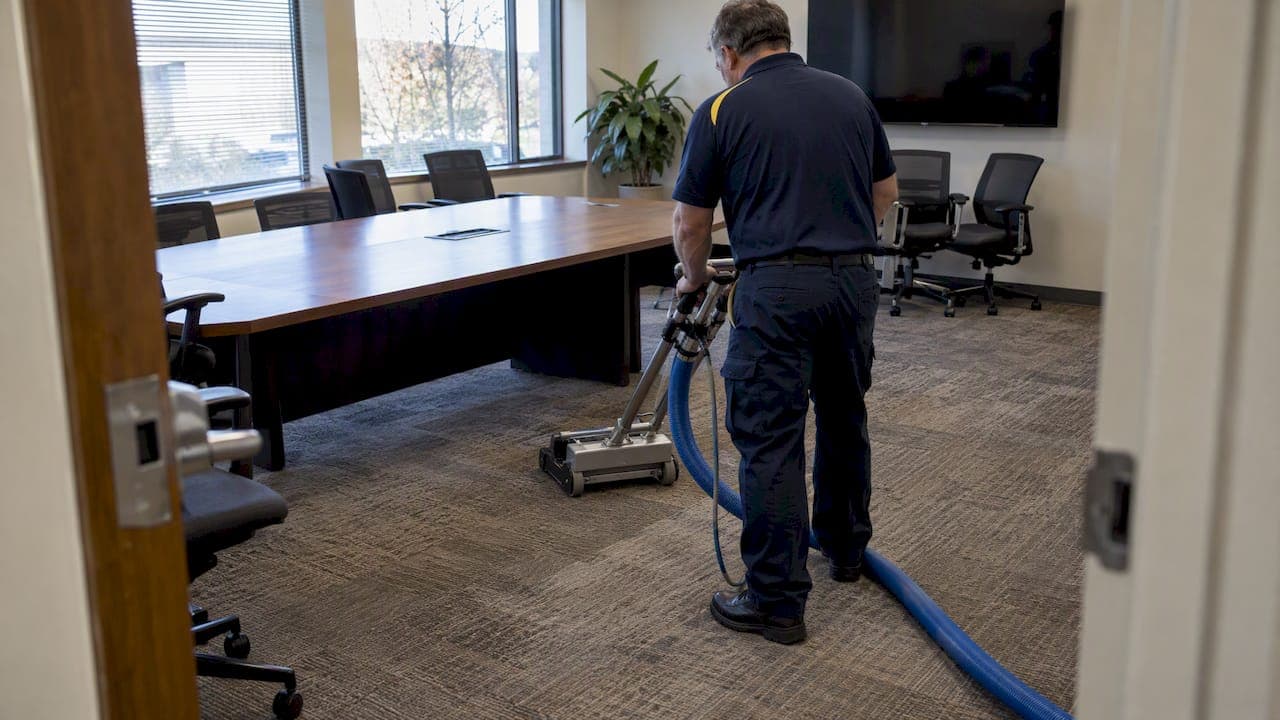
Commercial carpet cleaning is worth the investment for most businesses because it protects appearance, improves indoor air quality and lowers long-term replacement costs. Health Canada guidance ties carpet maintenance to healthier indoor air, Carpet and Rug Institute lifecycle data links upkeep to lower total flooring costs, and ISSA maintenance standards show how often that upkeep should happen.
TL;DR:
- Daily HEPA vacuuming and proactive interim cleaning limit soil buildup, while periodic restorative extraction removes grit and residue that can wear fibers down.
- After cleaning, keep carpet traffic low and ventilation high because Health Canada recommends drying within 24 hours to limit mold risk.
- Low moisture methods suit busy areas needing frequent service; hot water extraction reaches deeper residue but requires more drying time.
- Before hiring, request pricing by zone, planned methods, drying expectations, insurance, references, wastewater disposal details, and confirmation of HEPA equipment.
- For older carpets, inspect the backing and fibers first; cleaning can improve hygiene, but it cannot reverse structural damage that has reached the backing or padding.
Table of Contents
- The main ways professional carpet cleaning benefits workplaces
- Appearance and first impressions: how carpet condition affects clients and staff
- Health and indoor air quality: what cleaning removes and the safety steps to follow
- Extend carpet life and reduce total cost of ownership
- Operational considerations: scheduling, disruption and drying
- Common methods and recommended frequencies for commercial carpets
- How to choose a commercial carpet cleaner: criteria and questions to ask
- Client evidence: how iCleanseCUC delivers commercial carpet cleaning results
- Prioritizing carpet care on a facility budget
- Get a commercial cleaning quote from iCleanseCUC
- FAQ
- Sources
The main ways professional carpet cleaning benefits workplaces
A clean carpet does more than look better underfoot. It shapes how clients judge your business the moment they walk in, it affects what staff breathe all day, and it determines how many years you get out of a flooring investment before replacement.
- Appearance: Clean carpet signals professionalism and care to clients, visitors and staff.
- Health and air quality: Removing dust, allergens and residues supports better indoor air.
- Carpet lifespan: Regular maintenance prevents the fibre damage that forces early replacement.
- Stain and odour control: Prompt, correct treatment keeps problem areas from becoming permanent.
- Comfort: Carpet that is properly maintained keeps sound dampening and underfoot comfort intact.
The sections below walk through the evidence behind each benefit, then move into scheduling, methods and how to vet a vendor.
Appearance and first impressions: how carpet condition affects clients and staff
Soiled or stained carpet is one of the fastest ways a workplace reads as neglected, even when everything else is in order. Visitors form an impression within the first few steps into a lobby or reception area, and matted, dull or stained carpet undercuts every other investment a business makes in its space.
- Discoloured traffic lanes draw the eye before any signage or furniture does.
- Visible staining near entrances and break rooms is often the first thing a client notices.
- Flattened pile reads as worn even when the carpet itself has years of service left.
ISSA guidance recommends daily commercial vacuuming paired with scheduled interim and restorative cleaning to keep appearance consistent year-round, rather than letting soil build until it becomes visible. Beyond looks, well-maintained carpet also retains more of its sound-dampening quality, which keeps open offices and waiting areas quieter and more comfortable for the people in them.
Health and indoor air quality: what cleaning removes and the safety steps to follow
Carpet fibres trap dust, allergens and fine particulates that circulate back into the air with foot traffic. CMHC research found that rigorous HEPA vacuuming protocols, applied repeatedly over time, measurably reduce fine dust loading in carpet, meaning a single light pass is not enough to keep allergen levels down.
Carpets act as reservoirs for dust, allergens and endotoxins, and effective removal depends on HEPA filtration and sustained, repeated extraction rather than a single cleaning pass.
Health Canada guidance names three controls as central to reducing mould and other indoor air risks from carpet cleaning:
- Use HEPA-filtered vacuums for routine and pre-cleaning maintenance.
- Maximize water extraction during any wet cleaning method.
- Ensure carpet dries within a day of cleaning to prevent moisture-related mould growth.
Scheduling cleaning for low-occupancy hours and increasing ventilation afterward both help carpet dry faster and limit occupant exposure to damp conditions during the process.
Extend carpet life and reduce total cost of ownership
Untreated soil does mechanical damage long before a carpet looks dirty. Grit and debris act like sandpaper against fibres every time someone walks across them, and that abrasion accelerates wear far faster than foot traffic alone would. Regular interim and restorative cleaning removes that grit before it can grind fibres down, which is the core reason maintenance protects a carpet's working life.
- Interim cleaning between restorative visits keeps soil from accumulating in high-wear zones.
- Restorative hot-water extraction removes deep-set residue that interim methods leave behind.
- Skipping either step shortens the interval before replacement becomes necessary.
CRI lifecycle analyses show that consistent maintenance can substantially lower the total use-life cost of carpet compared with letting wear force premature replacement, particularly in high-traffic commercial settings. For budget planning, that means weighing installation, maintenance and disposal together as a total-use cost rather than judging carpet only on its upfront purchase price.
Operational considerations: scheduling, disruption and drying
Commercial cleaning works best when it fits around the business, not the other way around. Scheduling around occupancy and planning for drying time keeps the service effective without disrupting daily operations.
- Book cleaning during evenings, weekends or other low-occupancy windows whenever possible.
- Clean high-traffic lanes and entrances first, then move to lower-priority zones.
- Cordon off wet areas with signage so staff and visitors avoid them while drying.
- Increase ventilation immediately after cleaning to help carpet dry within 24 hours.
- Confirm with your vendor what extraction method they will use before the appointment.
Pro Tip: Ask your cleaning provider to maximize water extraction on-site, since less residual moisture means faster drying and lower mould risk.
Common methods and recommended frequencies for commercial carpets
Not every area of a facility needs the same cleaning method or the same schedule. Interim methods, such as encapsulation, bonnet cleaning and other low-moisture approaches, use less water and dry faster, which makes them well suited to frequent visits in lobbies, hallways and other high-traffic zones. Restorative hot-water extraction penetrates deeper into the pile and removes residue that interim methods leave behind, but it uses more water and takes longer to dry.
- Daily vacuuming with commercial-grade, HEPA-filtered equipment is the baseline for every facility.
- Interim cleaning on a regular cadence keeps soil and allergen load down between deeper cleans.
- Restorative extraction on a periodic schedule removes what interim methods cannot reach.
- High-traffic areas generally need more frequent interim cleaning than low-traffic offices or storage rooms.
ISSA guidance notes that interim methods remove minimal water, which lets carpet return to service faster, while restorative cleaning should be timed to remove the residues that interim methods accumulate over multiple cycles. Choosing between the two comes down to traffic level, how much downtime a space can absorb and how much residue has built up since the last restorative visit. You can read more about carpet cleaning methods and how each one is applied.
How to choose a commercial carpet cleaner: criteria and questions to ask
Vetting a vendor properly before booking saves time, protects your carpet warranty and avoids surprises on invoice day.
- Confirm they use HEPA-filtered vacuums and commercial-grade extraction equipment.
- Ask what cleaning products they use and whether they are low-VOC.
- Ask about their drying protocol and expected drying time for your space.
- Request proof of insurance and references from other commercial clients.
- Ask how they dispose of wastewater after extraction cleaning.
A clear quote should spell out:
- Pricing broken down by area or square footage, not a single lump sum.
- The cleaning method planned for each zone (interim versus restorative).
- Expected downtime and drying time before the space returns to normal use.
Client evidence: how iCleanseCUC delivers commercial carpet cleaning results
We provide commercial carpet cleaning and related services using commercial-grade equipment and eco-friendly cleaning solutions on every job. Our team works on deep-set soil, stubborn stains and persistent odours, and we back every job with transparent, upfront pricing so facility managers know what to expect before work begins.

Prioritizing carpet care on a facility budget
Balancing appearance, occupant health and a tight facilities budget rarely means doing everything at once. Prioritize high-traffic zones first, schedule interim cleaning proactively instead of reactively, and the rest of the carpet's service life tends to take care of itself.
— Rob
Get a commercial cleaning quote from iCleanseCUC
If you manage a facility and want appearance, air quality and carpet lifespan handled by people who do it daily, our commercial cleaning services cover carpet in heavy and light traffic areas across the Greater Toronto Area.
- Eco-friendly cleaning solutions on every job, with no guesswork on what is being applied to your floors.
- Transparent, upfront pricing broken down by traffic area so budgeting is straightforward.
- Scheduling built around your occupancy hours to limit disruption.
Request a quote and we will discuss your space, traffic patterns and timeline before any work is booked.
FAQ
What not to do after carpet cleaning?
Avoid walking on wet carpet in street shoes, moving furniture back too soon, or closing off ventilation, since all three slow drying and raise the risk of mould forming within fibres. Health Canada guidance recommends carpet dry within 24 hours of cleaning, so keeping traffic light and airflow up during that window matters more than any other aftercare step. For detailed aftercare steps, see our post-cleaning care guide.
What are the benefits of having carpet?
Carpet adds sound dampening, underfoot comfort and a warmer, more finished look to a commercial space compared with hard flooring. It also acts as a dust and allergen trap, which is a benefit only when paired with regular HEPA vacuuming and professional extraction to remove what it collects.
What is the best commercial carpet cleaning solution?
The right method depends on the area: low-moisture interim methods like encapsulation or bonnet cleaning suit high-traffic zones needing frequent attention, while hot-water extraction is better for periodic deep cleaning that removes residue interim methods leave behind. ISSA guidance recommends combining both into a scheduled maintenance program rather than relying on one method alone.
Is it worth cleaning a 20 year old carpet?
Cleaning a carpet that old is worth it if the backing and fibres are still structurally sound, since professional extraction can restore appearance and air quality without the cost of replacement. If wear has already reached the backing or padding, cleaning will improve hygiene but will not reverse structural damage, so a facility assessment is the better first step.
Sources
- Canada
- CMHC study on HEPA vacuuming effectiveness (Canada)
- Carpet is a cost-effective flooring choice - Carpet and Rug Institute (CRI)
- Keep commercial carpeting looking its best - ISSA