
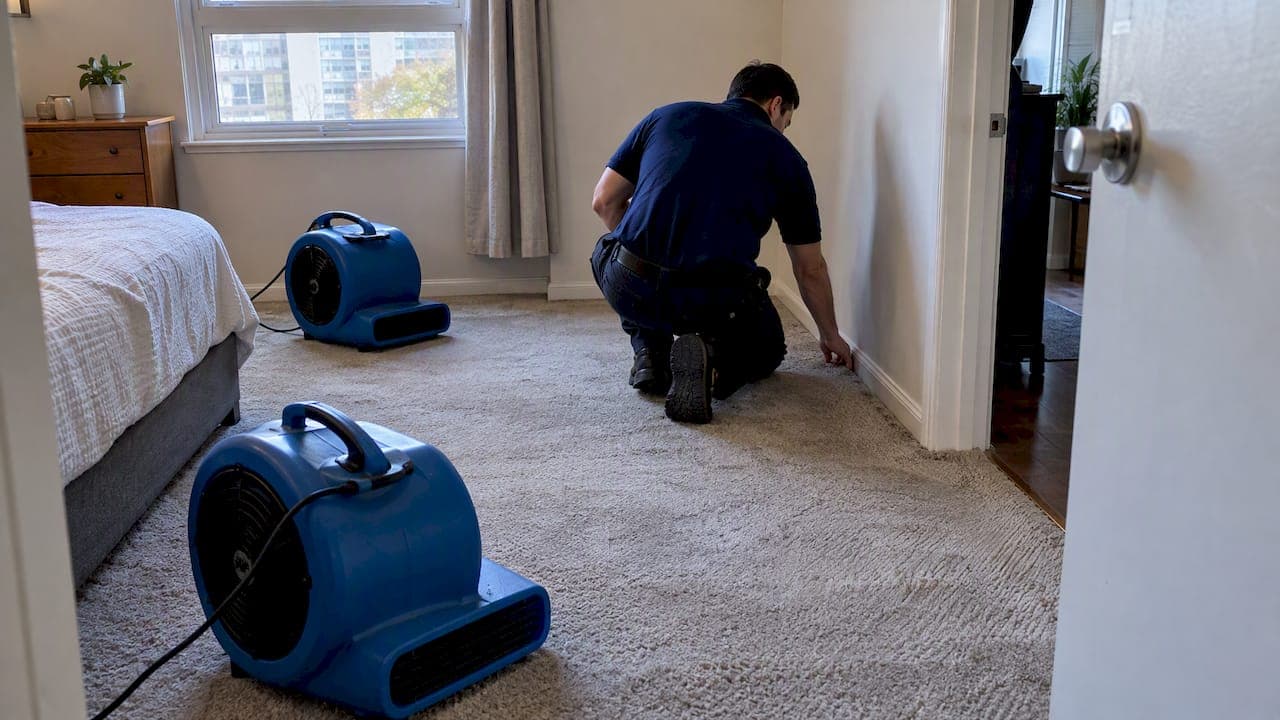
The most important thing you can do after a professional carpet cleaning is keep people and pets off the carpet until it is fully dry, maximize airflow to speed that process, and follow your technician's specific instructions before vacuuming or moving furniture back. Get these three things right and your carpet dries evenly, stays clean longer, and avoids the moisture problems that cause most post-cleaning complaints.
TL;DR:
- Keep pets and children off the carpet until it is completely dry and follow your technician's instructions to prevent moisture issues.
- Maximize airflow with open windows, fans, and dehumidifiers to ensure the carpet dries within 24 hours and avoid covering it with plastic.
- Check both the pile and backing for dryness before moving furniture back, pressing the back of your hand against the carpet near the backing for links to drying times.
- Blot spills immediately with a white cloth and avoid rubbing or household cleaners until testing confirms they are safe for your carpet's fiber type.
- Call your cleaning professional if drying exceeds 24 hours, a musty smell develops, or spots keep reappearing, as these signals moisture retention or residue issues.
Table of Contents
- Immediate do's and don'ts after the crew leaves
- How to speed up drying safely
- When and how to move furniture back safely
- Spot and stain handling after professional cleaning
- Vacuuming and routine maintenance after the carpet is dry
- Warning signs and when to call the cleaning company
- Carpet protectors: what they do and what to expect
- A quick word from the field
- How we can help with your next step
- FAQ
- Sources
Immediate do's and don'ts after the crew leaves
The first two hours set the tone for how well your carpet dries and how long the clean result lasts. Treat the space like a wet-paint zone: look, don't touch.
- Stay off the carpet and set up a visual reminder, like a chair across the doorway, so household members don't forget.
- Keep pets and children out of the room until the pile feels dry to the touch, not just on the surface.
- Hold off on placing rugs or runners until the carpet underneath is completely dry, since trapped moisture under a rug barely evaporates.
- Follow any instructions your technician left for the specific method used on your carpet, since drying needs differ between hot-water extraction and low-moisture cleaning.
If your technician left written notes about your carpet, hang onto them. They often include fibre-specific guidance that applies for weeks, not just the first day.
How to speed up drying safely
Airflow, not time, is what actually dries a carpet. Opening a window for a few hours does more than waiting around hoping the clock will solve it.
- Open windows when the outdoor air is dry and reasonably warm, and let cross-breezes move across the carpet.
- Run box fans or ceiling fans on low to keep air moving over the pile rather than pooling in one corner of the room.
- Switch on a dehumidifier if your home feels humid, particularly in summer or in basements with poor airflow.
- Never cover a damp carpet with plastic sheeting, since trapping moisture underneath slows drying and invites odour.
Keep indoor humidity below 50% when possible. Health Canada's guidance on addressing moisture and mould points to dehumidification as a practical response once relative humidity climbs past that mark, which is exactly the range that slows carpet drying and encourages musty smells. Health Canada's draft guidance on indoor air quality also recommends maximizing extraction and ventilation so carpets dry within roughly 24 hours, though the exact window depends heavily on the cleaning method and how humid your home already is. Touch the pile and backing rather than watching the clock: if it still feels cool or damp, it needs more time regardless of what the hour count says.
If you'd rather lean on something lower effort than running fans all afternoon, a few well-placed houseplants can support better indoor air circulation over the following weeks, an angle covered in this guide to indoor plants and air quality from Sprout Lab.
When and how to move furniture back safely
Rushing furniture back onto a damp carpet is one of the easiest ways to undo a good cleaning. Wet fibres crush more easily, and wood or metal legs can leave rust marks or colour transfer if the carpet underneath hasn't finished drying.
- Check the pile and the backing, not just the surface; both need to feel dry before anything goes back on the carpet.
- Leave any protective tabs or blocks your technician placed under furniture legs for the full time they recommended.
- Lift furniture into place instead of dragging it, since sliding legs can snag damp fibres and leave visible drag marks.
- For wool rugs, antiques, or anything delicate, check with your technician before moving it rather than guessing.
Pro Tip: Press the back of your hand flat against the carpet near the backing. If it feels cool or slightly damp compared to a dry area in another room, give it more time before furniture goes back.
Spot and stain handling after professional cleaning
New spills happen, and how you react in the first few minutes matters more than any product you reach for. The instinct to scrub is almost always the wrong one.
- Blot fresh spills immediately with a clean white cloth, working from the outer edge of the spot toward the centre.
- Never rub or scrub, since that pushes the spill deeper into the pile and can distort the fibres.
- Avoid reaching for vinegar, dish soap, or household detergents on a spot until you've tested them somewhere inconspicuous, because the wrong chemistry can cause colour loss or leave a sticky residue.
- Call your cleaner rather than treating it yourself if the fibre is wool, viscose, or part of a Persian rug, or if the same spot keeps reappearing after you've blotted it.
Fibre-specific chemistry matters more than people expect. The ANSI/IICRC S100 standard for professional carpet cleaning treats spot chemistry and fibre type as inseparable, which is why a cleaner that works beautifully on a synthetic blend can damage wool. If you have a wool or antique rug in the house, our guide to wool carpet care covers the extra caution those fibres need.
Vacuuming and routine maintenance after the carpet is dry
Vacuuming too early undoes a lot of what the cleaning just accomplished, since a wet vacuum head can push moisture deeper and distort the pile. Wait until the carpet passes the touch test everywhere, not just near the doorway.
- Skip vacuuming entirely until the pile and backing both feel completely dry.
- Use a vacuum with a HEPA filter or an outdoor-vented central vacuum once you resume, since these capture the fine particles that settle after cleaning.
- Focus extra passes on traffic lanes, hallways, and areas near entry points where soil builds up fastest.
- Stick to a regular vacuuming routine afterward, since consistent vacuuming reduces allergen load and helps the professional clean last longer.
Regular vacuuming between professional visits is one of the simplest ways to protect your investment, and it pairs directly with the allergen reduction outlined in our piece on cutting carpet allergens. For most households, a professional clean every 12 to 18 months alongside weekly vacuuming keeps carpets looking fresh between visits, a pattern we expand on in how frequent cleaning prevents carpet replacement.
Warning signs and when to call the cleaning company
Most carpets dry without drama, but a few signals mean it's time to stop waiting and start calling. Treat these as cues to get a technician back, not as problems to solve with more scrubbing.
- Drying that stretches past roughly 24 hours without noticeable progress.
- A musty smell developing anywhere in the room, which usually signals trapped moisture rather than normal slow drying.
- Discolouration or dark patches that weren't there right after the cleaning.
- Spots that keep reappearing in the same place no matter how many times you blot them, a sign of wicking from residue migrating up through the pad.
Health Canada's guidance on moisture and mould notes that mould can begin growing within 48 hours in wet conditions, which is why prompt follow-up beats waiting it out. Wicking in particular responds poorly to repeated home treatments; the right move is gentle blotting followed by a call to your cleaner rather than another round of saturation.
Pro Tip: If a spot reappears after drying, resist the urge to re-wet it yourself. Wicking usually needs a technician's extraction tools, not another bottle of carpet shampoo.

Carpet protectors: what they do and what to expect
A protector treatment buys you time against spills, not immunity from them. It's worth understanding what it actually does before you count on it.
- Protectors create a temporary barrier that gives you a few extra seconds to blot a spill before it sets into the fibres, but they are not stain-proof.
- Applying a protector can add slightly to your drying time, so follow whatever timeline your technician gives you rather than the general drying estimate.
- Delicate fibres like wool or viscose sometimes aren't good candidates for protector treatments at all; ask your technician before assuming one is right for your rug.
Protector coatings wear down with foot traffic and regular vacuuming, so most professionals recommend reapplying after each cleaning rather than expecting one treatment to last for years.
A quick word from the field
Press your palm flat against the carpet backing near a seam. If it's still cool or damp there while the surface looks dry, give it more time. Drying speeds vary a lot by method and humidity, so don't panic if your neighbour's carpet dried faster than yours. Keep any notes your technician left you, and call if something feels off rather than guessing.
— Rob
How we can help with your next step
Once your carpet dries, a follow-up visit can catch anything the drying period revealed, from a spot that wicked back up to a protector application worth adding before your next heavy-traffic season. We handle residential carpet cleaning, delicate area rugs including wool and viscose blends, and tile and grout care, with upfront pricing and a technician who explains exactly what your carpet needs.

If you noticed any of the warning signs above or just want a protector reapplied properly, request a quote and we'll get a technician back out to take a look.
FAQ
What not to do after carpet cleaning?
Don't walk on the carpet before it's dry, don't move furniture back early, and don't cover the carpet with plastic sheeting, since Health Canada's moisture guidance notes that trapping moisture underneath slows drying and can encourage mould. Avoid scrubbing fresh spots or using untested household cleaners on the carpet during this period as well.
Can I use dish soap to shampoo my carpet?
We don't recommend it. Household dish soap isn't formulated for carpet fibres and can leave a sticky residue that attracts more dirt, and on delicate fibres like wool or viscose it can cause colour changes, which is why the ANSI/IICRC S100 standard stresses fibre-specific chemistry for a reason.
Do I rinse or wash first with carpet cleaner?
Professional hot-water extraction applies a cleaning solution first, then rinses and extracts it along with the loosened soil in the same pass. If you're treating a fresh spot at home between professional visits, blot the spill first before applying any cleaner, rather than adding product to a spot that's still wet.
How long should I wait before walking on my carpet?
Wait until the pile and backing both feel completely dry, checked by touch rather than the clock, since drying time depends heavily on the cleaning method and your home's humidity. Health Canada's indoor air quality guidance recommends maximizing ventilation to help carpets dry within about 24 hours under normal conditions.
What if my carpet still smells musty after a day?
A musty smell after about a day usually signals trapped moisture rather than normal drying, and it's worth contacting your cleaning company promptly. Health Canada notes that mould can begin growing within 48 hours in wet conditions, so don't wait it out.