
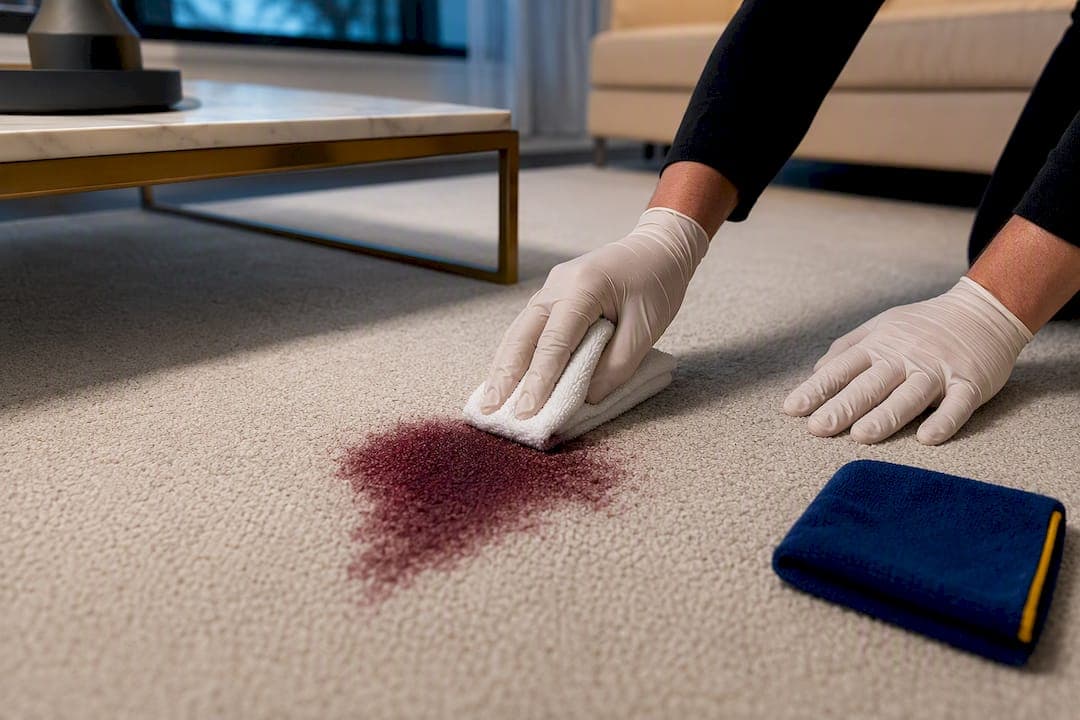
Most deep carpet stains can be substantially lifted, even months-old ones, but full removal depends on the stain type, how long it sat, and the fibre underneath. The moment you notice one, blot it with a clean white cloth and cold water. Skip scrubbing and skip the heat. If the spot is pet urine that soaked into the padding, a large dye stain that's set for weeks, or something that keeps coming back with an odour after cleaning, that's your signal to call in a professional rather than keep fighting it yourself.
TL;DR:
- Deep stains, especially those on padding or that are months old, often require professional extraction for effective removal.
- Immediate blotting with cold water and gentle dabbing prevent deepening, while aggressive scrubbing or heat can worsen protein-based stains.
- Enzymatic cleaners, peroxide, or specific solvents work best on biological, dye-based, or greasy stains, but thorough rinsing and drying are essential for prevention of re-soiling.
- Renting machines suffices for occasional, surface-level stains but yields weaker cleaning results than professional services for deep or embedded contamination.
- Overuse of cleaning products can trap dirt and cause stains to reappear; professionals typically use multiple high-pressure rinses and precise drying to prevent this.
Table of Contents
- What to do in the first 5 to 15 minutes after a spill
- Safe DIY methods for stains that have already set in
- Should you rent a machine, buy one, or hire a pro?
- How to treat the toughest stain types
- How professionals actually remove deep, set-in stains
- Keeping stains from coming back
- What years of stain calls have taught us about DIY limits
- Book a professional deep clean with iCleanseCUC
- Sources
What to do in the first 5 to 15 minutes after a spill
Every deep stain you've ever fought started as a fresh one somebody didn't catch in time. What you do in the first quarter hour decides whether it lifts easily next week or turns into a permanent shadow on your carpet.
- Blot, don't rub. Press a clean white cloth or paper towel into the spill from the outside edge toward the centre. Rubbing spreads the stain and pushes it deeper into the fibres.
- Clear away solids first. Scrape off anything sitting on the surface, food, mud, whatever it is, before you touch it with liquid.
- Soak up the liquid. Layer dry paper towels over the spot and stand on them if you need to. Change towels as they saturate.
- Dilute with cold water. A small amount worked in with a cloth helps loosen the stain without setting it. Skip warm or hot water on anything that might be protein-based (blood, dairy, egg), since blotting with cold water preserves fibres and prevents protein stains from setting, while heat does the opposite.
- Stop if it's fighting back. If the stain keeps spreading, smells off, or won't budge after several blotting passes, stop treating it yourself and consider professional help.
Pro Tip: Keep a stack of plain white cloths under your sink specifically for spills. Coloured towels can transfer dye onto damp carpet, which just gives you a second stain to deal with.
Safe DIY methods for stains that have already set in
Once a stain has had time to dry and bond with the fibre, blotting alone won't cut it. You need something with more lifting power, applied carefully enough that you don't trade one problem for another.
Enzymatic cleaners work best on anything biological: pet accidents, food residue, bodily fluids. Enzymes need time and moisture to break down the organic matter they're targeting, so spray enough to saturate the spot, then keep it lightly damp rather than letting it dry out for the dwell time listed on the bottle, usually 10 to 15 minutes. Don't rinse immediately. Rinsing before the enzymes finish working just washes away the product before it's done its job.
Hydrogen peroxide at a low concentration (3% is the standard drugstore strength) can lighten wine and some dye-based stains on light-coloured synthetic carpet. Test it on a hidden corner first, wait 10 minutes, and check for colour change before applying it to the visible stain. Peroxide bleaches, and wool or naturally dyed fibres can lose colour fast.
Vinegar and baking soda earn their reputation for odours and tannin-based marks like tea and coffee, but they have real limits. They're mild acids and bases, not solvents, so they won't touch deeply embedded pigment the way an enzyme or oxidizer will. Use them for freshening and light tannin lifting, not as your go-to for a set-in stain.
For the actual extraction, follow this sequence:
- Dampen the area lightly. Don't soak it.
- Agitate gently with a soft brush, working in the direction of the pile.
- Blot or extract with a wet/dry vacuum until the cloth or extraction water comes up clear.
- Dry the area completely before walking on it or replacing furniture.
That last step matters more than most people think. Homes & Gardens' review of common carpet-cleaning mistakes found that excess product and water left behind attracts new dirt fast and raises the risk of mildew underneath. Over-wetting is one of the most common reasons a "cleaned" stain reappears within a week.
One safety rule overrides everything else here: never combine bleach with vinegar, ammonia, or any other household cleaner. Health Canada's recall notice on this exact hazard warns that mixing bleach with other cleaning products can produce toxic gases. Pick one product, use it as directed, and rinse the area before trying anything else.
Should you rent a machine, buy one, or hire a pro?
This decision comes down to how often you'll use the equipment and how deep the contamination actually goes.
Renting makes sense for a one-off job on a surface-level stain. It's the cheapest route upfront, but rental units typically run cooler water and weaker suction than commercial-grade machines, which means more moisture left behind and a shallower clean. Consumer Reports' comparison of renting, buying, and hiring confirms renting or buying costs less than hiring a service, but professional extraction consistently delivers stronger lift on deep stains.
Buying your own machine pays off if you're deep-cleaning several times a year, across a few rooms or a pet-heavy household. You'll need somewhere to store it and the right chemistry on hand, since the wrong solution can leave sticky residue that attracts dirt faster than before.
Hiring a professional is the right call for anything that's soaked into the padding, wool or delicate fibres that punish the wrong product, or stains that have had months to bond with the carpet backing. One industry estimate puts rental-machine lift at roughly 20 to 40% on traffic lanes and deep soils, compared with 70 to 90% from professional hot-water extraction. That gap is the whole argument for calling someone in once a stain has gone deep.
| Option | Best for | Typical trade-off |
|---|---|---|
| Rent a machine | Single surface stain, occasional use | Weaker suction, cooler water, more leftover moisture |
| Buy a machine | Frequent cleaning, pets, multiple rooms | Upfront cost, storage, need to learn correct chemistry |
| Hire a professional | Pad-penetrating urine, old set-in stains, delicate fibres | Highest cost per visit, but strongest lift and fastest drying |
How to treat the toughest stain types
Different stains need different chemistry, and treating them all the same way is how a stain that should have come out clean ends up permanent.
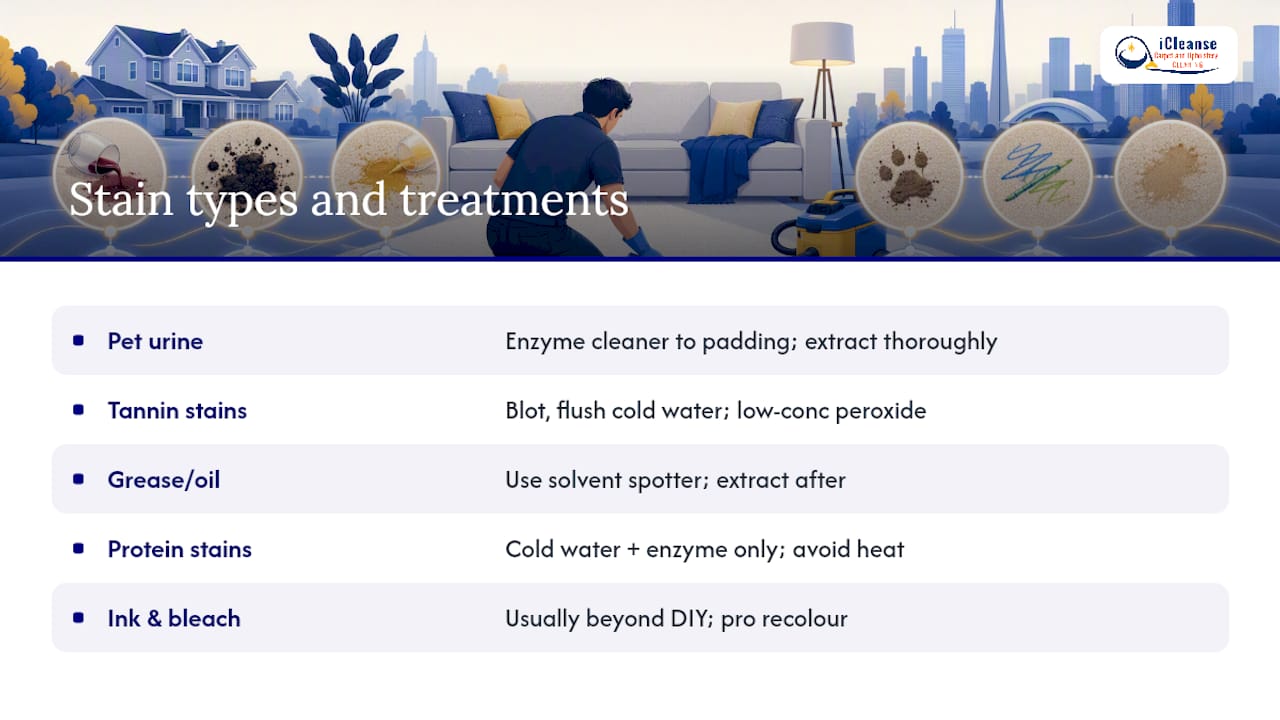
Pet urine needs an enzyme cleaner applied generously enough to reach the padding, not just the visible spot on the carpet surface. Extract thoroughly afterward. If the odour returns after the carpet dries, the padding underneath is likely still contaminated and may need to be replaced.
Red wine, coffee, and tea respond to the same first move: blot immediately, then flush with cold water. For lingering colour on light synthetic carpet, a low-concentration peroxide application can finish the job. True tannin stains (tea, some fruit juices) sometimes need a tannin-specific spotter rather than a general all-purpose cleaner.
Grease and oil laugh at water-based cleaners because oil and water don't mix. You need a solvent-based spotter designed for grease, followed by extraction to pull the loosened residue out of the pile rather than just smearing it around.
Blood and other protein stains are the one category where heat is the enemy every single time. Cold water and enzyme cleaners are the only combination that reliably works. Warm water cooks the protein into the fibres and locks the stain in permanently.
Permanent ink and bleach damage are usually beyond DIY recovery. Attempting aggressive bleaching to fix a bleach spot just spreads the colour loss. Professional colour restoration can sometimes redye a damaged patch, but going in with more bleach or a stronger chemical on your own tends to make the spot bigger, not smaller.
Pro Tip: Always test a new cleaning solution on a hidden patch of carpet, under a couch or in a closet corner, and wait 10 minutes before applying it to a visible stain. It takes two minutes and saves you from bleaching a spot right in the middle of your living room.
How professionals actually remove deep, set-in stains
A professional visit isn't just a bigger version of what you did with a rag and a spray bottle. It starts with inspection: checking the fibre type, testing for colour fastness, and figuring out why the stain hasn't come out on its own.
From there, the typical extraction workflow runs through a few defined stages:
- Pre-treatment with a chemistry matched to the stain, not a one-size-fits-all solution.
- Multiple passes of hot-water extraction, agitating and rinsing until the water pulled out comes back clear.
- Pad-level treatment for urine or biological contamination, since wicking, a stain reappearing after cleaning, usually means the padding underneath is still contaminated and surface cleaning alone won't fix it.
- Mechanical drying with air movers to bring the carpet back to a safe moisture level fast.
That drying step isn't optional. Health Canada's guidance on moisture and mould points out that carpet left damp for too long creates the conditions mould needs to grow. A truck-mount or high-powered portable extractor pulls out far more water than a rental unit, which is part of why professional jobs dry in hours instead of a day or two.
Even professionals hit walls, though. Colour that's already bled out from bleach contact, or a dye stain that's chemically bonded to the fibre for years, sometimes can't be brought all the way back. Anyone who promises a guaranteed full restoration on every stain, every time, isn't being straight with you.
Keeping stains from coming back
The work isn't done once the stain lifts. Getting the carpet fully dry and rinsed clean matters as much as the stain removal itself.
- Keep rinsing or extracting until the water runs clear, not cloudy or soapy.
- Point a fan at the damp area, or run a dehumidifier, and set a folded towel with something heavy on top to wick up leftover moisture.
- Go light on product. Extra cleaner left in the fibres attracts dirt faster and can trigger the same wicking problem you just fixed.
- Vacuum high-traffic areas at least weekly and treat new spills within minutes, since experts consistently point to speed as the deciding factor between a stain that lifts easily and one that sets permanently.
- Reapply a carpet protector after deep cleanings, especially in entryways and around pet areas, and schedule a full clean every 12 to 18 months depending on traffic. Households with kids tracking in dirt daily usually need it closer to the shorter end of that range.
What years of stain calls have taught us about DIY limits
People call us after they've already tried three different products on the same spot, and by then the carpet's had more chemical exposure than the original stain ever needed. That's the pattern worth understanding: most home stain disasters aren't caused by the spill, they're caused by the cleanup.
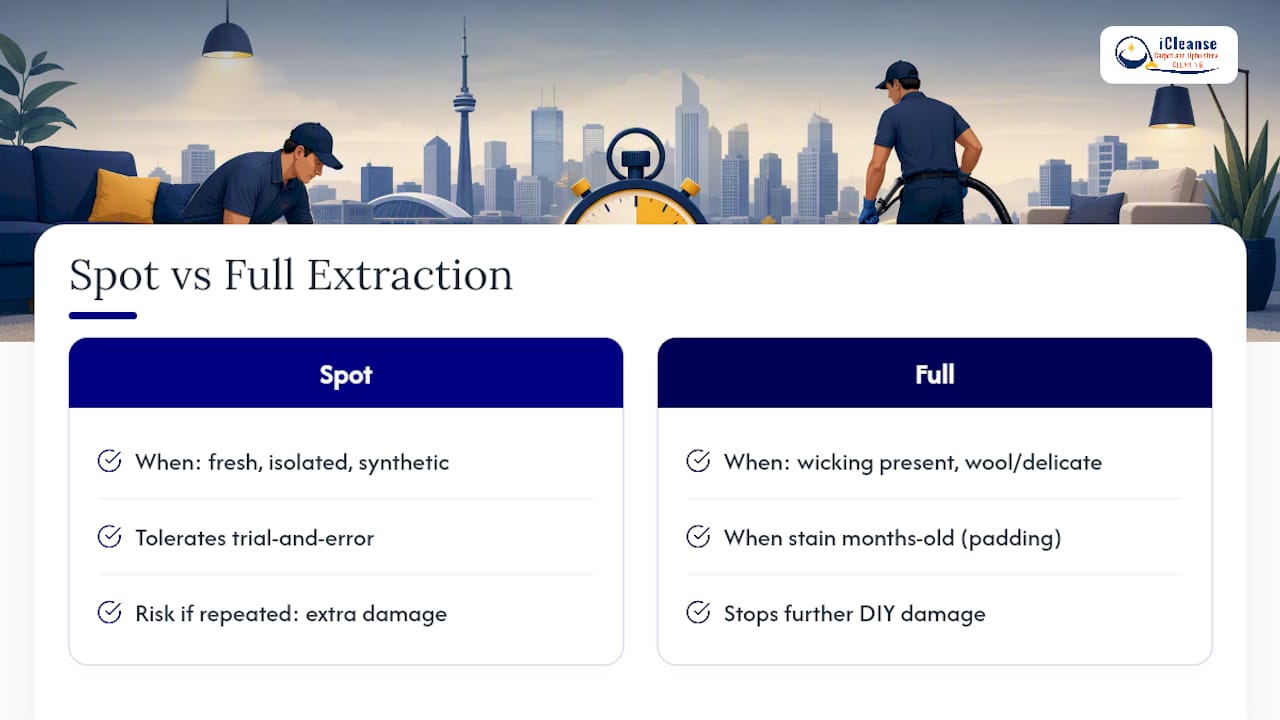
At iCleanseCUC, we lean toward spot treatment when a stain is fresh, isolated, and on a synthetic fibre that tolerates a bit of trial and error. We move straight to full extraction when there's any sign of wicking, when the carpet is wool or another delicate fibre, or when a client tells us the stain has "been there for months and nothing's worked." That last phrase is usually a giveaway that the padding is involved, not just the surface pile, and no amount of spray-and-blot is going to reach that.
The instinct to throw more product at a stubborn stain is understandable, but it's often the exact thing that turns a fixable problem into an expensive one. Knowing when to stop is arguably the more valuable skill than knowing which cleaner to grab.
— Rob
Book a professional deep clean with iCleanseCUC
If you've worked through the enzyme cleaners, the peroxide, and the patient blotting and the stain is still staring back at you, that's exactly the point where commercial-grade extraction earns its cost. Professional cleaning services run hot-water extraction equipment that reaches deeper into the pile and pad than rental units, paired with eco-friendly solutions that avoid leaving sticky residue which can cause stains to return.
Pricing is often quoted upfront before any work starts, and cleaning teams typically cover homes and businesses in the Greater Toronto Area and surrounding locations. If a stain has outlasted your patience, request a quote and get a real assessment of what it'll take to bring that carpet back.
Sources
- Recalls-rappels
- Canada
- Rent, hire or buy a carpet cleaner? (Consumer Reports)
- 7 carpet cleaning mistakes to avoid | Homes and Gardens