
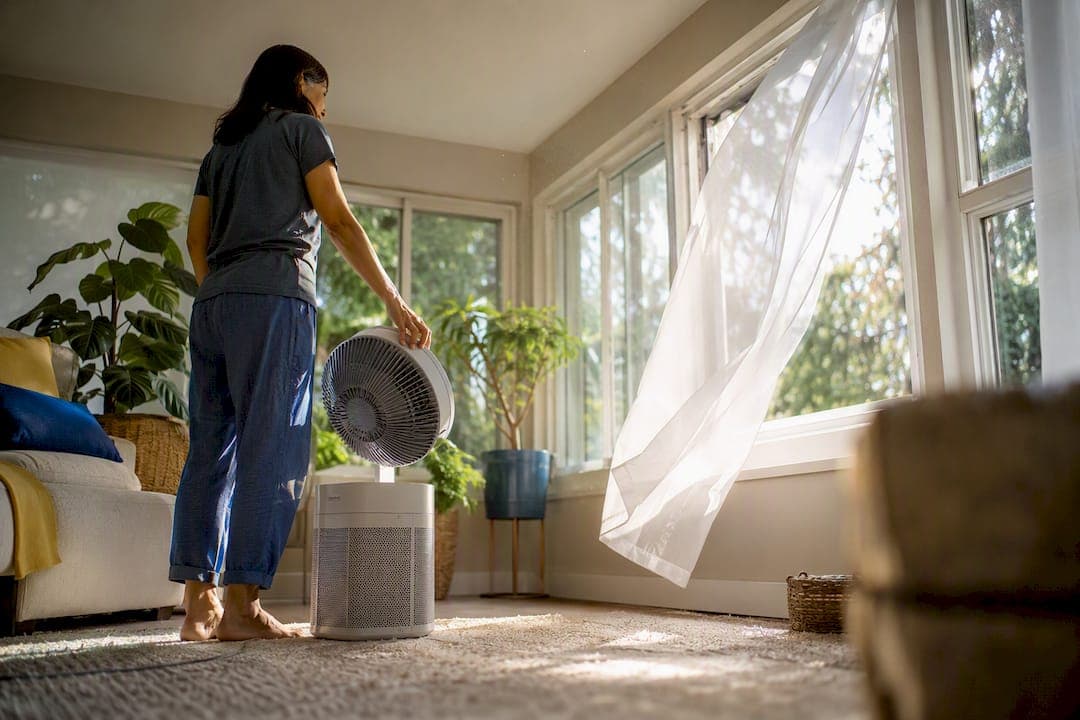
Find the source, remove it, deep-clean anything porous that touched it, neutralize what's left, then ventilate. That order matters. Skip step one and spray fragrance over a hidden problem and the smell always comes back within a day or two.
Two things to try in the next 30 minutes: empty every trash can and hamper in the house (damp fabric and food waste are the most common repeat offenders), then open two windows on opposite sides of the room and run a fan between them for cross ventilation. Odour neutralization isn't the same as masking with fragrance, a distinction the Cleaning Institute explains clearly, and it's the difference between a smell that's gone and one that's just hiding.
Key Takeaways
Lasting odour removal depends on finding and removing the source before any neutralizing product touches the surface.
| Point | Details |
|---|---|
| Source before product | Locate and remove the actual cause before applying any neutralizer or fragrance. |
| Match the method to the odour | Use enzyme cleaners for organic soils, baking soda for general fabric odours, and charcoal for airborne smells. |
| Ventilation supports, doesn't replace | Airflow clears airborne odour but won't fix smells trapped in carpet fibres or drywall. |
| Recheck after 24 hours | A smell that returns after proper cleaning usually means the source wasn't fully addressed. |
| Call a professional when DIY fails twice | Icleansecuc offers targeted extraction and diagnostics for smoke, sewage, pet urine, and hidden mould cases home methods can't resolve. |
Table of Contents
- The 6-step checklist for eliminating odours after cleaning
- How do you find where a smell is actually coming from?
- Cleaning carpets, upholstery, and mattresses so the smell doesn't come back
- What actually neutralizes odours, and what just covers them up
- Does airing out a room really get rid of the smell?
- When should you call a professional cleaner?
- Editorial take: stop treating odour like a fragrance problem
- Get a professional to finish what cleaning couldn't fix
- Sources
The 6-step checklist for eliminating odours after cleaning
Work through this in order. Don't jump to step 4 because it's easier than step 1.
- Localize the source. Walk the room at the time of day the smell is worst.
- Remove the source. Pull out trash, spoiled food, or the soaked item causing it.
- Deep-clean porous materials that absorbed the odour (carpet, upholstery, fabric).
- Neutralize with baking soda, an enzyme cleaner, or activated charcoal depending on the cause.
- Ventilate with open windows or a HEPA-filtered fan to clear airborne residue.
- Re-check after 24 hours. Odours often return faintly before they're fully gone.
Pause between steps 3 and 4. If the smell is still strong after deep cleaning, you likely haven't found the real source yet. Going back to step 1 saves you from wasting product on the wrong spot.
Pro Tip: Keep a small kit on hand: baking soda, an enzyme cleaner, microfiber cloths, and a fan with a HEPA filter. Most home odour problems can be solved with those four things alone.
How do you find where a smell is actually coming from?
Note when the smell is strongest. A stink that spikes after the furnace kicks in points to HVAC or ductwork. One that gets worse after a shower points to a drain or damp wall cavity. Timing narrows the room before you even start sniffing corners.
Run a simple patch test: stand near a suspected source, step away for two minutes to reset your nose, then come back and compare. Your olfactory system fatigues fast, so this rest interval matters more than people expect. InspectApedia's diagnostic approach recommends exactly this kind of stepwise localization before you touch any cleaning product, and a quick log of time, location, and intensity often reveals patterns you'd otherwise miss, like a drain that only smells after use.
Check these hidden spots first:
- Drains: pour a cup of water down slowly floor drains and rarely used sinks dry out and let sewer gas back up.
- HVAC filters: a filter that hasn't been changed in months holds dust, pet dander, and mildew.
- Damp textiles: rugs, curtains, or towels left folded while slightly wet.
- Fridge and small appliances: spoiled food residue lingers longer than people expect.
- Wall cavities: a musty smell with no visible source often means moisture inside a wall.
If the pattern keeps pointing to plumbing, ductwork, or something behind a wall, that's your signal to stop guessing and get a proper inspection.
Cleaning carpets, upholstery, and mattresses so the smell doesn't come back
Porous materials trap odour molecules deep in their fibres, and heat plus moisture actually loosens those molecules back into the air, which is exactly why a damp carpet smells worse before it smells better. Surface cleaning alone rarely fixes this because the source is sitting below what a vacuum or a wipe-down can reach.
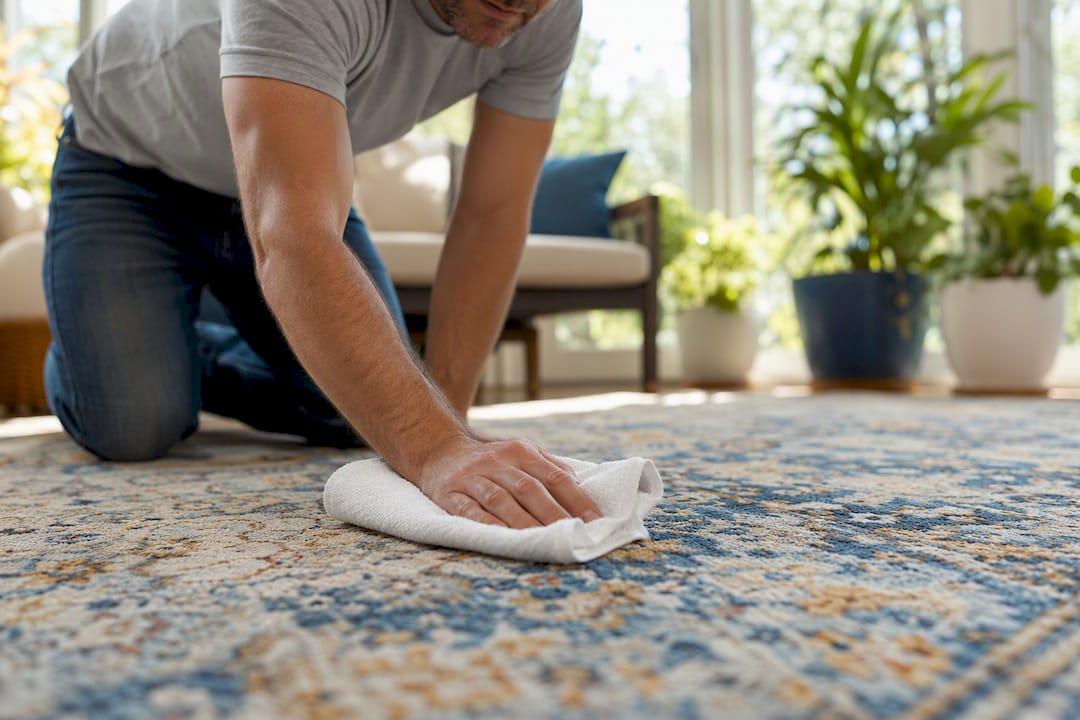
Hot water extraction, commonly called steam cleaning, pushes hot water and cleaning solution deep into carpet and upholstery fibres, then pulls it back out along with the loosened residue. For organic soils like pet urine or food spills, an enzyme cleaner should go on first. Enzymes break down the actual compounds causing the smell rather than just lifting the residue, which is why enzyme-based products outperform standard detergents on persistent organic odours.
For general odour absorption, a baking soda pre-treatment works well:
- Sprinkle a generous layer over the affected fabric.
- Let it sit for at least four hours (overnight is better).
- Vacuum thoroughly, going over the area twice.
- Repeat if any smell remains after the first pass.
Confirm the job worked by letting the material fully air-dry, then doing a smell test up close. If it still smells musty rather than clean, moisture is likely still trapped inside, and that calls for professional hot water extraction rather than another round of home products.
Pro Tip: Press a dry white cloth into the fabric after cleaning. If it comes away with any dampness after 24 hours, the material hasn't fully dried and odour-causing bacteria can still grow.
What actually neutralizes odours, and what just covers them up
Neutralizing means changing or breaking down the odour compound itself. Fragrance just adds another smell on top, and the two can clash badly if you use them out of order, per the Cleaning Institute's explanation of odour chemistry. Each common method works through a different mechanism, and picking the wrong one for the job is the most common reason DIY odour removal fails.
- Baking soda and activated charcoal work through adsorption, meaning odour molecules physically stick to their surface. Good for soft fabrics and enclosed spaces like closets.
- Vinegar changes the pH of certain odour compounds, particularly useful on alkaline smells like fresh pet accidents.
- Enzyme cleaners break down organic matter at the molecular level, making them the strongest option for urine, vomit, or food-based odours.
- Hydrogen peroxide oxidizes odour compounds, which works well on tougher biological stains but needs a patch test first since it can lighten fabric colour.
Never mix strong oxidizers like hydrogen peroxide with ammonia or bleach. The combination can produce toxic fumes, and it won't neutralize odour any faster than using either product on its own.
Test any new product on a hidden patch of fabric before treating the visible area. A method that works on cotton can discolour wool or damage delicate upholstery.
Does airing out a room really get rid of the smell?
Ventilation clears airborne odour but does nothing for smells trapped inside carpet fibres or drywall. It's a supporting step, not a fix on its own.
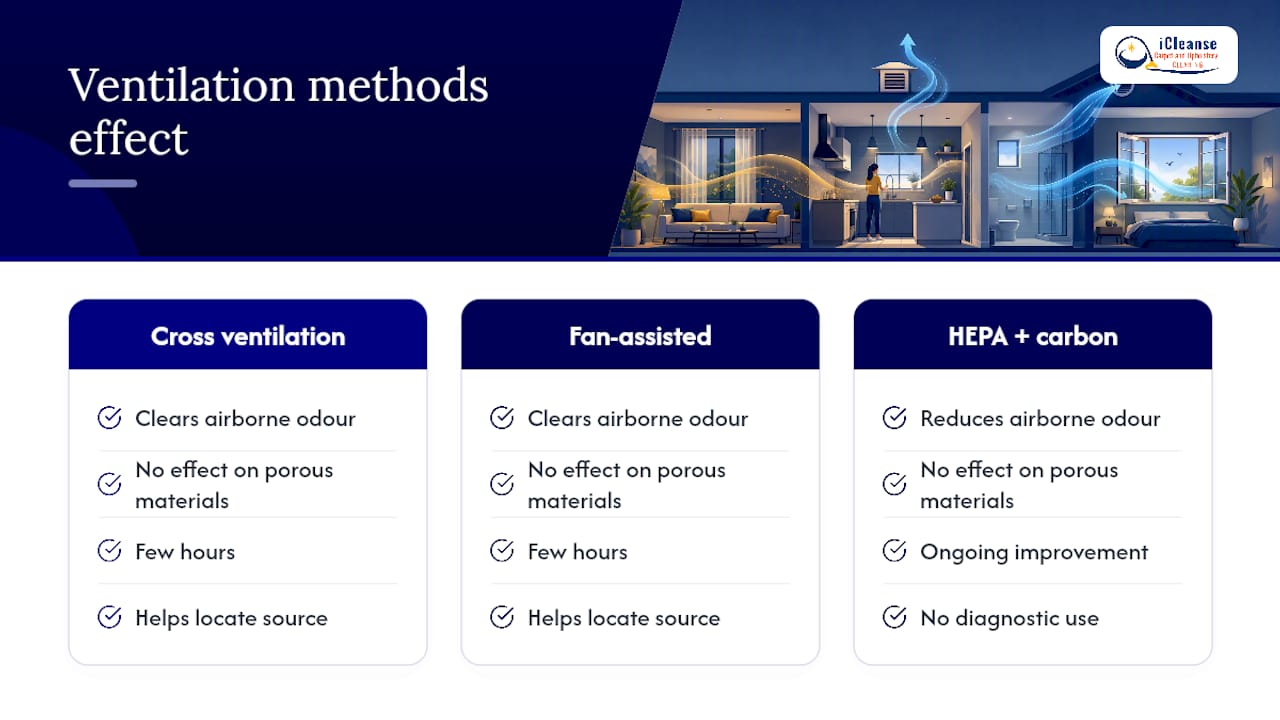
Cross ventilation works best: open windows on opposite walls so air actually moves through the space instead of sitting stagnant near one opening. If outdoor air is too cold, humid, or polluted to open windows, a fan aimed at pulling air toward an exterior door achieves a similar effect.
For ongoing airborne odour, a HEPA purifier with an activated carbon stage helps, since HEPA catches particles while the carbon layer adsorbs odour molecules. It won't touch a smell buried in your carpet's indoor air quality profile if the fibres themselves are contaminated. Some homeowners also find certain indoor plants help with perceived air freshness, though they're a minor supplement, not a substitute for source removal.
Moving air also helps you diagnose. Stand near a running fan and notice where the smell gets stronger as air passes over it. That's often your clearest clue yet.
Expect noticeable improvement within a few hours of ventilation, but a truly musty smell that hasn't budged after two or three days of airing usually means the source is still there.
When should you call a professional cleaner?
Some odours are beyond what baking soda and a fan can fix. Persistent smoke smell soaked into fabric, sewage backups, deep-set pet urine that's reached the carpet backing or subfloor, or any musty smell that suggests hidden mould all call for professional-grade equipment and expertise.
Signs it's time to stop DIYing:
- The smell returns within a day or two of every cleaning attempt.
- You can smell it but can't locate any visible source.
- There's a history of water damage, flooding, or a slow leak in the area.
- Multiple rooms are affected, suggesting an HVAC-wide issue.
A professional visit typically starts with a proper diagnostic walk-through, followed by targeted extraction using commercial-grade equipment, the right deodorizing agent for the specific contaminant, and a follow-up check to confirm the smell hasn't returned. Icleansecuc handles exactly this kind of persistent, source-based odour problem across carpet, upholstery, and tile, including tricky cases like smoke odour trapped in upholstery fibres.
Pro Tip: If you've tried the full 6-step checklist twice with no lasting improvement, stop repeating it. A recurring smell after proper cleaning is the clearest sign the source hasn't actually been found.
Editorial take: stop treating odour like a fragrance problem
Most odour advice online treats the whole process as a shopping decision. Which spray, which candle, which "odour eliminator" off the shelf. That framing gets the order backwards. The research here is consistent: neutralization is a chemical process, not a preference, and it only works once the actual source is gone.
The conventional advice fails most often on timing. People neutralize before they've located the source, so the smell fades for two days and comes back. A diagnostic log of when and where a smell peaks does more for a stubborn odour problem than any product swap, and it costs nothing but a few minutes of attention.
What the reader should prioritize first isn't the neutralizer at all. It's the walk-through. Spend fifteen minutes finding the source before opening a single bottle. If that walk-through keeps leading back to a wall cavity, a drain, or a carpet that never fully dries, that's not a product problem anymore. That's a job for someone with an extraction machine and a moisture meter, not another can of spray.
— Rob
Get a professional to finish what cleaning couldn't fix
If you've worked through the source-first checklist and the smell is still there, the problem usually sits deeper than home tools can reach, in carpet backing, upholstery padding, or grout that's held moisture for months. Icleansecuc handles that layer directly with commercial-grade hot water extraction and eco-friendly deodorizing treatments matched to the actual contaminant, not a generic fragrance spray.
This fits homeowners, tenants, and landlords across the Greater Toronto Area dealing with pet odour that won't lift, musty carpet after a leak, or a rental that needs to smell genuinely clean before a new tenant moves in. Icleansecuc's team diagnoses the source first, the same principle this whole article is built on, then treats it with the right method instead of guessing. If your own checklist hasn't worked after two attempts, request a quote and get a technician to find what's actually causing it.
Sources
- Ask ACI: Odor Neutralization
- InspectApedia: Odor diagnosis steps
- Peer-reviewed article on odour/chemical behaviours and remediation techniques