
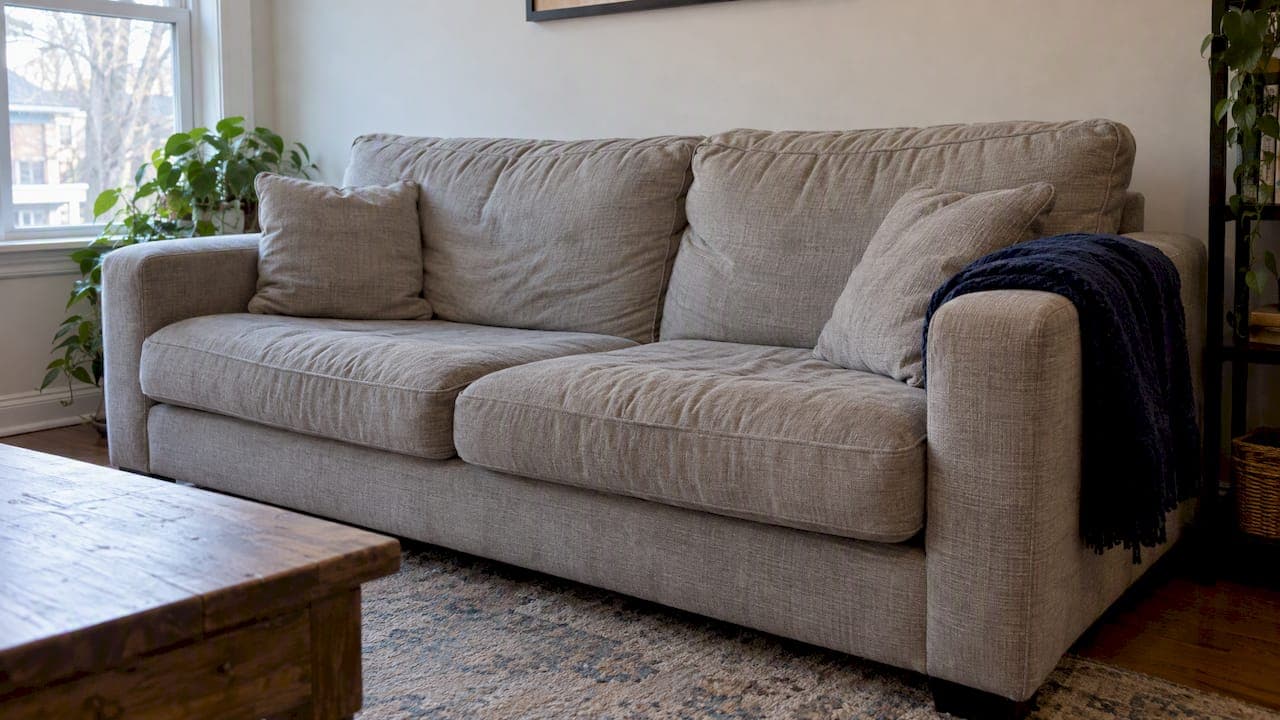
Vacuum your sofa weekly and book a professional deep clean every 6 to 24 months, depending on how hard it works. Light use in a dust-free home can stretch toward the long end of that range. Pets, allergies, young kids, or daily heavy use push you toward the shorter end, sometimes every 6 months, with spot cleaning in between whenever something spills.
TL;DR:
- Use a HEPA filtered vacuum on upholstery seams and beneath cushions, and rotate reversible cushions weekly to limit hidden debris and uneven wear.
- Rarely used sofas need professional cleaning every 18 to 24 months, daily use about yearly, and pets or allergies every 6 to 12 months.
- Vacuum before low moisture spot cleaning because soaking fabric can leave cushion foam damp for too long and cause odors or mold.
- Blot spills from the outside inward, test new cleaners on hidden fabric, and hire a professional for pet urine or suspected mold.
- Leather needs weekly wiping and a leather care and conditioning treatment every few months, while delicate fabrics need gentle vacuuming to avoid fiber wear.
Table of Contents
- Routine maintenance schedule: daily, weekly and monthly tasks
- Deep-clean schedule: timelines for professional cleaning and acceptable DIY intervals
- Triggers to clean sooner: stains, odours, allergy flare-ups and visible wear
- What professional upholstery cleaning does and why it helps
- Does leather need cleaning as often as fabric?
- A simple routine that actually works
- Ready for a professional deep clean?
- FAQ
- Sources
Routine maintenance schedule: daily, weekly and monthly tasks
A sofa collects skin cells, dust, pet dander, and crumbs faster than most people notice, and routine upkeep is what keeps that buildup from turning into a deep-clean emergency. The baseline habit is weekly vacuuming with a vacuum equipped with a HEPA filter, which traps dust mites and dander instead of blowing them back into the air you breathe.
Daily habits matter too, especially in busy households:
- Brush off crumbs and loose debris after meals eaten on the couch.
- Blot any spill immediately with a clean cloth rather than letting it sit.
- Shake out or fluff cushions before the end of the day.
On a weekly basis, work the vacuum's upholstery attachment into seat faces, arm rests, crevices, and the gaps under and around cushions, where dust and food particles settle out of sight. Rotate or flip reversible cushions weekly to spread out wear so one section does not flatten or fade faster than the rest.
Monthly, go a step further: pull the cushions off entirely for a deeper vacuum pass on the frame underneath, and check care labels on removable covers before laundering them. Some fabric covers are machine washable, others need dry cleaning only, so the tag on the cushion seam is worth reading before you toss anything in the wash.
Pro Tip: Keep indoor humidity between 35% and 50% where possible. Health Canada notes this range helps limit dust mite and mould growth on upholstered furniture, which means less work for your vacuum over time.
Deep-clean schedule: timelines for professional cleaning and acceptable DIY intervals
Weekly vacuuming handles surface debris, but it cannot touch the oils, skin cells, and dander that bind to fabric fibres over months of use. That is the job of a proper deep clean, and how often you need one depends almost entirely on how hard your sofa works.
A practical breakdown by use level:
- Light use (a guest room sofa, rarely sat on): every 18 to 24 months.
- Moderate use (a family living room sofa used daily): around every 12 months.
- Heavy use, pets, or allergy-sensitive households: every 6 to 12 months.
Professional hot-water extraction, or HEPA-assisted extraction, reaches soil that sits deep in the fibres rather than just on the surface, and it does so without oversaturating the fabric. That matters because deep-seated oils and dander are the hardest contaminants to shift with a home vacuum or a spray bottle alone.
A careful DIY approach is reasonable between professional visits, as long as you stick to light, low-moisture spot cleaning rather than soaking the fabric. Oversaturation can seep into cushion foam and padding, leading to slow-drying dampness, odour, or even mould. Abrasive scrubbing is another common mistake. The Canadian Conservation Institute notes that mechanical surface cleaning should match the textile's condition, since frequent aggressive cleaning can grind gritty particles into the pile and accelerate wear. Vacuum first, always, before any wet cleaning, so loose grit does not get rubbed into the fabric during the wet step.

Triggers to clean sooner: stains, odours, allergy flare-ups and visible wear
Some situations call for cleaning outside your regular schedule. Here is how to respond when they come up:
- Fresh spills: blot immediately with a clean, dry cloth, working from the outside of the stain inward. Never rub, since that pushes liquid deeper into the fibres and widens the stain.
- Unknown stains or new cleaning products: test on a hidden patch, like the back or underside of a cushion, before applying anything to a visible area.
- Pet urine, strong odours, or suspected mould: call in a professional rather than masking the smell with a spray. These situations often involve contamination below the surface that home methods cannot fully remove.
- Worsening allergy symptoms: increase vacuuming frequency and move up your next professional clean. A quick guide to pet dander removal covers steps specific to pet-related allergen buildup in upholstery.
What professional upholstery cleaning does and why it helps
Professional cleaners rely on a few core methods depending on the fabric and the soil involved. Hot-water extraction forces heated water and cleaning solution into the fibres, then pulls it back out along with loosened dirt. HEPA-assisted extraction adds filtration that captures fine particles like dander and dust mite debris during the process. For delicate or moisture-sensitive materials, low-moisture or dry foam methods clean the surface without risking oversaturation, and targeted spot treatment handles isolated stains without a full clean.

These methods matter most for deep-seated soil and allergens that routine vacuuming cannot reach. A professional visit is the practical choice when a sofa has gone past the 12 month mark, when pets or allergies are in play, or when a stain has set in deep enough that spot cleaning is not enough.
When booking a service, a few questions are worth asking:
- What equipment is used, and does it include HEPA filtration?
- Are the cleaning solutions eco-friendly and safe for pets and kids?
- Is there a satisfaction guarantee if the result does not meet expectations?
Pro Tip: Ask about drying time before booking. A fast-drying method means less time your sofa sits damp and vulnerable to odour or mould.
We offer upholstery-friendly room packages as part of our residential cleaning services, using professional-grade equipment and eco-friendly solutions across the Greater Toronto Area.
Does leather need cleaning as often as fabric?
Upholstery material changes the cleaning math. Fabric sofas, especially woven or textured ones, trap dust, dander, and oils deep in the weave, which is why they need weekly vacuuming and a professional deep clean on the 6 to 24 month schedule outlined above.
Leather behaves differently. It does not trap dust the way fabric does, so a weekly wipe with a dry or slightly damp cloth usually handles surface dust, and a deeper leather-specific clean and conditioning treatment every few months keeps the material from drying out or cracking. Leather does not absorb spills the way fabric does, which makes spot response easier, but it is more sensitive to heat, direct sunlight, and harsh chemical cleaners.
Delicate natural fabrics, like linen blends or loosely woven textures, sit at the other end of the spectrum. They need gentler, less frequent mechanical cleaning since aggressive vacuuming or scrubbing can wear down the fibres faster than on a sturdy synthetic blend. Identifying which fabrics count as delicate before choosing a cleaning method helps avoid accidental damage. Synthetic blends and microfibre tend to be the most forgiving, tolerating more frequent cleaning without showing wear.
A simple routine that actually works
Most households do fine with one plan: vacuum weekly, spot-clean within 24 hours of any spill, and book a professional clean around the 12 month mark, moving earlier with pets, allergies, or heavy daily use. The only real mistake is over-cleaning a delicate fabric out of habit. Match your routine to what the fabric can actually handle, not just the calendar.
— Rob
Ready for a professional deep clean?
If your sofa is past its 12 month mark, or pets and allergies have pushed it there sooner, a professional visit clears out what weekly vacuuming cannot reach. We use eco-friendly solutions and professional-grade extraction equipment, with upfront pricing and a focus on getting it right the first time.
- Living room, master bedroom, and regular room packages for standard upholstery and flooring needs.
- Heavy and light traffic area carpet cleaning for homes with pets or high foot traffic.
- Rug cleaning sized to material, from synthetic blends to wool and Persian rugs.
When you book, expect a visit focused on your specific fabric and soil level, not a one-size-fits-all pass. Request a quote and we will walk you through what your space needs.
FAQ
How often are you supposed to wash your couch?
Vacuum weekly and plan on a full wash or professional deep clean every 6 to 24 months, depending on use. Pets, allergies, or daily heavy use call for the shorter end of that range.
What is the 5-5-5 rule for cleaning?
There is no single, widely recognized definition of a "5-5-5 rule" for sofa or upholstery cleaning. If you have seen it referenced, it likely points to a general tidying habit rather than an established upholstery care standard.
What is the 2/3 rule for sofas?
Definitions vary and no standard source defines a "2/3 rule" specific to sofa cleaning frequency. It may refer informally to seating proportions or furniture sizing rather than a cleaning schedule.
Can a couch last 30 years?
A well-built sofa can last for decades with consistent care, including weekly vacuuming, prompt stain response, and routine professional deep cleaning. Longevity depends more on frame quality, cushion materials, and maintenance habits than on age alone.