
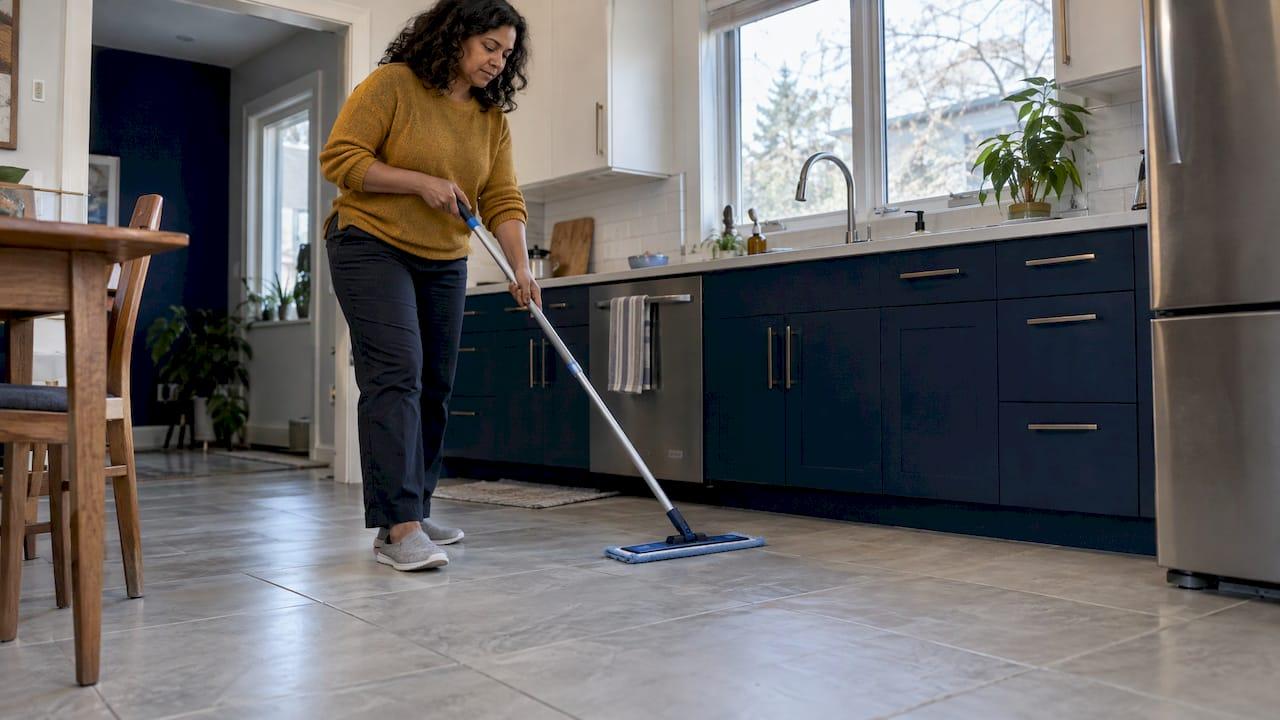
Porcelain tile is clean when you remove dry grit first, wash with a pH-neutral cleaner in warm water, then rinse with clear water and dry. Most streaks and dull patches come from leftover detergent, oily or waxy products, or dirty mop water pushed into the grout. This guide covers the method, the products to keep away from porcelain, grout care, outdoor tile, and how to tell when a floor needs professional cleaning.
TL;DR
- Sweep or vacuum first, wash with a pH-neutral cleaner, then rinse with clear water and dry with microfiber.
- Keep ammonia, bleach, acids, wax and oil-based products off porcelain, along with steel wool and abrasive pads.
- Grout is porous, so it darkens long before the tile does. It needs its own attention.
- A deep clean every three to six months is a common rule of thumb, or sooner when mopping stops giving clean results.
- When grout stays grey after a proper wash, our team in the GTA can deep clean it with commercial equipment.
Table of Contents
- Why porcelain still needs the right method
- What you need
- Step-by-step: how to clean porcelain floors
- Match the method to the finish
- What to keep off porcelain
- Cleaning grout without damaging the tile
- Cleaning outdoor porcelain: patios and terraces
- How often to clean porcelain tile
- When professional porcelain tile cleaning makes sense
- Our perspective
- Professional tile and grout cleaning across the GTA
- FAQ
- Sources
Why porcelain still needs the right method
Porcelain is dense and hard wearing, which is why it is so popular in Ontario kitchens, entryways and bathrooms. Hard wearing does not mean damage proof. Daltile notes that porcelain resists scratches, etching and stains, but it is not damage proof, and polished tile in particular picks up fine scratches and stains more readily. Their advice is to keep dust and sand off the floor and clean it promptly.
That matters in the GTA, where winter brings salt, sand and slush through the door for months. Grit works like sandpaper underfoot. The first step of any cleaning routine is removing it dry.
What you need
A short kit covers nearly every porcelain floor. Based on StoneFunTek's routine cleaning list, gather:
- A soft broom or a vacuum with a hard-floor attachment
- A clean microfiber mop or cloth
- A bucket and a measuring cup, so you dilute the cleaner exactly as the label says
- A second clean mop pad or cloth for rinsing
- A soft nylon brush for textured tile or sound grout
Steel wool, metal brushes, wax cleaners and unapproved abrasive pads stay out of the routine.
Step-by-step: how to clean porcelain floors
- Remove dry debris. Sweep with a soft-bristle broom or vacuum on the hard-floor setting. Never use a vacuum with a beater bar on tile.
- Mix a pH-neutral cleaner. Follow the label dilution. More product does not clean better, it leaves film. Atlas Concorde recommends warm water and a neutral detergent made for stoneware, avoiding oily or waxy products that can leave streaks.
- Damp mop in sections. Wring the mop well and change the solution as soon as it looks dirty. Dirty water spreads soil and can settle in grout lines.
- Rinse with clear water. Atlas Concorde is clear that you should always rinse to remove detergent residue. Daltile adds that cleaners that do not require rinsing can leave a residue that reduces slip resistance.
- Dry. Let the floor air dry or buff it with a clean, dry microfiber cloth. This prevents water spots and the cloudy film that makes a clean floor look dirty.
Why streaks appear
Streaks nearly always come from one of three things: too much cleaner, no rinse, or a mop that is already dirty. If your floor looks hazy after cleaning, wash it once with plain warm water and a clean microfiber pad, then dry it. Many floors come back without any stronger product.

Match the method to the finish
Porcelain is not one surface. The finish changes how you clean it. StoneFunTek's finish guidance, summarized:
| Finish | Approach |
|---|---|
| Smooth glazed | Microfiber and an approved neutral cleaner. Check the finish instructions even if it looks matte. |
| Polished | Remove grit gently, rinse, then dry with microfiber. Confirm any factory treatment and sealer requirements. |
| Textured | Use a suitable nylon brush for the low points, and lift the dirty liquid before it settles back into the relief. |
Polished porcelain shows every swirl and scratch, so grit removal matters most there. Textured and stone-look porcelain hides footprints but holds dirt in its relief, so it benefits from a soft brush and a good rinse.
What to keep off porcelain
Manufacturers agree on most of this list. Emser Tile says porcelain should not be cleaned with ammonia, bleach or acid cleaners, and that wax or oil-based products should be avoided. It also warns that steel wool and abrasive pads can scratch tile and leave rust stains in grout. Daltile adds that chemicals containing fluorine compounds damage ceramic, glass and stone.
Vinegar is the common kitchen-cupboard question. Because vinegar is acidic, it can affect cement-based grout, some sealers and nearby fittings, so it is not a good everyday floor cleaner. A pH-neutral product is the safer default.
Sealing: Maline Tile advises against sealing or using acid-based cleaners on glazed ceramic or porcelain tiles. Sealing relates to the grout joints and to unglazed or specially treated surfaces, so follow your tile manufacturer's instructions.

Cleaning grout without damaging the tile
Grout is where most porcelain floors really show their age. It is far more porous than tile, so it absorbs grime, oils and moisture quickly, which is why grout discolours long before the tile looks dirty. Mopping alone often cannot lift soil that has settled deep into the joints.
A safe approach for light to moderate grout soil:
- Apply a non-acidic grout cleaner made for porcelain and ceramic. For example, FILA describes its GROUTRENEW as non-acidic, so it does not harm the grout or tile glaze.
- Let it dwell for the time on the label.
- Scrub gently along the joint with a soft nylon brush. Skip wire brushes, which can scratch polished porcelain.
- Rinse thoroughly with clear water and dry.
For heavily stained grout, diluted oxygen bleach or a commercial grout cleaner rated for porcelain is often suggested, since porcelain is less porous than ceramic and tolerates slightly stronger products. That is also the point where many homeowners choose to hand the job over, because grout that has darkened for years usually needs more than a surface scrub.
If the haze you see is a cloudy film left from installation, read our guide to grout haze removal. For mould or mildew on grout in a bathroom, see our advice on cleaning grout mould with Canadian health guidance, and for larger areas our note on shower grout mould removal.
Cleaning outdoor porcelain: patios and terraces
Porcelain pavers and patio tiles can be pressure washed, but only gently. Joint-It's guidance is to keep pressure below 2000 PSI, use a wide-angle nozzle held 12 to 18 inches away, and keep the nozzle moving. Installer guides are stricter: Belgard's porcelain paver guide specifies a low-pressure washer with a maximum of 1600 PSI and care around grout on adhesive and grout installations. When the two differ, follow the lower figure and your installer's instructions.
Other precautions:
- Sweep loose debris first and rinse well afterwards.
- Aim high-pressure water away from grout lines and sand or polymeric joints.
- In Canadian conditions, avoid cleaning when the surface is below freezing or in direct sun and heat.
- Do not pressure wash indoor tile.
How often to clean porcelain tile
A routine that fits Ontario homes, following Canadian North Tile's maintenance schedule:
| Frequency | Task |
|---|---|
| Daily or every few days | Five minutes with a soft broom or hard-floor vacuum, especially at entrances |
| Weekly | Vacuum, then damp mop with pH-neutral cleaner in sections, and dry |
| Every 3 to 6 months | Deep clean, or sooner when mopping no longer leaves the floor looking clean |
Martha Stewart's advice is to use a spray mop with a hard surface cleaner once a week, noting that dirty bucket water can seep into grout lines and leave residue. Either method works if the water stays clean and you rinse.
If you want a plan for the grout itself, our tile and grout maintenance schedule explains resealing intervals.
When professional porcelain tile cleaning makes sense
The deep clean is where professional equipment earns its place. Professional tile and grout cleaning uses specialized equipment, solutions and controlled processes to deal with soil and residue that mopping and hand scrubbing may not fully remove, especially within porous grout lines.
Book a professional clean when:
- Grout stays grey or brown after a proper wash and rinse
- The floor looks hazy or sticky even after a plain-water rinse
- You are preparing a home for sale, a rental turnover or a move-out
- You have a large area, such as a basement recreation room, a full main floor or a commercial entrance
- You want the tile and grout protected after cleaning
For restaurants and food premises, we also wrote a tile and grout cleaning checklist for CFIA inspections. If you have glazed ceramic as well as porcelain, see our guide to protecting ceramic tile glaze.
Our perspective
Most porcelain floors that come to us are not ruined. They are coated. Years of a little too much cleaner, a mop that was never quite clean, and salt tracked in every winter build up in the tile surface and especially in the grout.
That is why we treat tile and grout as one job. We use commercial-grade equipment and eco-friendly cleaning solutions to lift embedded soil, and we offer cleaning on its own, cleaning with a protector, or cleaning with a sealer, so you pay for what your floor needs. Our prices are published up front, and we stand behind the work with a satisfaction guarantee.
Our advice is simple: keep up the weekly routine above, and book a deep clean when grout stops responding. A clean floor is easier to keep clean, and a protected one stays that way longer.
Rob
Professional tile and grout cleaning across the GTA
We clean porcelain and ceramic tile and grout for homeowners, landlords, tenants and businesses in Toronto, Markham, Richmond Hill, Vaughan, Aurora, Whitby, Ajax, Pickering, Mississauga and nearby communities.
Our tile and grout cleaning page lists three options:
| Service | Published price |
|---|---|
| Tile And Grout Cleaning Only | $0.80 |
| Tile and Grout + Protector | $1.00 |
| Tile And Grout Cleaning + sealer | $1.30 |
The page shows how each rate is applied. For a firm number on your floor, request a quote and we will confirm the details with you.

If you also have carpets, rugs or stairs in the same visit, our residential cleaning page shows room-by-room pricing, so one appointment can cover the whole home.
FAQ
What is the best way to clean porcelain tiles?
Sweep or vacuum, damp mop with a pH-neutral cleaner diluted to the label, rinse with clear water and dry with microfiber. Rinsing is the step most people skip, and it is what prevents streaks and film.
What should you not use on porcelain tile?
Avoid ammonia, bleach, acid cleaners, wax or oil-based products, and cleaners containing fluorine compounds. Also keep steel wool, metal brushes and abrasive pads away from tile and grout, since they can scratch tile and leave rust stains in grout.
Can you pressure wash porcelain tile?
Outdoors, yes, with care. Use a low-pressure setting, a wide-angle nozzle, a safe distance and smooth strokes, and keep the spray off grout lines. Installer guides cap pressure at around 1600 PSI for porcelain pavers, and indoor tile should not be pressure washed.
How do you clean grout between porcelain tiles without damaging it?
Use a non-acidic grout cleaner made for porcelain, let it dwell, scrub gently with a soft nylon brush and rinse thoroughly. Avoid wire brushes and acid products. For grout that stays stained, professional cleaning reaches soil that surface scrubbing leaves behind.
How often should porcelain tile be deep cleaned?
Every three to six months is a common guideline, or whenever routine mopping no longer leaves the floor looking clean. Entryways and kitchens in busy homes may need it more often than bedrooms or powder rooms.
Sources
- How to Clean Porcelain Tiles, Atlas Concorde
- How to Clean Porcelain Tile: Finishes, Stains & Grout, StoneFunTek
- Care and Maintenance, Maline Tile
- Ceramic & Porcelain Tile Care & Maintenance, Daltile
- Care and Maintenance, Emser Tile
- How to Clean Tiles: Safe Cleaning & Maintenance Guide, Discount Tiles
- GROUTRENEW grout cleaner, FILA Solutions
- Tile Grout Cleaner: Best Methods for Every Surface, GroutCleaner.com
- Can You Pressure Wash Porcelain Patio Tiles?, Joint-It
- Porcelain Pavers Installation Guide, Belgard
- How Do I Maintain Porcelain Slabs in Canadian Climate?, Edison Stone
- How Do You Clean Porcelain Tile, Canadian North Tile
- How to Clean Porcelain Tile Safely and Effectively, Martha Stewart