
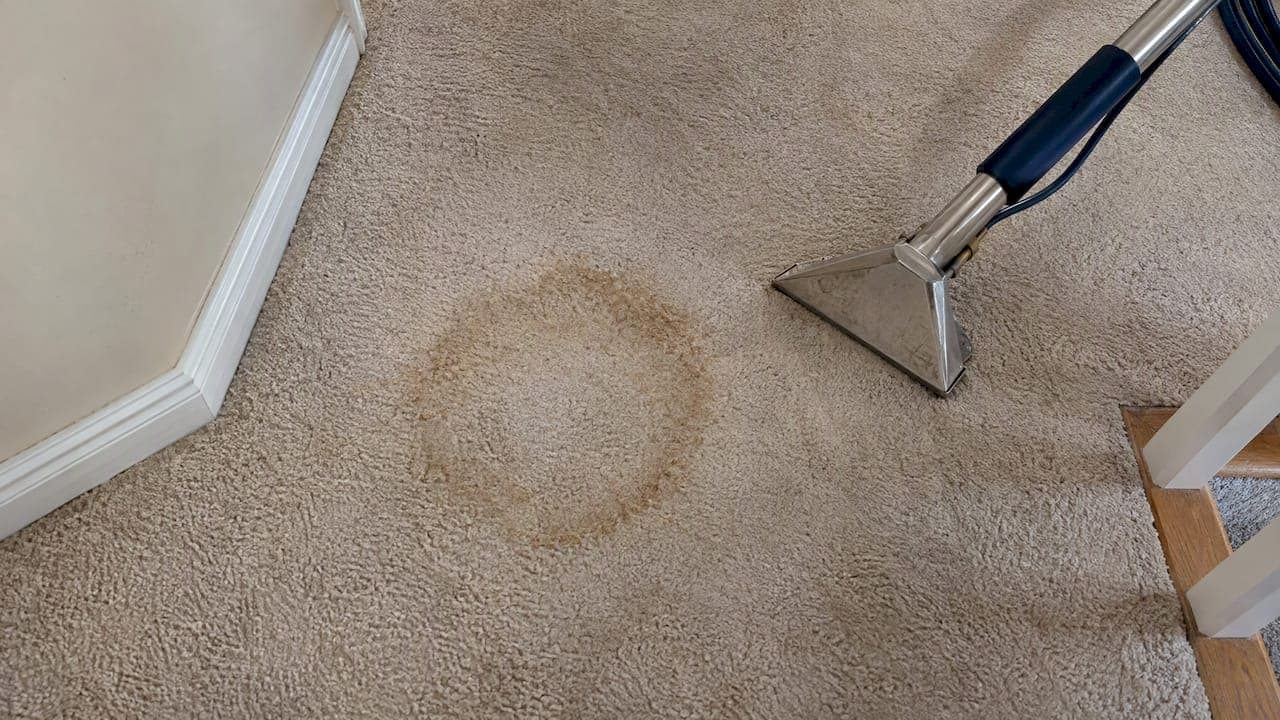
Most carpet browning after cleaning comes from wicking or a fibre reaction, not permanent dye damage. Wicking happens when deep soil and residue rise to the fibre tips as the carpet dries slowly, while natural fibres can darken through cellulosic browning. The safest first move is to speed up drying with fans and skip extra detergent or bleach. Health Canada flags damp carpet as a mould risk, so drying fast matters more than scrubbing.
TL;DR:
- Even browning across cleaned areas or seams usually signals wicking; isolated patches suggest another stain, while wool, cotton, viscose, and jute can develop fibre browning.
- Test a hidden spot with diluted vinegar only if the carpet is not wool or viscose; stop if the color shifts or fibers weaken.
- Run fans and a dehumidifier, avoid adding water or scrubbing, and dry the carpet quickly; damp carpet and padding can develop mold within 48 hours.
- Choose a carpet neutralizer over bleach; seek professional help for recurring or widespread browning, visible mold, or a persistent musty odor.
Table of Contents
- Common causes of carpet browning
- How to tell which type of browning you're dealing with
- How to safely treat browning after cleaning
- Drying and aftercare to stop browning from coming back
- When browning might mean mould, not just wicking
- A professional's take on preventing recurring browning
- Getting stubborn browning corrected professionally
- FAQ
- Sources
Common causes of carpet browning
Carpet browning usually traces back to one of a handful of mechanisms, and knowing which one you're dealing with changes how you fix it.
Wicking is the most common culprit. During cleaning, moisture pushes soil, old spill residue, and cleaning solution down into the carpet backing and pad. As the carpet dries, that moisture travels back up through the fibres by capillary action and deposits everything it carried at the tips, leaving a brown or yellow ring right where the carpet looks cleanest. Industry practitioners describe this as the leading cause of post-cleaning discolouration, worsened by over-wetting and incomplete extraction.

Cellulosic browning is a separate issue tied to the fibre itself. Plant-based materials such as cotton, jute, and viscose contain natural sugars that oxidize and darken when exposed to heat and moisture, which is why older rugs with jute backing are especially prone to it.
A few other mechanisms contribute as well:
- Alkaline residue: leftover high-pH detergent raises the carpet's surface pH and triggers yellowing or browning as it dries.
- Over-wetting: too much water during cleaning extends drying time and gives wicking more opportunity to occur.
- Hard water deposits: mineral content in rinse water can react with fibres and leave discolouration behind.
- Backing reactions: older jute or latex backings can release lignin or alkaline compounds that migrate to the surface during evaporation.
How to tell which type of browning you're dealing with
A few quick checks can narrow down the cause before you touch any cleaning product.
Look at the pattern first. Browning spread evenly across the whole cleaned area, especially along seams or high-traffic paths, points to wicking. Isolated patches in one spot are more likely a residual stain or a dye reaction unrelated to the cleaning process itself, closer to colour bleeding than browning.
Fibre type matters too:
- Wool, cotton, viscose, and jute-backed rugs are the most likely to show cellulosic browning.
- Synthetic fibres like nylon or polyester more often wick but rarely brown from the fibre itself.
- A musty smell or carpet that stays damp suggests mould rather than ordinary wicking.
Pro Tip: Before treating the whole area, dab a small, hidden section with a diluted white vinegar solution and watch for colour change; skip this test entirely on wool or viscose, where acids can affect the dye.
If a patch test makes the colour worse or the fibres feel weak or sticky, stop and call a professional rather than continuing on your own.
How to safely treat browning after cleaning
Speed is the priority before any product touches the carpet. Get air moving with fans, bring in a dehumidifier if you have one, and resist the urge to add more water or shampoo, since that only feeds the wicking cycle.
Once the carpet is mostly dry, work through these steps:
- Blot the browned area with a clean, dry towel to lift any surface moisture.
- Test a hidden spot with a mild, diluted acid rinse, such as a weak white vinegar solution, to check for colour change.
- If the fibre tolerates it, apply the diluted acid rinse to the browned area to neutralize alkaline residue, then blot again.
- For organic soil causing cellulosic browning, a gentle oxidizing treatment can help, though it should be tested first and avoided on wool.
- Let the area dry fully and check again; wicking stains often look worse right after treatment and fade as moisture fully clears.
Formulated neutralizers built for this exact problem, sometimes called "brown-out" treatments, tend to work more reliably than household bleach, which can damage or discolour wool and viscose outright.
Pro Tip: Never scrub a browned spot. Scrubbing pushes soil deeper into the backing and can fray fibres, making the stain harder to remove later.
Avoid high water pressure during any follow-up cleaning, since it drives moisture and soil further down rather than lifting it out.
Drying and aftercare to stop browning from coming back
Fast, even drying is what actually prevents browning from returning, and it's also what keeps mould from taking hold. Health Canada notes that mould can begin developing in damp carpet and padding within 48 hours, which makes drying time a health consideration, not just a cosmetic one.
A few practical steps cut drying time significantly:
- Run a dehumidifier in the room and place air movers at floor level, angled across the carpet.
- Lower extraction pressure on any follow-up cleaning pass to avoid pushing more water into the pad.
- Lay absorbent cotton towels over damp spots and weight them down to pull moisture upward, a technique the Canadian Conservation Institute recommends over pressing moisture deeper.
- Vacuum lightly once the carpet is completely dry, and hold off on applying any protector until the pH is neutral.
Our post-cleaning care guide and our breakdown of reducing drying time both cover these techniques in more detail. If a section stays wet longer than expected, consider lifting the padding underneath or isolating that area until it's fully dry.
When browning might mean mould, not just wicking
Visible mould growth, a persistent musty smell, or damp padding point to something more serious than wicking. Health Canada advises pulling affected carpet and padding away from walls for airflow, or discarding them when mould is visible or the odour persists.
If you suspect mould, isolate the area, skip heat-only drying methods that can spread spores, and bring in a licensed mould assessment professional to evaluate the extent before deciding whether to clean or replace.
A professional's take on preventing recurring browning
Technicians control water pressure, rinse pH, and airflow in ways that cut wicking risk significantly compared to a typical home cleaning setup. Targeted neutralizing treatments also lower the odds of browning reappearing weeks later. That said, expectations should stay realistic: synthetic carpet generally responds better than wool or viscose, and some older rugs need specialist handling no matter how carefully they're treated.
— Rob
Getting stubborn browning corrected professionally
When browning keeps coming back or covers a wide area, a controlled professional visit solves what fan-and-vinegar fixes often can't. We provide professional carpet cleaning to help address stubborn browning.

Depending on what's affected, that might mean:
- Residential carpet cleaning for living rooms, bedrooms, hallways, and stairs.
- Area rug cleaning suited to the specific fibre, whether wool, viscose, or synthetic.
- Targeted spot correction for stubborn browning that's resisted earlier attempts.
If browning has come back more than once or covers a large section of carpet, request a quote and we'll assess the cause before recommending the right fix.
FAQ
How to get rid of carpet browning after cleaning?
Speed up drying with fans or a dehumidifier first, since most browning is wicking that fades as moisture clears. If it doesn't fade, a diluted acid rinse tested on a hidden spot can neutralize residue, but a formulated neutralizer built for this problem works more reliably than household products.
Why is my carpet still stained even after I cleaned it?
The stain you're seeing after cleaning is often wicking, where old soil or residue trapped deep in the carpet rises to the surface as it dries. It can also be leftover alkaline detergent residue that wasn't fully rinsed out during the cleaning process.
How can I remove cellulosic browning stains from my carpet?
Cellulosic browning, common on wool, cotton, and jute-backed rugs, responds best to a careful, tested treatment rather than bleach, which can damage natural fibres. A mild oxidizing or neutralizing treatment applied by hand after a patch test is the safer route, and heavily affected natural-fibre rugs often need professional handling.
Can you fix discoloration on carpet?
Most browning is correctable once you identify whether it's wicking, cellulosic browning, or residue-related yellowing. Isolated colour loss from a chemical reaction is a different problem, closer to colour bleeding than browning, and may need professional colour restoration instead of a neutralizing rinse.