
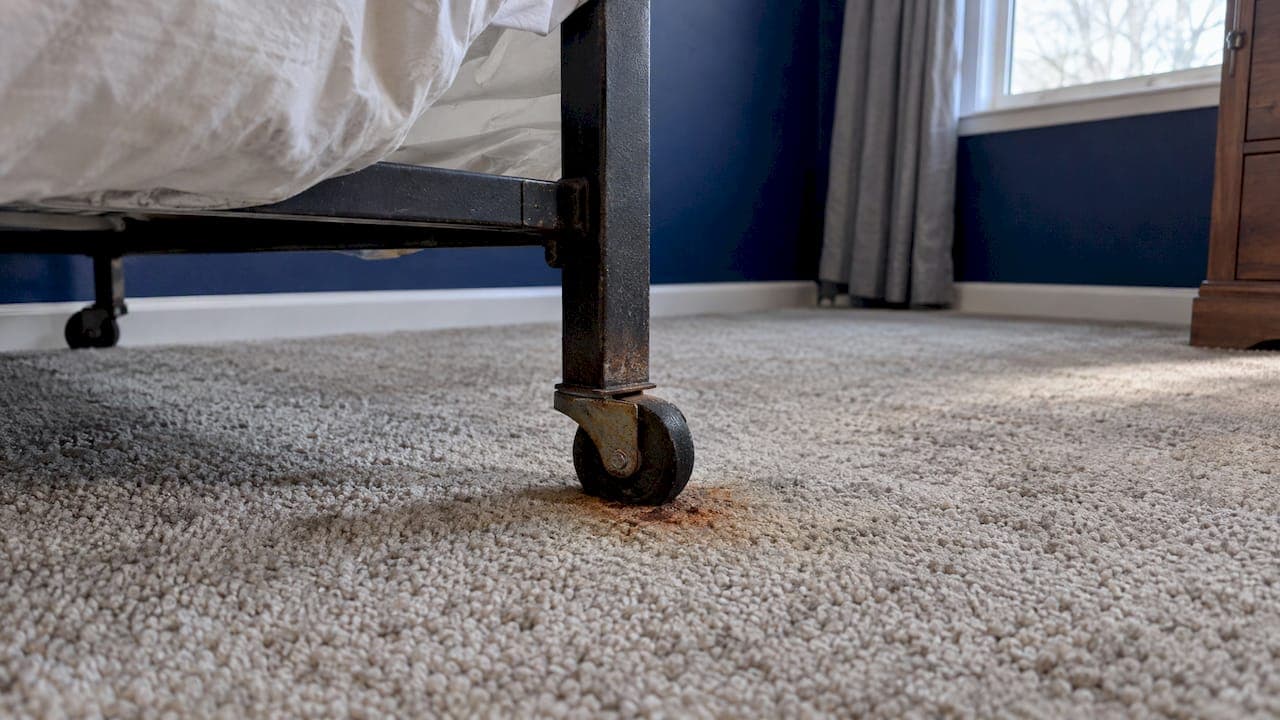
A rust stain on carpet comes out best when you act while it is fresh, blot instead of rubbing, and test every product on a hidden spot first. Light stains often lift with a mild acid such as lemon juice or a dedicated rust remover. Stains that have dried, spread, or sit on wool, silk or a pale carpet are better left to a professional extraction. Bleach is the one thing to keep away from rust, because it can lock the stain in for good.
Below you will find the steps in the right order, what each product does to the fibres, how to handle orange stains on grout, and how to tell when a spot has moved beyond a home fix.
TL;DR
- Remove loose rust by vacuuming or lifting it gently, then blot from the outside of the stain toward the centre. Never scrub.
- Test any remover on a hidden patch of carpet before it touches the stain.
- Lemon juice and salt suits light marks. A no-scrub rust remover suits stronger ones. Never use chlorine bleach on rust.
- Orange stains on sealed or natural-stone-adjacent grout call for a baking soda paste, not vinegar.
- If the stain survives two careful attempts, stop and book a professional before the spot sets.
Table of Contents
- Why rust stains carpet, and why it is stubborn
- Step by step: removing a rust stain from carpet
- What to avoid on a rust stain
- Is a rust stain permanent?
- Rust stains on outdoor rugs and entry mats
- Orange stains on grout
- Preventing the next rust stain
- Perspective: why we say stop after two tries
- When to call a professional
- Book rust stain and carpet cleaning in the GTA
- FAQ
- Sources
Why rust stains carpet, and why it is stubborn
Rust is iron oxide. It reaches carpet when something metal sits on a damp spot: a plant stand with a steel foot, a bed frame caster, a toolbox, a fire pit on an outdoor rug, or a leaking radiator. Blackburn's Interiors notes that rust on carpet often starts when metal furniture stays on a wet area and iron bleeds into the fibres while the area remains damp.
That is why a rust stain feels different from a coffee spill. Coffee is a dye you can dilute. Rust is a fine mineral particle that lodges between the fibres. James.eu explains that these particles can make the pile feel rougher, and that a permanently discoloured patch may stay visible if the stain is not dealt with correctly.
In the GTA, a few situations come up again and again:
- Metal furniture left on a basement carpet after a minor leak or a humid summer.
- Outdoor or balcony rugs stained by steel planters, barbecue legs or fire pit bases.
- Rental move-outs, where a bed frame or shelving unit left a ring that was not visible until the furniture moved.
- Entry mats stained by rusty boot trays or salt-damaged metal in winter.
Knowing the source matters. If the moisture is still arriving, any stain you remove will come back.
Step by step: removing a rust stain from carpet
1. Remove the source and the loose rust
Move the metal object, then deal with the dampness underneath. For dry flakes, the Carpet and Rug Institute (CRI) advises vacuuming dry material or gently scraping semi-solids with a rounded spoon, and warns that scrubbing can distort the pile. Do not brush rust powder in. Brushing drives it deeper.
2. Blot, never rub
If the stain is damp, press a dry white cloth or plain white paper towel onto it. The CRI's residential standard says to blot liquids with a dry white absorbent cloth or plain white paper towel and to avoid scrubbing or brushing, which can cause fraying or a change in texture. White material matters: a printed or coloured cloth can transfer dye into the carpet.
3. Work from the outside in
When you apply anything to the stain, start at the outer edge and move toward the centre. The CRI's commercial standard recommends working from outside the visible spill toward the centre to prevent spreading. A rust ring that grows from a half-sized coin to a saucer is almost always the result of working from the middle outward.
4. Pretest your remover
The CRI recommends pretesting any cleaner on a scrap of carpet or an unseen area. Use the inside of a closet, under a sofa, or a leftover offcut. Wait for the spot to dry and check for colour change before you go near the stain.
5. Try the mildest option first: lemon juice and salt
For light stains, Blackburn's Interiors suggests lemon juice and salt left for about five minutes, then blotted away. Put the lemon juice on a cloth or in a spray bottle instead of pouring it on, and keep the amount small so it does not soak into the backing. Blot with clean white cloth, working inward, and rinse the area with a little cool water, blotting dry.
6. Use a no-scrub rust remover if the stain holds
If the lemon method only fades the mark, a product made for rust is the next step. Summit Brands states that Iron OUT spray needs no scrubbing and can be used on carpeting after a test in an inconspicuous area: spray it on, let it stand for a few seconds, wipe with a damp cloth and rinse thoroughly. Follow the label exactly. Rinse before you try anything else on the same spot.
That last point deserves emphasis. The CRI warns that applying multiple spot-removal products without rinsing between them can set a stain and make it permanent, and that you should never use a stronger concentration than the product label recommends.
7. Rinse, blot dry and let it air out
Residue left in carpet attracts dirt and can leave a stiff patch that darkens faster than the rest. Rinse lightly with cool water, blot with fresh white towels, and let the area dry fully with airflow. Damp carpet in an Ontario basement is an invitation for mould, so our guide on drying carpets within 24 hours is worth a read before you flood a spot with water.
What to avoid on a rust stain
Most permanently ruined rust spots are the result of a good intention. These are the usual mistakes.
| Mistake | What happens | Do this instead |
|---|---|---|
| Chlorine bleach | Sets rust permanently and can strip colour from fibres | Use a rust-specific remover or call a professional |
| Scrubbing or brushing | Can damage carpet and change its texture | Blot from the edges inward |
| Stacking several products | Can set the stain if you do not rinse between them | Rinse fully before each new product |
| Stronger than the label says | Risks fibre damage and colour loss | Follow label concentration |
| Skipping the patch test | Colour loss shows after the spot dries | Test on a hidden area first |
| Pouring solvent onto carpet | Can reach the backing and spread the stain | Apply to a cloth, then blot |
The CRI's residential standard lists these same cautions: no scrubbing, no coloured materials, no untested cleaners, no excess concentration, no stacking products, and no pouring volatile solvents directly onto carpet.
Acids deserve one more caution. Even when an acid is considered for rust, James.eu cautions that it can cause colour differences or spread stains on some textiles. Wool, silk, viscose and any dyed natural fibre need extra care, which is one reason we handle those rugs with fibre-specific methods. If you own a wool carpet, our wool carpet care guide explains why.
Is a rust stain permanent?
Not always, but time and heat work against you. A fresh, damp spot on synthetic carpet often responds well. A stain that has dried for weeks, been bleached, or been treated with several products in a row is much harder. Blackburn's Interiors makes the practical point that if rust holds on, a professional extraction is safer than a harsh store remover.
The CRI says the same thing in its own words: if the first two steps of its spot procedure do not work, contact a Seal of Approval service provider.
A practical rule we give customers: two careful tries, then stop. Every extra attempt adds moisture, chemistry and friction, and each one reduces what a professional can safely do afterwards.
If the colour itself has been damaged, for example by bleach or a harsh acid, rust removal is no longer the issue. That is a dye loss, and we explain what can be done in how carpet colour restoration works professionally.
Rust stains on outdoor rugs and entry mats
Outdoor rugs are stained by rust more than almost any other carpet. Fire pits, steel chairs and planters sit on them for months, and rain keeps the contact area damp, which is the exact condition that lets iron bleed into the fibre.
A few practical points:
- Most outdoor rugs are synthetic, which tolerates a rust-specific remover better than natural fibre, though you should still test first.
- Lift the rug off the surface to treat it, and rinse thoroughly. Rust-laden rinse water can stain a deck or patio stone.
- Put rubber or plastic feet under metal furniture, and a waterproof mat under any fire pit.
- Jute and seagrass rugs are plant fibres. Water and acids can leave tide marks or browning, so these are better treated by a specialist.
We clean seagrass, jute, synthetic, viscose, Persian and wool rugs, and the fibre decides the method. You can see the rug categories and published rates on our area rug cleaning page.
Orange stains on grout
Rust in grout looks different from rust in carpet, but the cause is the same: iron meeting moisture. Typical sources in Ontario homes are a rusted steel shower caddy, a metal can left on a wet vanity, an old drain flange, or iron-rich water. Grout is porous, so the stain soaks in rather than sitting on top.

The safest first move on hard floors and bathroom grout is a gentle one. Blackburn's Interiors suggests a baking soda paste to lift rust without harsh chemicals, followed by wiping the area dry. Their advice for unsealed grout, or grout next to natural stone, is to choose baking soda paste over vinegar so no acid reaches the stone. They also note that mild acids such as lemon juice, while fine for carpet, would ruin natural stone.
A careful approach for grout:
- Find and remove the metal or leak causing the stain.
- Test a small, hidden joint first.
- Apply a thick baking soda paste, leave it briefly, and wipe with a damp cloth.
- Dry the joint fully.
- If orange remains, stop. Deep stains in porous grout rarely respond to repeated DIY rounds, and aggressive scrubbing wears grout down.
Never mix cleaners on tile. Bleach combined with acids or ammonia-based products can release dangerous fumes, so use one product at a time, rinse, and ventilate the room.
Once the stain is out, sealing is what keeps it from returning. Our tile and grout cleaning page lists cleaning only, cleaning with a protector, and cleaning with a sealer as separate options, and the tile and grout service overview explains what each involves.
Preventing the next rust stain
- Use furniture cups or rubber feet under metal legs, especially in basements and on balconies.
- Fix moisture first. A dehumidifier in a damp basement protects carpet, furniture and your air quality.
- Check metal items before placing them. A tool, a plant pot with a rusted base or a wet radiator cover can mark carpet within hours.
- Lift and rotate furniture occasionally so you spot trouble early.
- Keep up with routine care. Regular vacuuming and scheduled deep cleaning keep fibres from holding onto stains. Simple carpet cleaning tips that avoid fibre damage and product residue make future spot treatment easier.
For homes and offices that see heavy foot traffic, a regular schedule matters more than any single product. Our commercial carpet cleaning frequency guide shows how Canadian facilities set theirs.
Perspective: why we say stop after two tries
Most rust calls we get start the same way. Someone tried lemon juice, then a store remover, then a little bleach "just to see", and now the stain is wider, paler and stiffer than when it started.
Our view is simple. Rust is one of those stains where professional equipment and fibre knowledge do the most good. We use commercial-grade extraction and eco-friendly cleaning solutions, we test before we treat, and we tell you honestly what we expect before work begins. That is part of why clear upfront pricing and satisfaction guarantees matter to us: you should know what you are paying for and what we will do if a result is not what you hoped for.
If you have a fresh stain, blot it and call us early. If you have tried the mild options and the mark is still there, call before you try anything stronger. We would rather treat a stain that has had two gentle attempts than one that has been through six.
Rob
When to call a professional
Book a professional when any of the following applies:
- The stain has spread or dried for more than a few days.
- The carpet is wool, silk, viscose, jute, seagrass, or a vintage rug.
- The carpet is light-coloured, and a patch of lost colour would show.
- You have already used bleach or several products.
- The stain covers a large area, such as under a bed frame or beneath a shelving unit.
- You are a tenant or landlord preparing a move-out, and the deposit or next tenancy depends on a clean result.
A professional visit also deals with what you cannot see: residue from earlier treatments, moisture trapped in the pad, and the overall dirt load, which makes a spot look worse than it is.
Book rust stain and carpet cleaning in the GTA
We serve homeowners, tenants, landlords and businesses across the Greater Toronto Area, including Markham, Richmond Hill, Vaughan, Aurora, Whitchurch-Stouffville, King City, Ajax, Whitby, Pickering, Mississauga and Toronto. Our published rates for residential carpet include $60 for a regular room, $70 for a living room or master bedroom, $30 for a small hallway, $60 for a set of stairs and $120 for a recreation room. See the full list on our residential carpet cleaning page.

Rugs are priced by fibre: $0.75 for synthetic and seagrass or jute, $1.00 for viscose blend and Persian, and $1.50 for wool, oriental and cotton. Tile and grout cleaning is $0.80 for cleaning only, $1.00 with a protector and $1.30 with a sealer, as published on our site. Businesses can see light and heavy traffic rates on our commercial carpet cleaning page.
If you are not sure what you are dealing with, request a quote and tell us the carpet type, the size of the stain and what you have already tried. That detail helps us plan the right method before we arrive.

FAQ
How do I remove a rust stain from carpet?
Remove any loose rust, then blot from the edges of the stain toward the centre with a white cloth. Test lemon juice and salt or a no-scrub rust remover on a hidden patch, apply it as the label directs, and rinse. If the stain remains after two careful tries, call a professional.
What dissolves rust without scrubbing?
A rust-specific spray, such as one that the maker says can be used on carpeting after a spot test, works by being sprayed on, left briefly, wiped with a damp cloth and rinsed. Lemon juice and salt is a milder home option. Scrubbing is the thing to avoid, because it can distort the pile.
Is rust a permanent stain on carpet?
It can be, particularly if it has been bleached or treated with several products without rinsing. Fresh stains on synthetic carpet have the best odds of coming out. Once a stain has set or the colour has changed, professional extraction is the safer route.
Can I use bleach on a rust stain?
No. Chlorine bleach can set rust permanently and strip colour from carpet fibres. Use a product made for rust, test it first, and choose a professional when you are unsure.
How do I get orange rust stains out of grout?
Find the metal or leak causing it, then try a baking soda paste on a hidden joint first. Avoid vinegar and lemon on unsealed grout or near natural stone. Deep stains in porous grout usually need professional cleaning and sealing.
Sources
- How to Remove Rust Stains From Floors, Blackburn's Interiors
- CRI 205 Residential Carpet Standard for Maintenance and Restorative Cleaning
- CRI 204 Commercial Carpet Standard for Maintenance and Restorative Cleaning
- Iron OUT Rust Stain Remover Spray, Summit Brands
- Removing Rust Stains, James.eu